FontVibe
InschriftÄsthetik
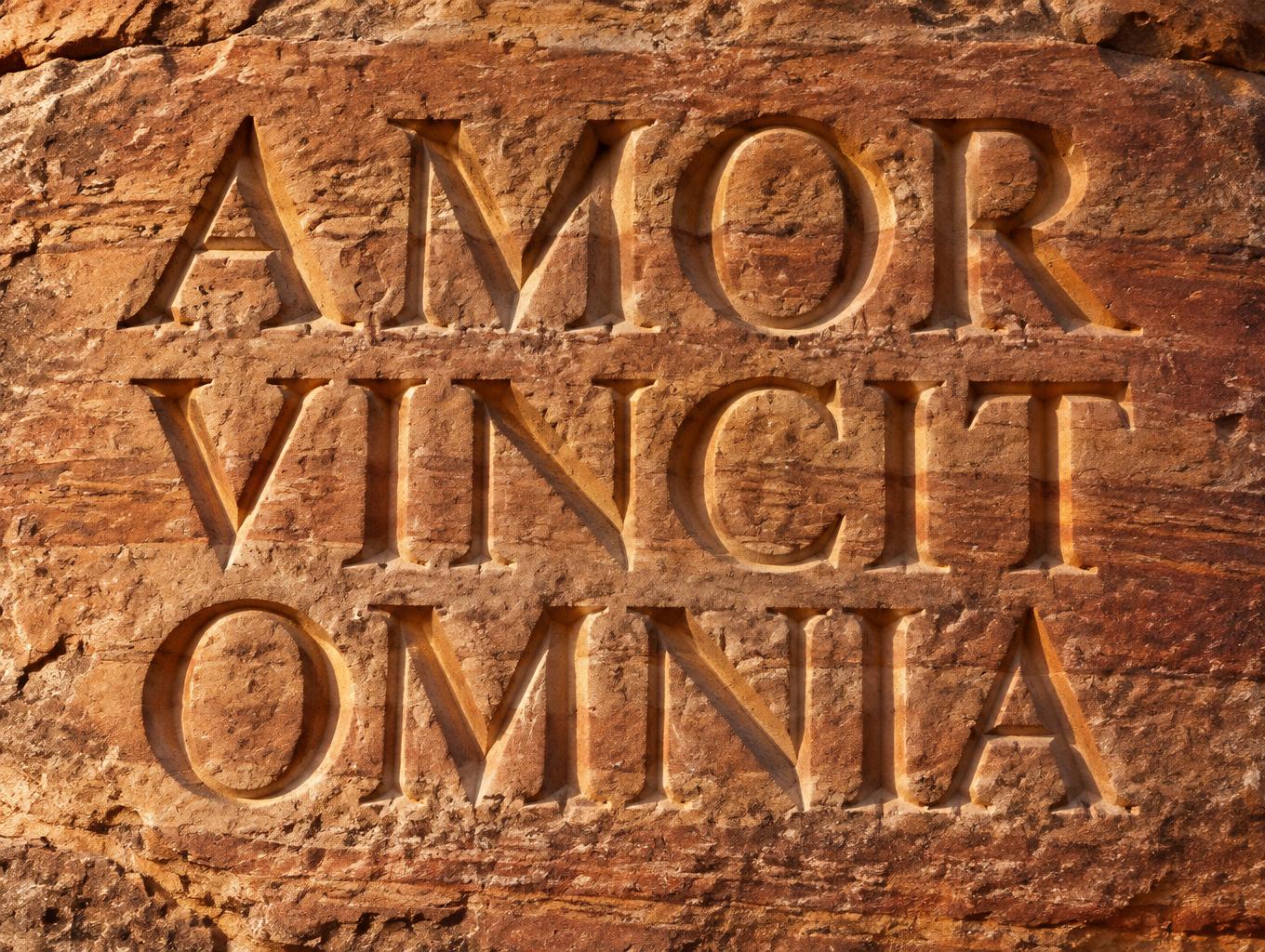
AMOR VINCIT OMNIA - Sand & Stein Text Effect


✦ Dieses Design mit deinem Text neu erstellen
Nutzt OpenAI GPT-Image-2.5 Sunburst, das Modell dieses Werks · 15 Credits
Transparent-Effekt
✦ Transparent-Effekt
Generiert ein PNG mit entferntem Hintergrund — nur der Text und seine visuellen Effekte bleiben übrig. Die KI wählt automatisch die optimale Hintergrundfarbe für eine saubere Entfernung passend zu deinem Stil.
Die Ausgabe ist immer PNG für verlustfreie Transparenz.
✦ Sand & Stein
Alle Sand & Stein ansehen →





Über dieses Werk
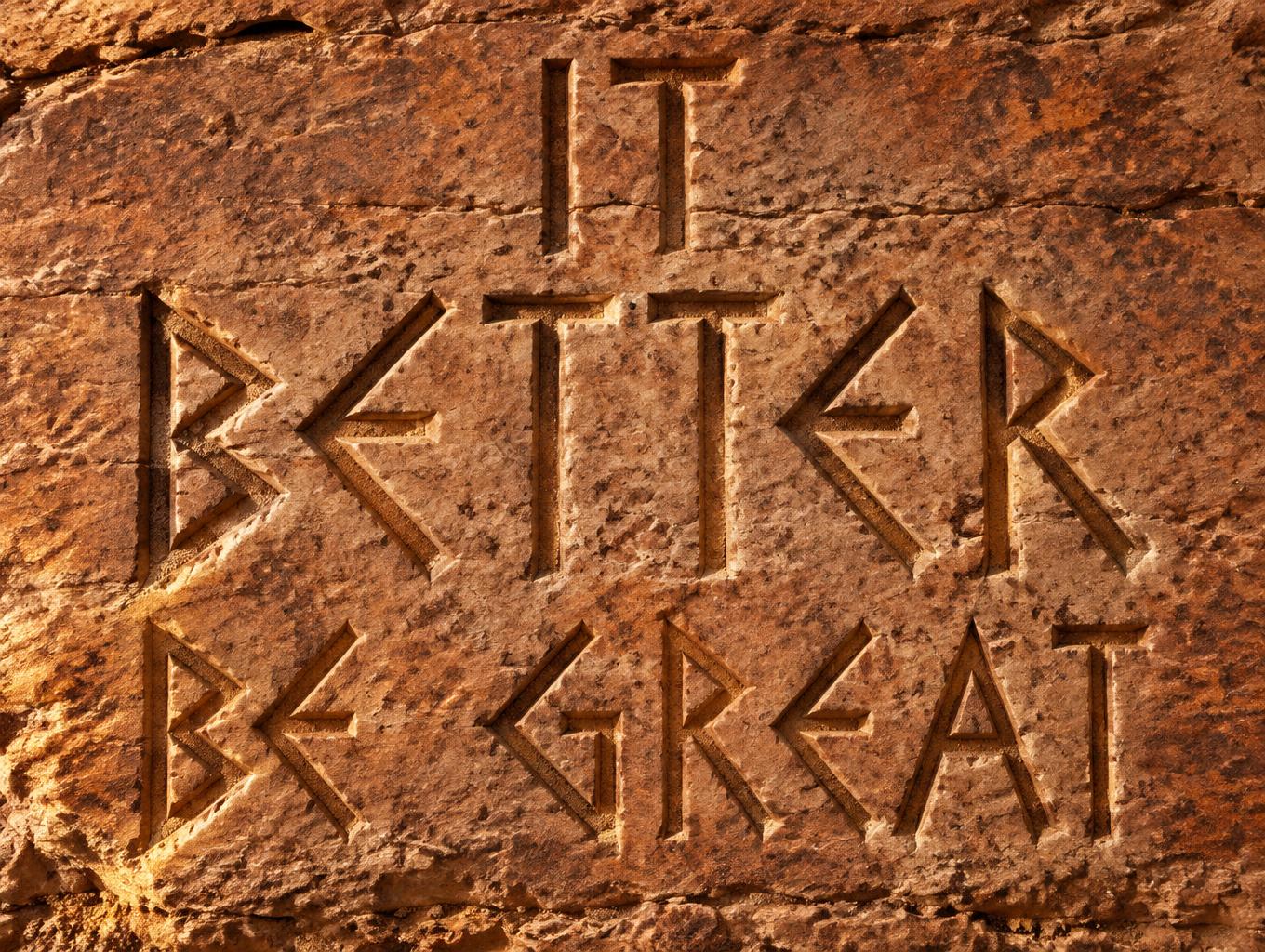
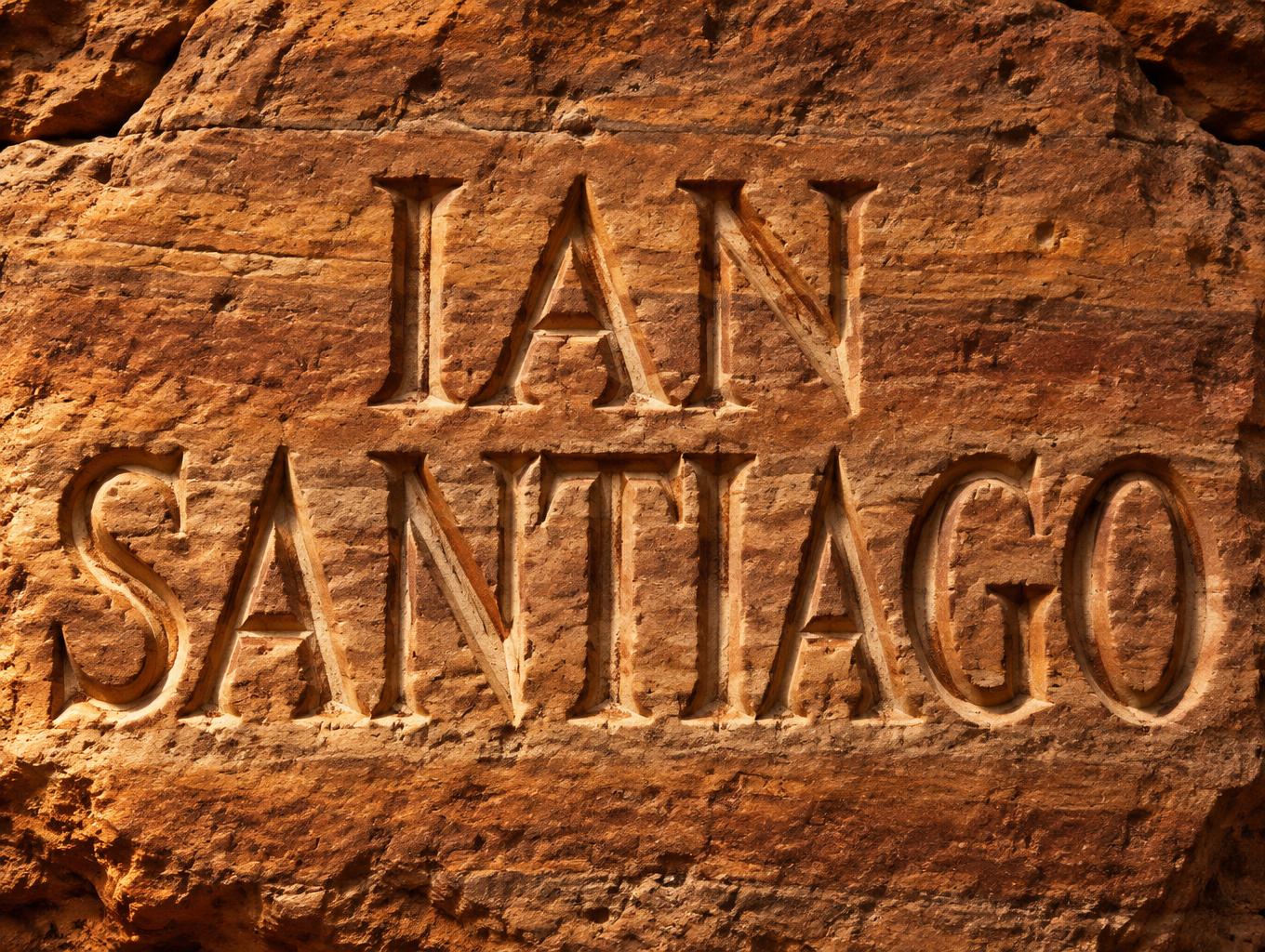
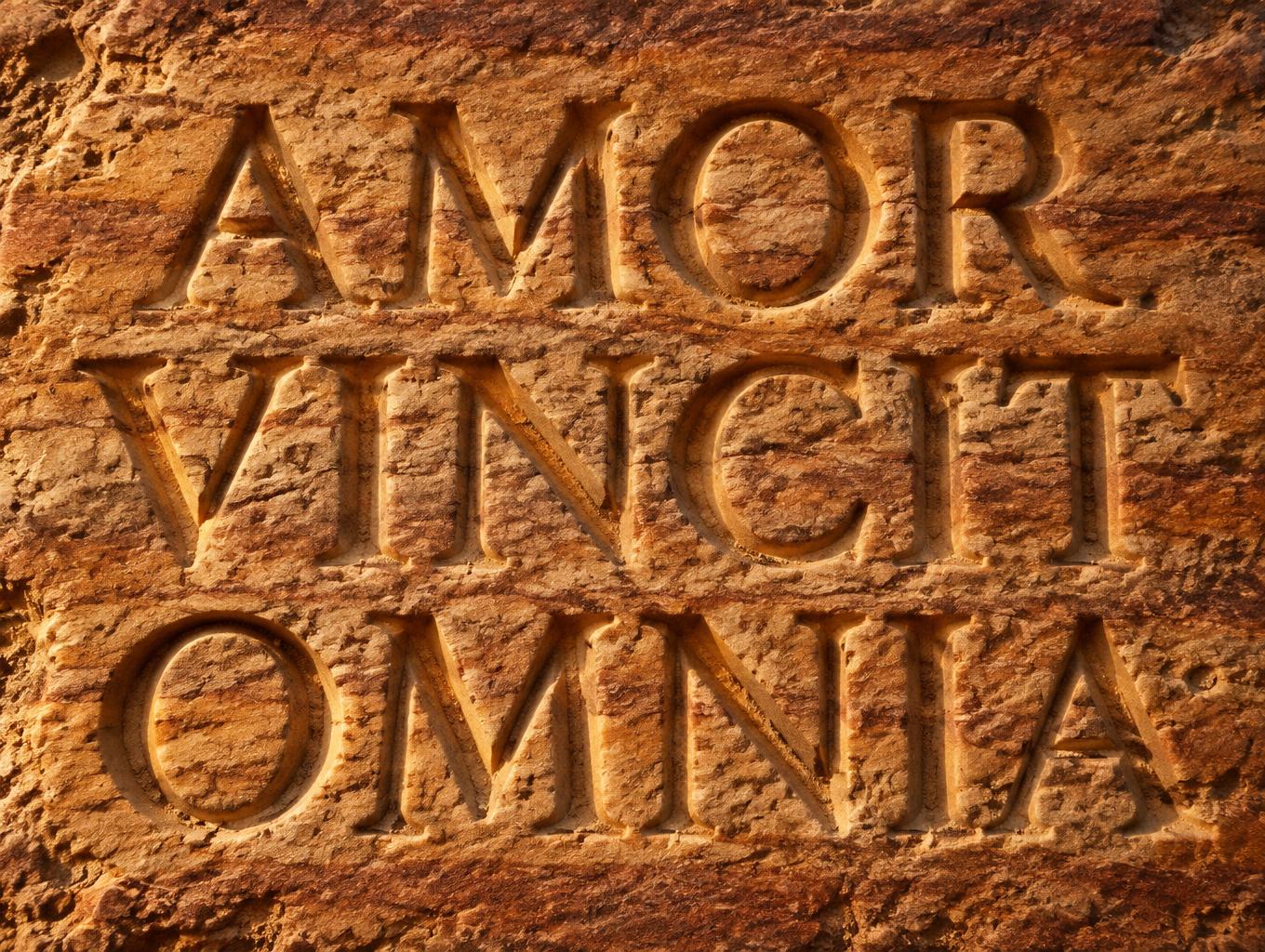
"AMOR VINCIT OMNIA" in römischen Versalien, in roten Sandstein gemeißelt, ein lateinischer Wahlspruch als Steininschrift. Drei gestapelte Zeilen sitzen in V-Rillen auf terrakottafarbenem Fels mit waagerechten Schichten, von warmem, streifendem Sonnenlicht beleuchtet. Ersetze den Spruch durch deine eigenen Worte, um es nachzubauen.
Kreativ-Prompt
Text exists as an irreversible physical mark in ancient earth material — carved stone, incised desert varnish, or painted adobe plaster. Not digitally rendered. MATERIAL TRACKS: — Classic Stone / Bas-Relief: warm stone face; iron oxide banding shifts from cream-beige at fresh chisel cuts to amber-ochre across weathered exterior; V-cut groove interiors filled with warm amber shadow; fresh-cut sections reveal lighter stone against darker aged surface — color contrast defines dimensional depth. — Desert Sandstone: amber-ochre to rose-red stone body; horizontal sedimentary grain lines; micro-pitting from wind erosion; fine quartz sand at letter bases. — Petroglyph / Varnish Stone: near-black desert varnish patina on rock; scratch channels cut through to pale tan unweathered stone — high contrast between pale interior and dark patina. — Adobe / Painted Earth: sun-baked buff terracotta plaster; warm red-ochre to burnt sienna pigment; sand aggregate and trowel marks visible through thin paint; hairline drying cracks at pigment edges. STONE LAWS (all tracks): — Low-angle raking sidelight from left at 15–25° grazes every surface — reveals grain, carving depth, micro-texture, patina unevenness. — Geological color palette: cream-beige / amber-ochre / warm sienna / burnt umber / terracotta red / iron brown. No cool tones. — All surfaces carry age: patina, oxidation staining, erosion pitting, mineral banding. — Cut and incised sections always expose lighter, fresher material against dark weathered exterior. FORBIDDEN: neon, digital glow, chrome, smooth modern surfaces, gradient fills, drop shadows, cool tones. When no specific material is defined by the font: default environment — warm amber raking sidelight from lower-left at 20° angle, deep amber-brown shadow pools in surface recesses, dark desert earth background. Create a finished archaeological title image with the exact inscription “AMOR VINCIT OMNIA,” arranged in three centered lines: “AMOR” largest and leading, “VINCIT” just beneath it, and “OMNIA” completing the compact stack. Carve the words deeply into a single broad face of ancient rose-amber sandstone, as if the inscription has endured for centuries in a desert monument. Let the lettering occupy most of the image, with generous stone margins and a clear silhouette against the surrounding rock. Use horizontal sedimentary grain lines that pass naturally through the stone, iron-oxide banding, wind-worn micro-pitting, and fine quartz sand gathered along the lower edges of the cuts. The fresh carved interiors are pale cream-beige, sharply distinct from the darker, weathered sienna and burnt-umber surface; deep V-cut recesses hold warm amber-brown shadow. A low raking sidelight from the lower left grazes the entire wall, revealing every groove, grain, and chipped edge. Keep the setting close and monumental, with the same ancient stone extending to the frame edges and no distracting objects. Restrained, timeless, solemn, and tactile; the inscription remains the unmistakable focus.
Tags
Generiert am 24. November 2026 · 1360 × 1024 · JPEG · OpenAI GPT-Image-2.5 Sunburst · Von der erstellenden Person geteilt · Kostenlos kommerziell nutzbar (CC BY 4.0)
✦ KI-Texteffekt-Stile entdecken
KI-Texteffekt-Stile durchstöbern


InschriftÄsthetik
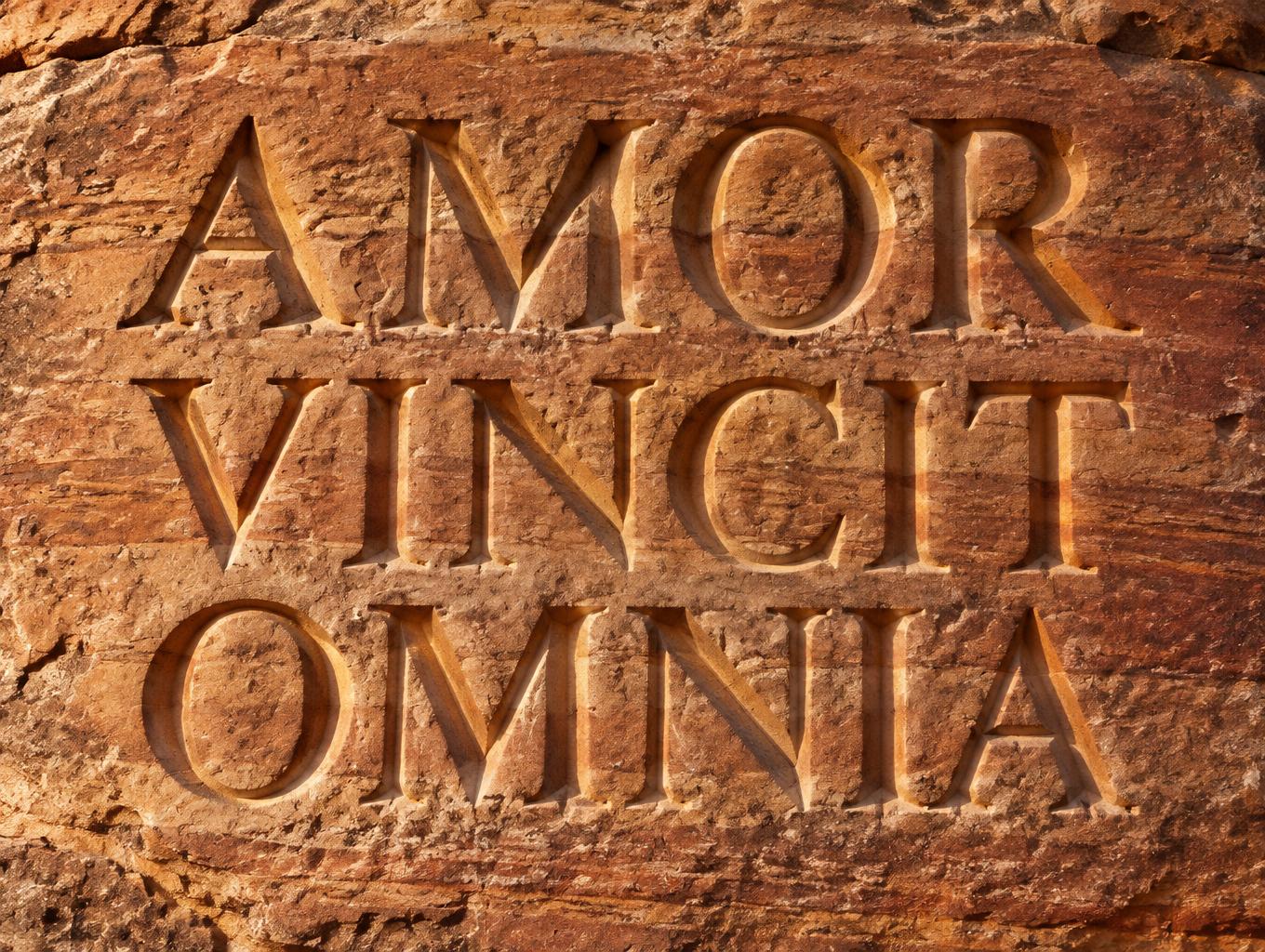
AMOR VINCIT OMNIA - Sand & Stein Text Effect


✦ Dieses Design mit deinem Text neu erstellen
Nutzt OpenAI GPT-Image-2.5 Sunburst, das Modell dieses Werks · 15 Credits
Transparent-Effekt
✦ Transparent-Effekt
Generiert ein PNG mit entferntem Hintergrund — nur der Text und seine visuellen Effekte bleiben übrig. Die KI wählt automatisch die optimale Hintergrundfarbe für eine saubere Entfernung passend zu deinem Stil.
Die Ausgabe ist immer PNG für verlustfreie Transparenz.
✦ Sand & Stein
Alle Sand & Stein ansehen →Mehr Sand & Stein Texteffekte
Über dieses Werk
"AMOR VINCIT OMNIA" in römischen Versalien, in roten Sandstein gemeißelt, ein lateinischer Wahlspruch als Steininschrift. Drei gestapelte Zeilen sitzen in V-Rillen auf terrakottafarbenem Fels mit waagerechten Schichten, von warmem, streifendem Sonnenlicht beleuchtet. Ersetze den Spruch durch deine eigenen Worte, um es nachzubauen.
Kreativ-Prompt
Text exists as an irreversible physical mark in ancient earth material — carved stone, incised desert varnish, or painted adobe plaster. Not digitally rendered. MATERIAL TRACKS: — Classic Stone / Bas-Relief: warm stone face; iron oxide banding shifts from cream-beige at fresh chisel cuts to amber-ochre across weathered exterior; V-cut groove interiors filled with warm amber shadow; fresh-cut sections reveal lighter stone against darker aged surface — color contrast defines dimensional depth. — Desert Sandstone: amber-ochre to rose-red stone body; horizontal sedimentary grain lines; micro-pitting from wind erosion; fine quartz sand at letter bases. — Petroglyph / Varnish Stone: near-black desert varnish patina on rock; scratch channels cut through to pale tan unweathered stone — high contrast between pale interior and dark patina. — Adobe / Painted Earth: sun-baked buff terracotta plaster; warm red-ochre to burnt sienna pigment; sand aggregate and trowel marks visible through thin paint; hairline drying cracks at pigment edges. STONE LAWS (all tracks): — Low-angle raking sidelight from left at 15–25° grazes every surface — reveals grain, carving depth, micro-texture, patina unevenness. — Geological color palette: cream-beige / amber-ochre / warm sienna / burnt umber / terracotta red / iron brown. No cool tones. — All surfaces carry age: patina, oxidation staining, erosion pitting, mineral banding. — Cut and incised sections always expose lighter, fresher material against dark weathered exterior. FORBIDDEN: neon, digital glow, chrome, smooth modern surfaces, gradient fills, drop shadows, cool tones. When no specific material is defined by the font: default environment — warm amber raking sidelight from lower-left at 20° angle, deep amber-brown shadow pools in surface recesses, dark desert earth background. Create a finished archaeological title image with the exact inscription “AMOR VINCIT OMNIA,” arranged in three centered lines: “AMOR” largest and leading, “VINCIT” just beneath it, and “OMNIA” completing the compact stack. Carve the words deeply into a single broad face of ancient rose-amber sandstone, as if the inscription has endured for centuries in a desert monument. Let the lettering occupy most of the image, with generous stone margins and a clear silhouette against the surrounding rock. Use horizontal sedimentary grain lines that pass naturally through the stone, iron-oxide banding, wind-worn micro-pitting, and fine quartz sand gathered along the lower edges of the cuts. The fresh carved interiors are pale cream-beige, sharply distinct from the darker, weathered sienna and burnt-umber surface; deep V-cut recesses hold warm amber-brown shadow. A low raking sidelight from the lower left grazes the entire wall, revealing every groove, grain, and chipped edge. Keep the setting close and monumental, with the same ancient stone extending to the frame edges and no distracting objects. Restrained, timeless, solemn, and tactile; the inscription remains the unmistakable focus.
Tags
Generiert am 24. November 2026 · 1360 × 1024 · JPEG · OpenAI GPT-Image-2.5 Sunburst · Von der erstellenden Person geteilt · Kostenlos kommerziell nutzbar (CC BY 4.0)
✦ KI-Texteffekt-Stile entdecken
KI-Texteffekt-Stile durchstöbern
Mehr Textstile gefällig? Stöber durch unsere kostenlosen Schriftgeneratoren — cool, Schreibschrift, Gothic und mehr.