靖传瑾 瑾印 仿曹全碑意 - Stele Ink on Rice Paper Text Effect

この作品と同じ OpenAI GPT-Image-2.5 Sunburst を使用 · 15 クレジット
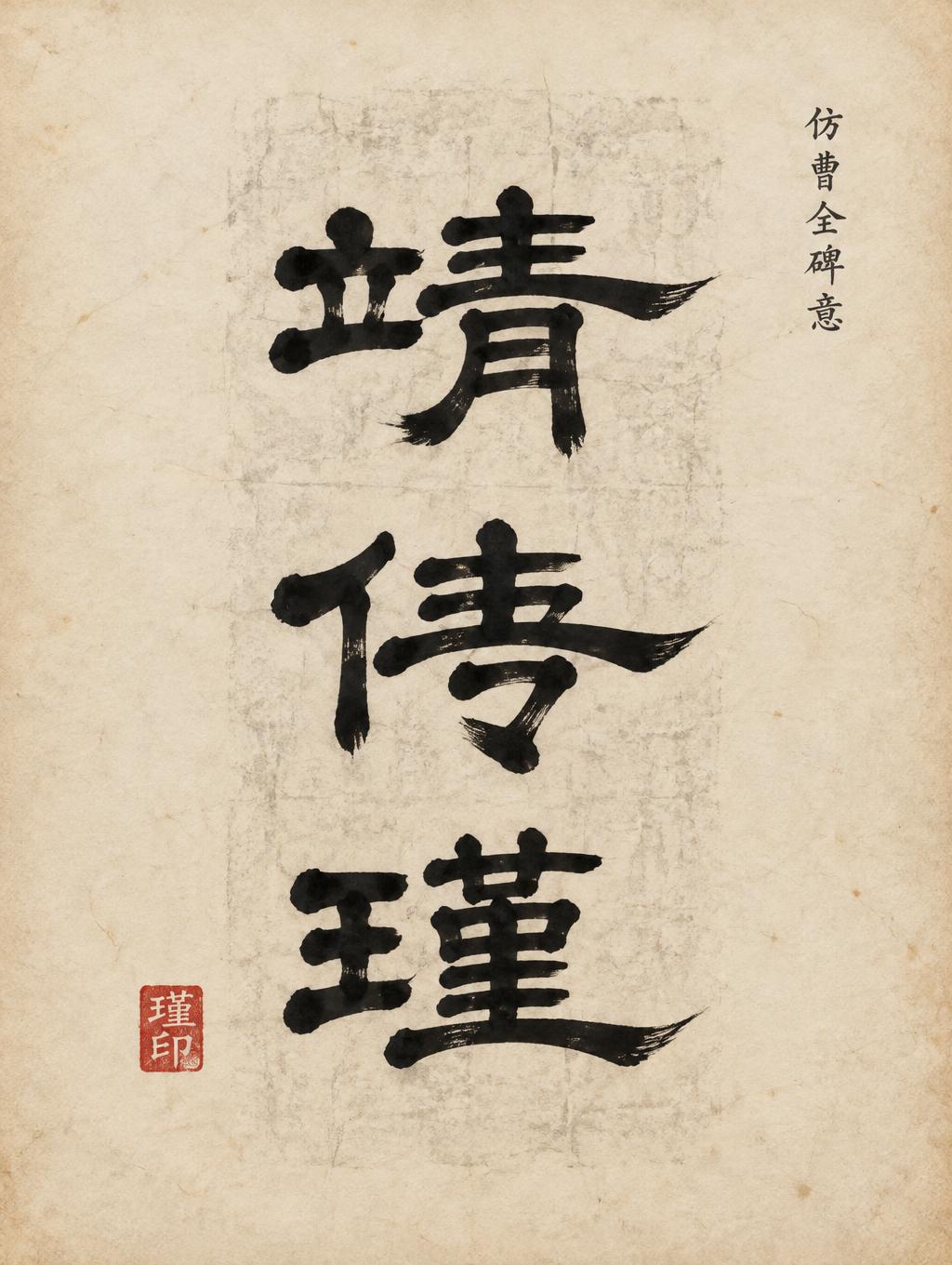
「靖传瑾」は、漢代風の隷書で書かれた書のワードアートで、石碑の拓本のような古紙に縦に3文字を配置しています。クリーム色の紙に太い黒の筆文字と燕尾の筆致があり、右上に小さな縦書きの「仿曹全碑意」、左下に赤い印があります。名前や言葉、脇書き、印の文字を差し替えて、自分だけの書作品に仕立てられます。
A finished calligraphy name piece in the manner of the Han-dynasty Cao Quan Stele (曹全碑). Three Chinese characters 「靖传瑾」, written verbatim, stacked vertically in a single column and centred, filling about 62% of the canvas height and about 70% of its width. Each character is wide and flat with a squared, spreading build: the horizontals are long and carry a rounded silkworm-head (蚕头) at the left start and a single graceful upward-lifting swallow-tail (燕尾) at the right end, while the verticals and diagonals are short, restrained and evenly spaced. The strokes are heavy sumi-black ink with a wet, glossy core and visible dry-bristle streaks and slightly ragged edges at the stroke ends. Ink pools slightly at the silkworm heads. The ground is warm cream xuan rice paper with fine fibres, faint foxing and a soft tonal vignette toward the corners. A faint, pale grey ghost of weathered stone-stele texture, with rubbing-like cracks, sits behind the characters at low contrast. At the lower left, beside the column, a small square vermilion seal with white-relief carved characters 「瑾印」 stamped slightly uneven in cinnabar red. A narrow vertical column of tiny regular-script colophon text 「仿曹全碑意」 runs at the upper right, small and quiet. Generous empty paper margins all round. Soft, even daylight, no strong shadows, a calm, monumental, ancient atmosphere.
タグ
2026年11月18日に生成 · 1024 × 1360 · JPEG · OpenAI GPT-Image-2.5 Sunburst · レイアウト:Vertical Name Column · 制作者がシェア · 商用利用無料(CC BY 4.0)
AI文字エフェクトのスタイルを見る



靖传瑾 瑾印 仿曹全碑意 - Stele Ink on Rice Paper Text Effect

この作品と同じ OpenAI GPT-Image-2.5 Sunburst を使用 · 15 クレジット
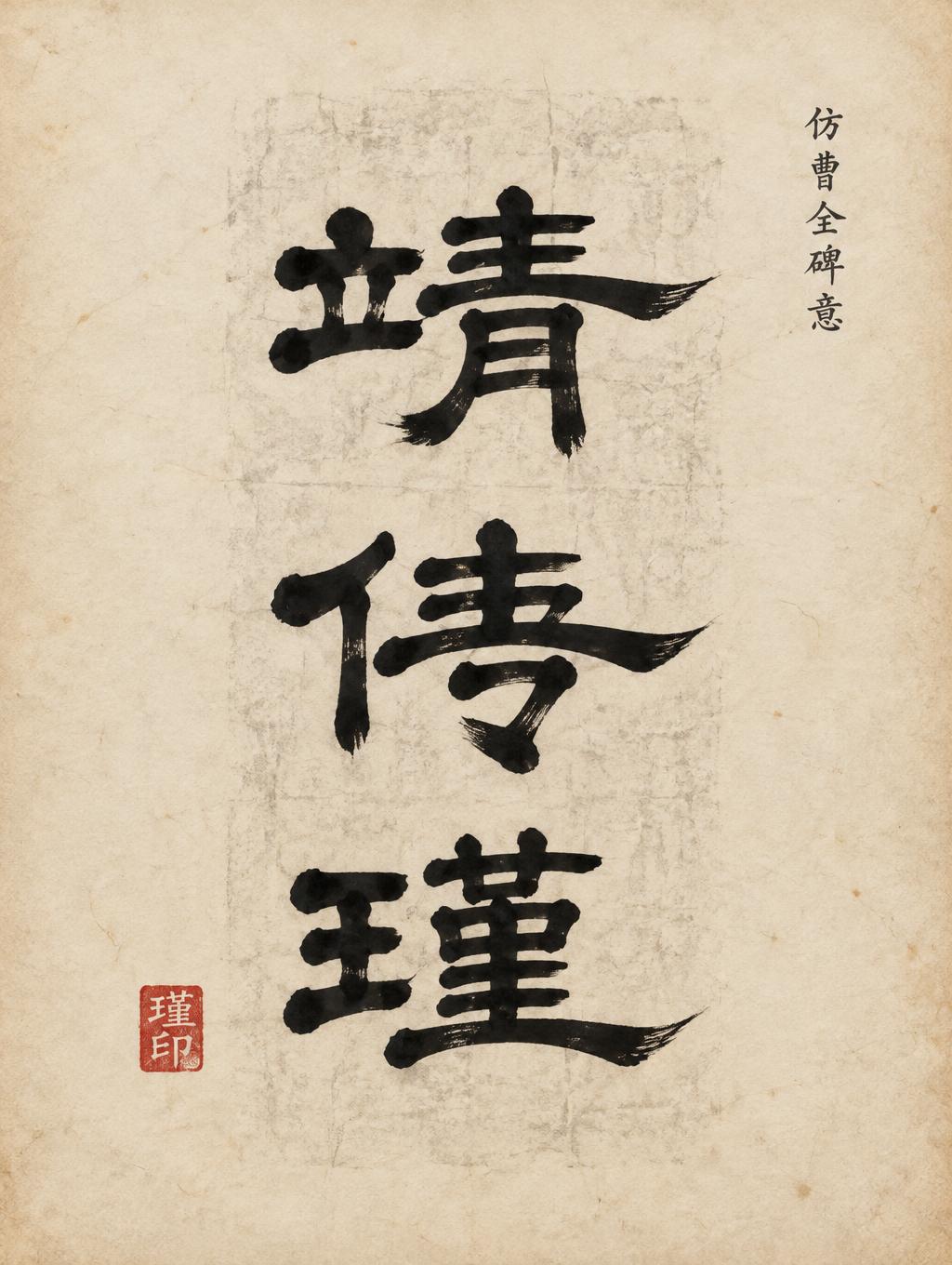
「靖传瑾」は、漢代風の隷書で書かれた書のワードアートで、石碑の拓本のような古紙に縦に3文字を配置しています。クリーム色の紙に太い黒の筆文字と燕尾の筆致があり、右上に小さな縦書きの「仿曹全碑意」、左下に赤い印があります。名前や言葉、脇書き、印の文字を差し替えて、自分だけの書作品に仕立てられます。
A finished calligraphy name piece in the manner of the Han-dynasty Cao Quan Stele (曹全碑). Three Chinese characters 「靖传瑾」, written verbatim, stacked vertically in a single column and centred, filling about 62% of the canvas height and about 70% of its width. Each character is wide and flat with a squared, spreading build: the horizontals are long and carry a rounded silkworm-head (蚕头) at the left start and a single graceful upward-lifting swallow-tail (燕尾) at the right end, while the verticals and diagonals are short, restrained and evenly spaced. The strokes are heavy sumi-black ink with a wet, glossy core and visible dry-bristle streaks and slightly ragged edges at the stroke ends. Ink pools slightly at the silkworm heads. The ground is warm cream xuan rice paper with fine fibres, faint foxing and a soft tonal vignette toward the corners. A faint, pale grey ghost of weathered stone-stele texture, with rubbing-like cracks, sits behind the characters at low contrast. At the lower left, beside the column, a small square vermilion seal with white-relief carved characters 「瑾印」 stamped slightly uneven in cinnabar red. A narrow vertical column of tiny regular-script colophon text 「仿曹全碑意」 runs at the upper right, small and quiet. Generous empty paper margins all round. Soft, even daylight, no strong shadows, a calm, monumental, ancient atmosphere.
タグ
2026年11月18日に生成 · 1024 × 1360 · JPEG · OpenAI GPT-Image-2.5 Sunburst · レイアウト:Vertical Name Column · 制作者がシェア · 商用利用無料(CC BY 4.0)
もっと文字スタイルが欲しいときは、無料のフォント変換ツールへ。おしゃれ文字・筆記体・ブラックレターなど。