Halloween Aesthetic Ideas: 4 Looks and What Each Is For
Spooky, cute, vintage and pink Halloween, each with its colors, lettering and the designs it suits. Every example was made on FontVibe.
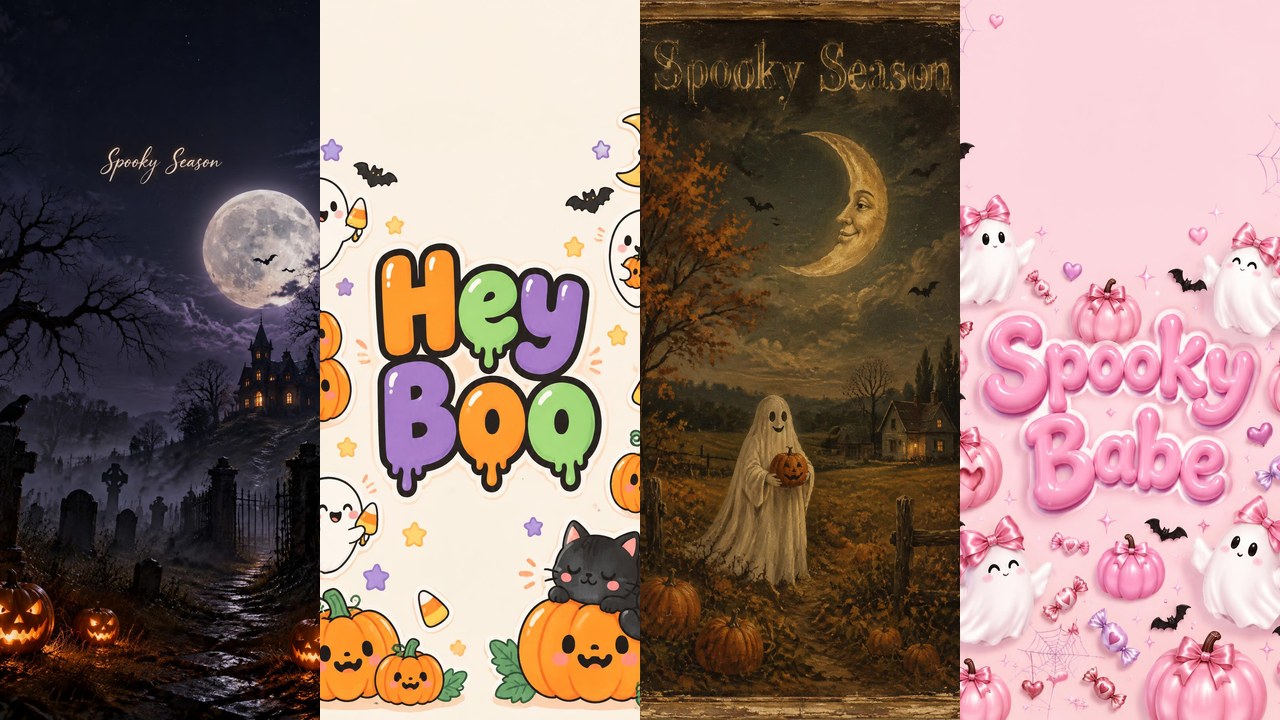
Most Halloween designs that look off are not badly made. They mix two aesthetics. A purple haunted-house sky with pastel pink bows, or a 1920s grinning moon next to a glossy 3D cartoon ghost. Each half is fine. Together they read as nobody's party.
So here is the short version of this article: pick one Halloween aesthetic and commit to it. Below are the four I see people use most, what each is made of, and which kind of design it suits. Every image here was made on FontVibe, the design tool I run, and you can open any of them and swap in your own words.
The Halloween aesthetic is four aesthetics
When people search for a Halloween aesthetic they mean different things. A parent planning a class party, a teenager redoing a phone lock screen and someone hosting a candlelit supper are not after the same picture. In practice the look splits into four families:
| Look | Palette | Lettering | Best for |
|---|---|---|---|
| Spooky | Black, orange, night purple | Carved, gothic, condensed caps | Adult parties, haunted attractions, countdown posts |
| Cute | Cream, pumpkin orange, pastel purple | Round, bubbly, handwritten | Kids' parties, stickers, coloring sheets |
| Vintage | Aged cream, burnt orange, soft black | Slab serifs, banners, old script | Greeting cards, suppers, grown-up invitations |
| Pink | Pastel pink, rose, black accents | Ribbon script, glossy bubble letters | Sleepovers, social posts, phone wallpapers |
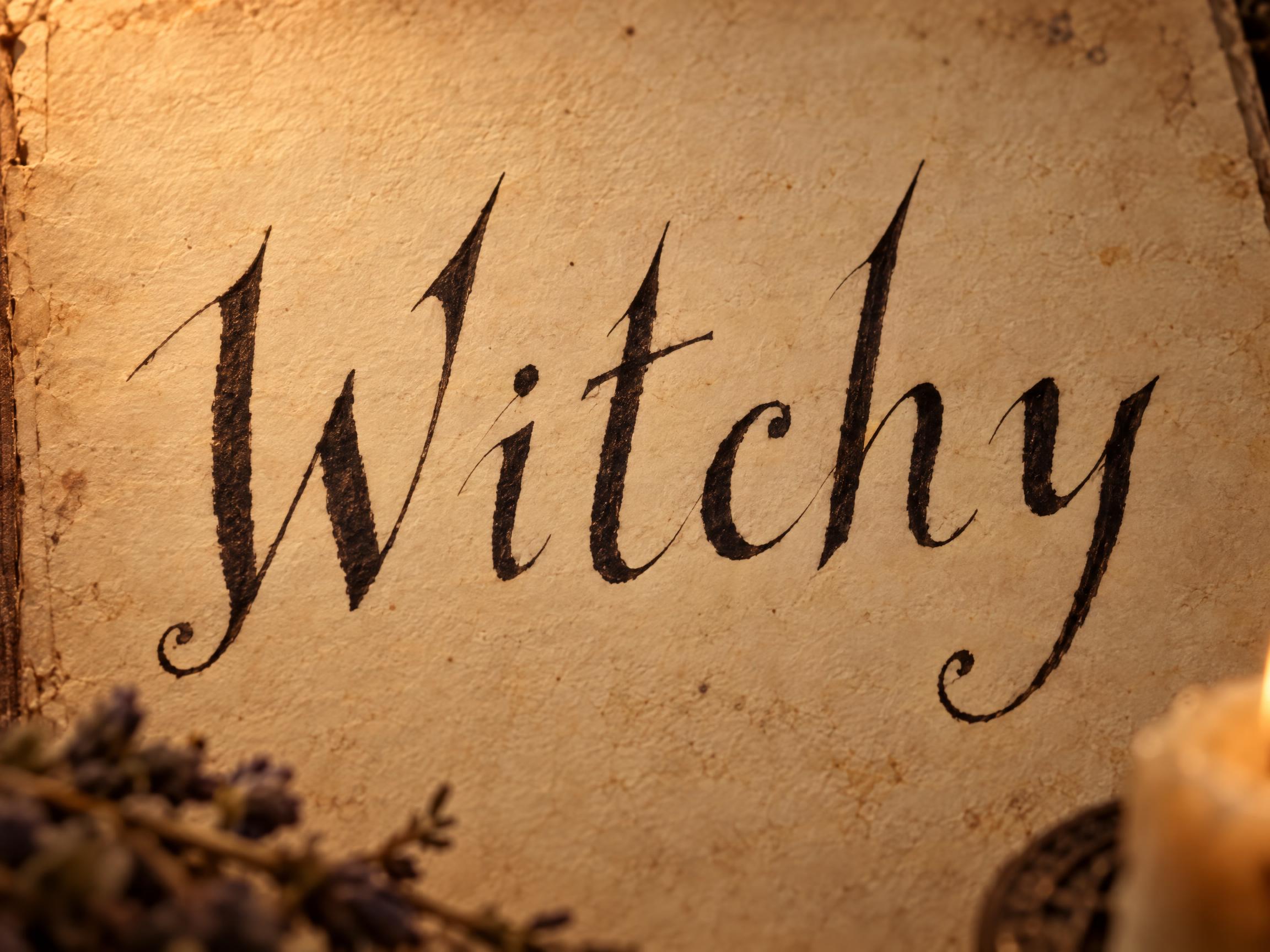
The lettering column matters more than it looks. People read the type before they notice the background, so the font is the fastest signal of which look you chose.
1. Spooky Halloween: the classic night scene
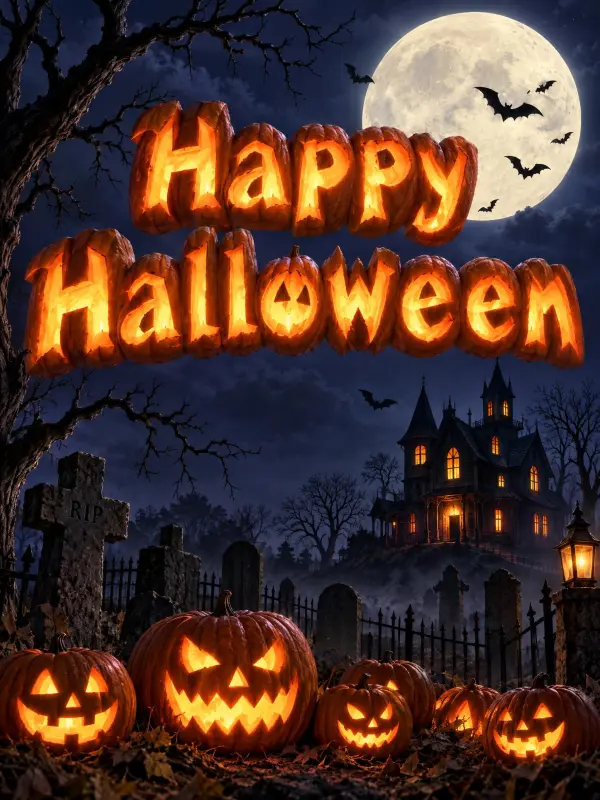
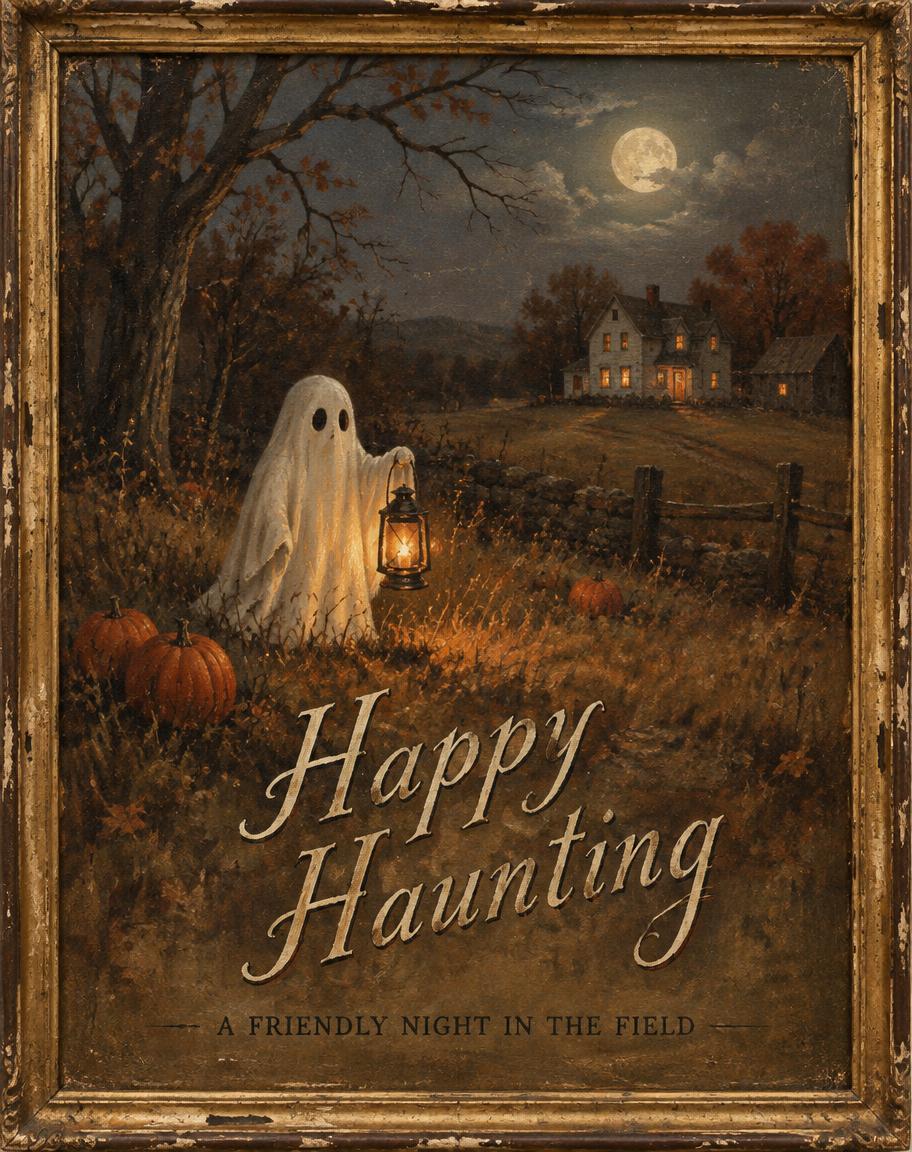
This is the look most people picture first: a full moon, bare trees, a lit-up mansion on a hill and a row of jack-o'-lanterns along the bottom edge. The palette is the traditional one. Wikipedia's Halloween article lists black, orange and sometimes purple as the holiday's traditional colors, and this look uses all three.
The castle-and-graveyard setting has a long film history behind it. Universal released Dracula in February 1931 with Bela Lugosi, and Frankenstein followed in November 1931 with Boris Karloff (Wikipedia — Universal Classic Monsters). A haunted mansion on a hill still reads as "scary movie" to almost anyone.

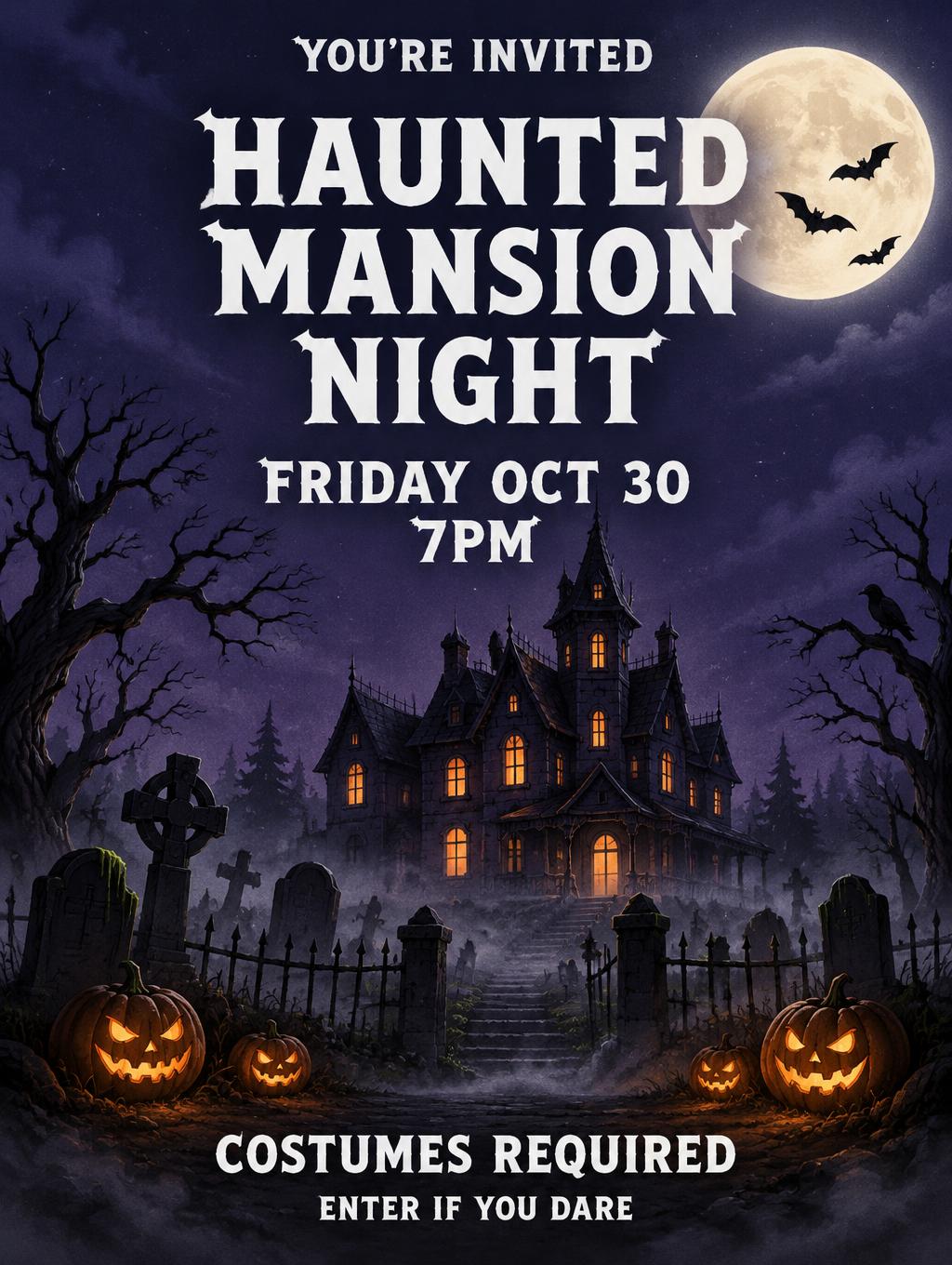
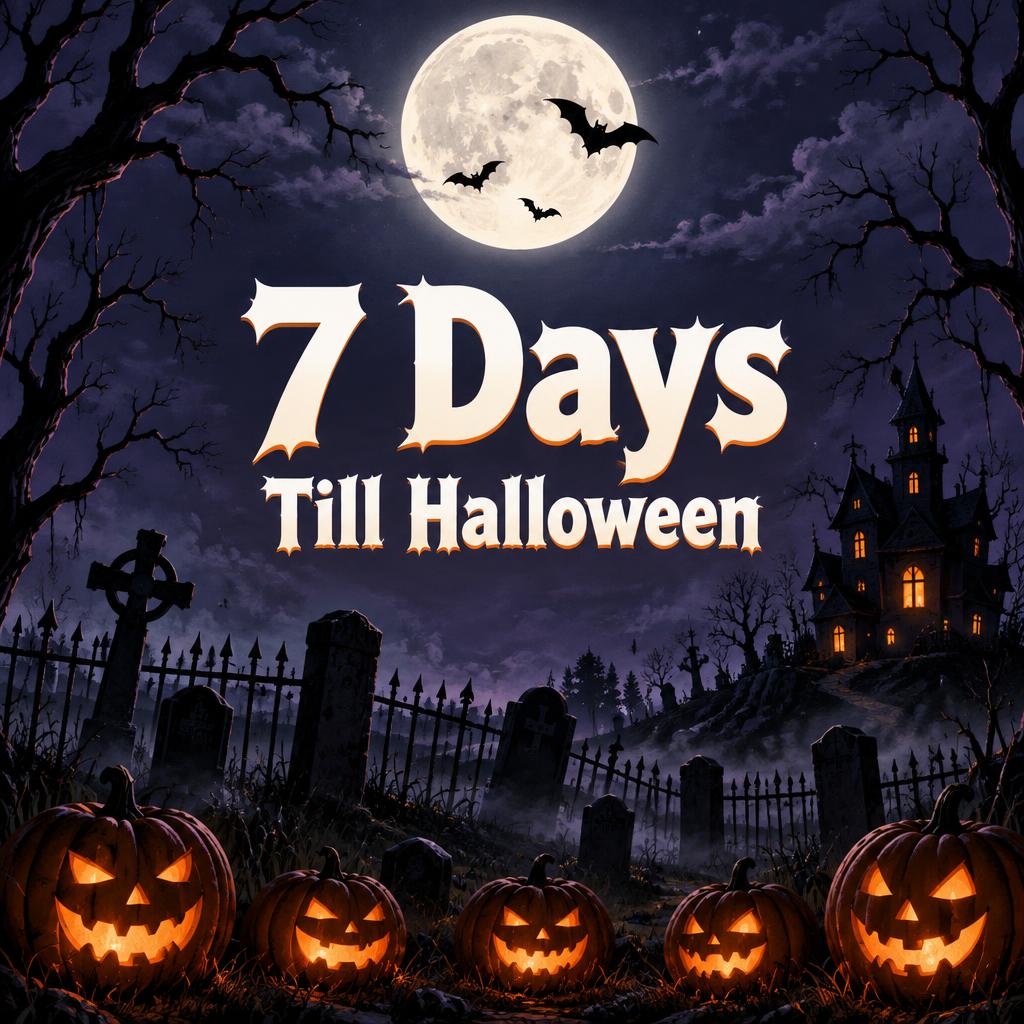
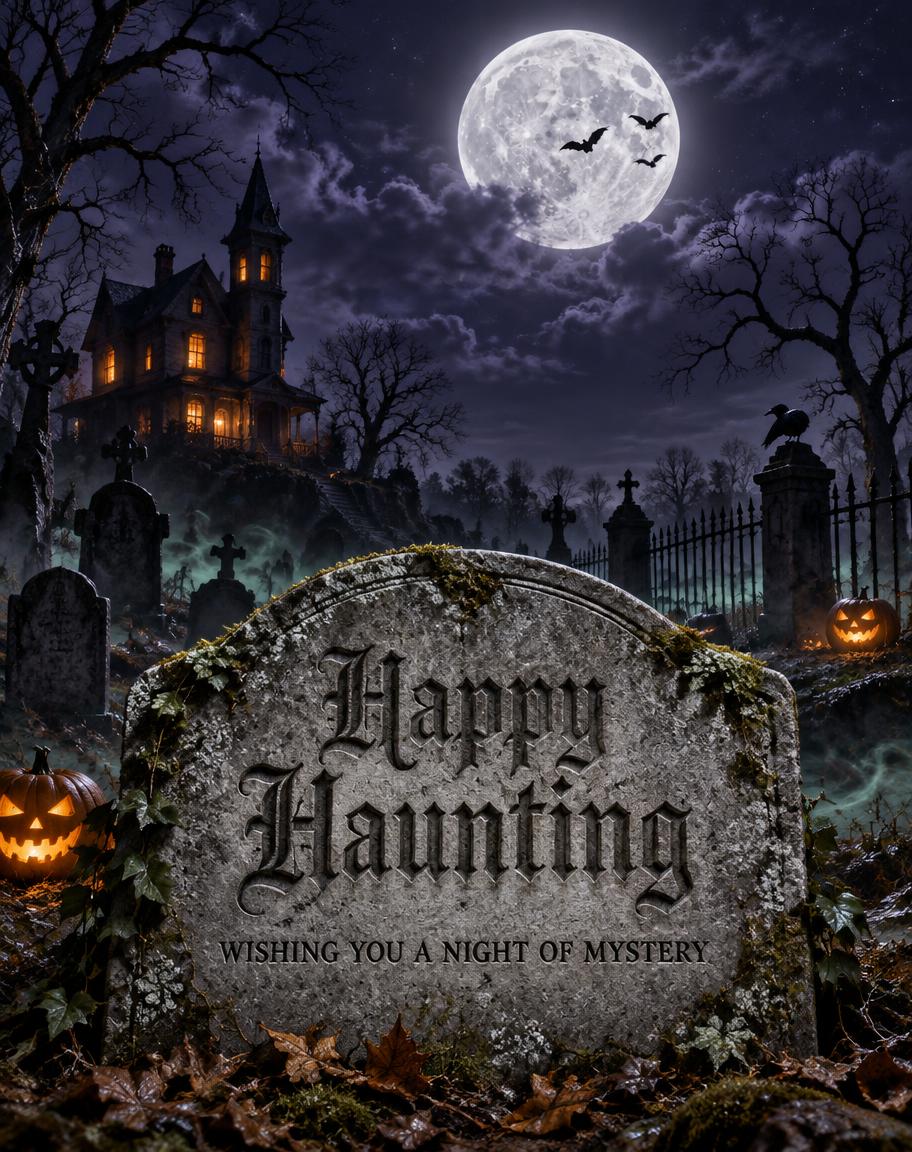
What makes it work: a dark top half for the words and a busy bottom half for the pumpkins. Keep the text in the sky. When letters overlap the graveyard detail, they disappear.
Use it for: adult costume parties, haunted hayrides, Halloween party invitations and event posters. It is the wrong choice for anything aimed at small children.


2. Cute Halloween: round, friendly, cream background
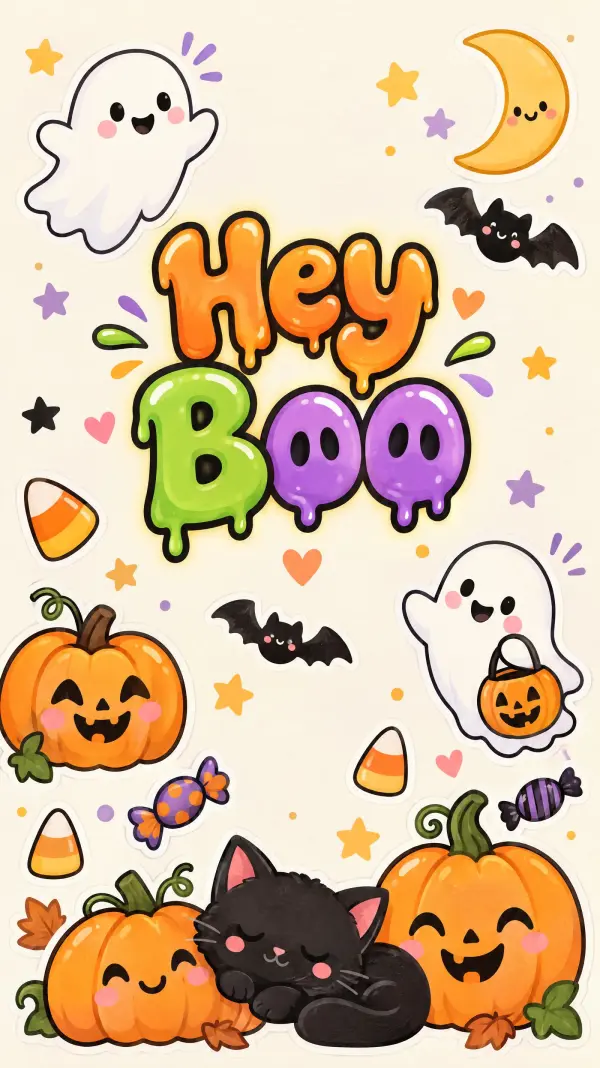
Cute Halloween keeps the cast (ghosts, pumpkins, bats, black cats) and removes the threat. Everything gets a round face and rosy cheeks, the background turns cream, and purple shows up as candy wrappers instead of night sky.
The style borrows from kawaii, the Japanese culture of cuteness. Wikipedia's article on kawaii points to Sanrio's Hello Kitty, created in 1974, as the example of the trend, and notes that its popularity has spread well beyond Asia.
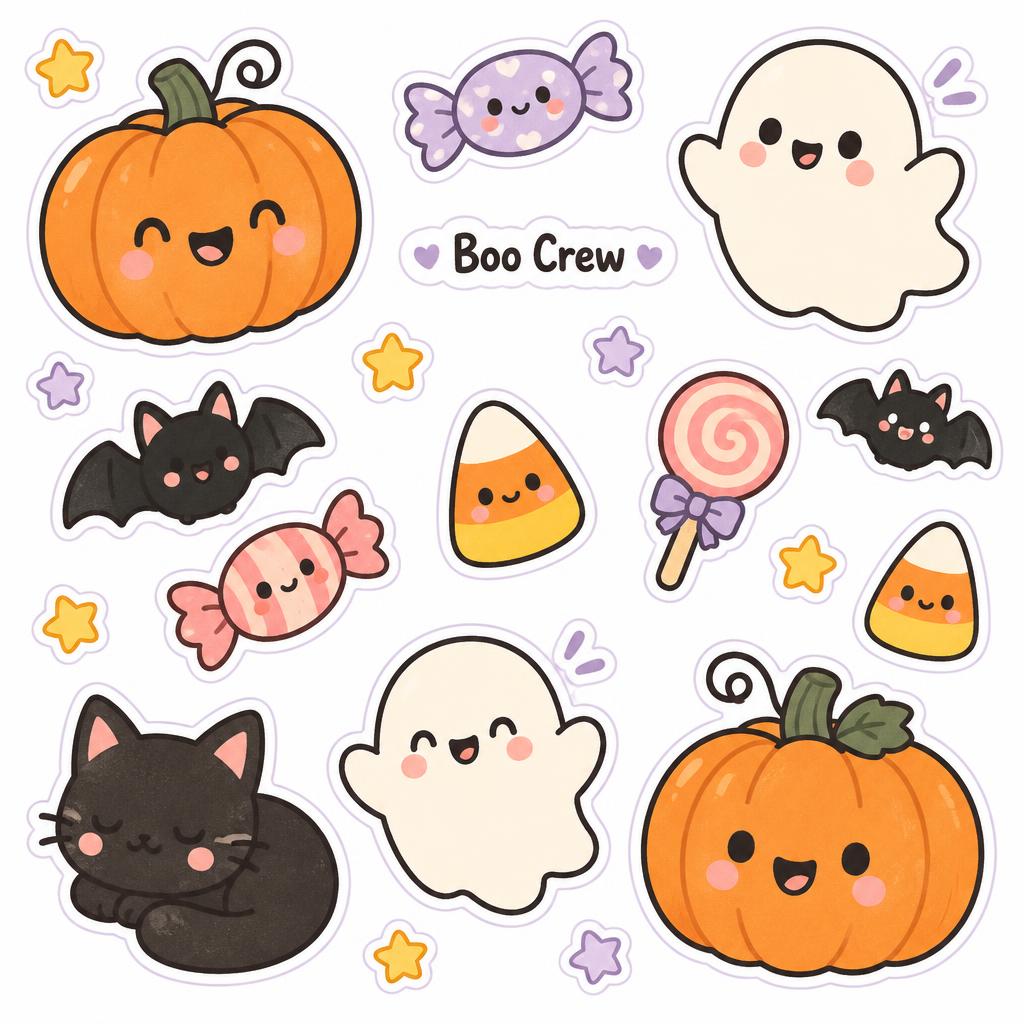
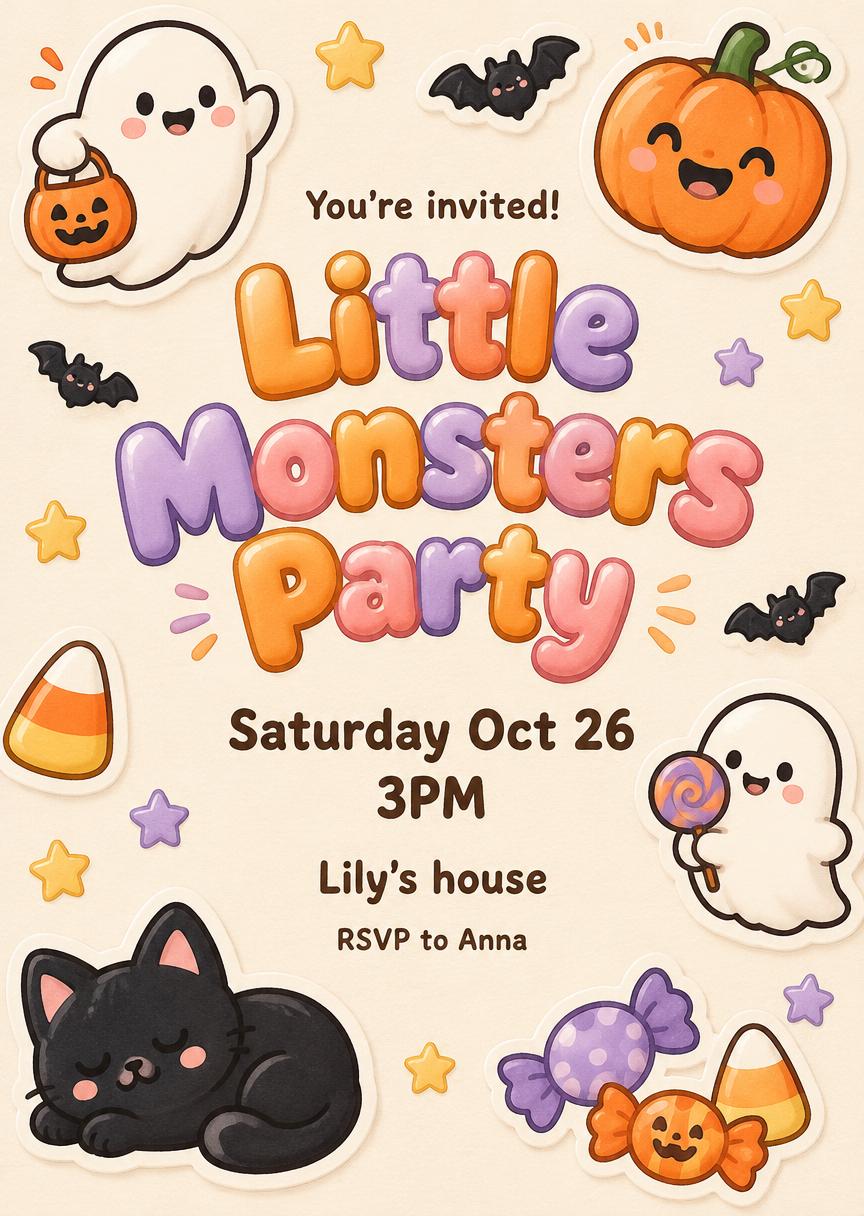
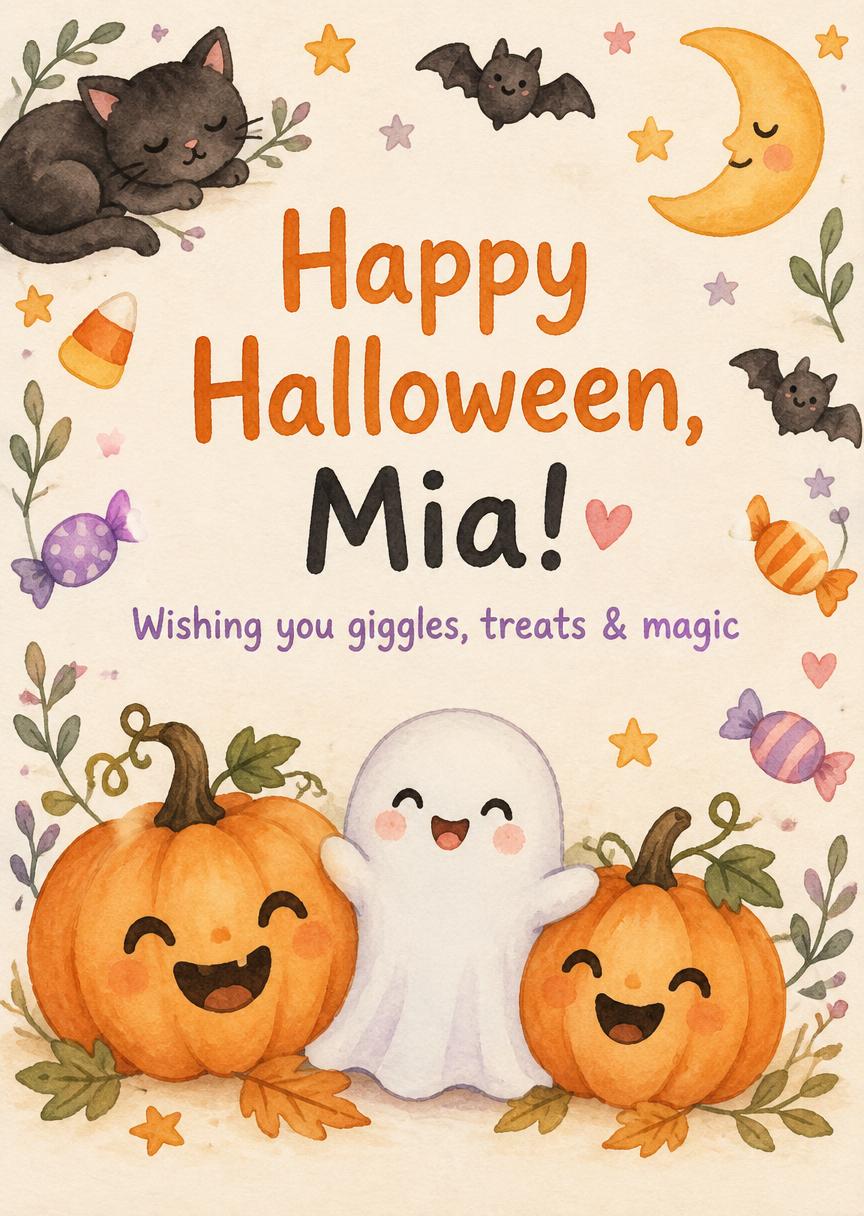
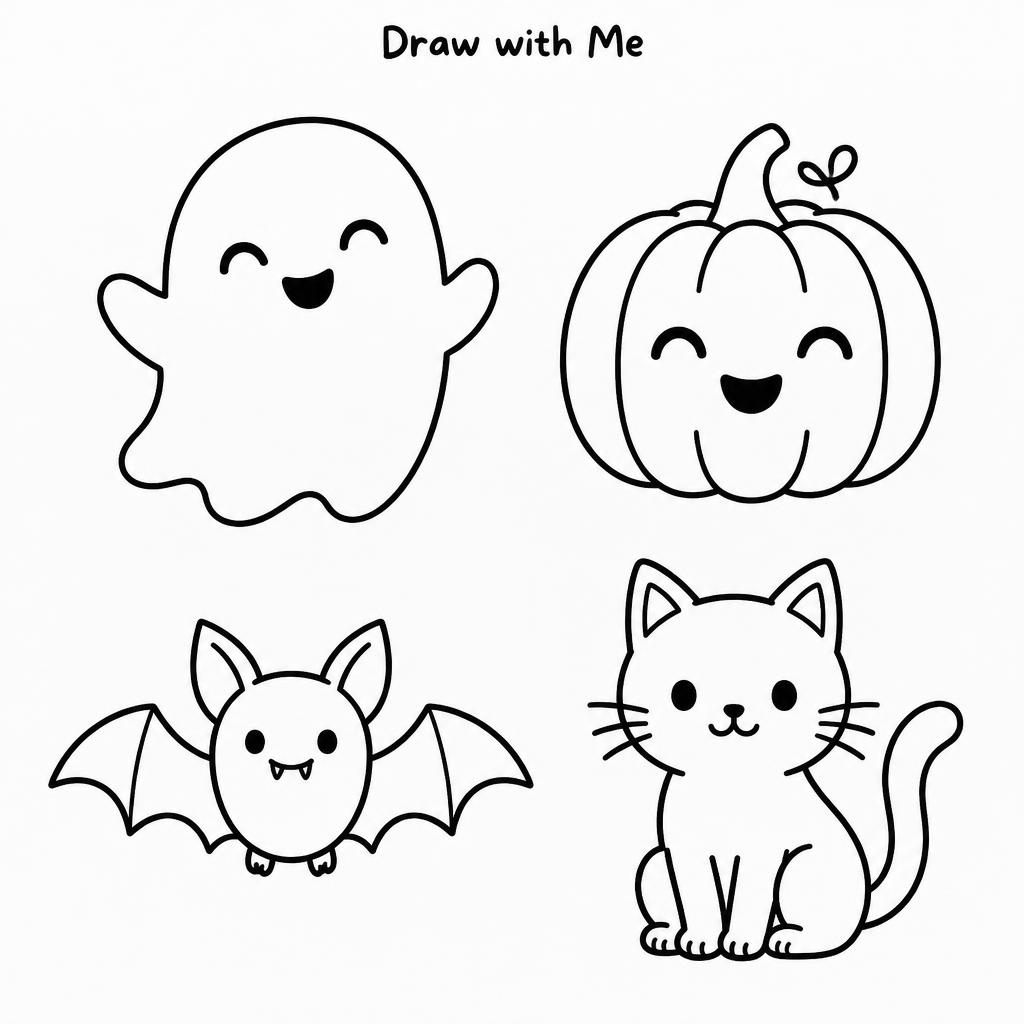
What makes it work: soft shapes everywhere, including the letters. One sharp gothic headline on a cute background breaks the whole thing.
Use it for: class and family parties, trunk-or-treat flyers, Halloween clipart and stickers, and coloring pages for younger kids.


3. Vintage Halloween: the postcard look
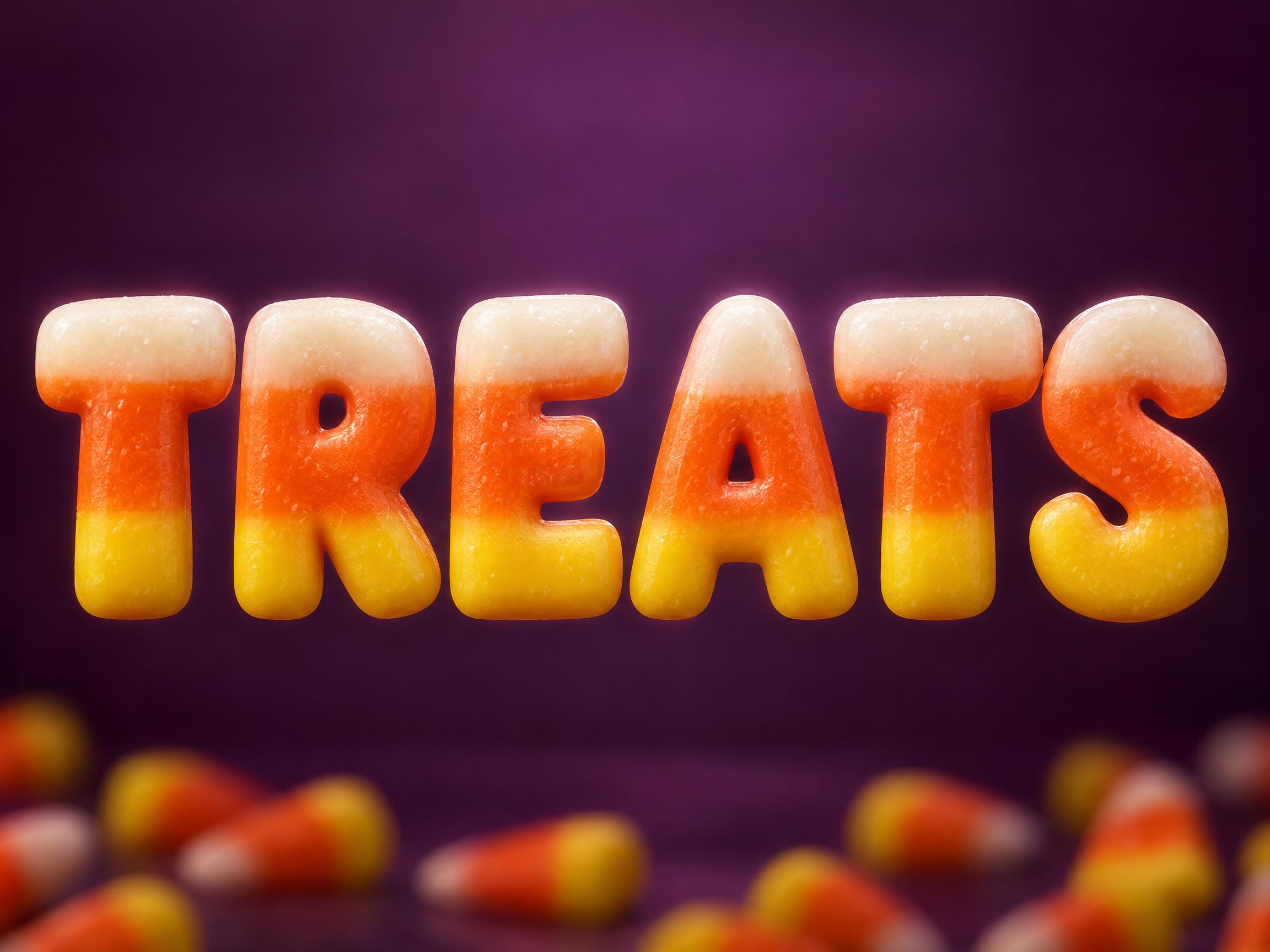
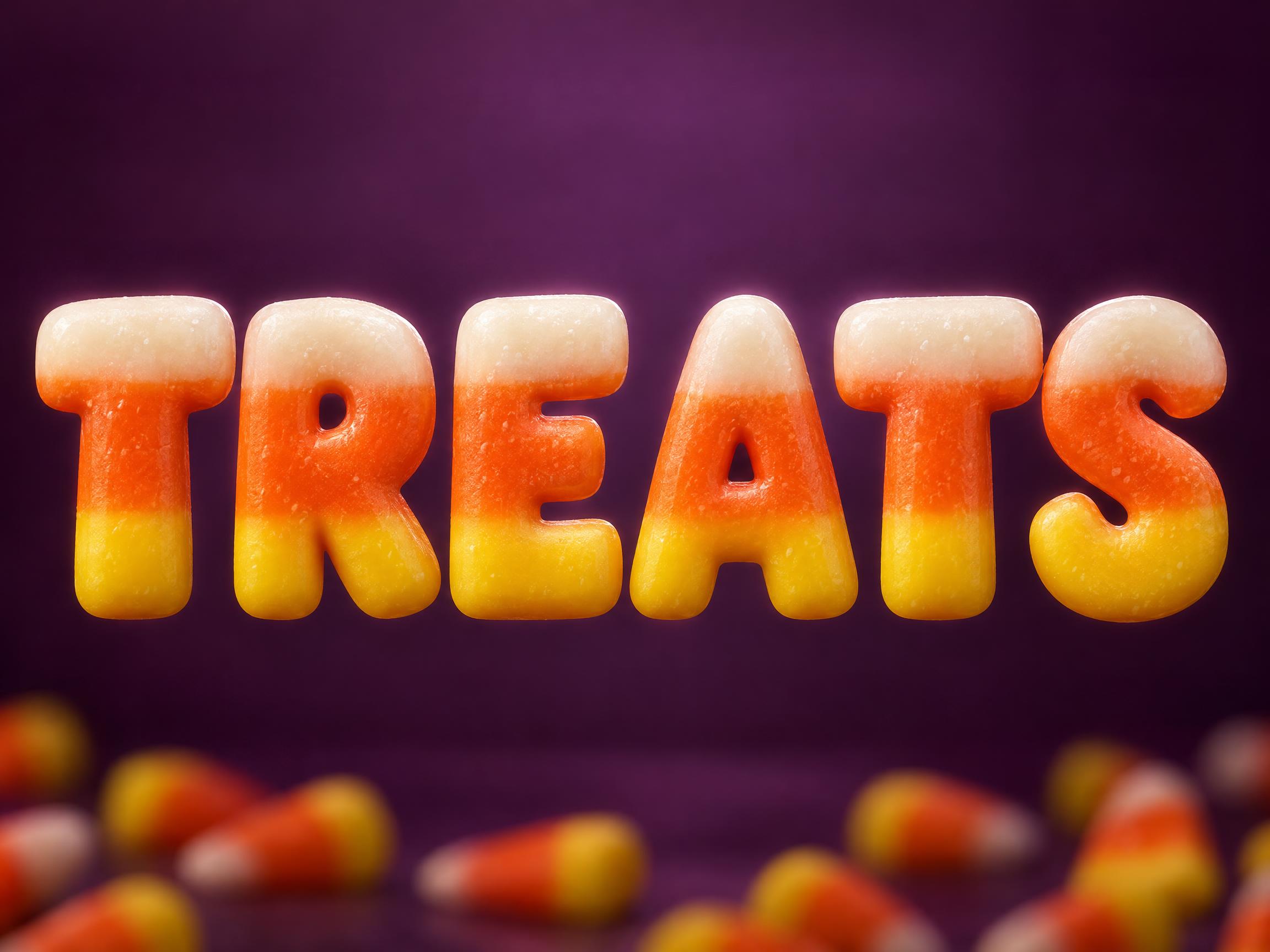
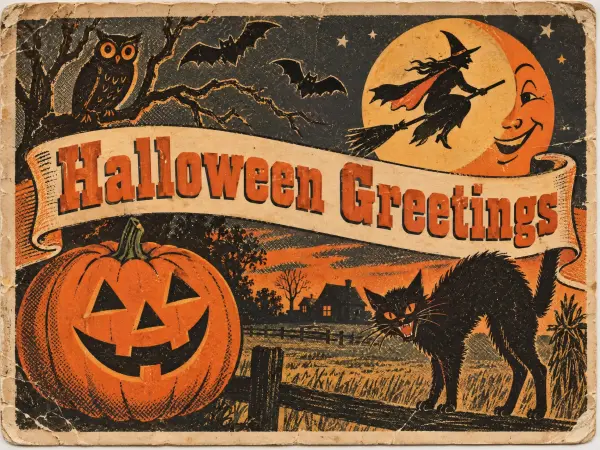
Vintage Halloween copies the paper goods of the early 1900s. Wikipedia's Halloween article mentions the thousands of Halloween postcards produced between the turn of the 20th century and the 1920s. Party decorations followed. The Beistle Company introduced its Halloween line in the 1920s, and Halloween decorations were the first seasonal decorations in its catalog (Wikipedia — The Beistle Company). The Henry Ford museum holds a Beistle party set from about 1923 (The Henry Ford — Hallowe'en Party Decorations, circa 1923).
The visual rules come straight from that printing: two or three flat inks, aged cream paper, banners for the headline, a grinning crescent moon, an arched black cat.
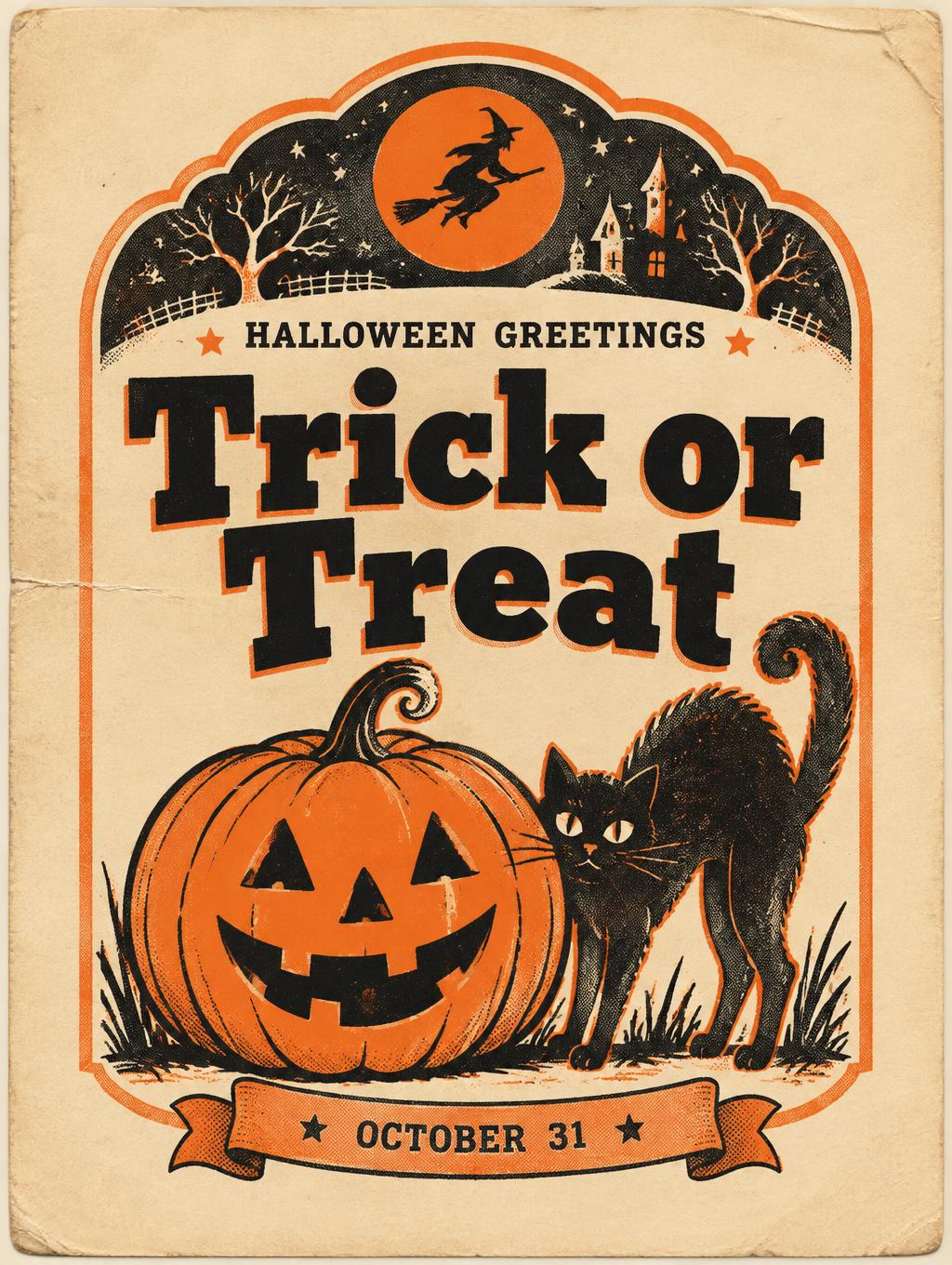
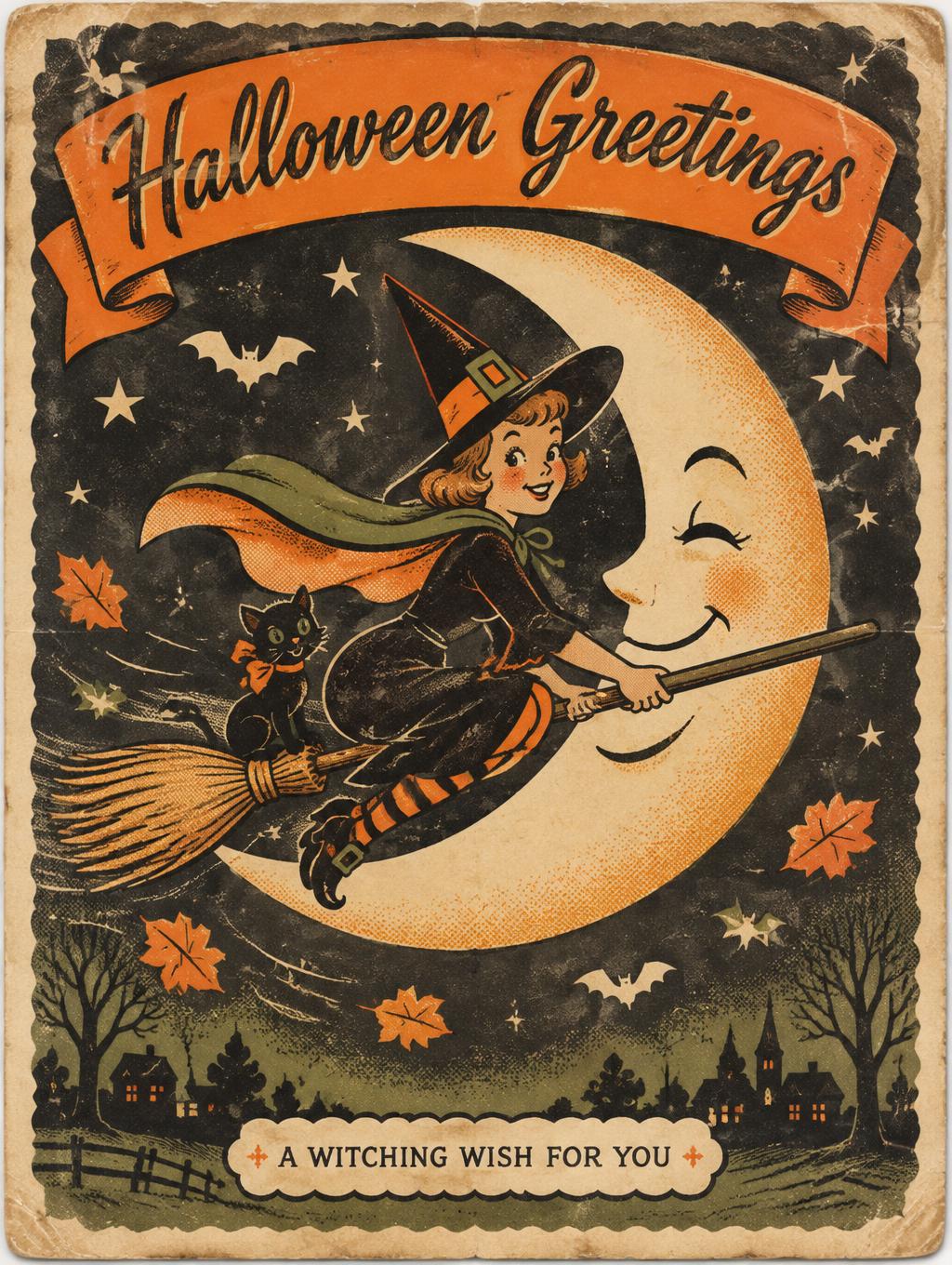
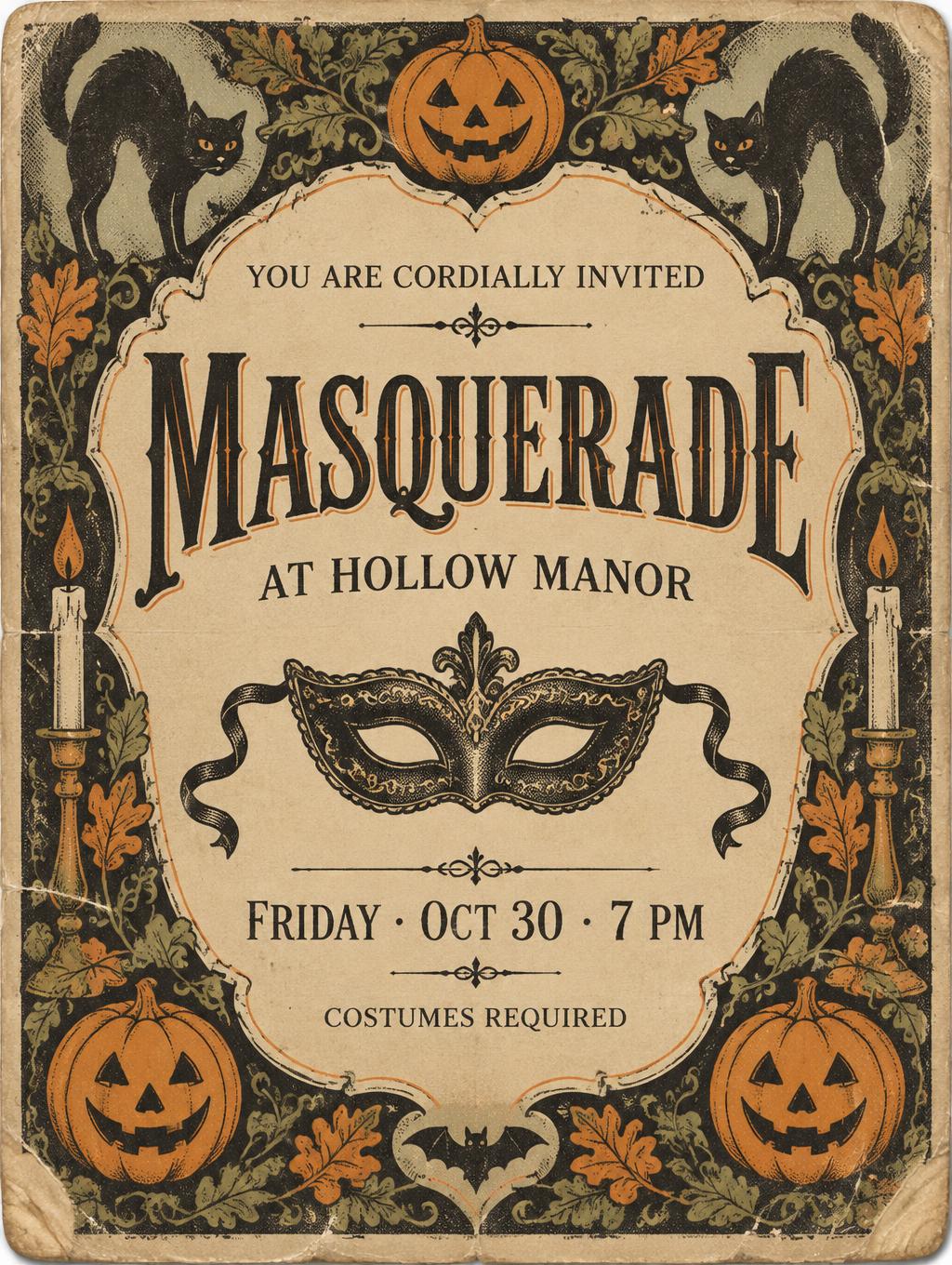
What makes it work: restraint. Fewer colors, no gloss, no 3D. The moment you add a neon glow, it stops looking old.
Use it for: Halloween cards, supper and masquerade invitations, and anything for adults who like Halloween but not horror.


4. Pink Halloween: pastel with a black accent
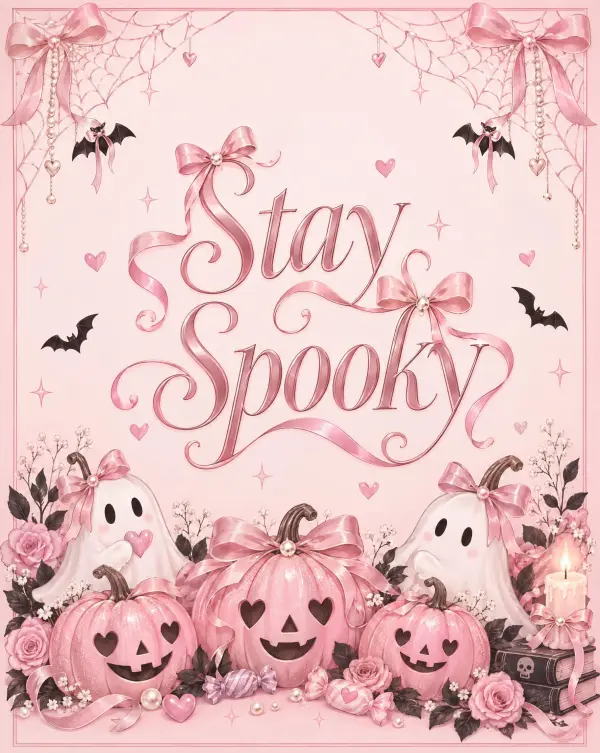
Pink Halloween replaces orange with pastel pink and keeps black only for small accents: bats, a single word, a ribbon edge. Pumpkins become glossy pink with bows on top, and ghosts get bows too.
It grew out of pastel goth, a fashion trend Know Your Meme describes as pastel-colored clothing and hair worn with goth-style pieces. The same page dates a dedicated pastel goth Tumblr blog to January 27, 2012 (Know Your Meme — Pastel Goth). The Halloween version is softer than the fashion and leans on bows and glitter more than on spikes.
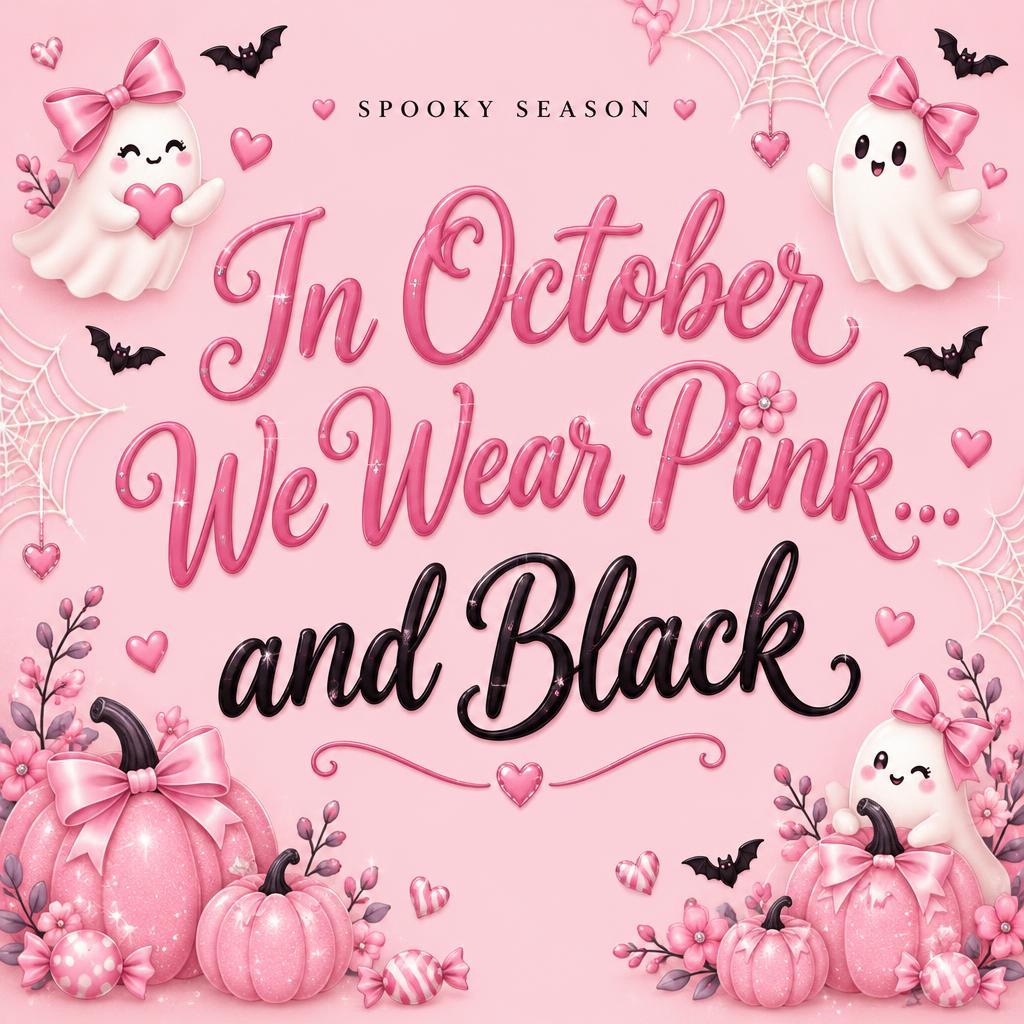
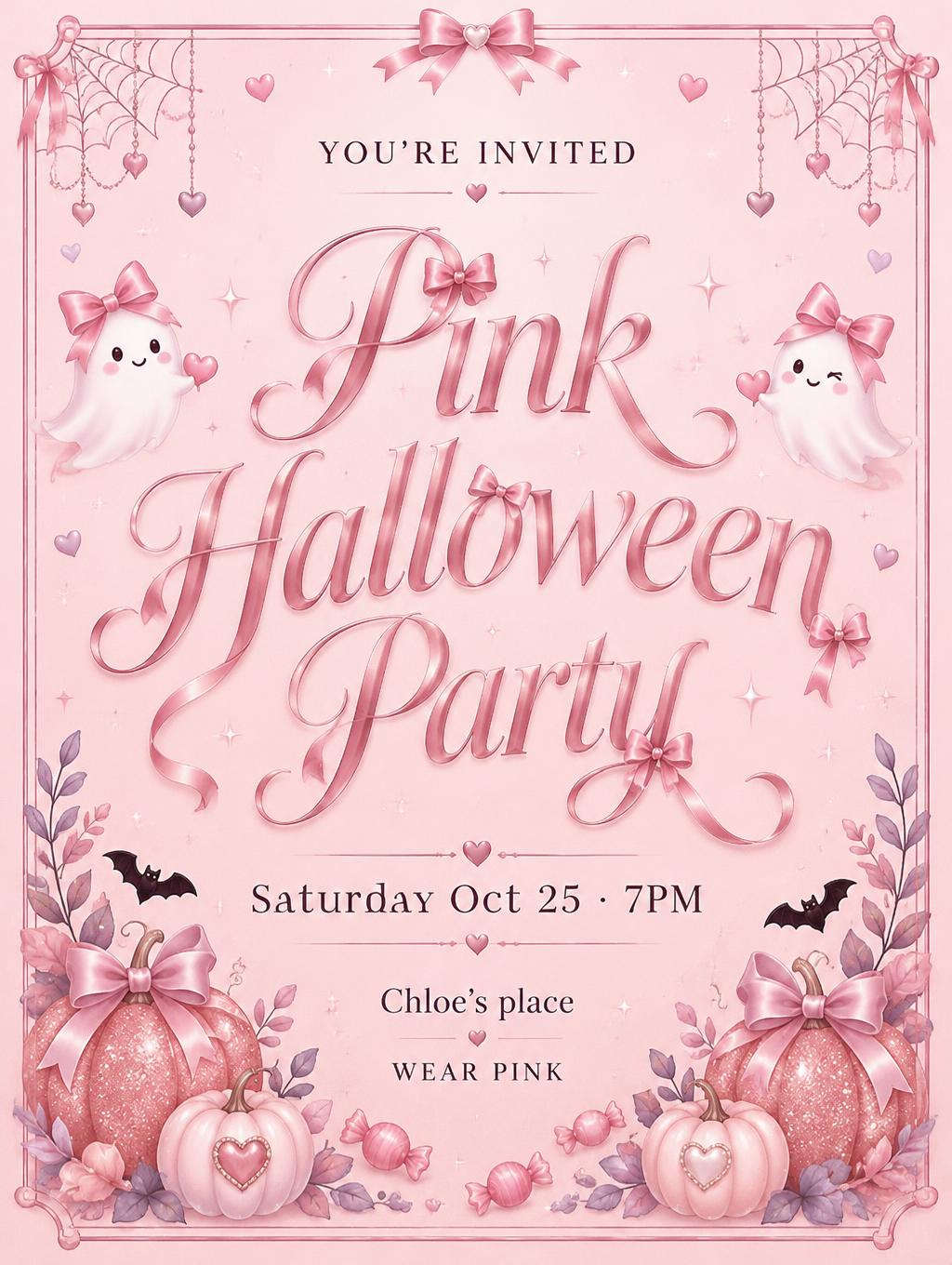
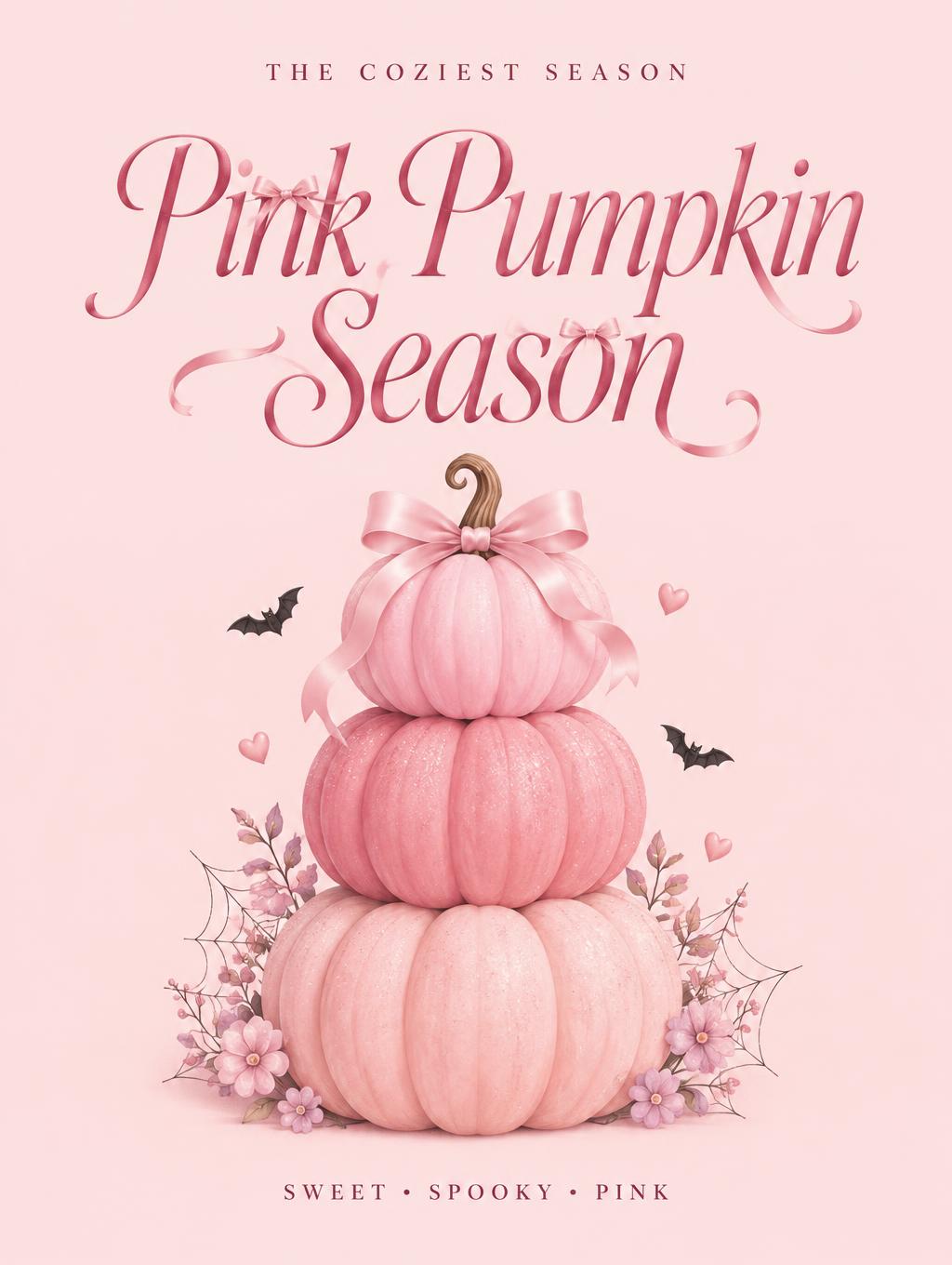
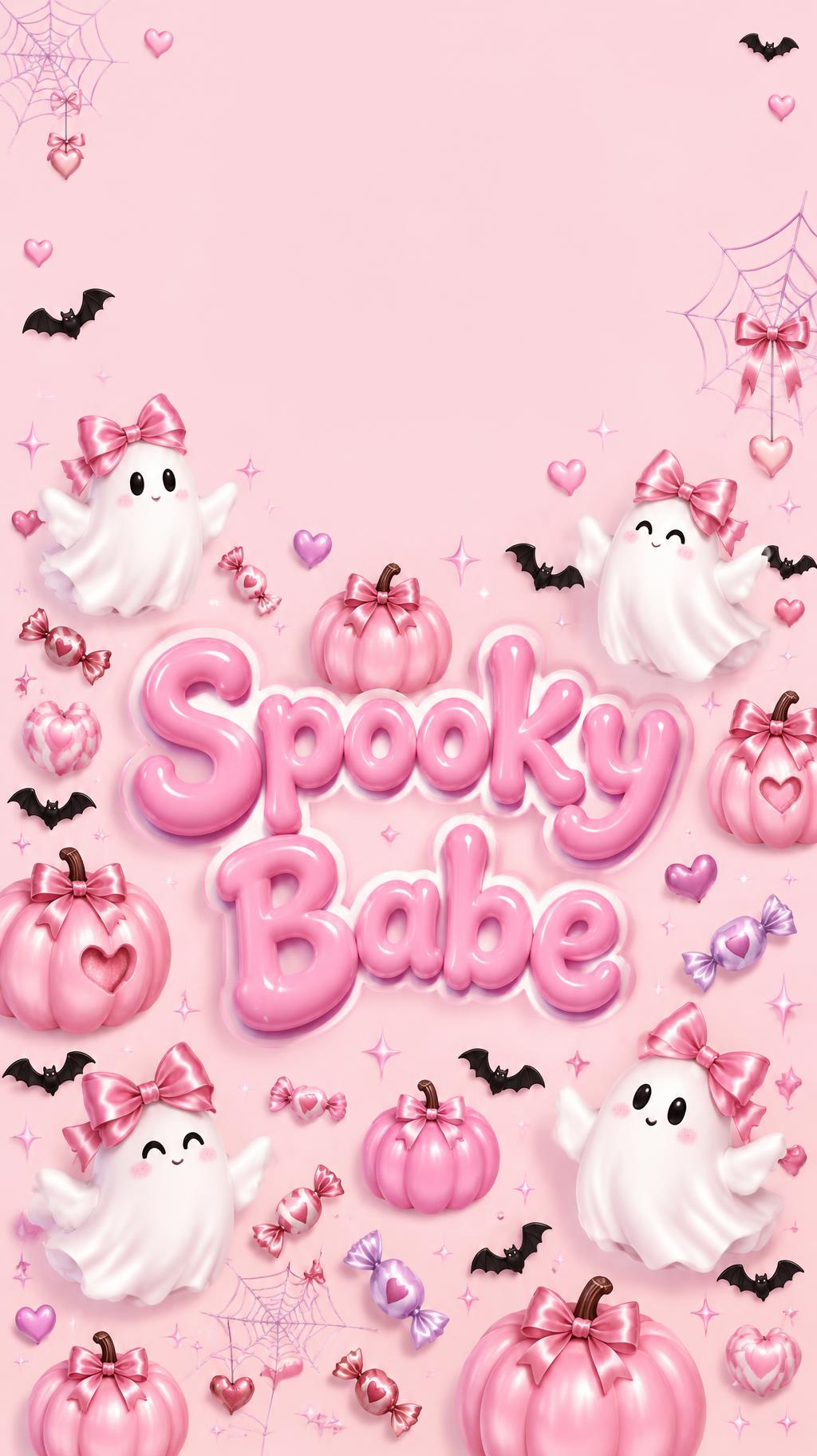
What makes it work: keeping orange out completely. One orange pumpkin turns pink Halloween into a mistake.
Use it for: sleepovers, Instagram posts and stories, and Halloween phone wallpapers.


If you want it to be scary
None of the four looks above is frightening, and that is on purpose. Most Halloween designs go to guests, kids and neighbors. If you do want real horror, for a haunted house, a horror stream or a film night, drop the scenery and let the lettering do it: dripping blood, melting wax, blackletter with rough edges.


More of these are on the spooky font generator page.


How to pick one
Start from who will see it, not from what you like:
- Young kids or a school: cute.
- Adults, costume party, haunted attraction: spooky.
- Adults who don't want gore, or a family card: vintage.
- Friends your own age, social media, your own phone: pink.
Then choose the lettering before anything else, and keep the second palette out. If a design feels muddy, the fix is almost always to delete the elements that belong to a different look, not to add more.
Making one yourself
Every example above started as a few words typed into FontVibe. Open one of the four Halloween aesthetic style pages, type your own text (a name, a date, a party title) and it comes back in that look. The Halloween design hub has a page for each kind of design, from invitations to pumpkin carving stencils.
You get 20 free credits without an account and 200 a month once you sign up, and commercial use is allowed on every plan. Transparent PNGs for stickers and clipart are on paid plans. FontVibe makes images, not installable font files.
Frequently asked questions
What is the Halloween aesthetic?
It is the look people reach for when they make anything for Halloween, and it comes in a few distinct versions rather than one. The four most common are spooky (purple night, full moon, carved pumpkins), cute (cream backgrounds and smiling ghosts), vintage (aged paper and orange-and-black print) and pink (pastel pink with black accents).
What colors go with a Halloween aesthetic?
Black, orange and sometimes purple are the traditional Halloween colors. Cute designs soften them with cream and pastel purple, vintage designs mute them to burnt orange on aged paper, and pink Halloween swaps orange for pastel pink and keeps black as the accent.
Which Halloween aesthetic works best for kids?
The cute look. Round letters, cream backgrounds and friendly faces read well at a glance and do not scare younger children. It also prints cleanly, which matters for class party invitations, stickers and coloring sheets.
Can I make a Halloween aesthetic wallpaper for free?
Yes. On FontVibe you can make a phone or desktop wallpaper in any of these four looks with free credits, 20 without an account and 200 a month once you sign up. Commercial use is allowed on every plan, including the free one.
Ready to try it yourself?
Put these prompt techniques into practice — no account needed to start.
✦ Start GeneratingAdd FontVibe as a preferred source on Google
Put these prompt techniques into practice — no account needed to start.
Start creating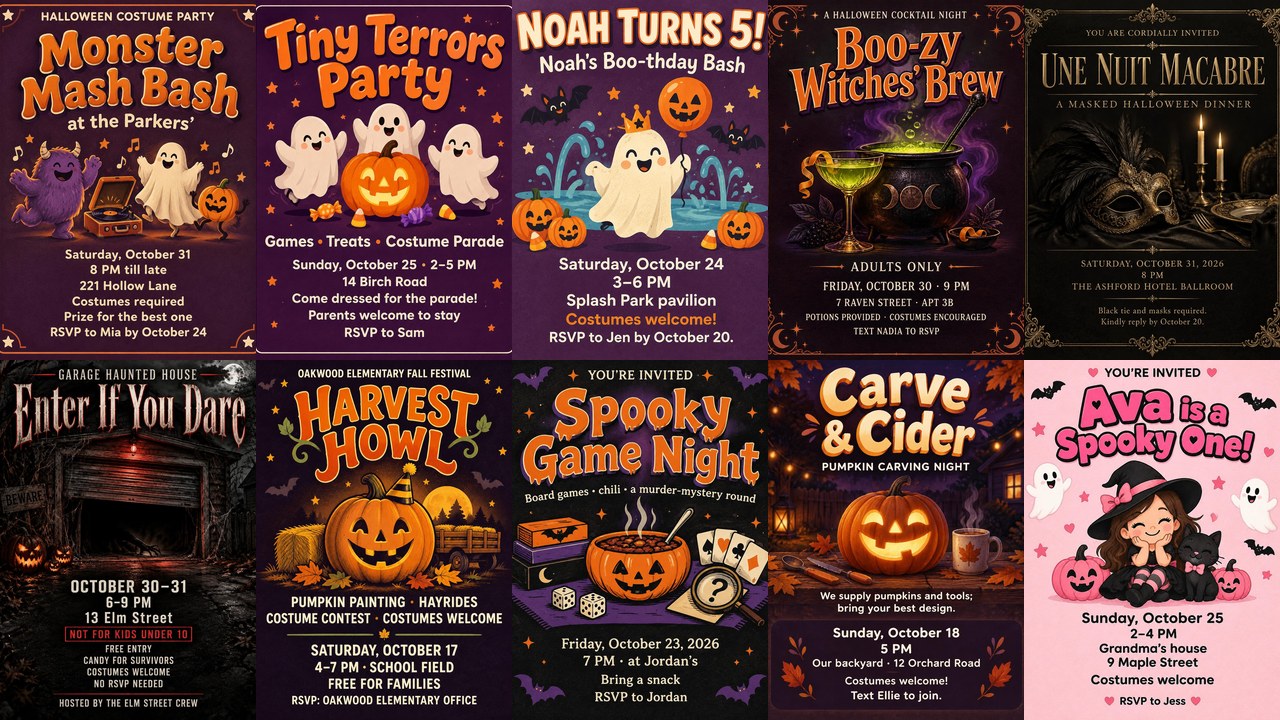

Comments