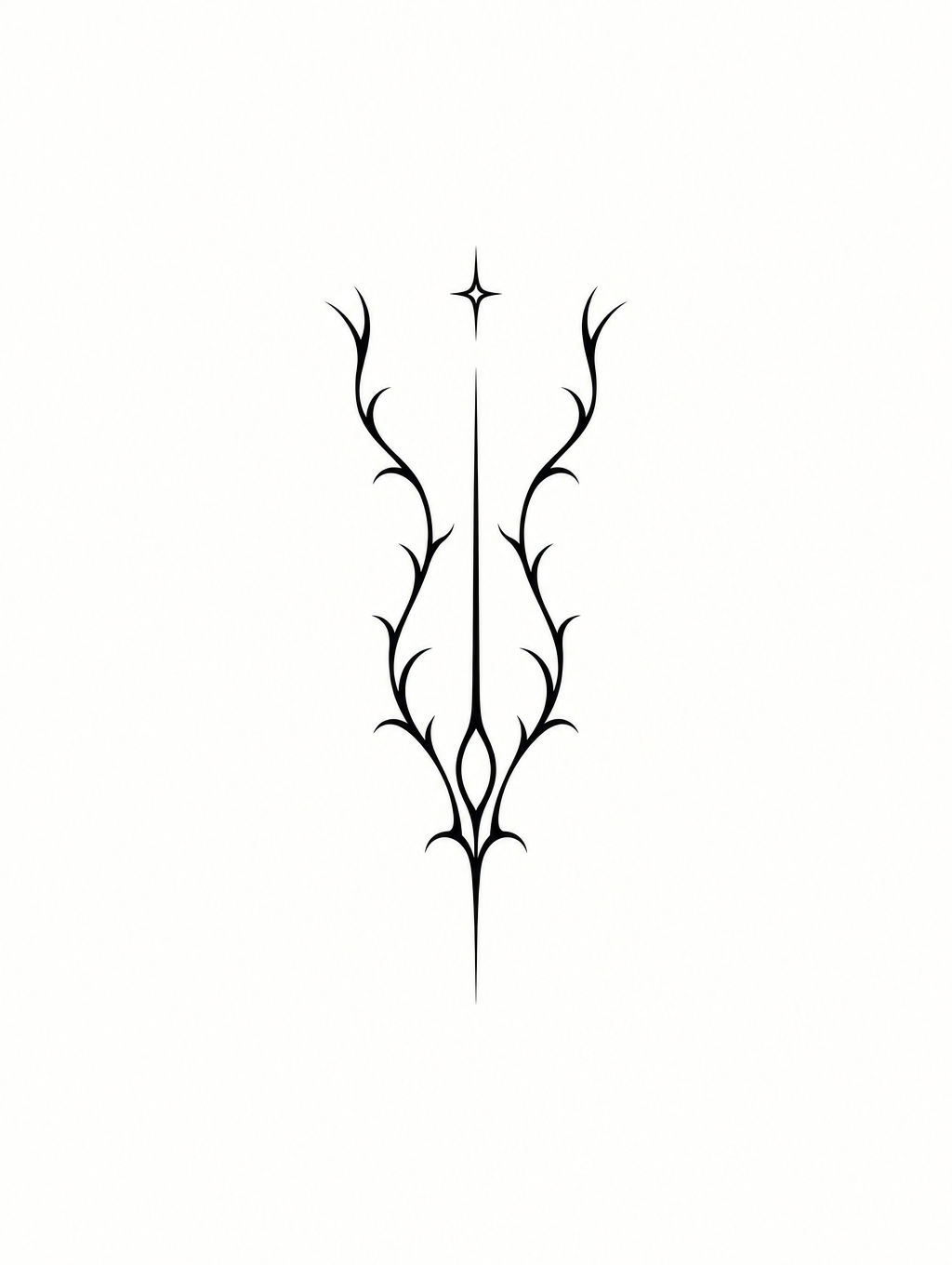
The cybersigilism aesthetic: thorns, symmetry, monochrome and chrome
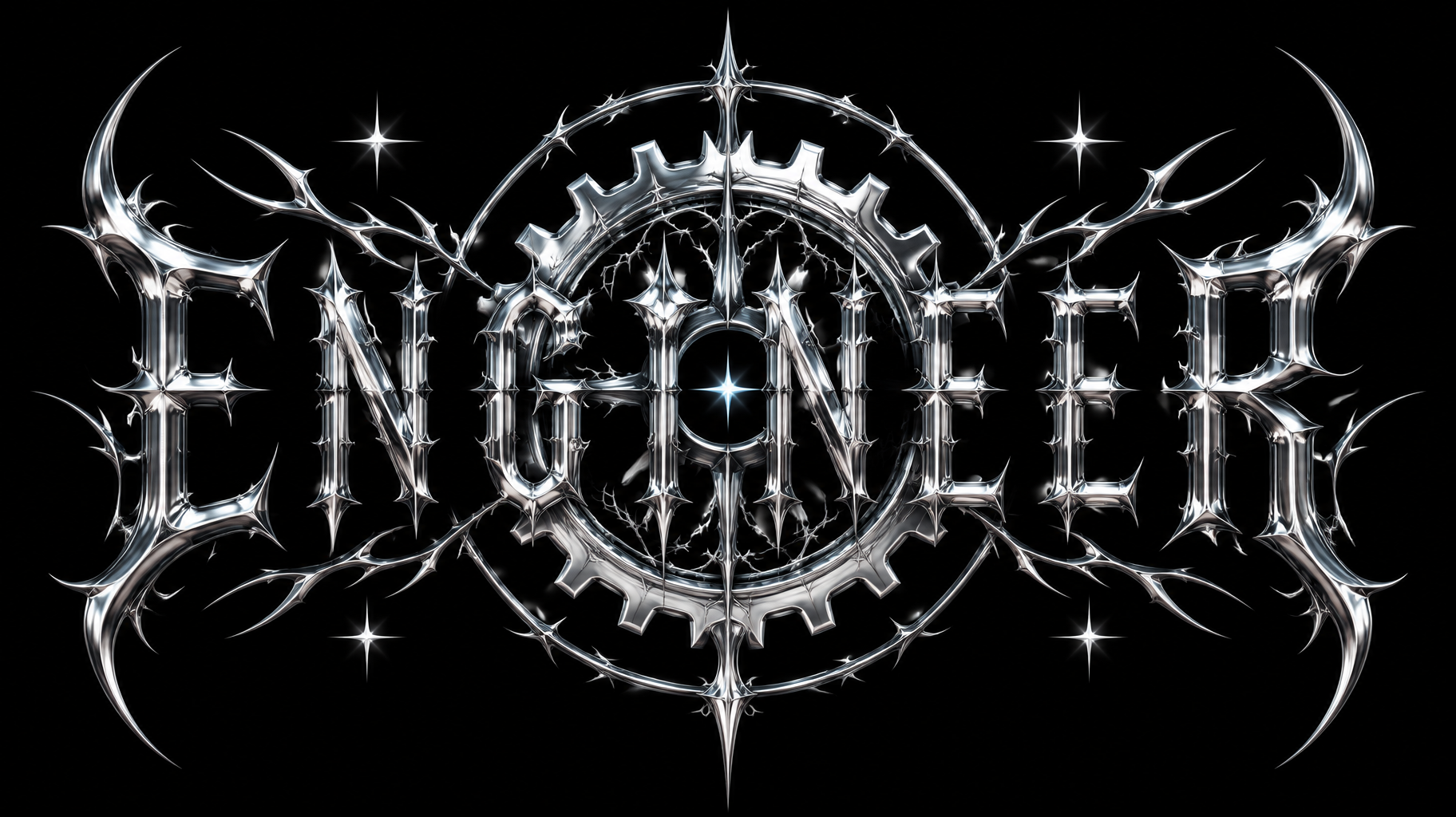
Every cybersigilism piece here is built from the same four parts. The style draws the thorns, the symmetry, the tones and the finish of the whole picture; the letters come from the AI font you pick.
Cybersigilism posters, album covers, merch prints, wallpapers and PFPs
Every format here puts your name or title on the centre line of a mirrored thorn emblem, in black ink or liquid chrome. Pick a format to see designs made in it, or describe your own.
Cybersigilism Album Covers
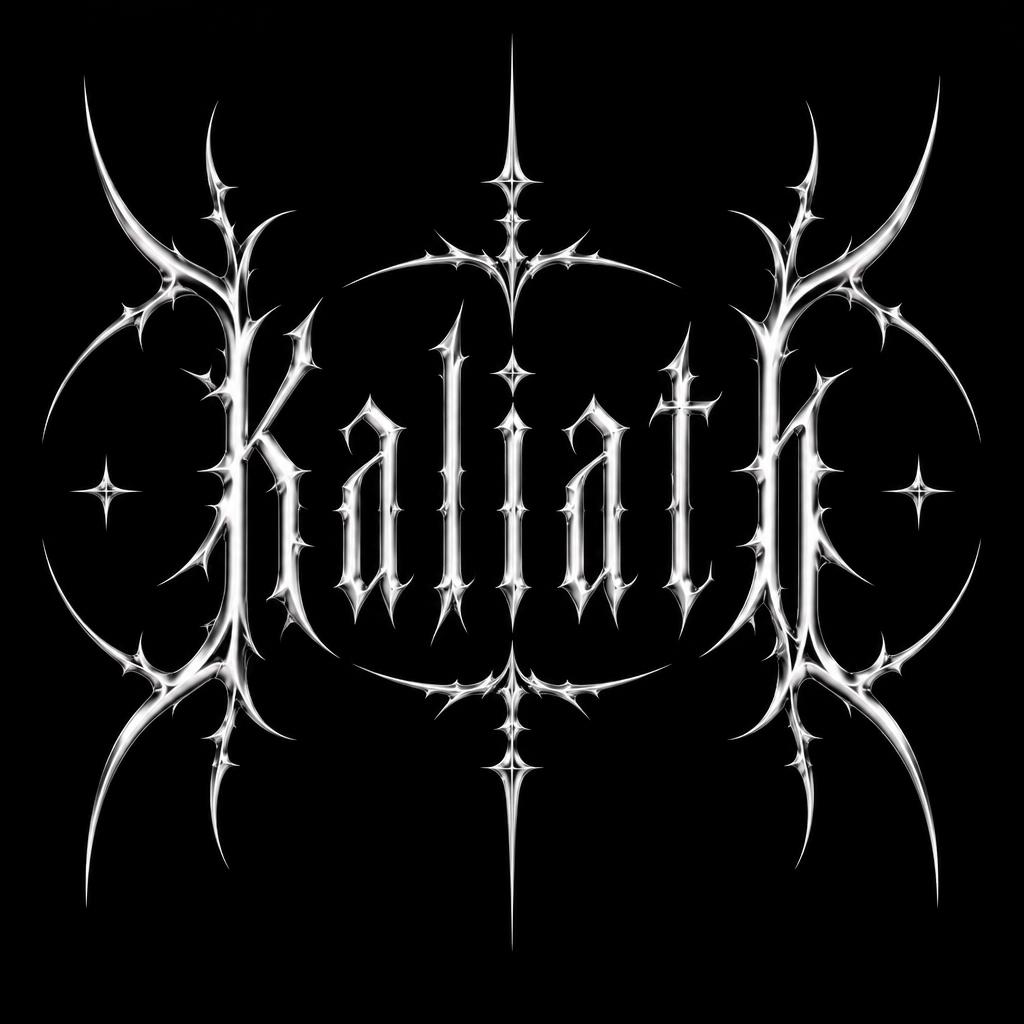
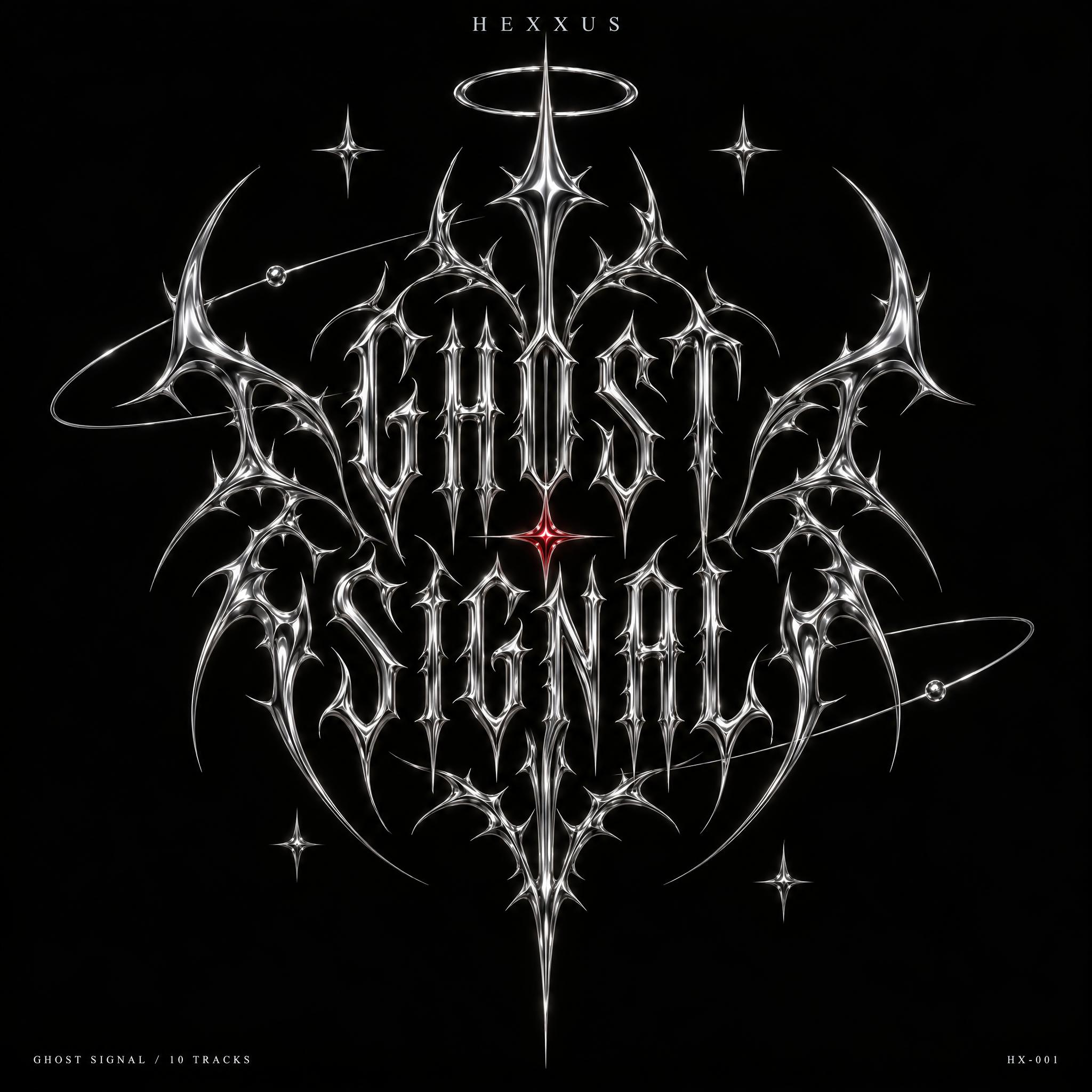
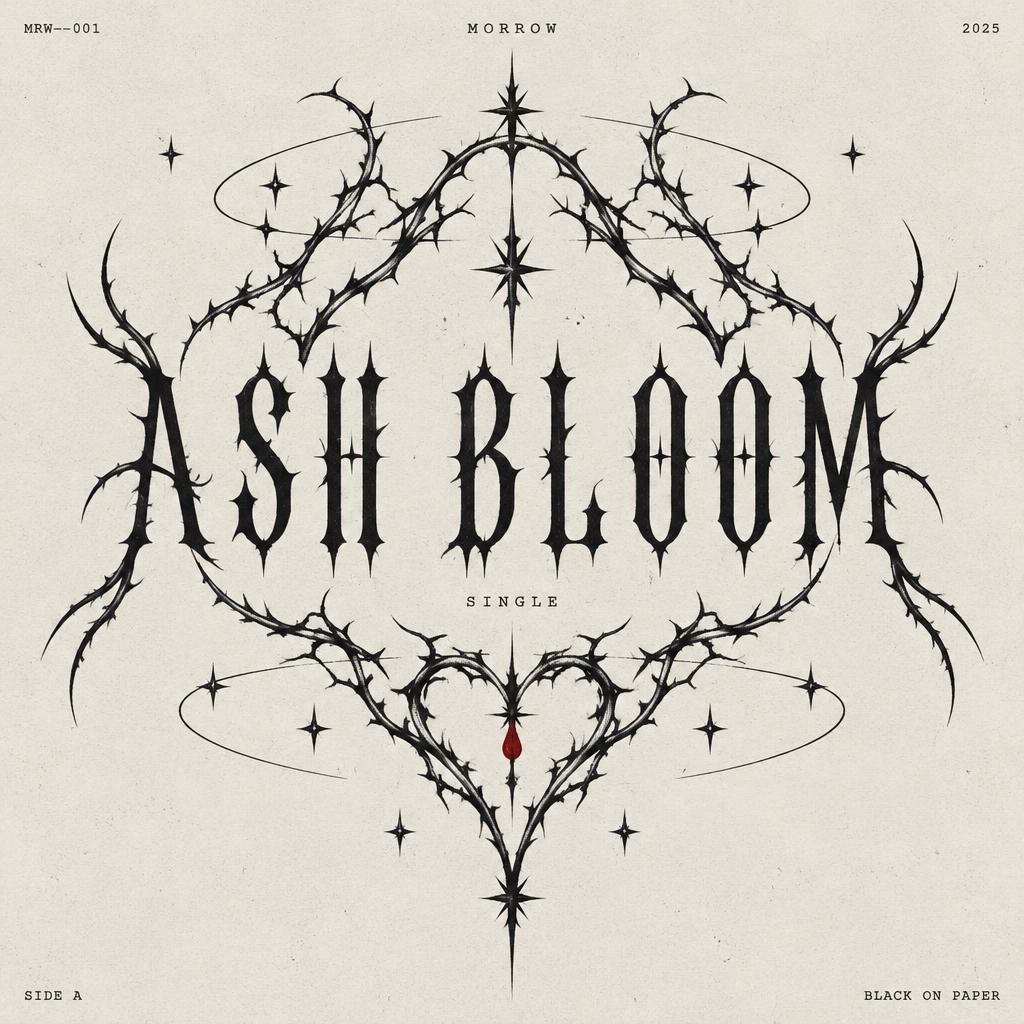
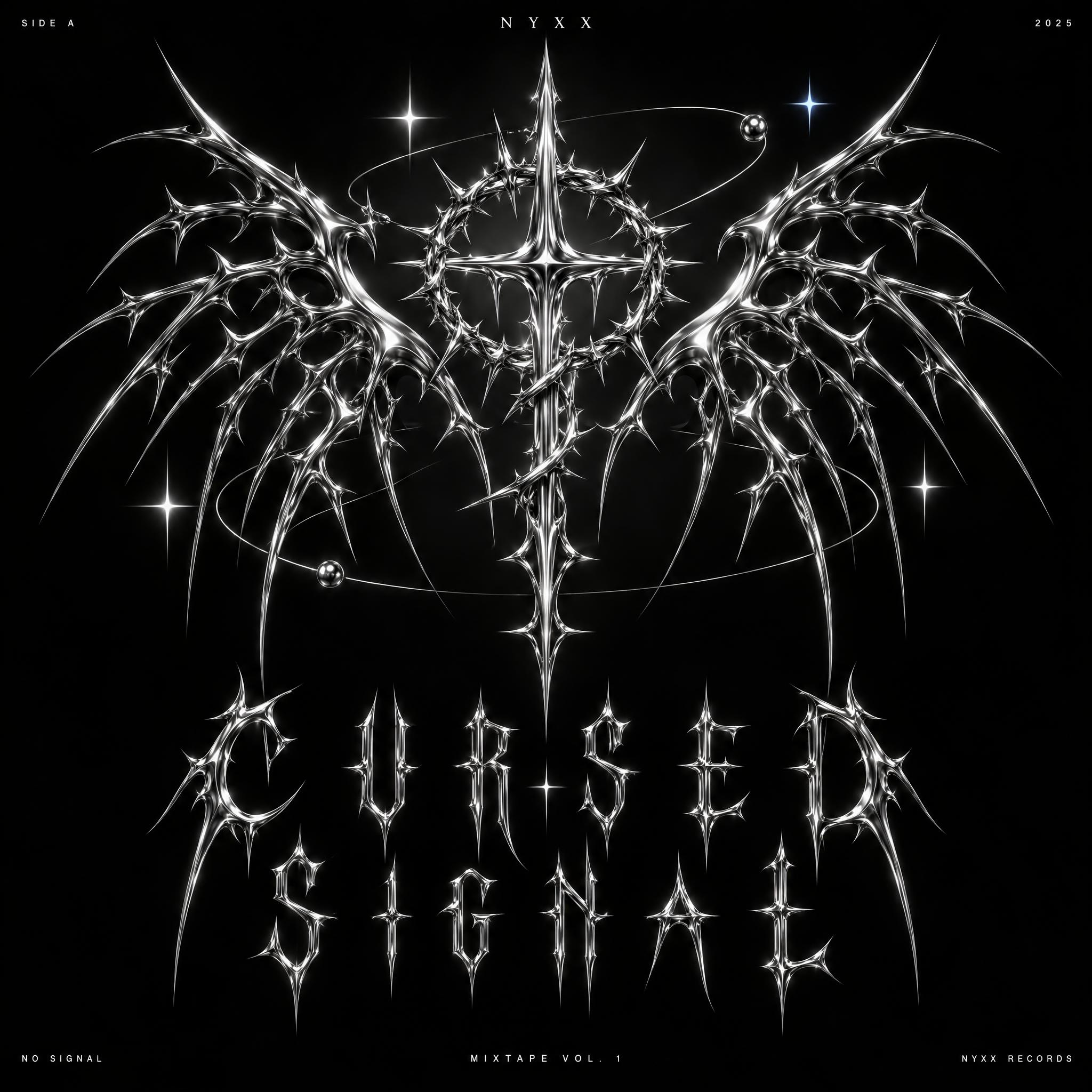
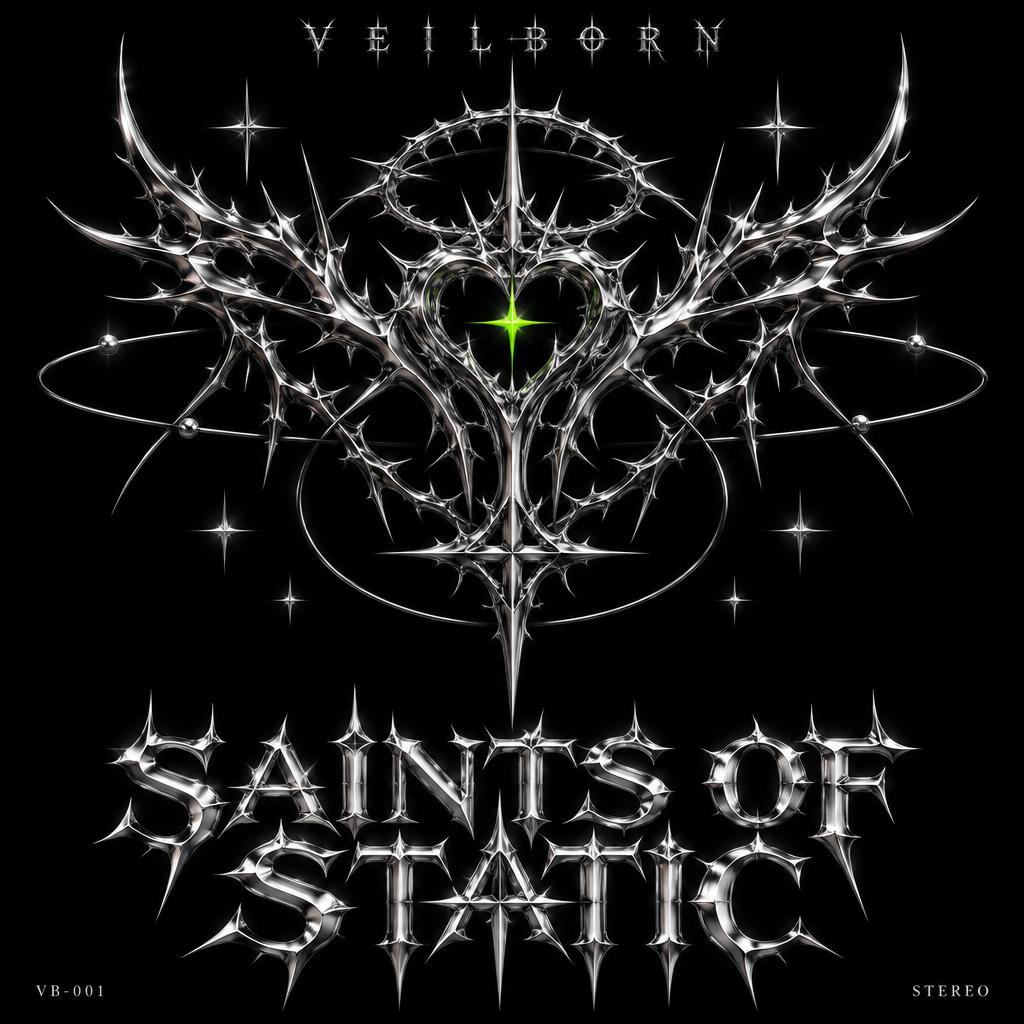
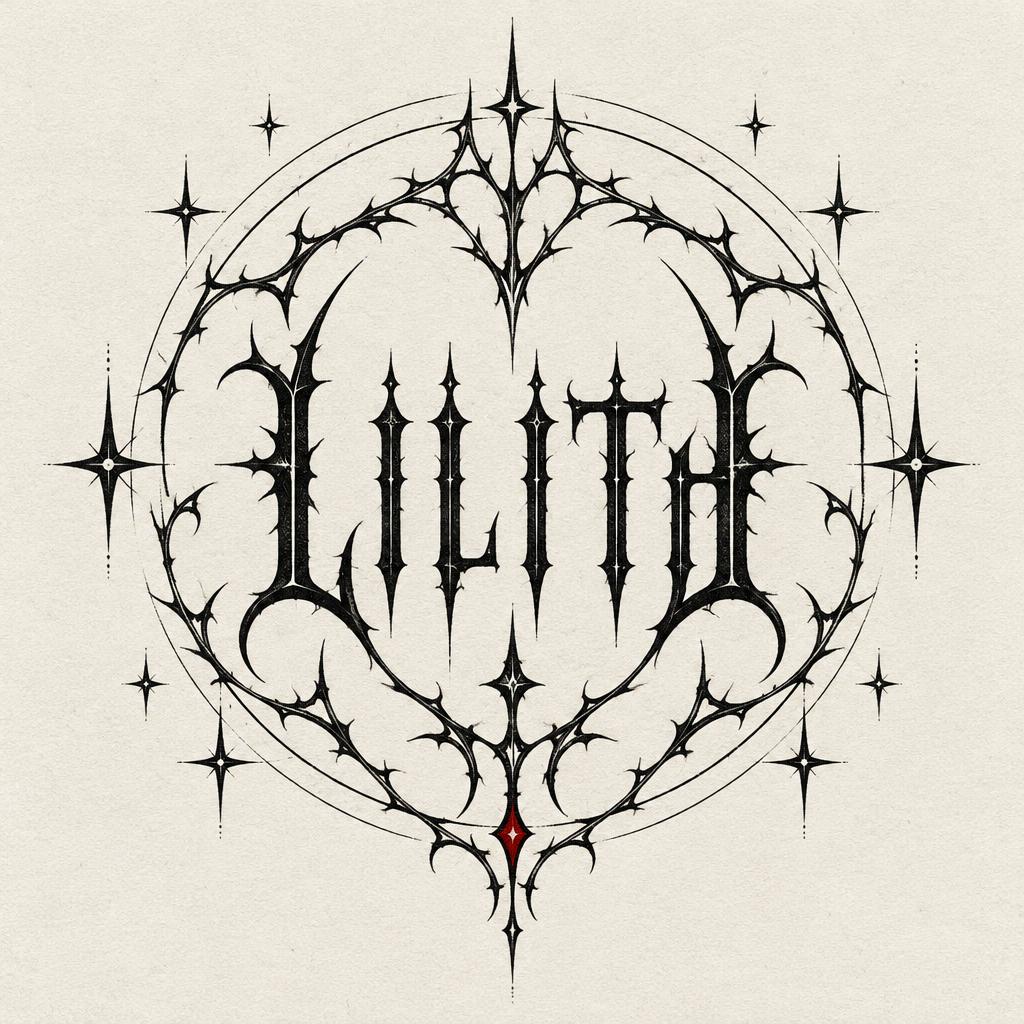
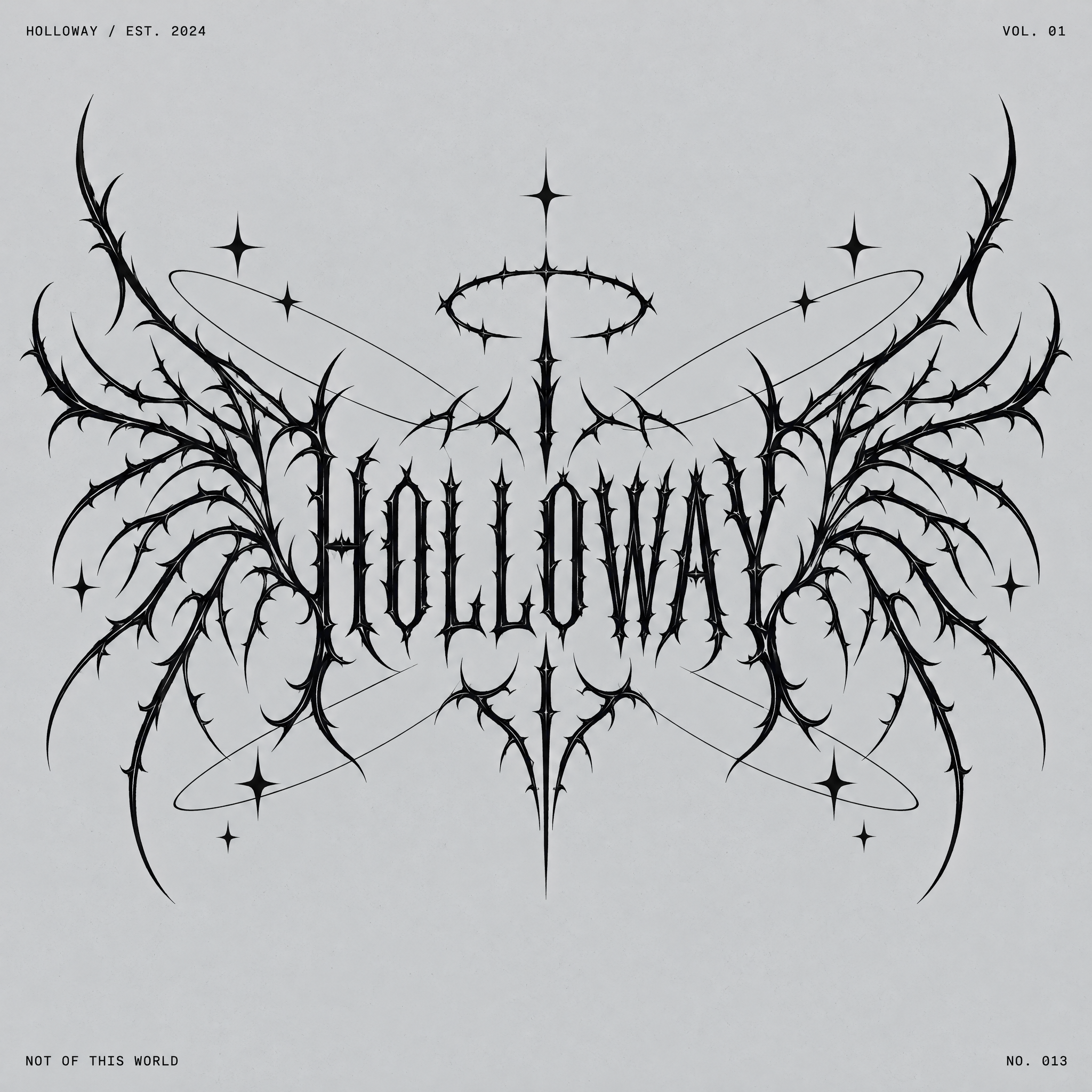
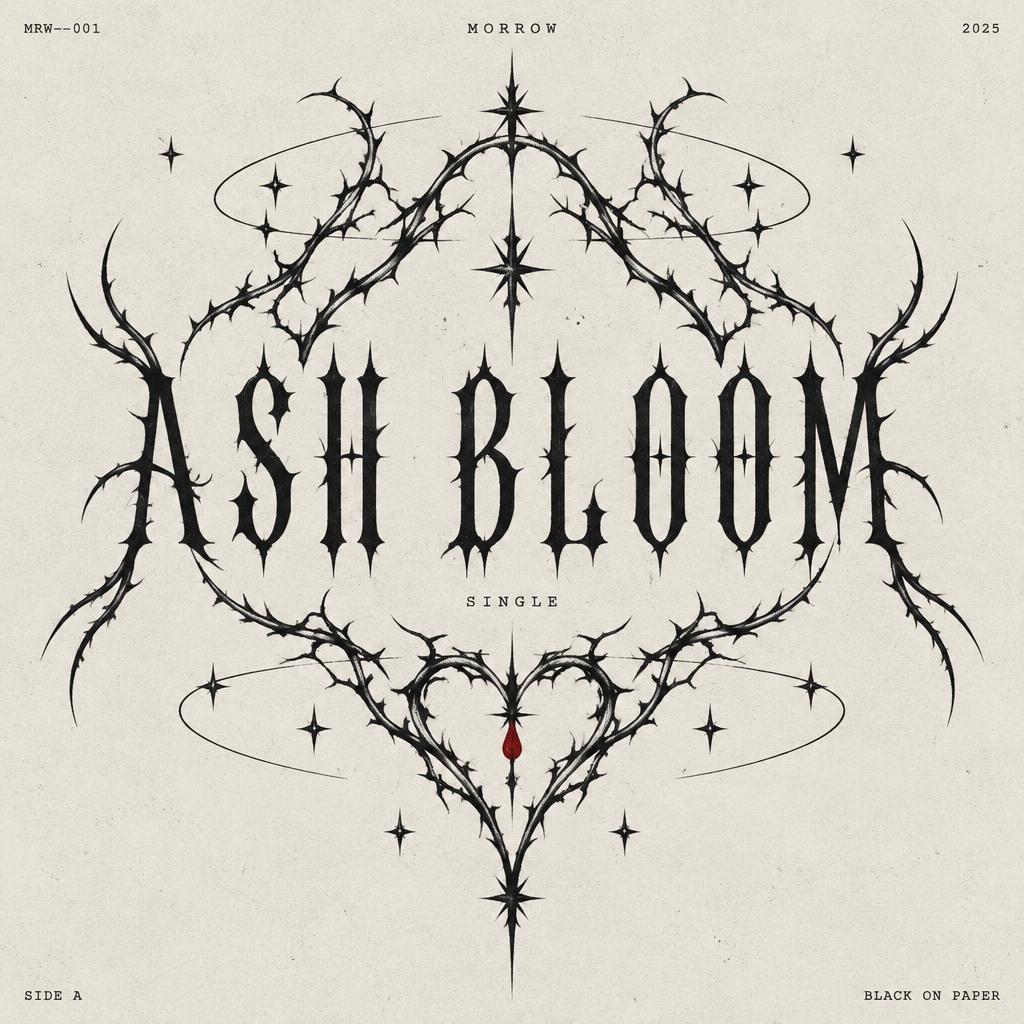
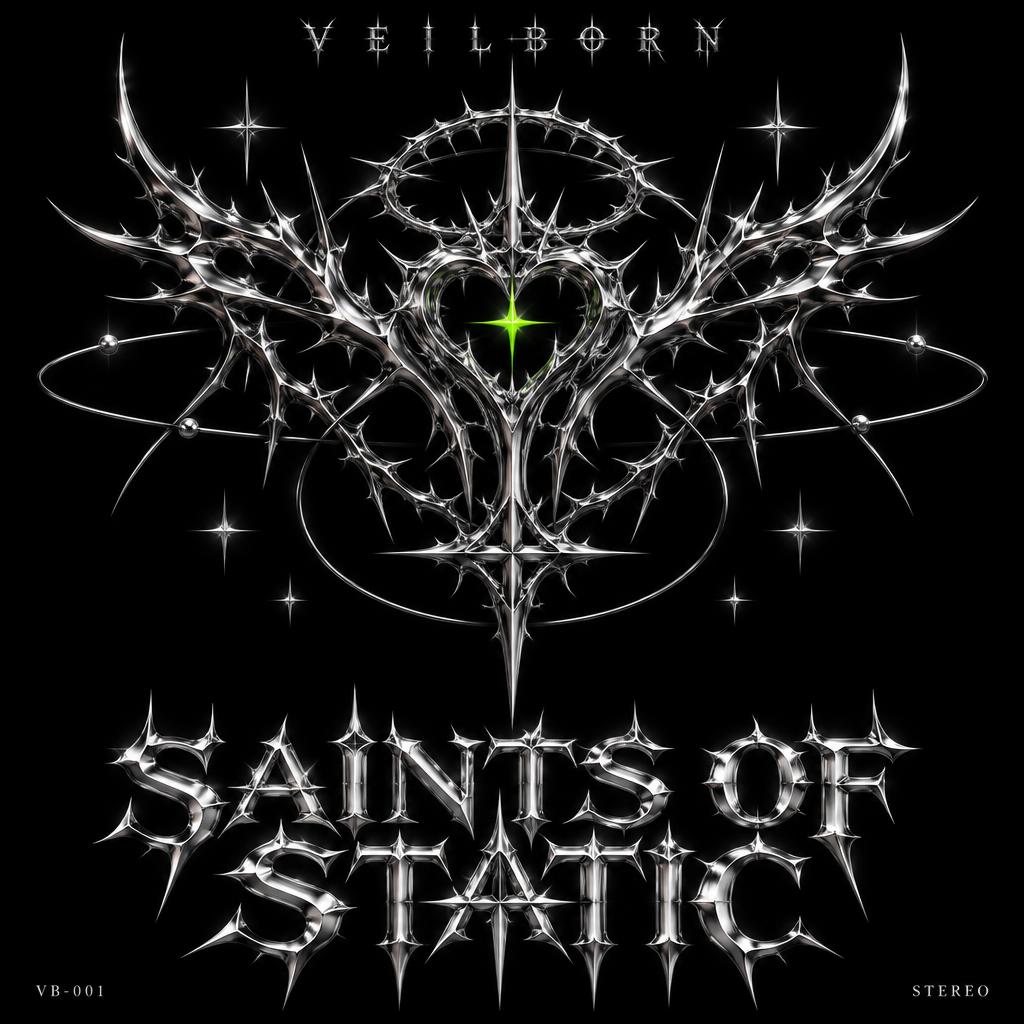
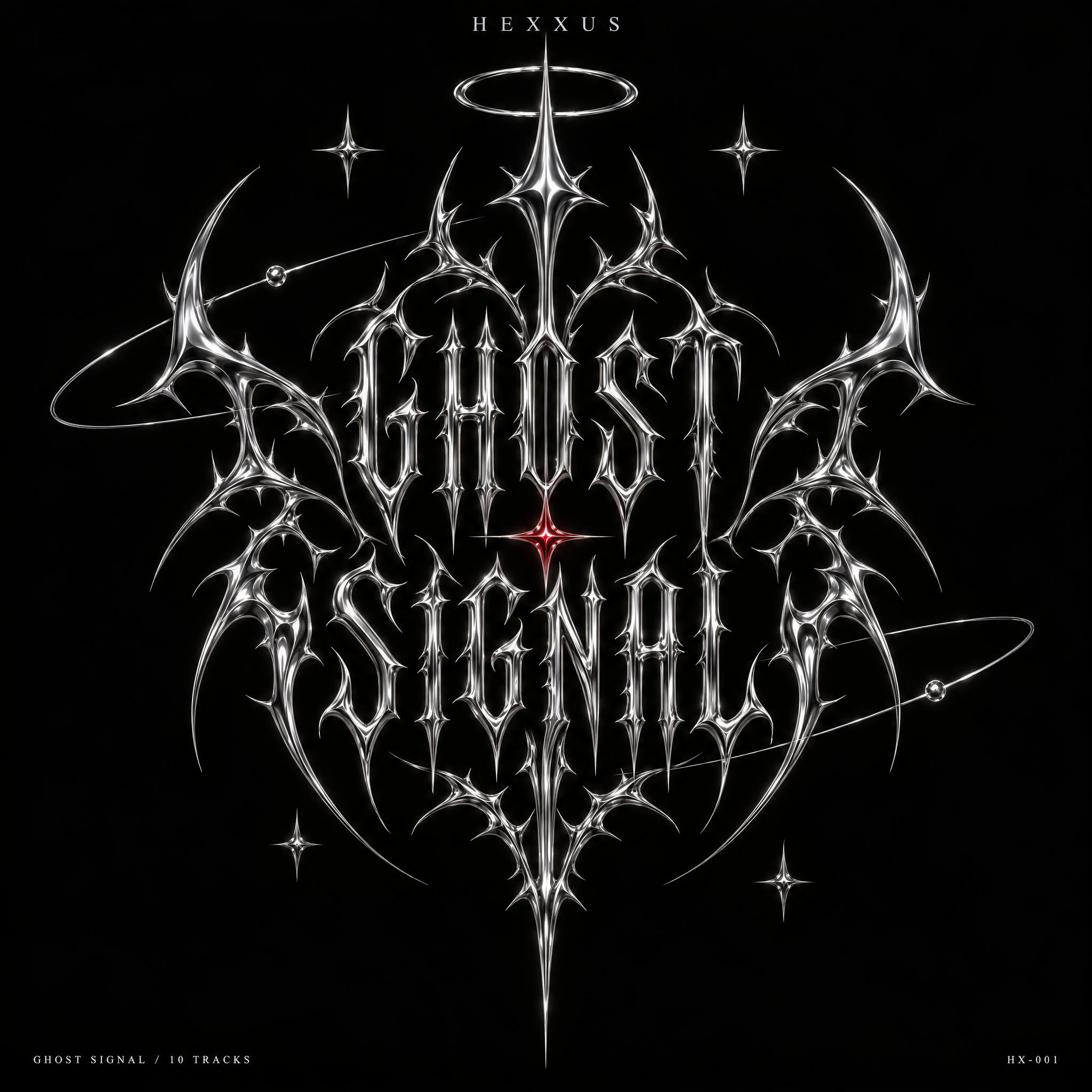
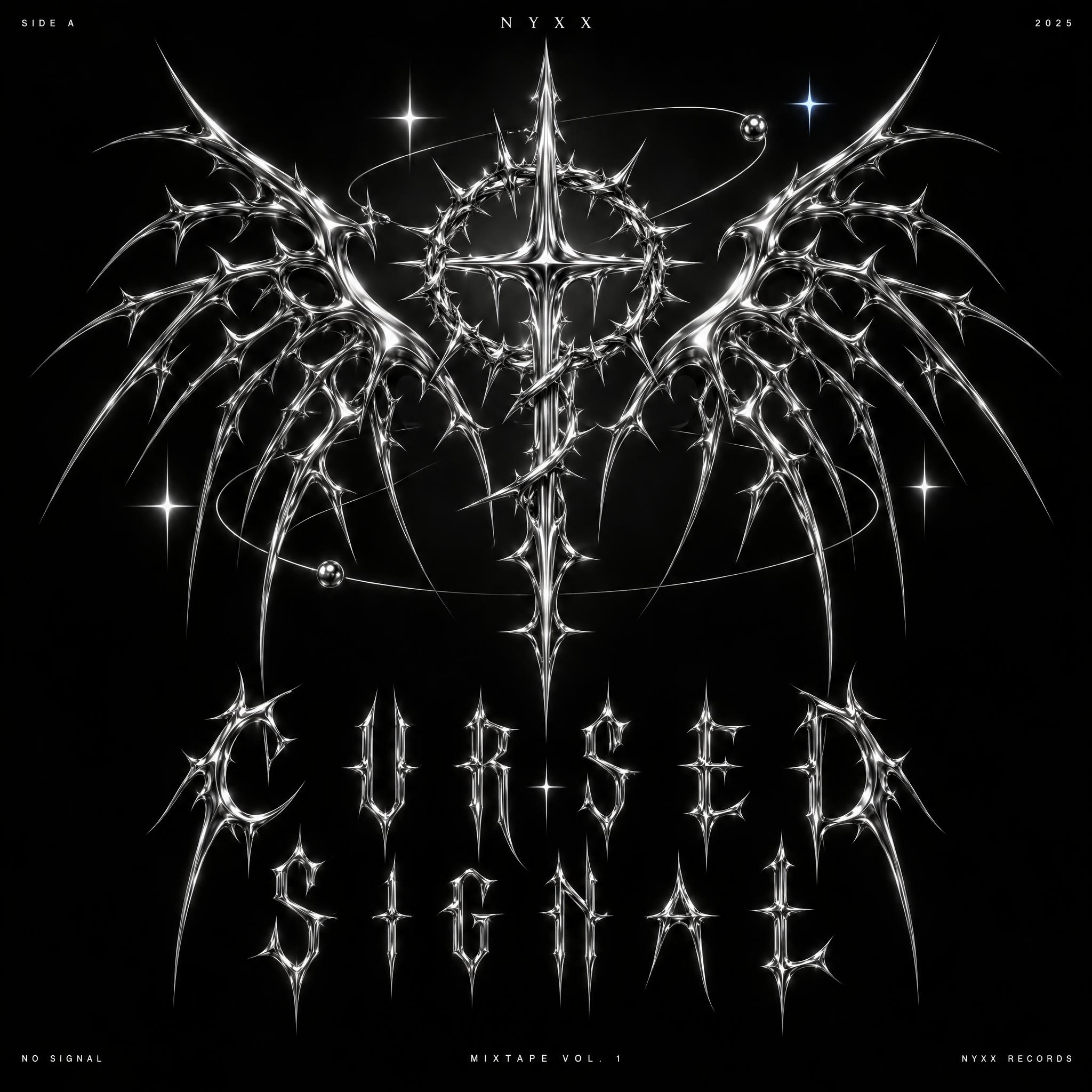
Square album, single and mixtape covers with a symmetrical thorn sigil behind the artist name, in black ink or liquid chrome.
Cybersigilism Shirt & Hoodie Prints
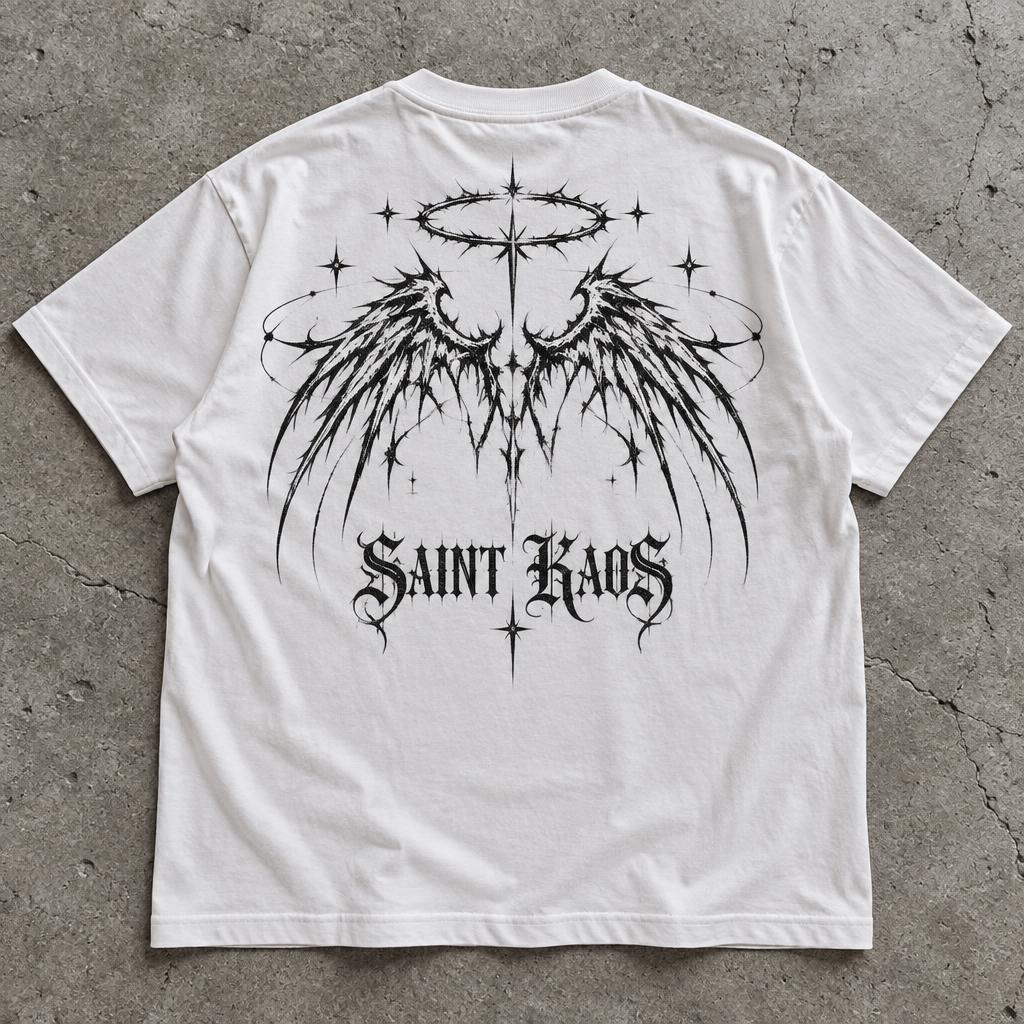
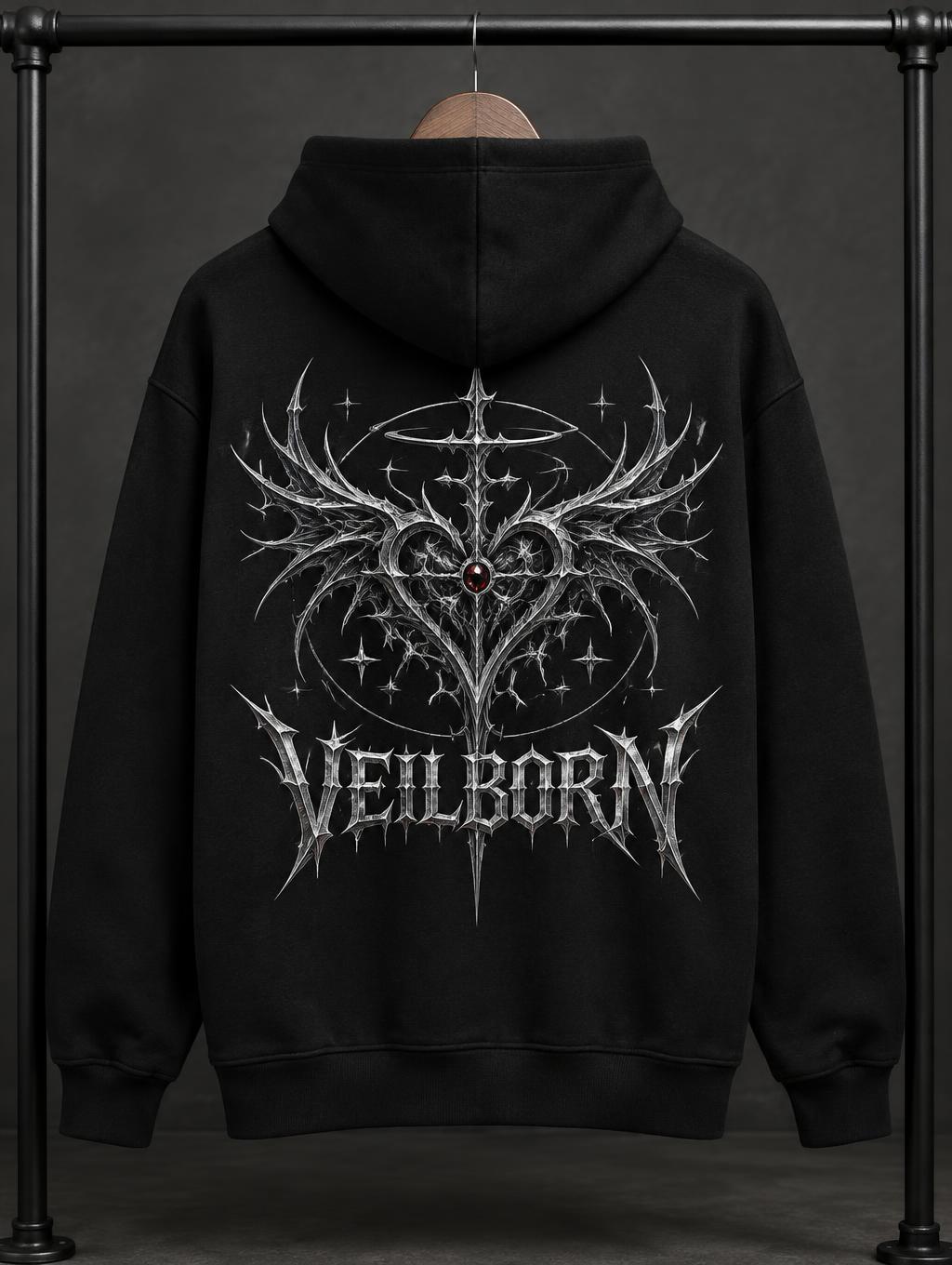
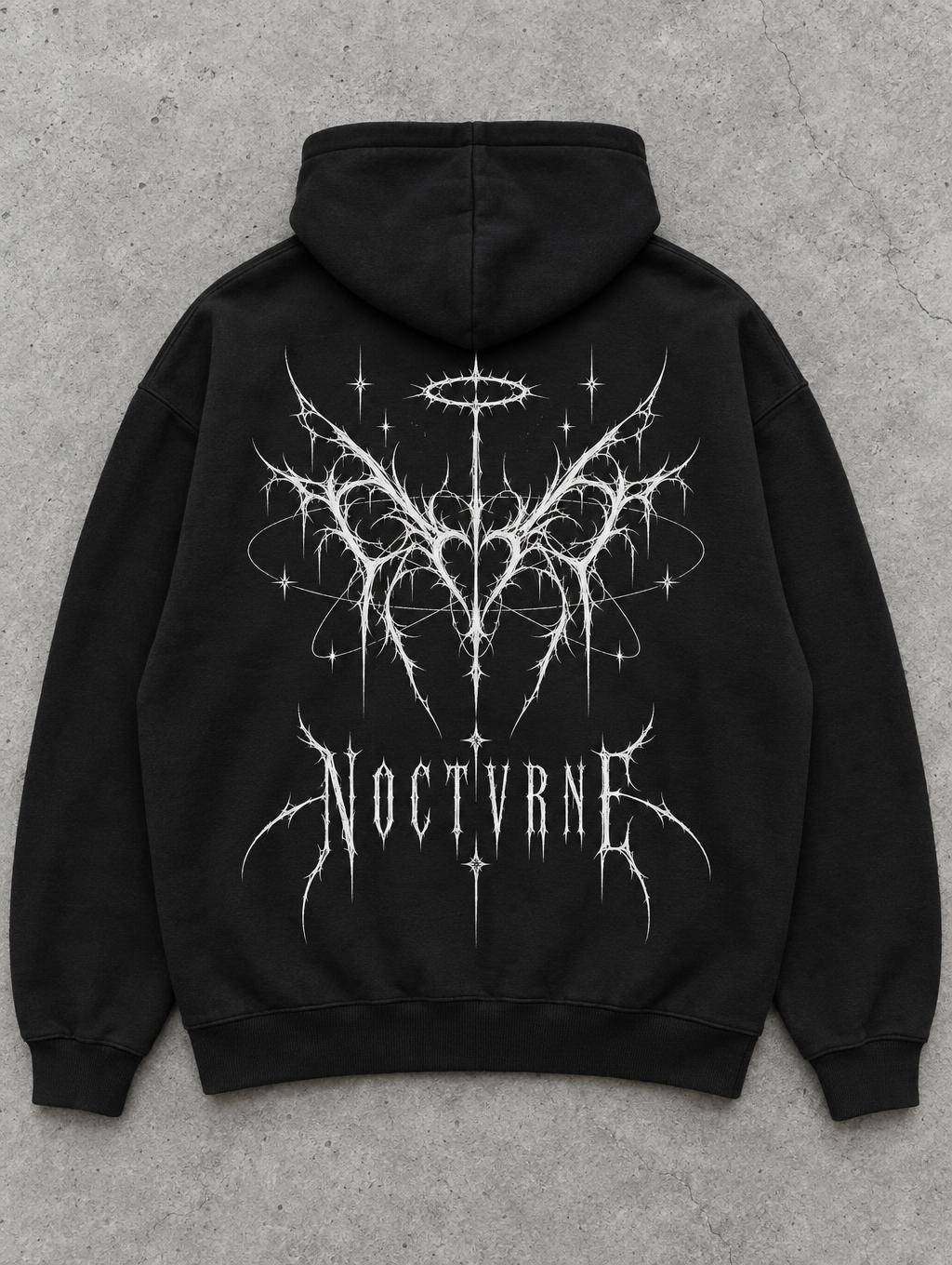
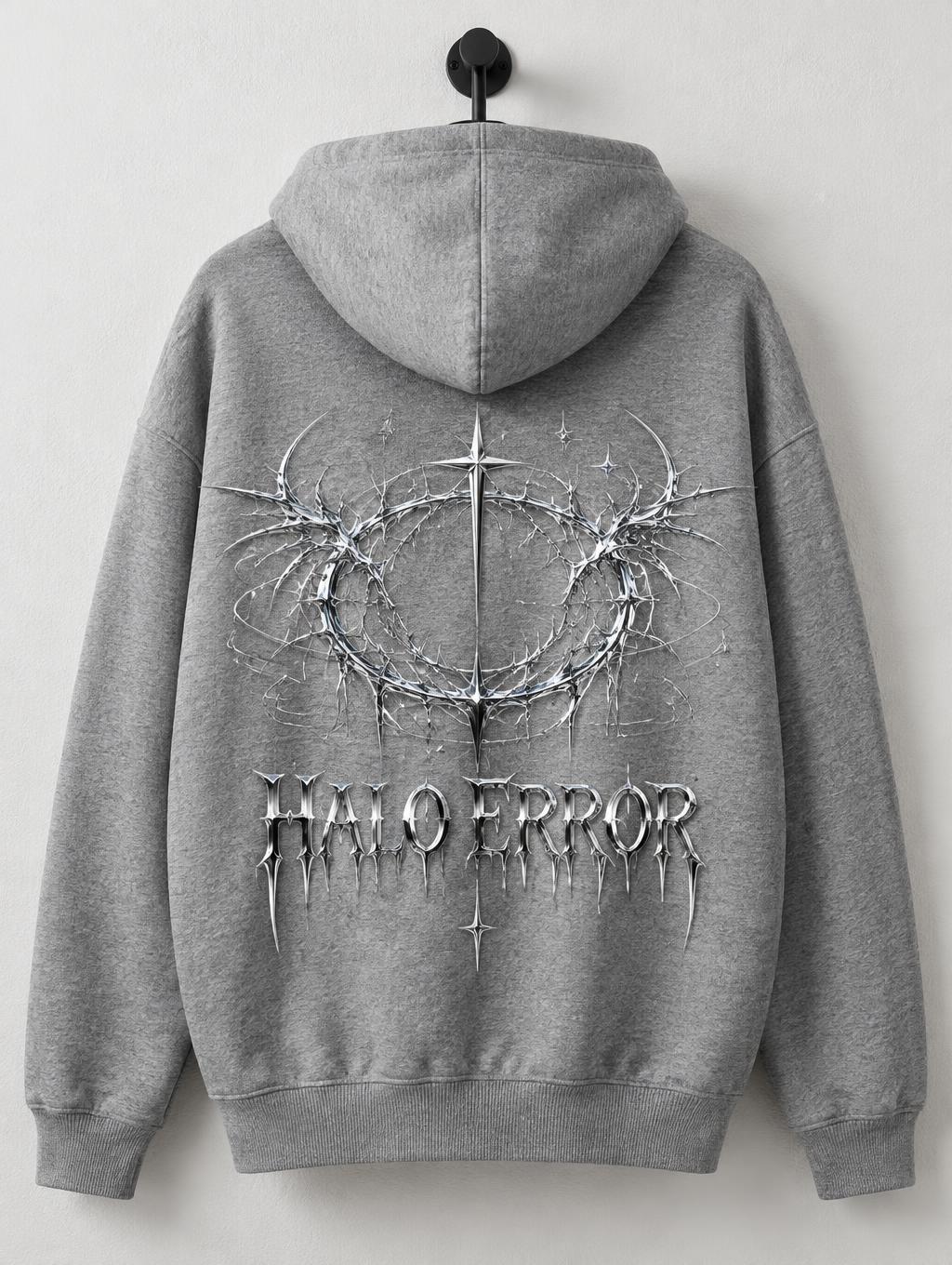
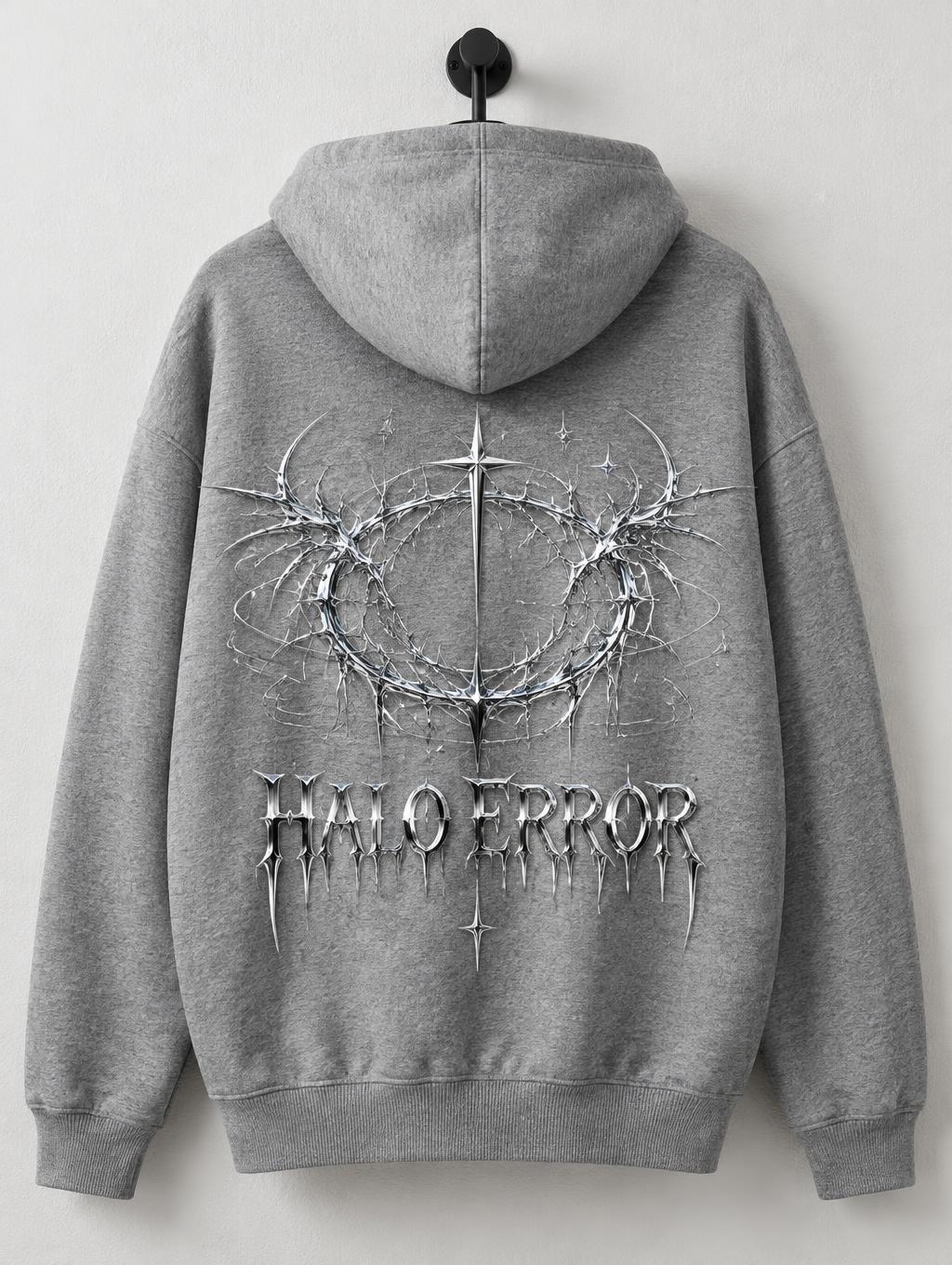
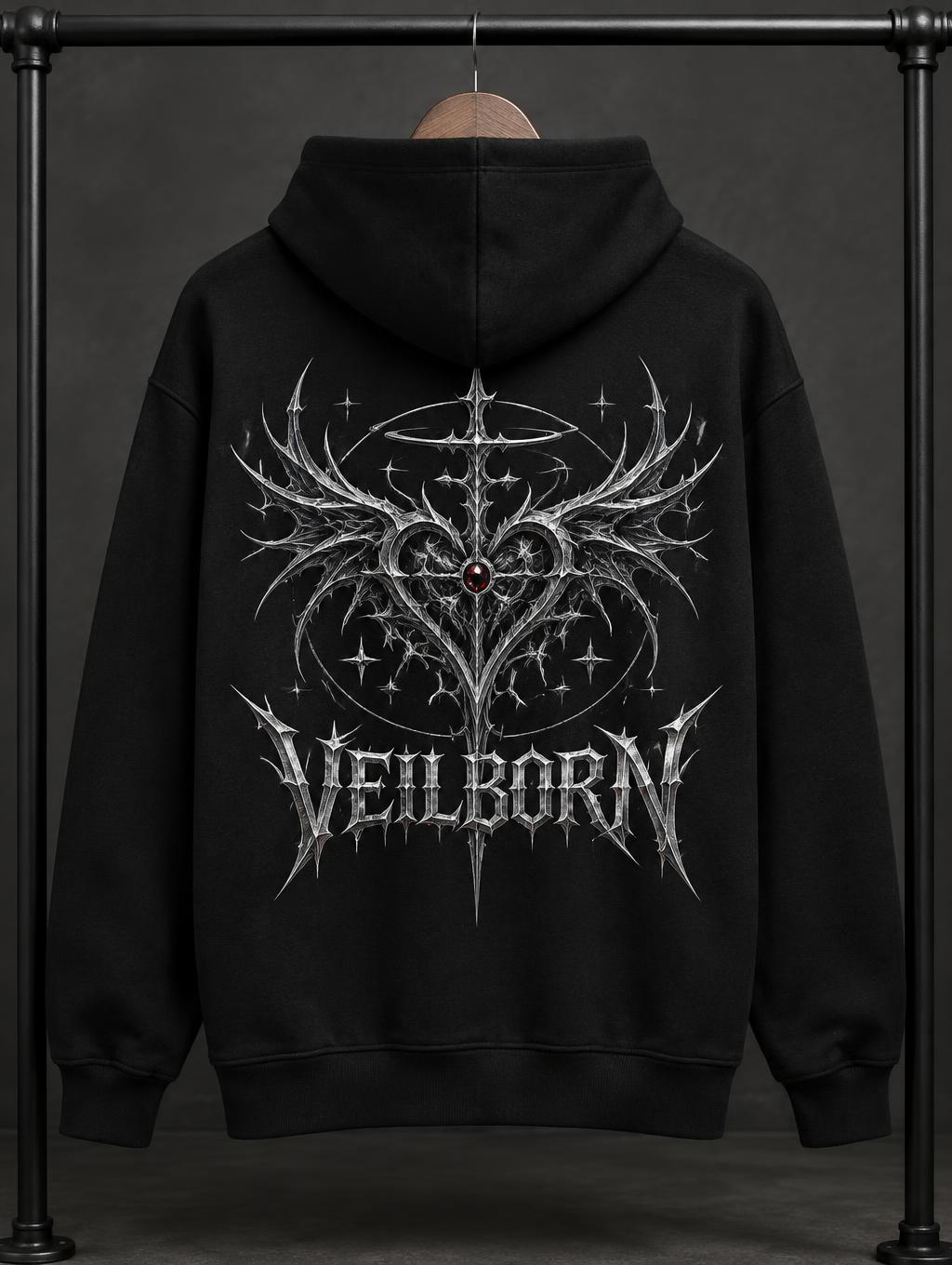
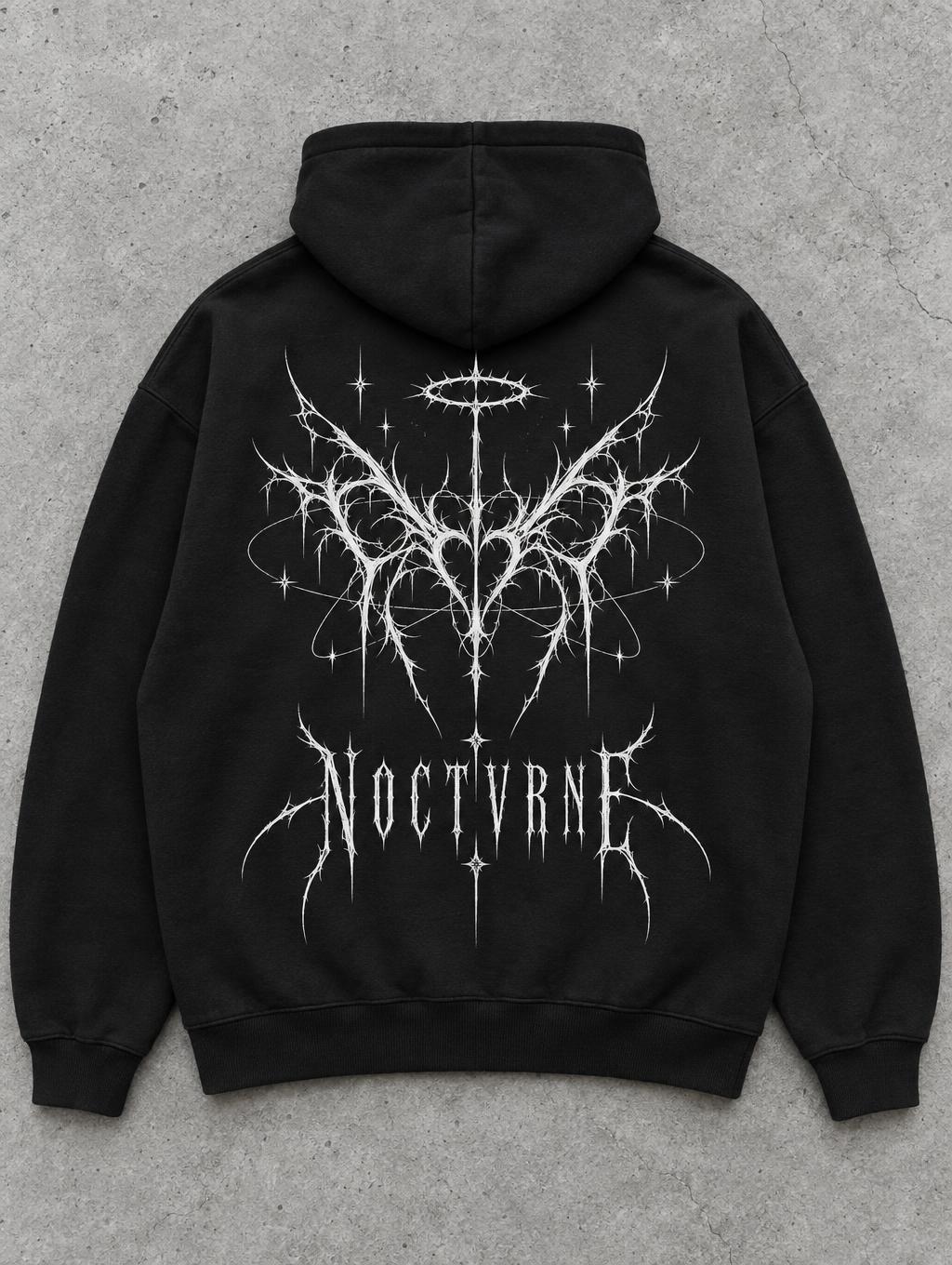
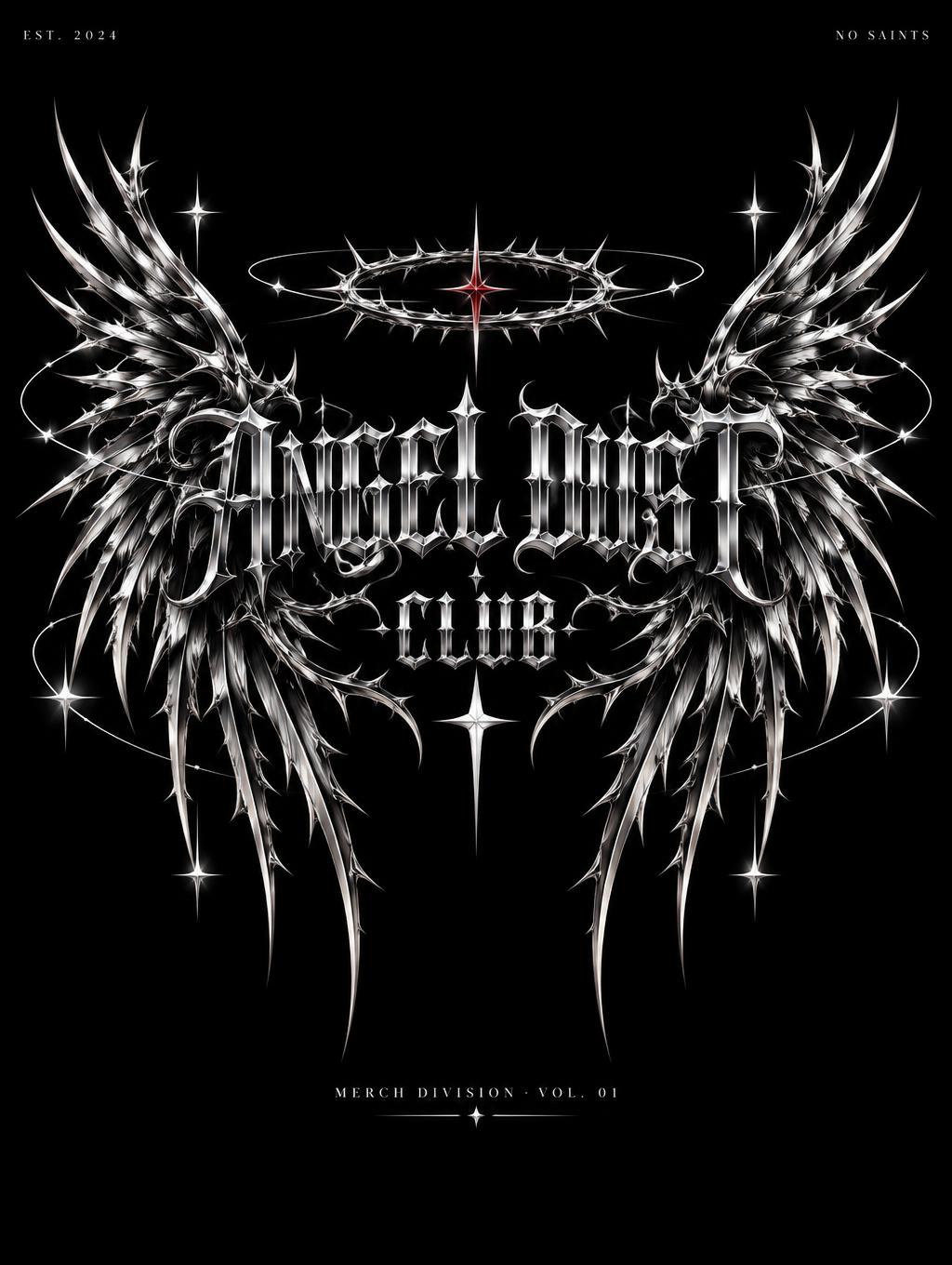
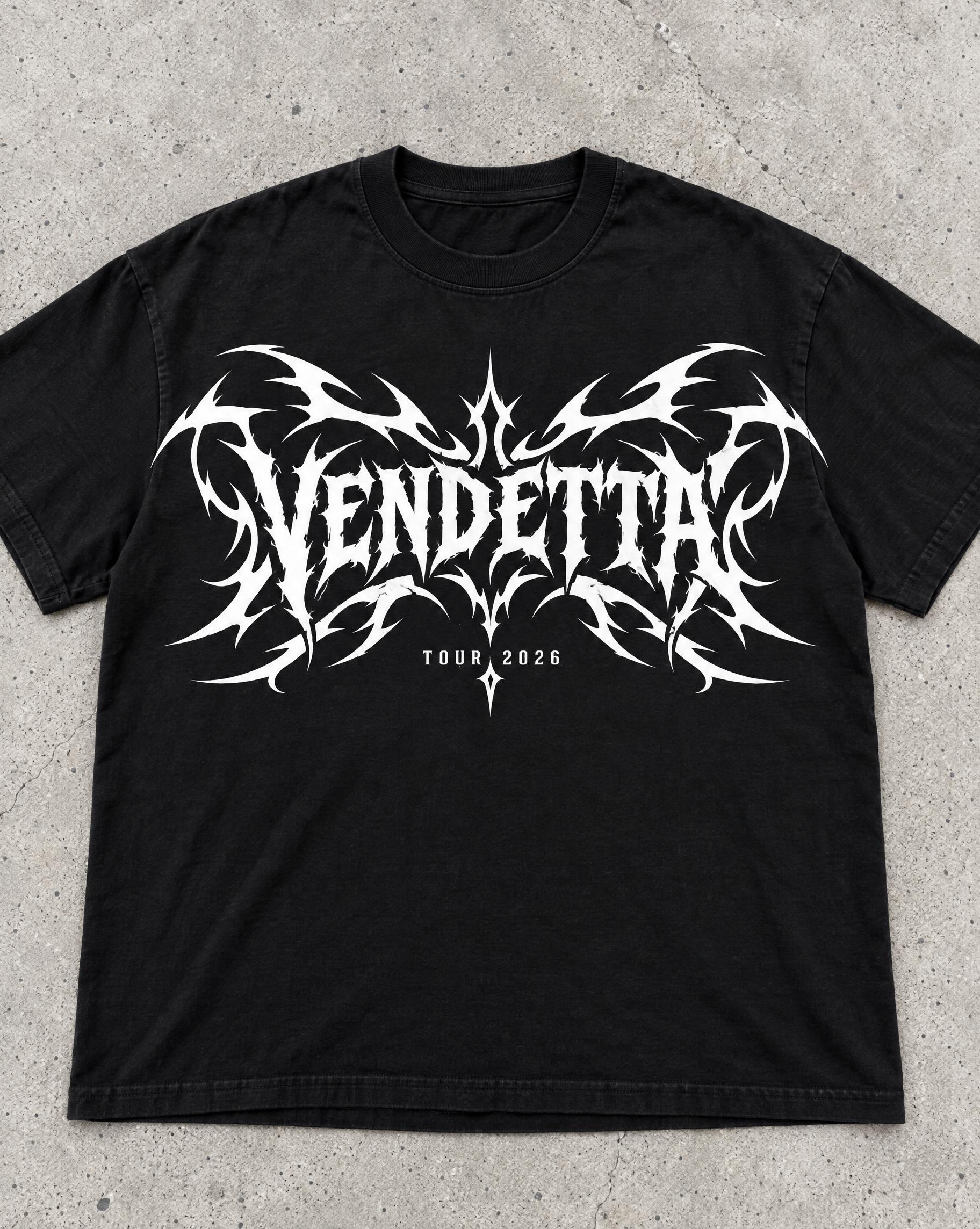
Flat print artwork for hoodie backs and T-shirt fronts: your brand name across a thorn emblem, black on light or white on black.
Cybersigilism Posters
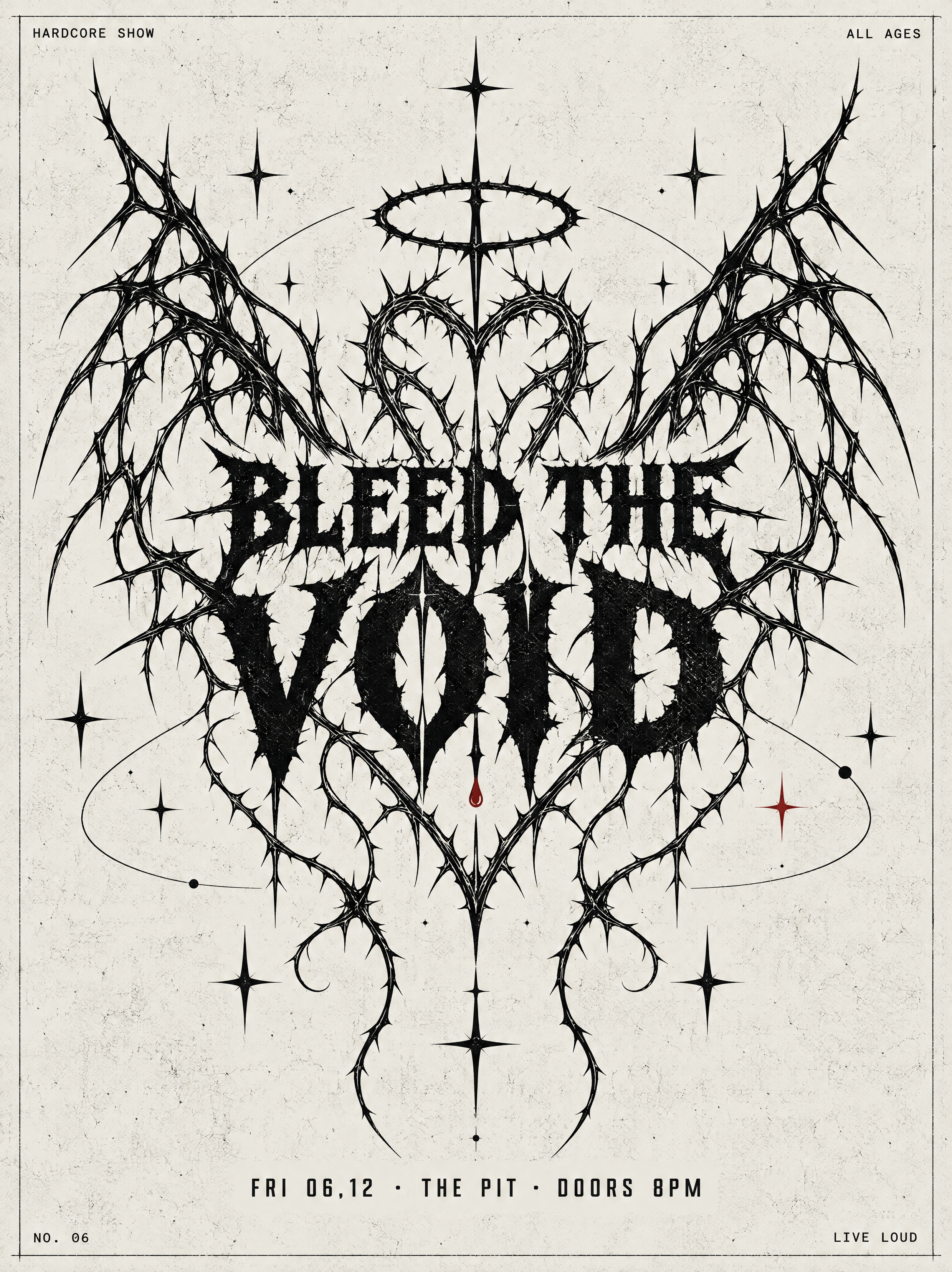
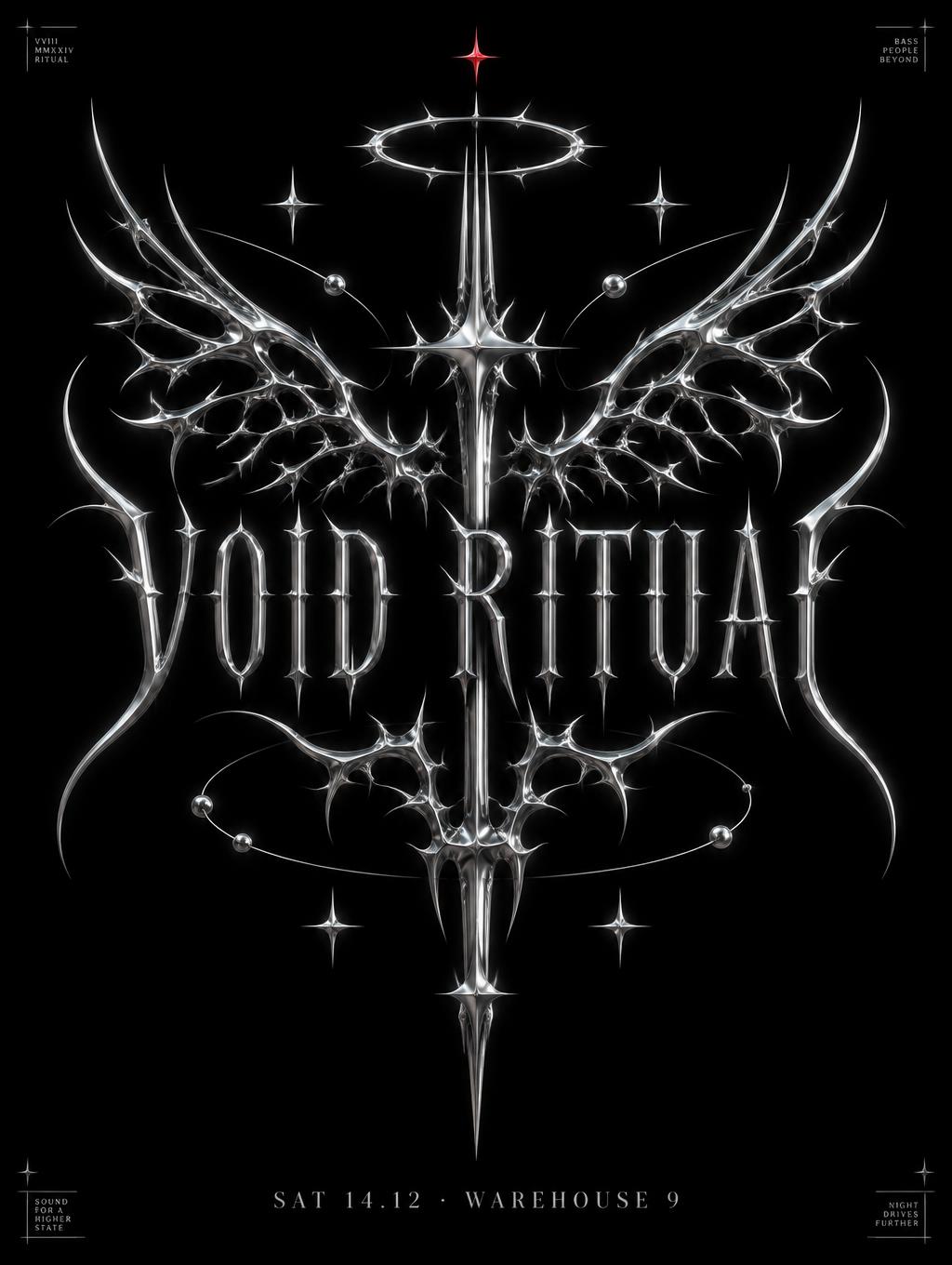
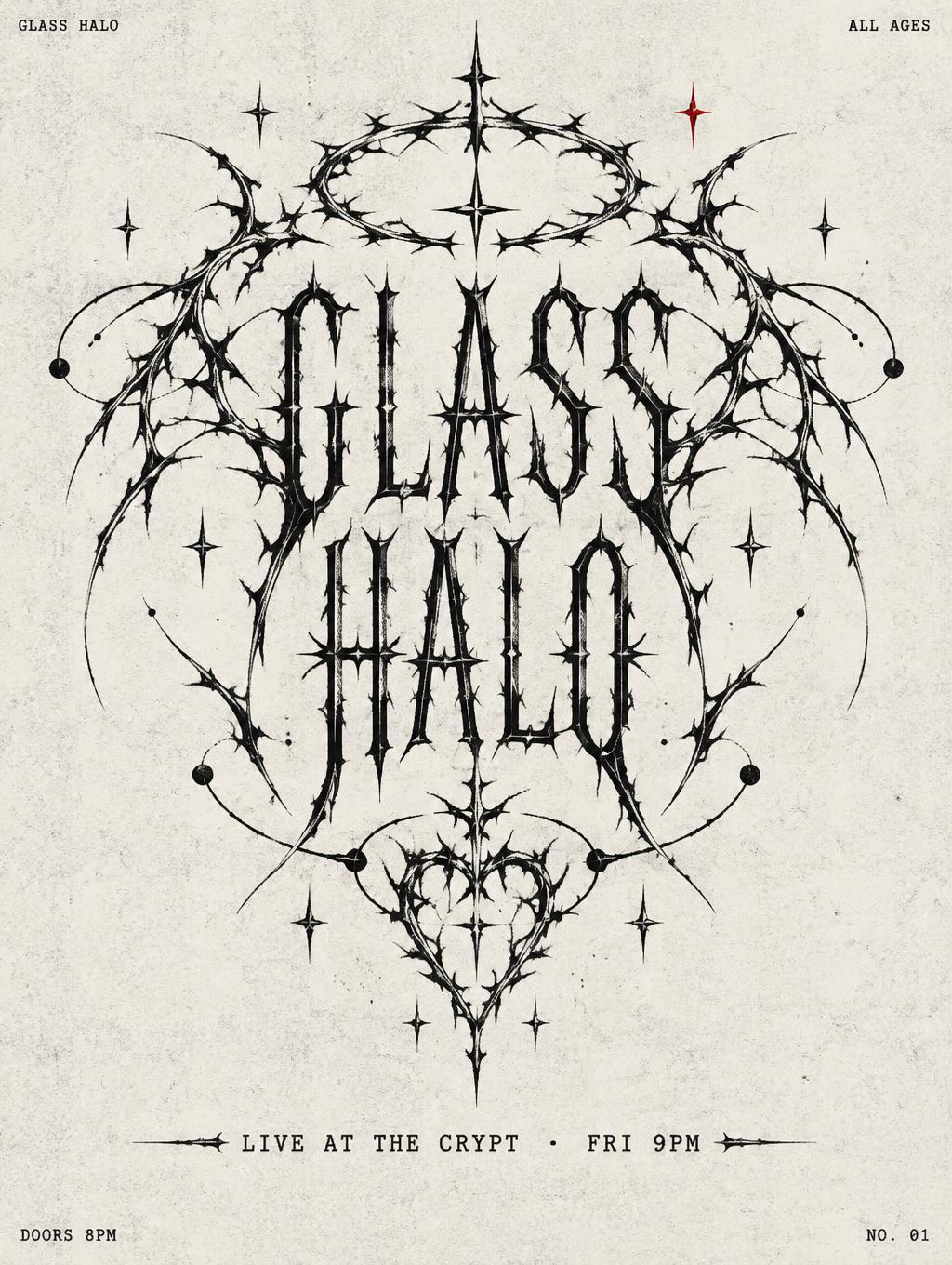
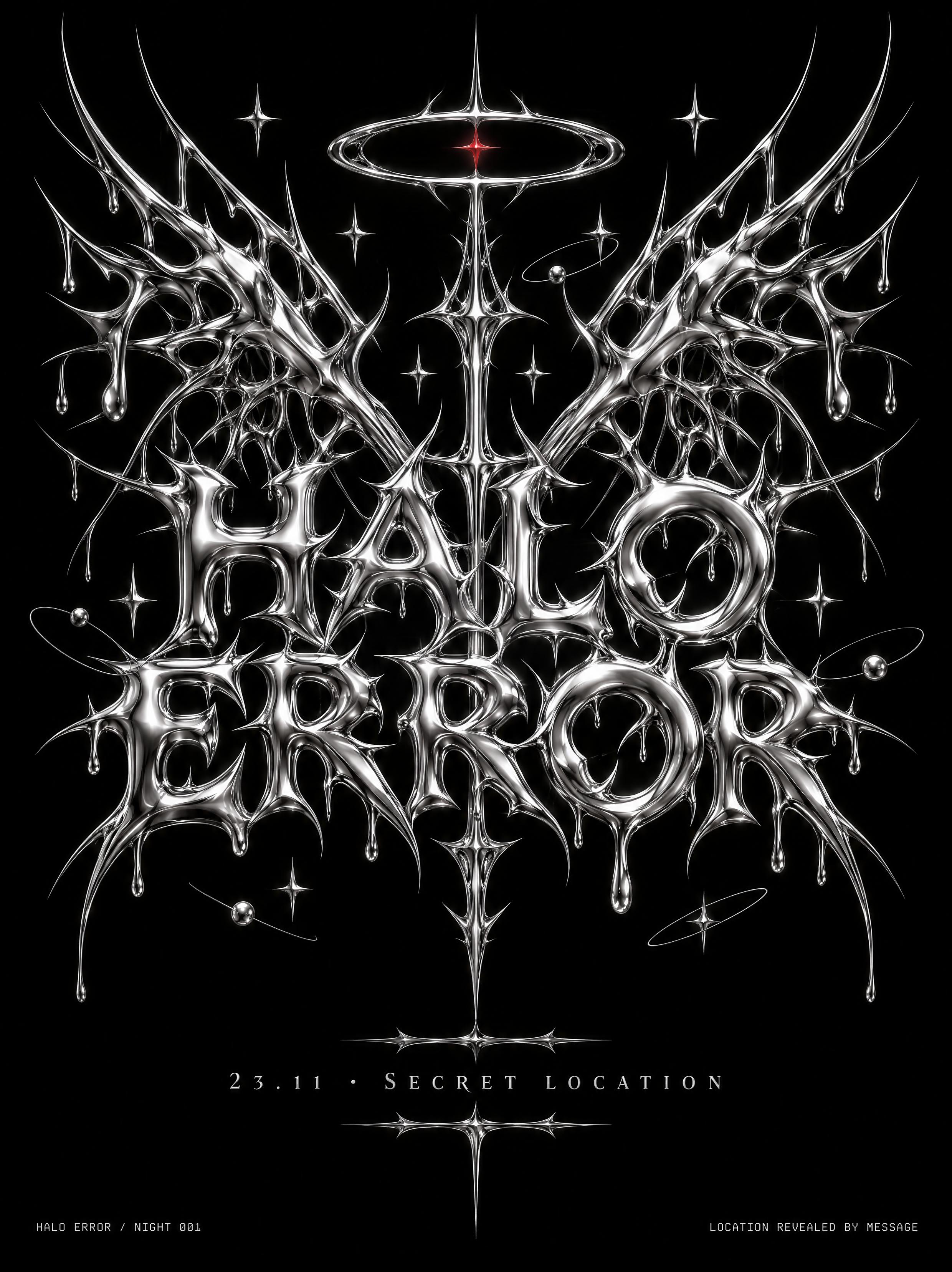
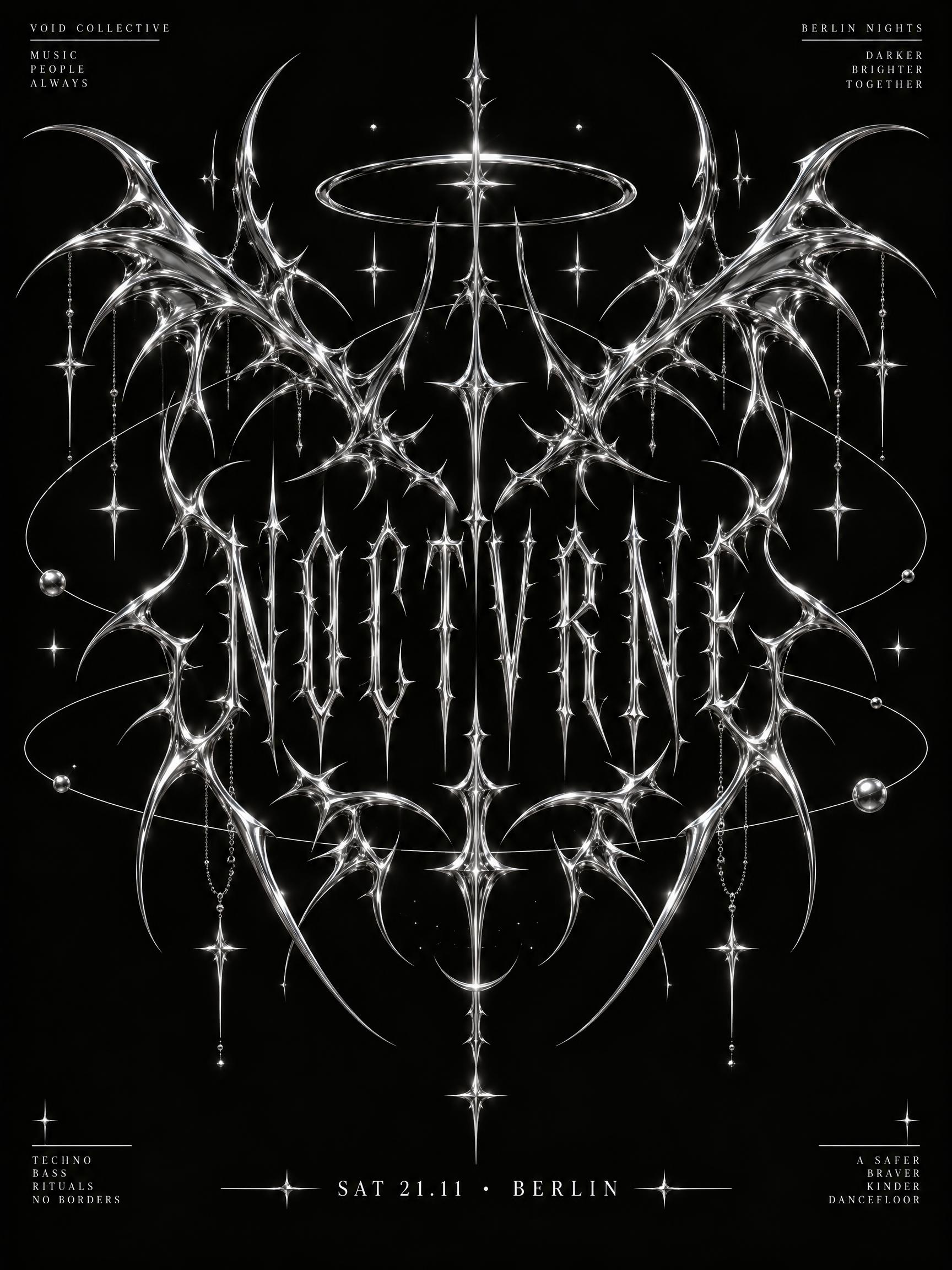
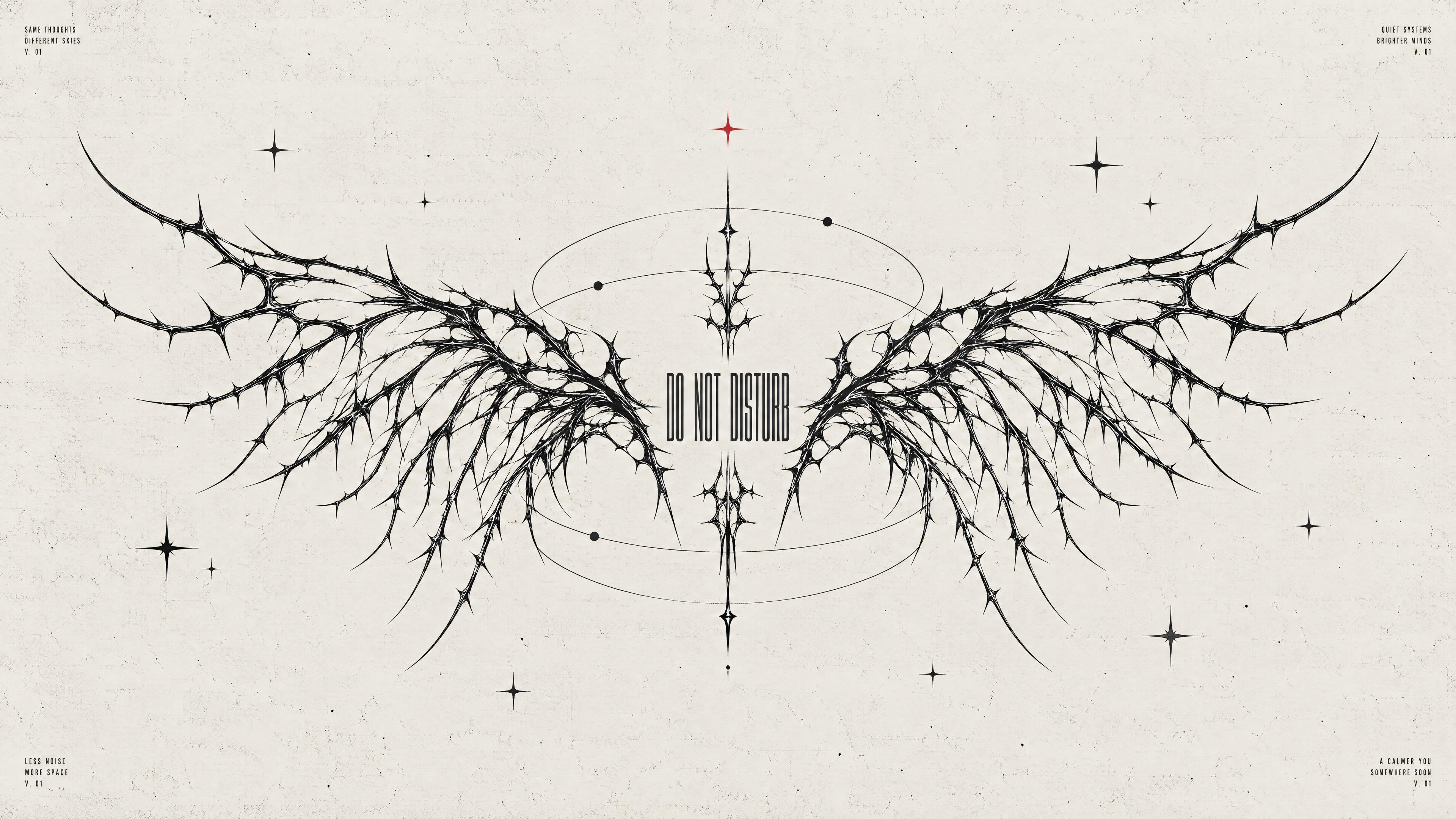
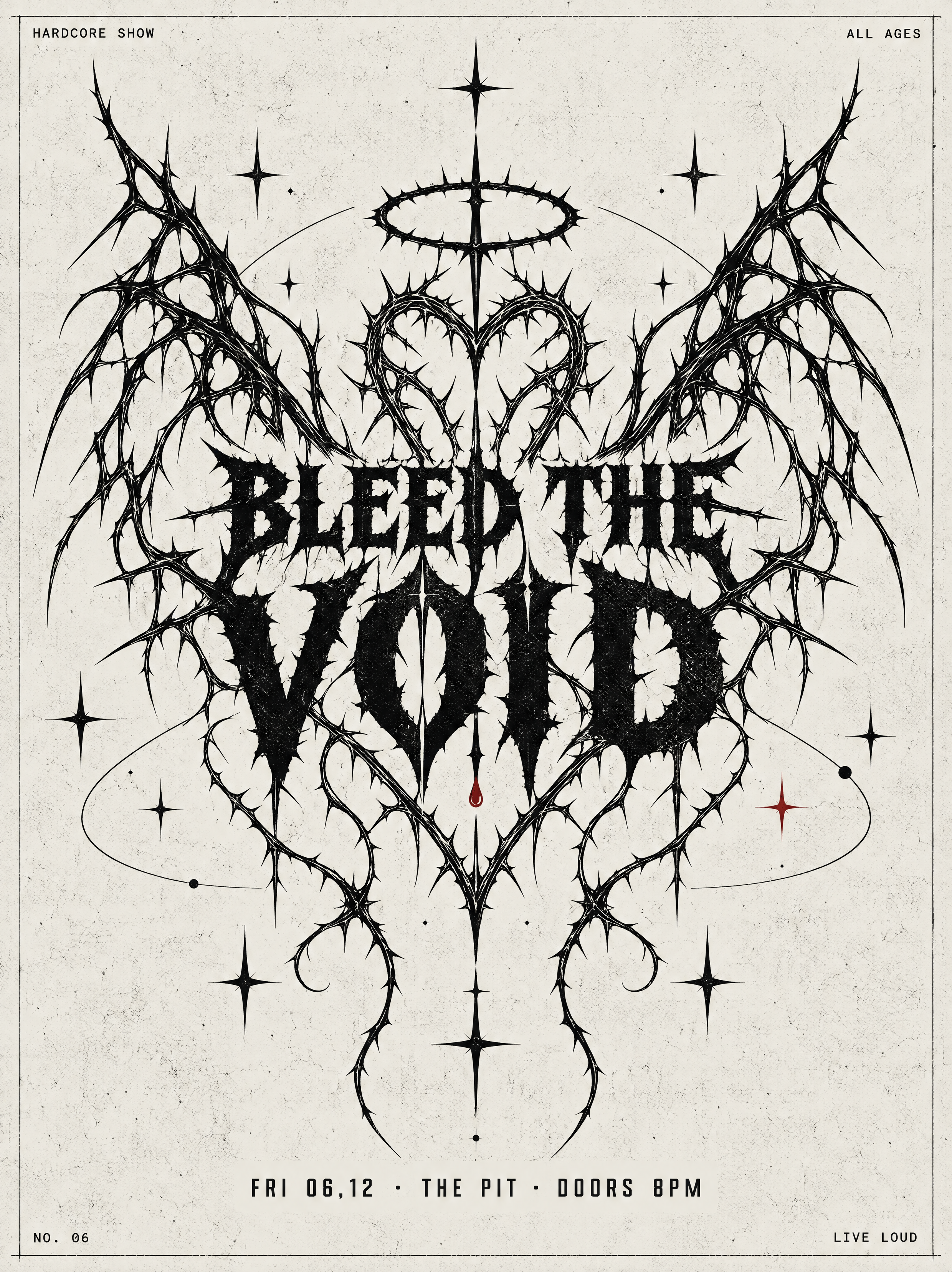
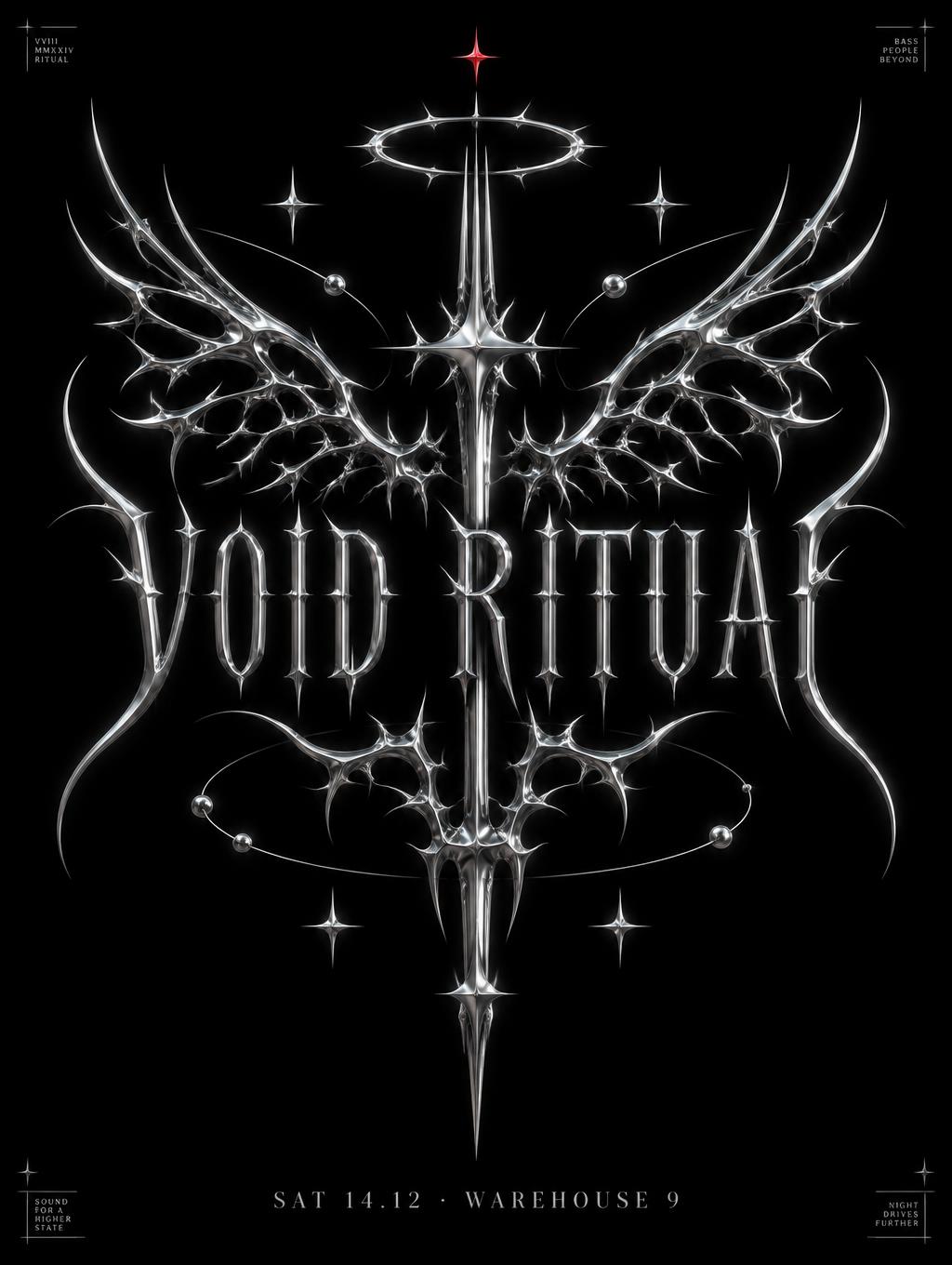
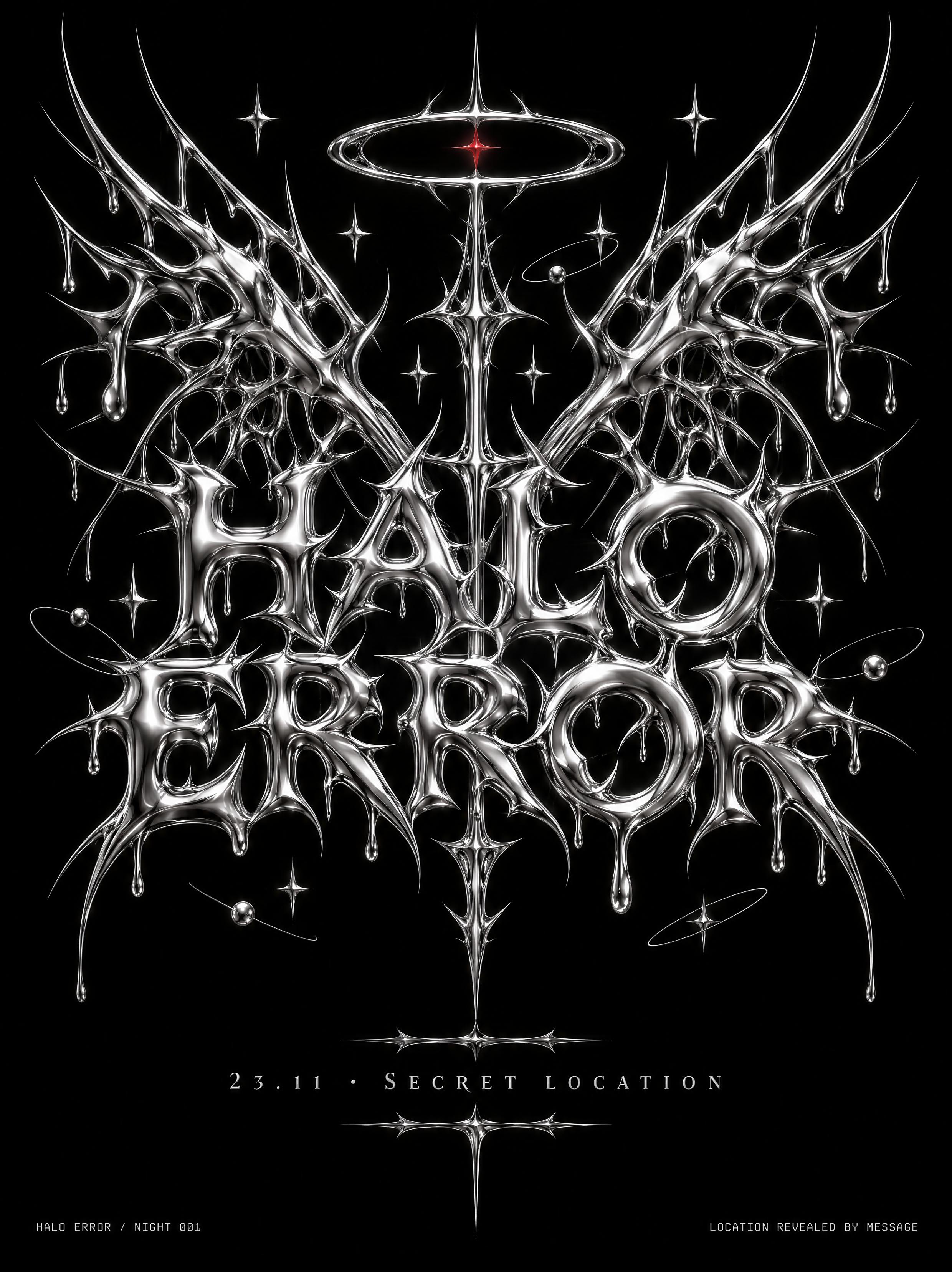
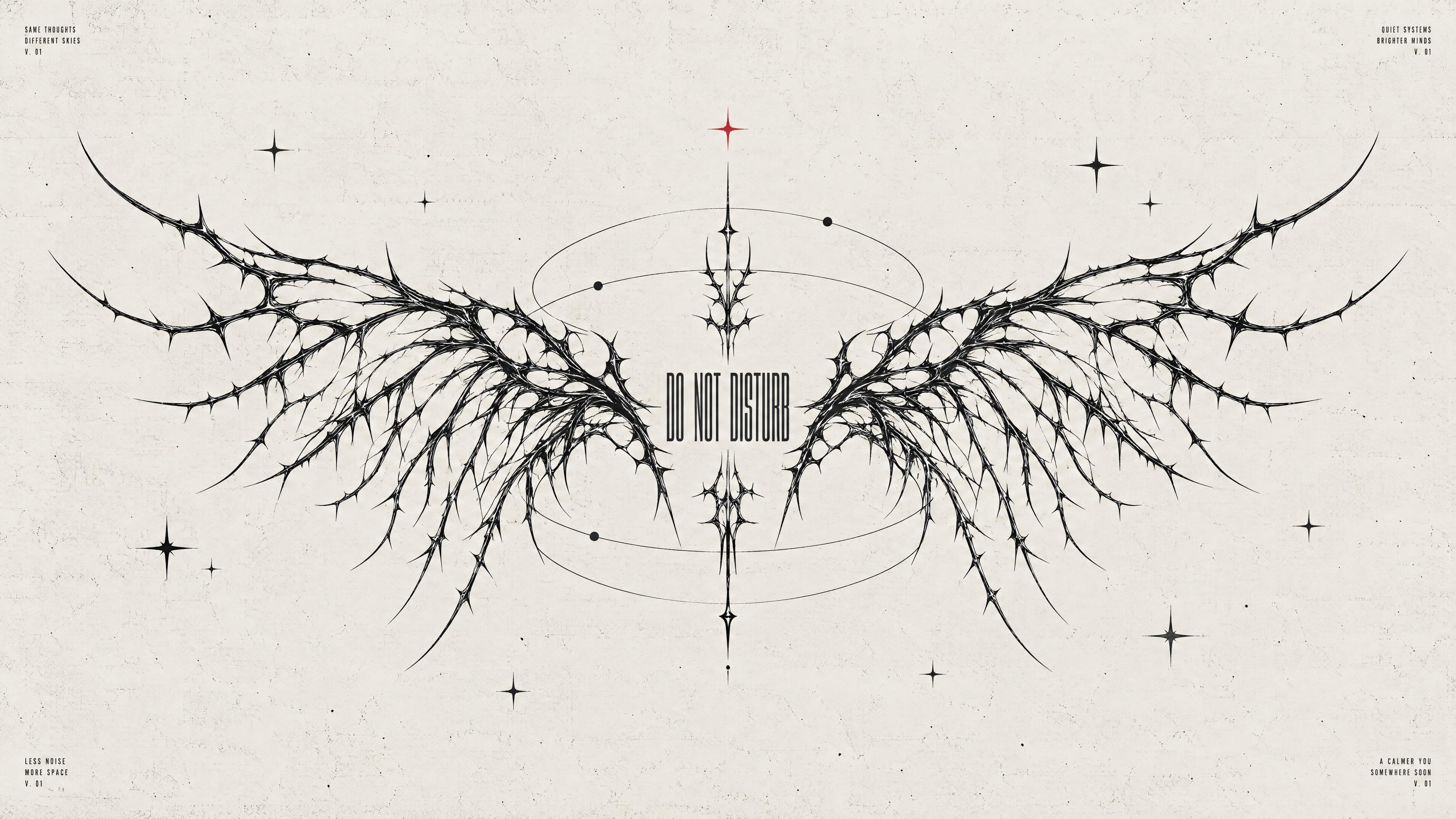
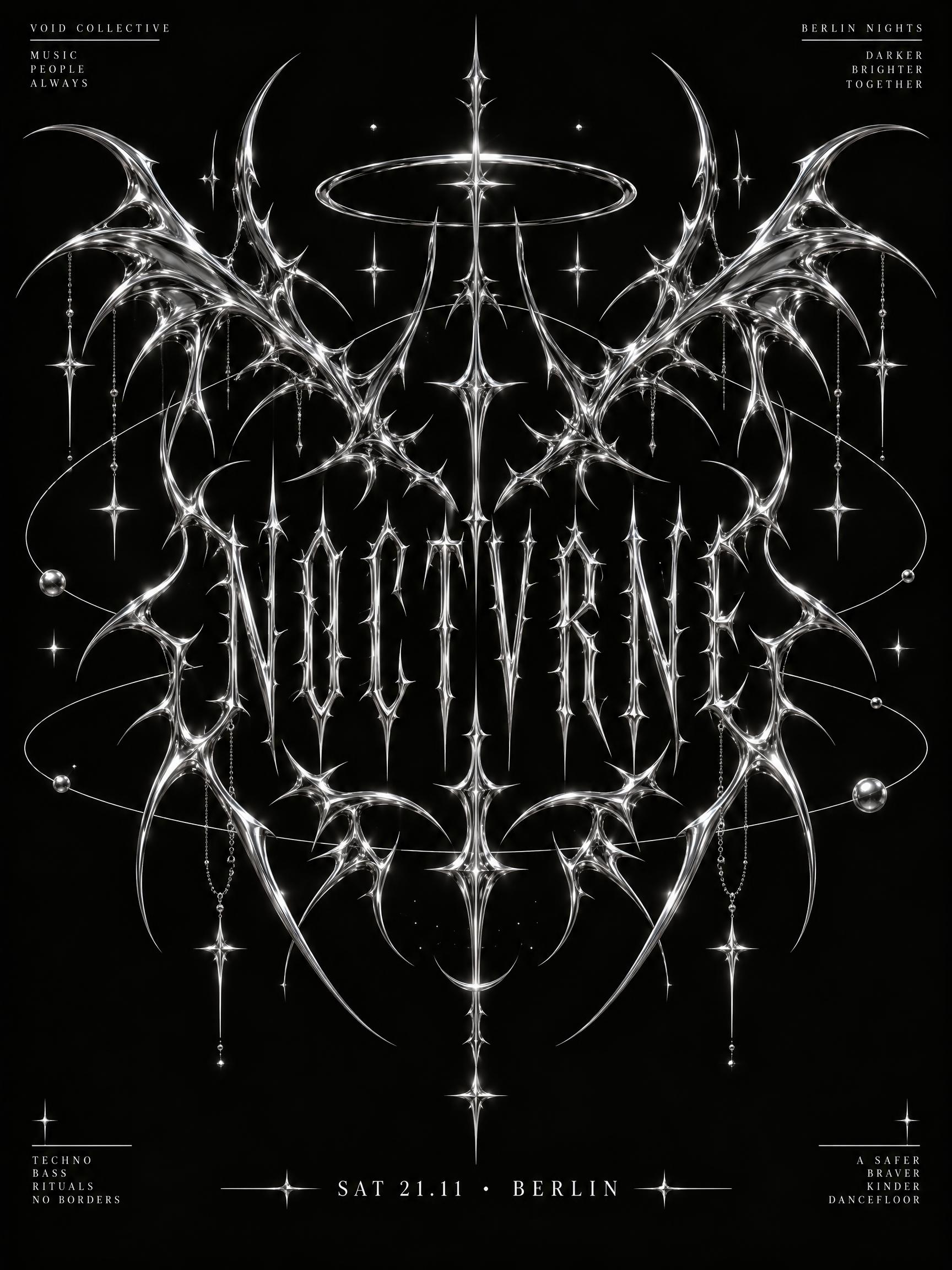
Club night and gig posters with a mirrored thorn emblem around the title, sparkle stars and tiny caption blocks in the corners.
Cybersigilism PFPs
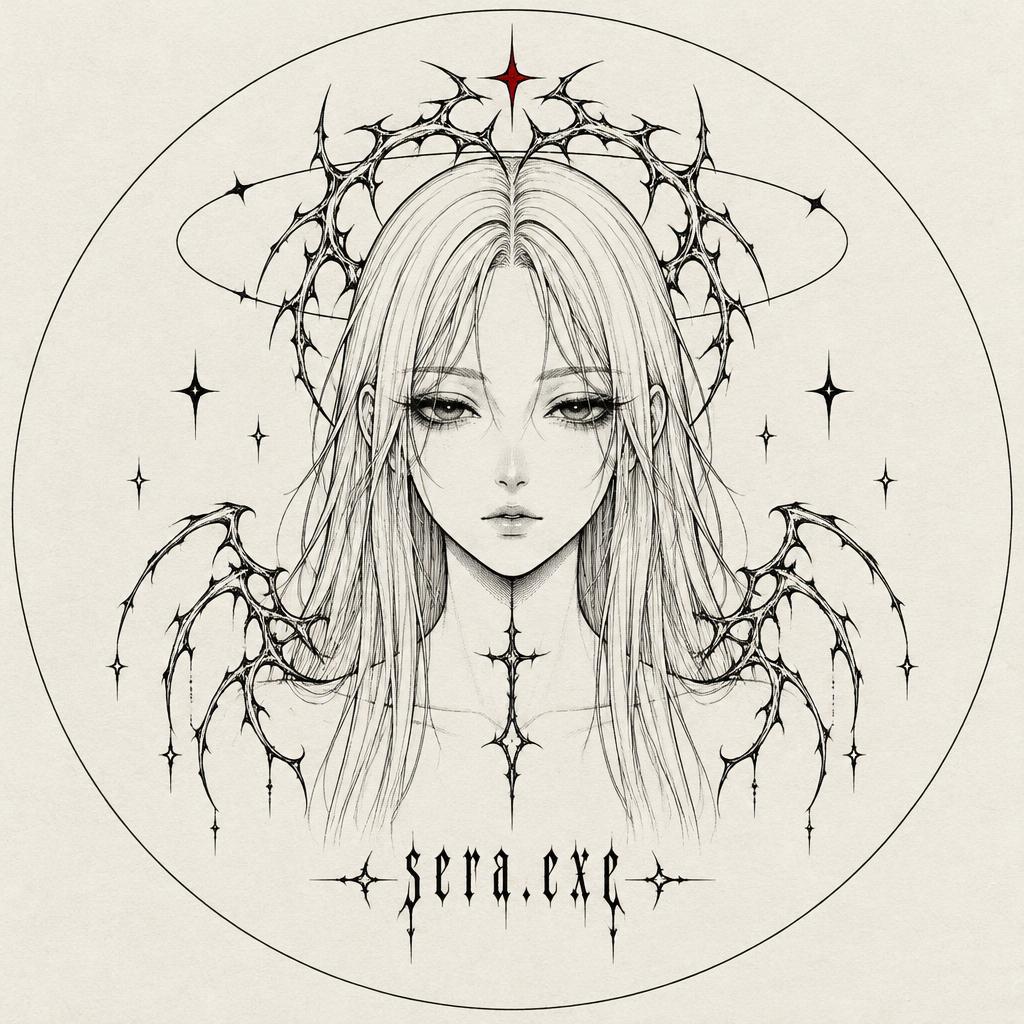
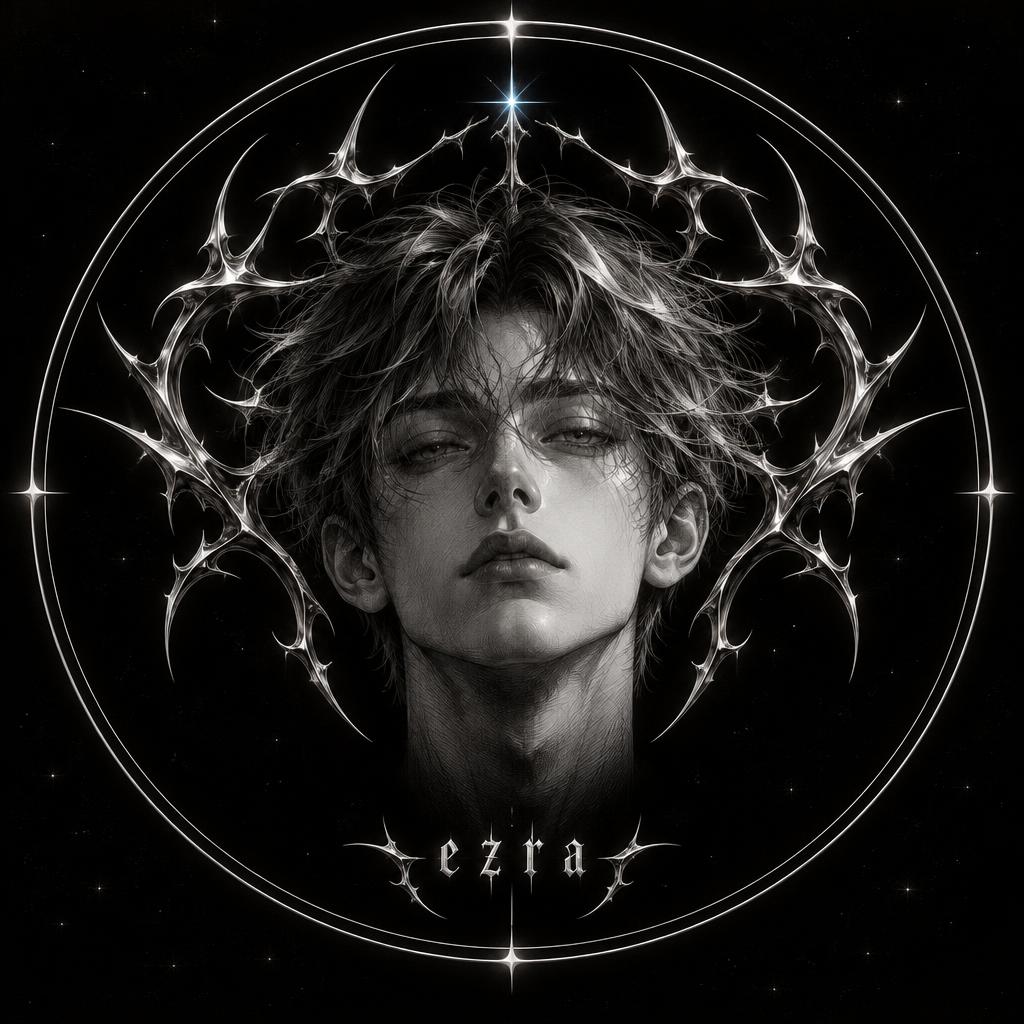
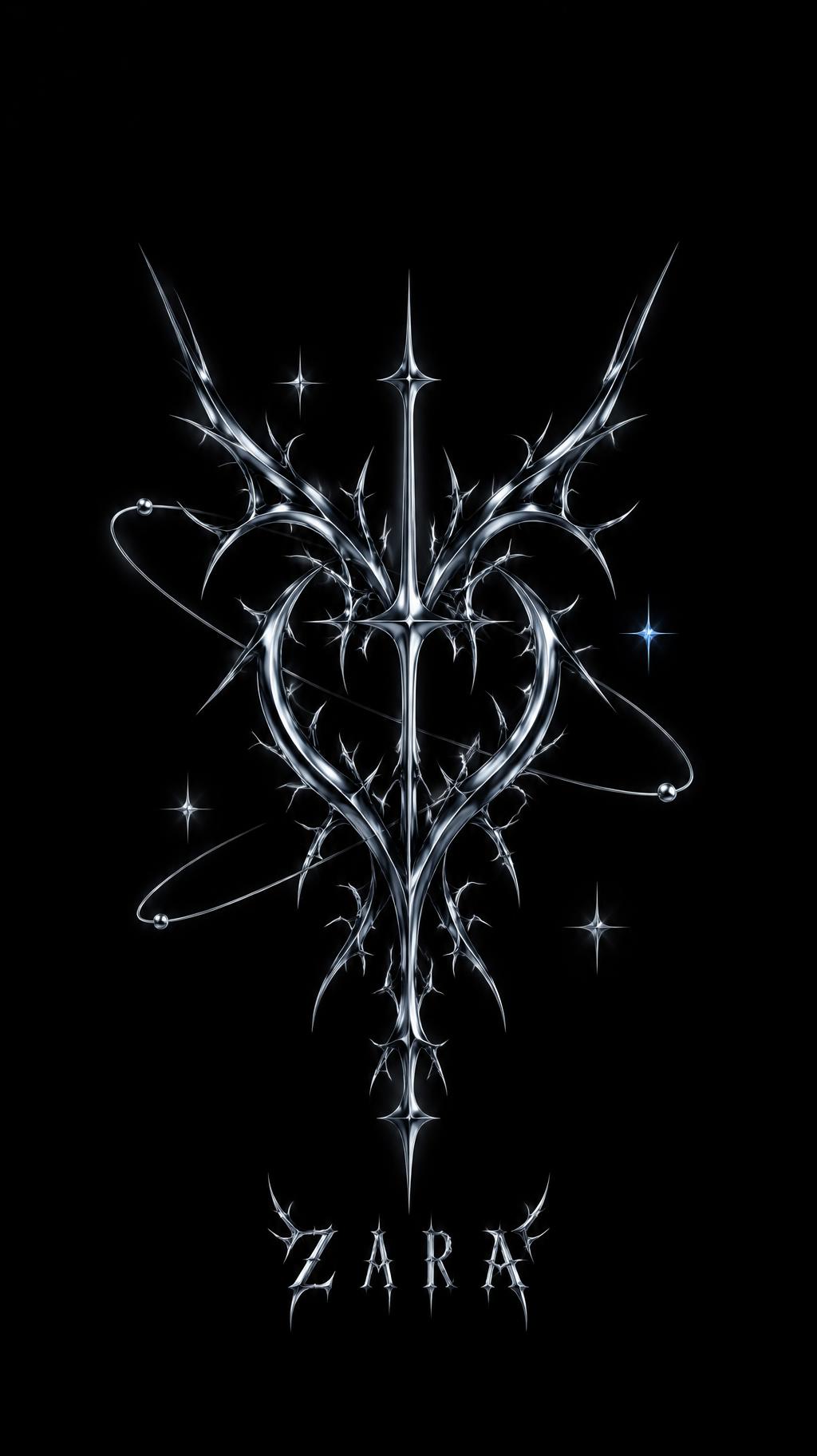
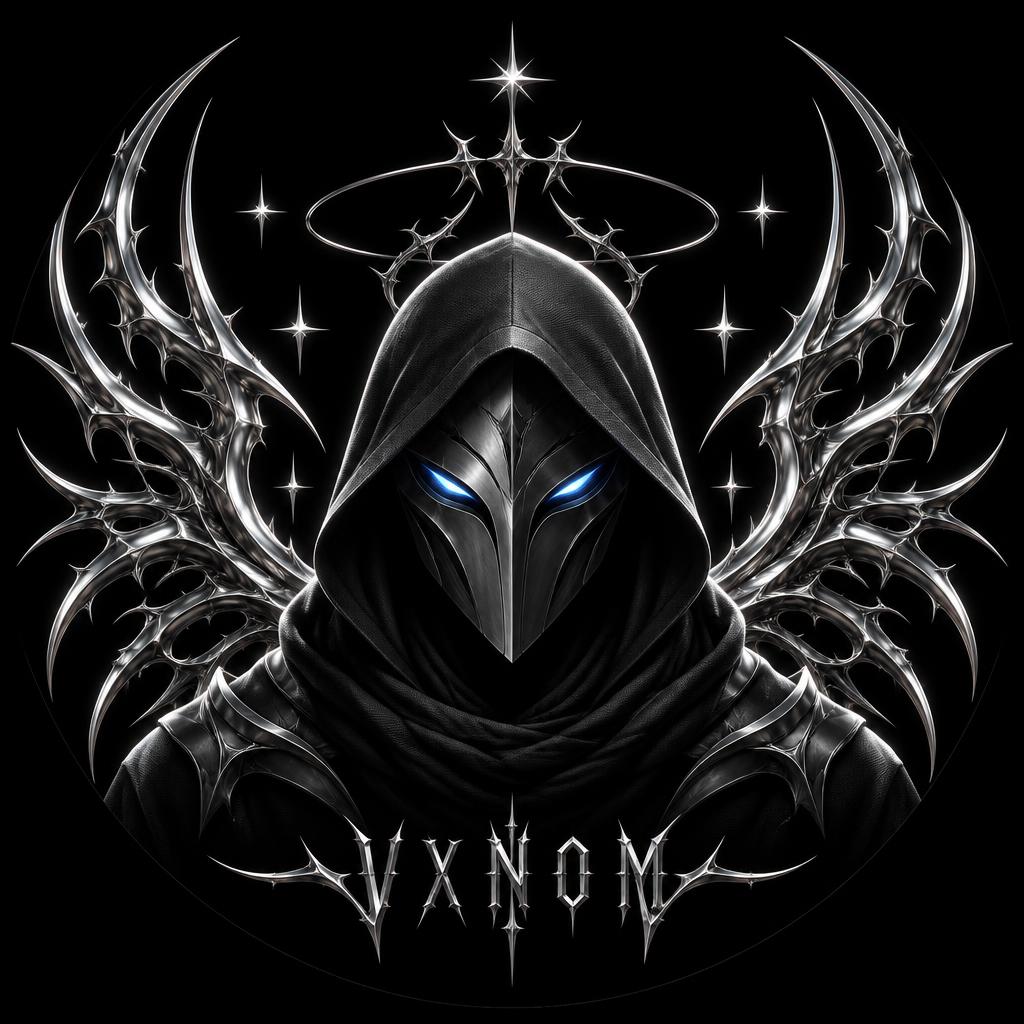
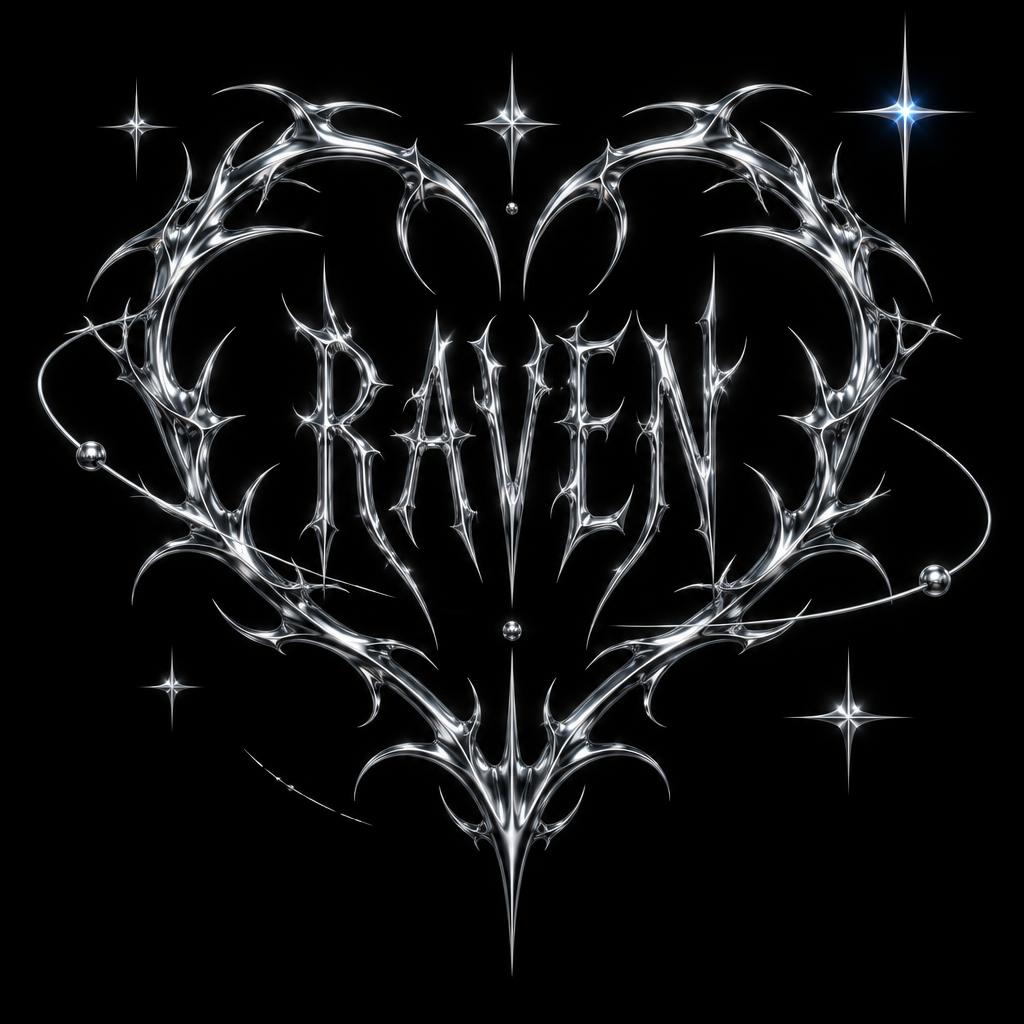
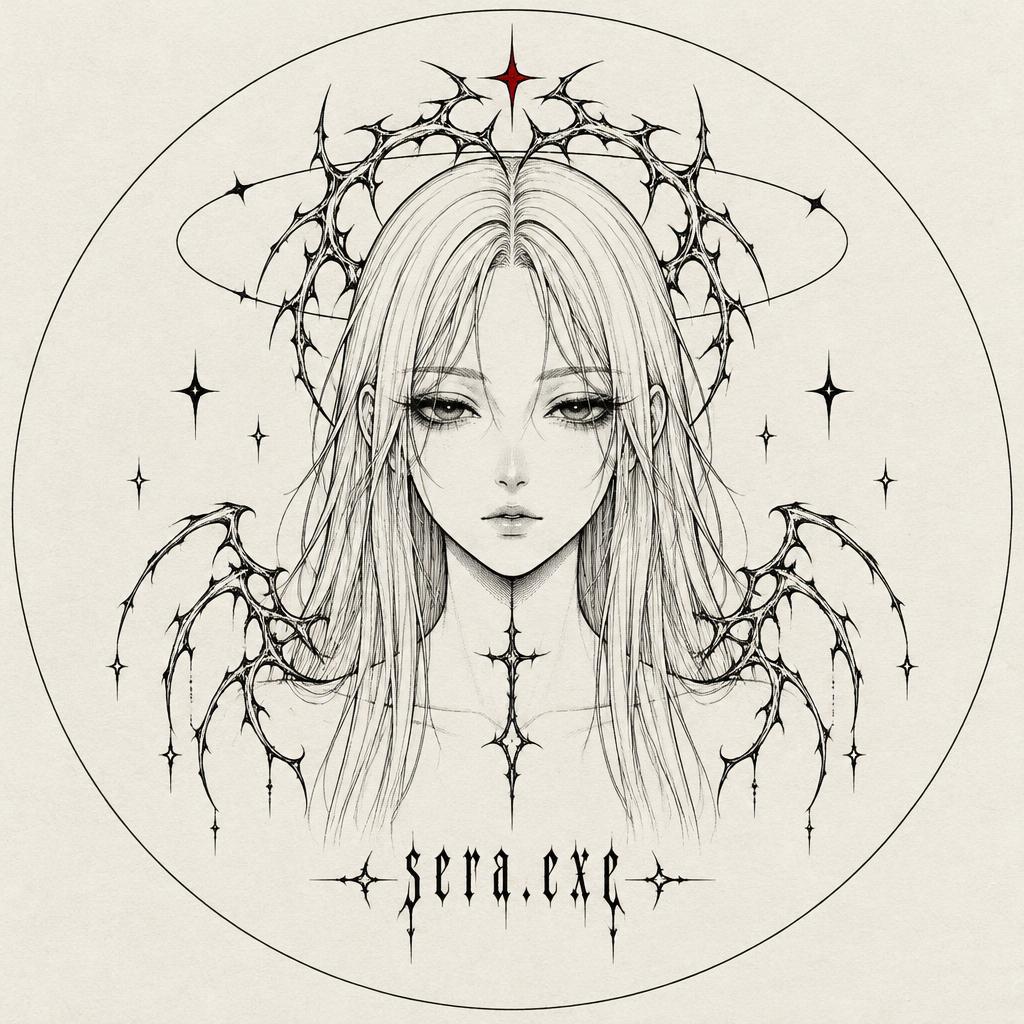
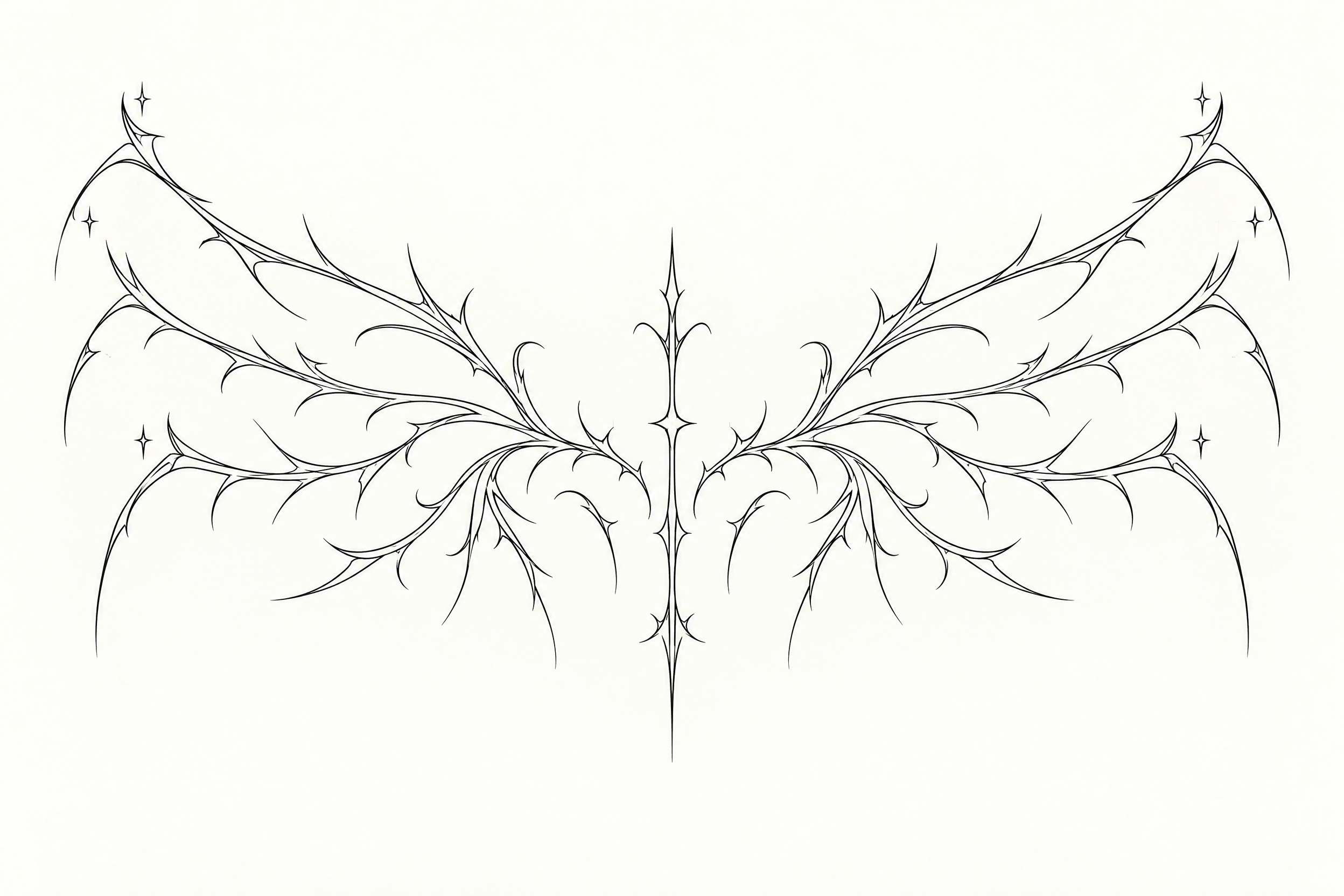
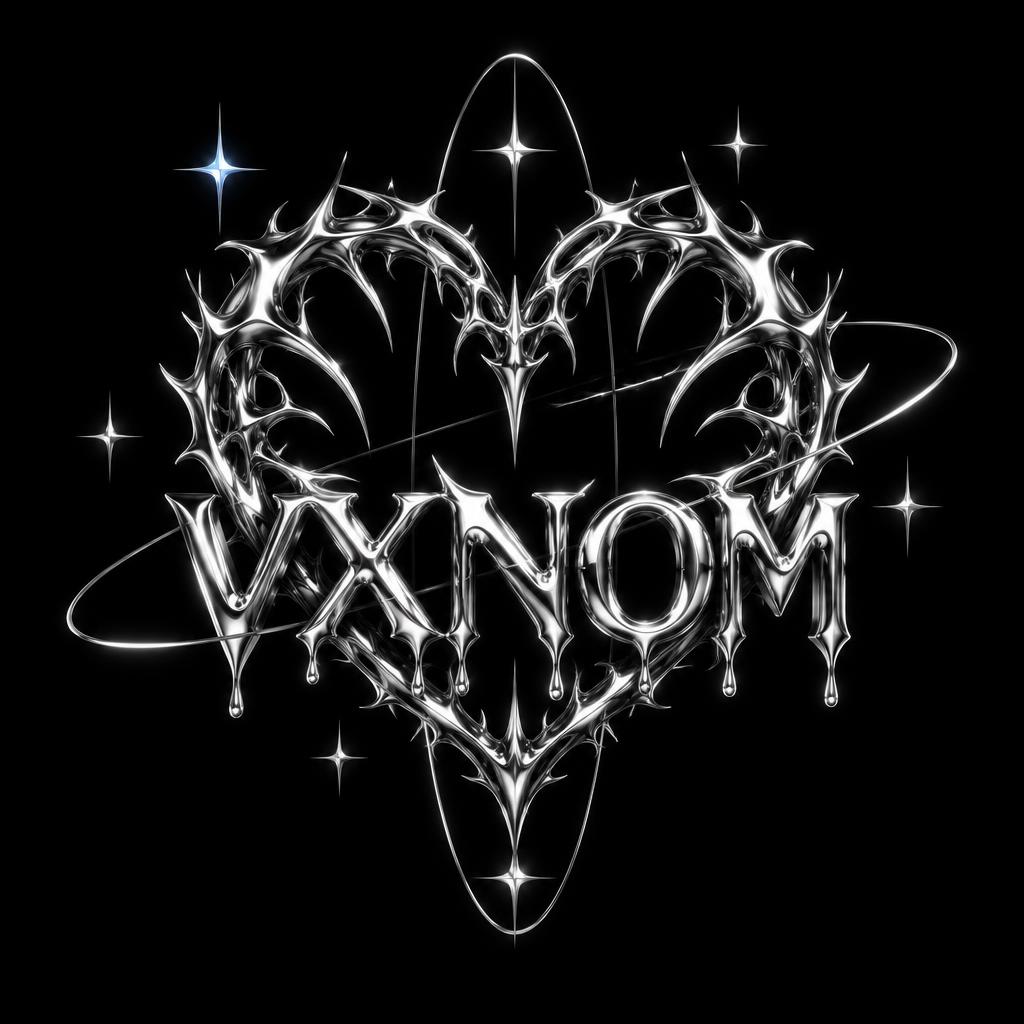
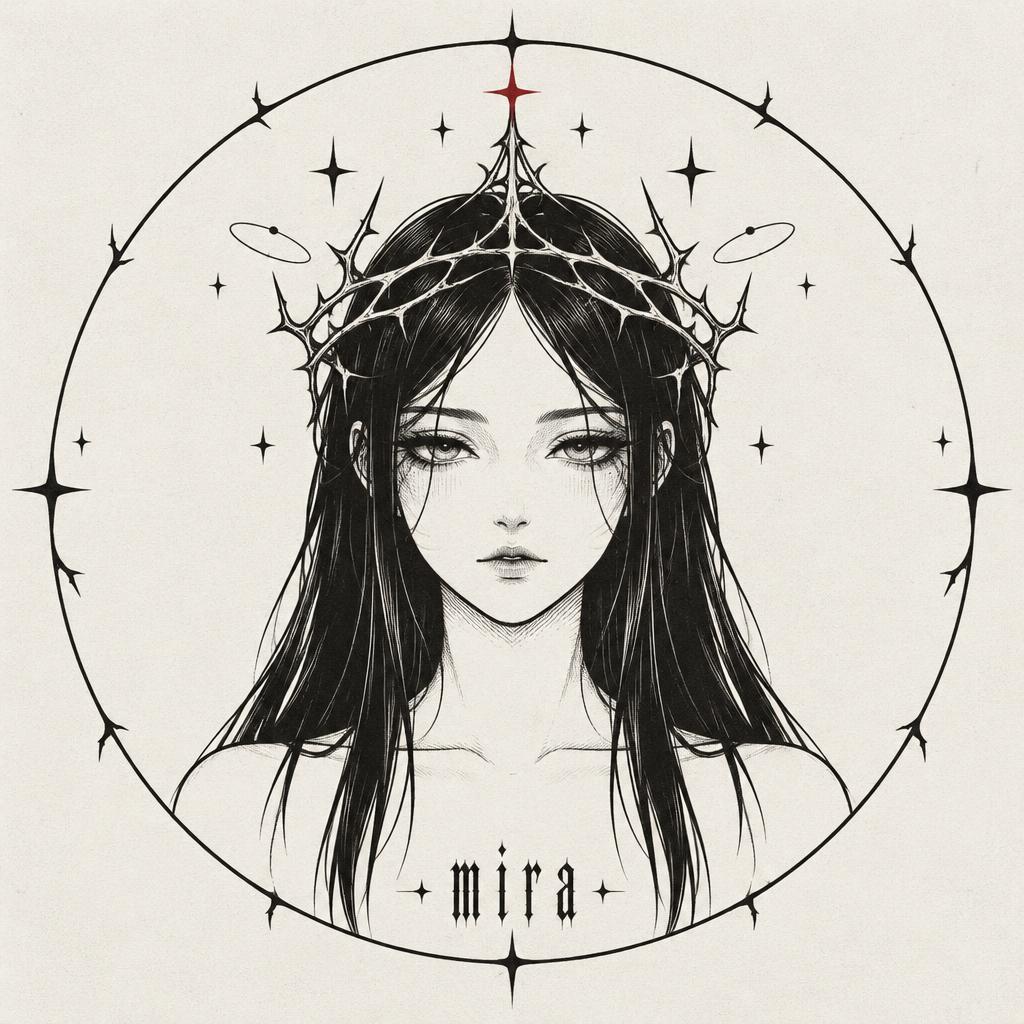
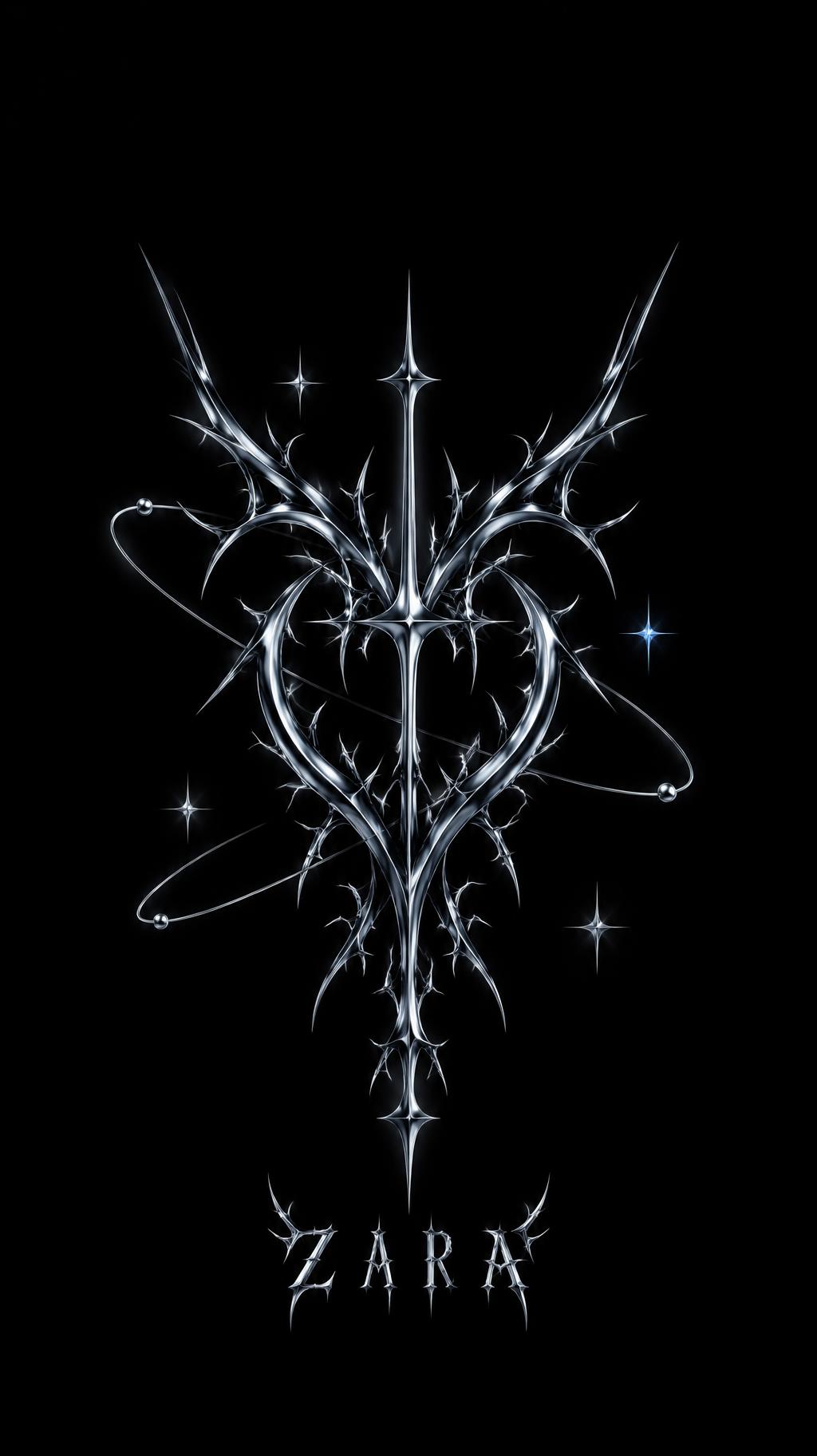
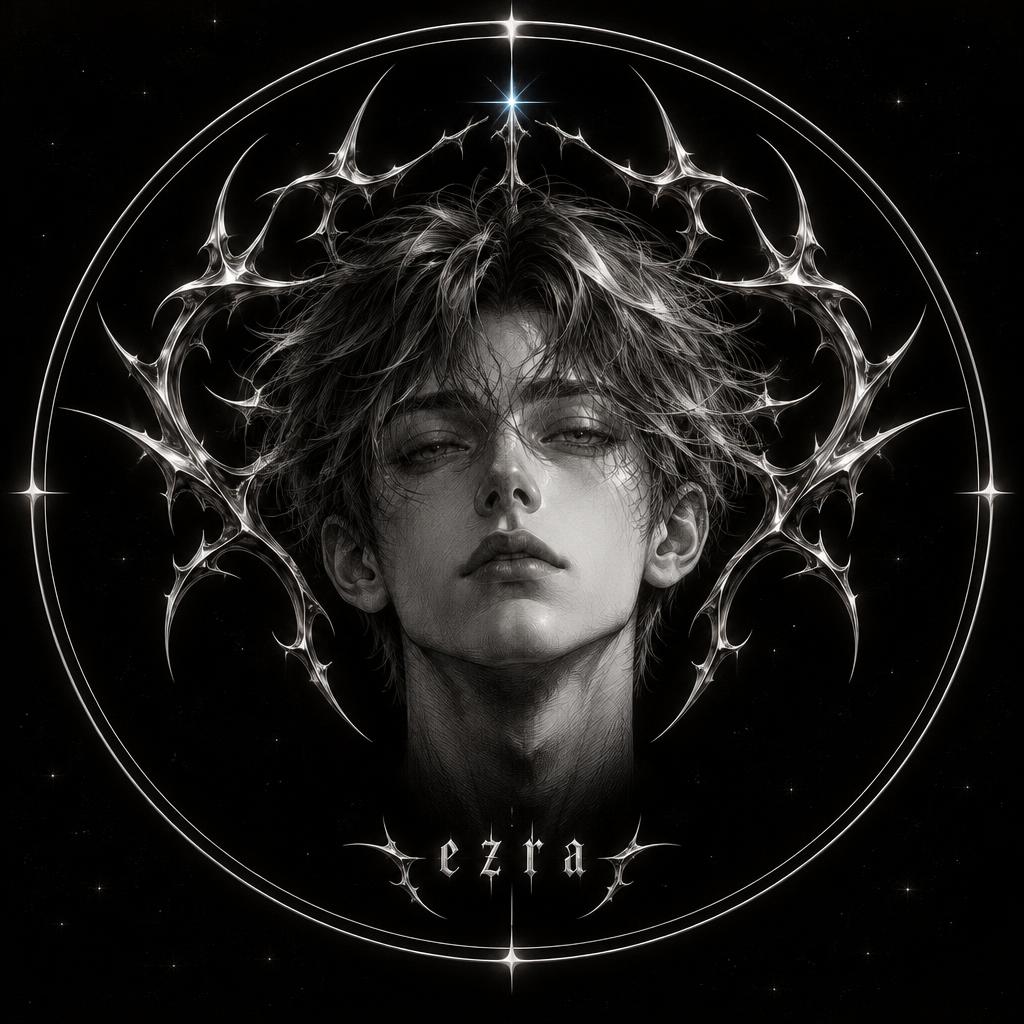
Square profile pictures with your name or handle inside a chrome thorn heart, halo or pair of wings.
Cybersigilism Wallpapers
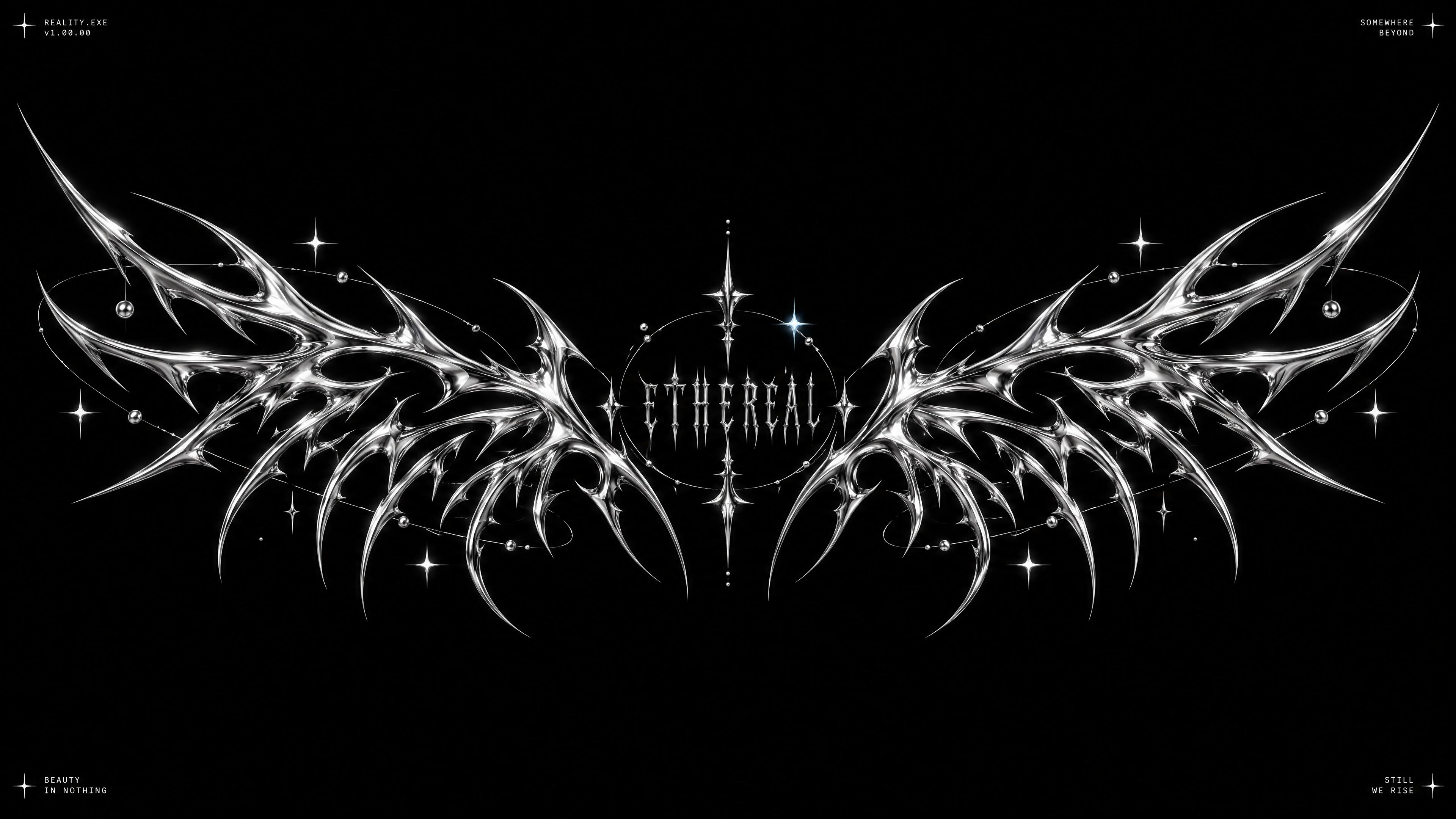
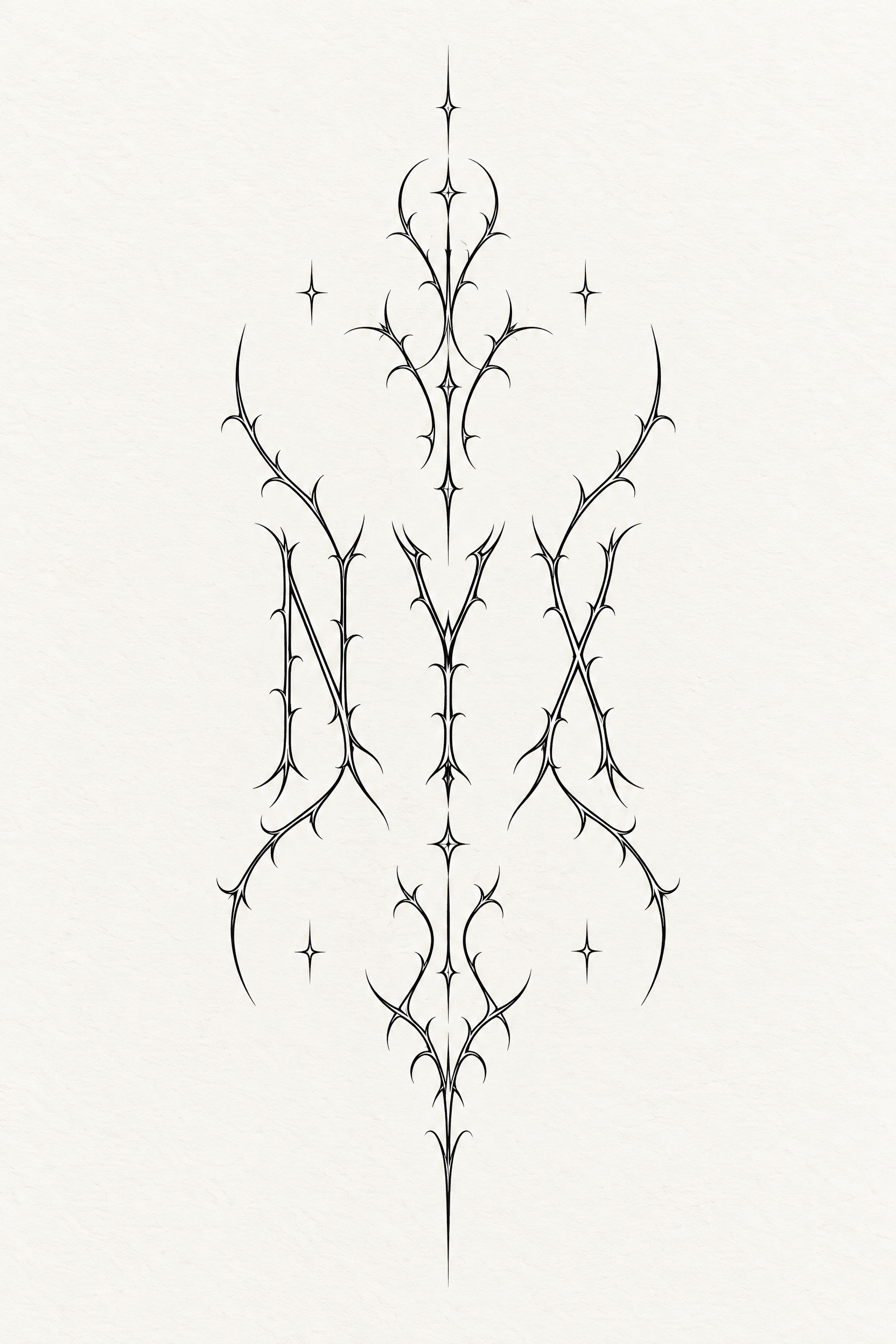
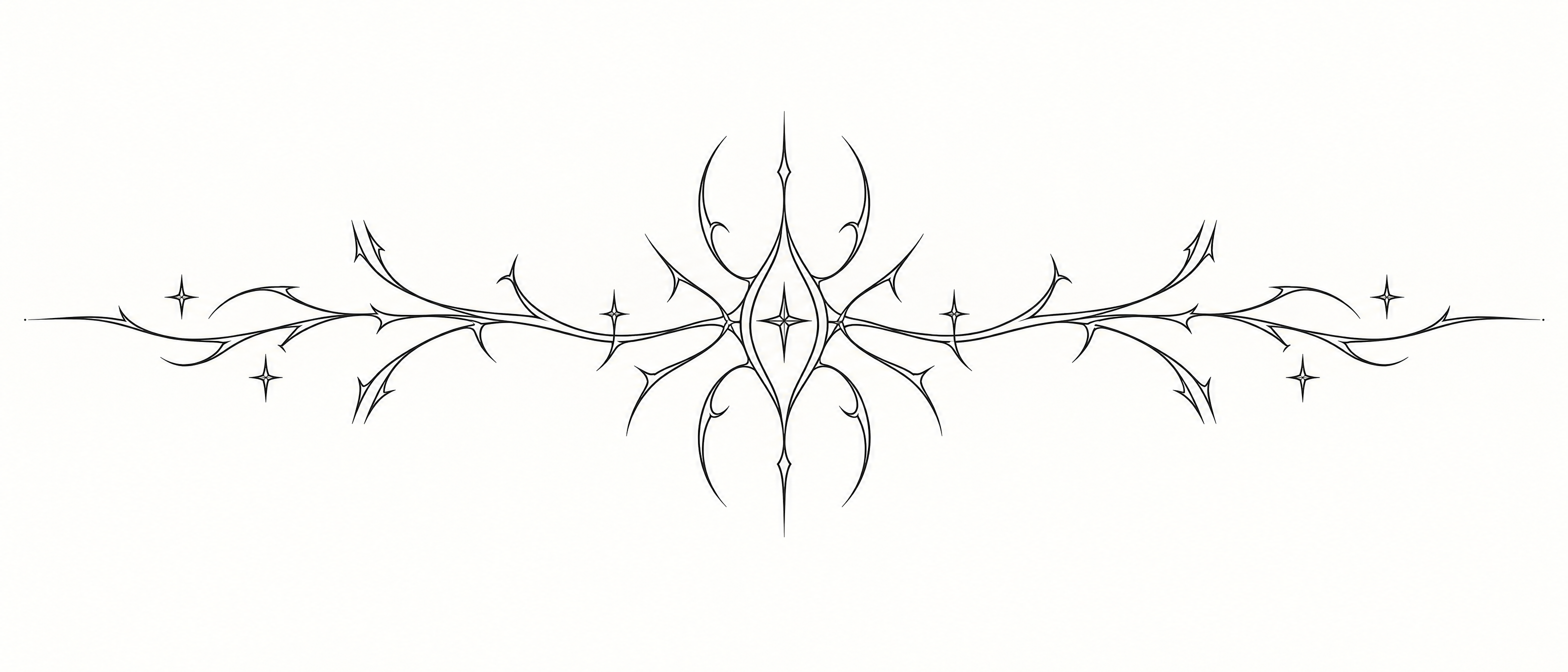
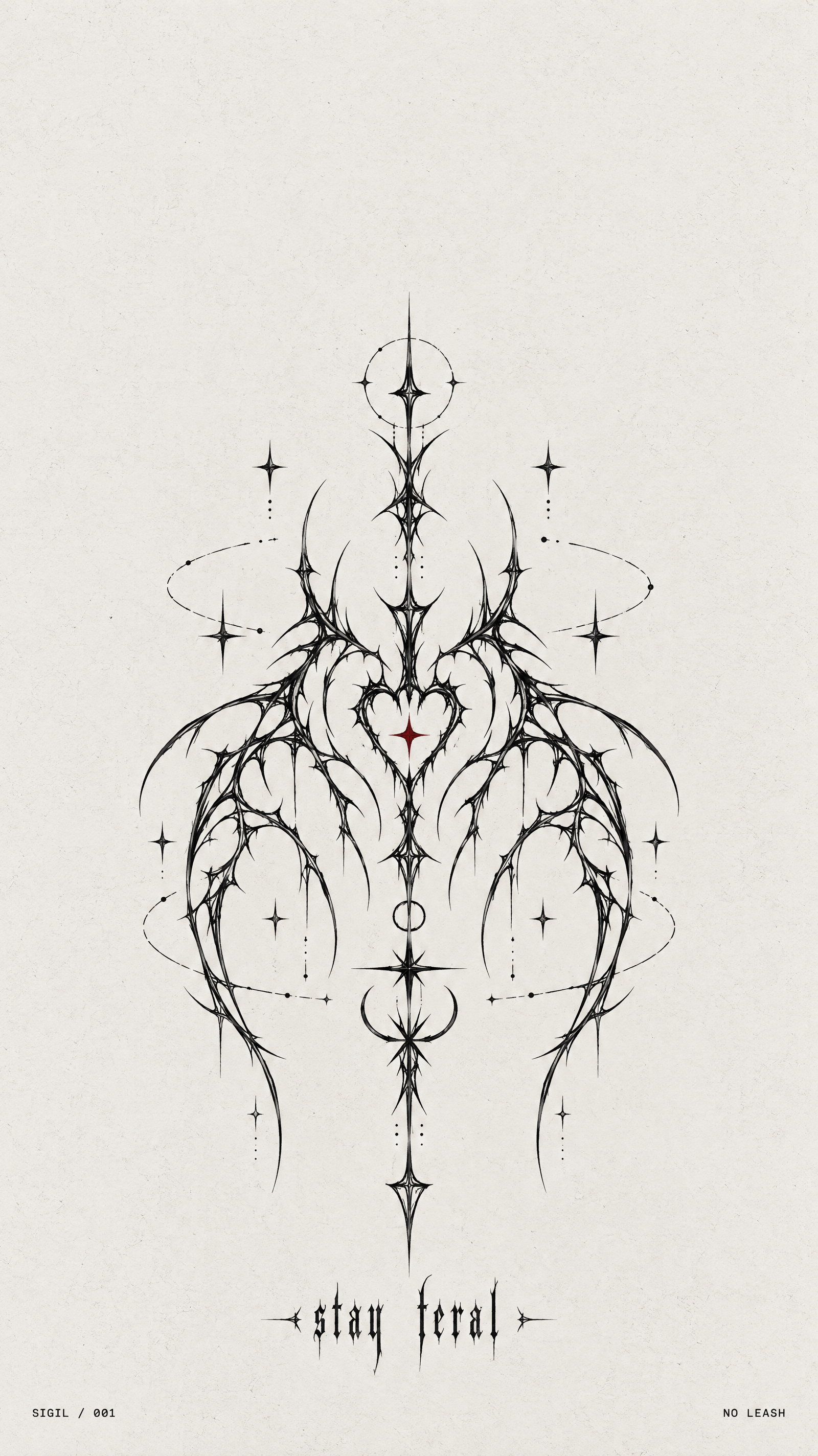
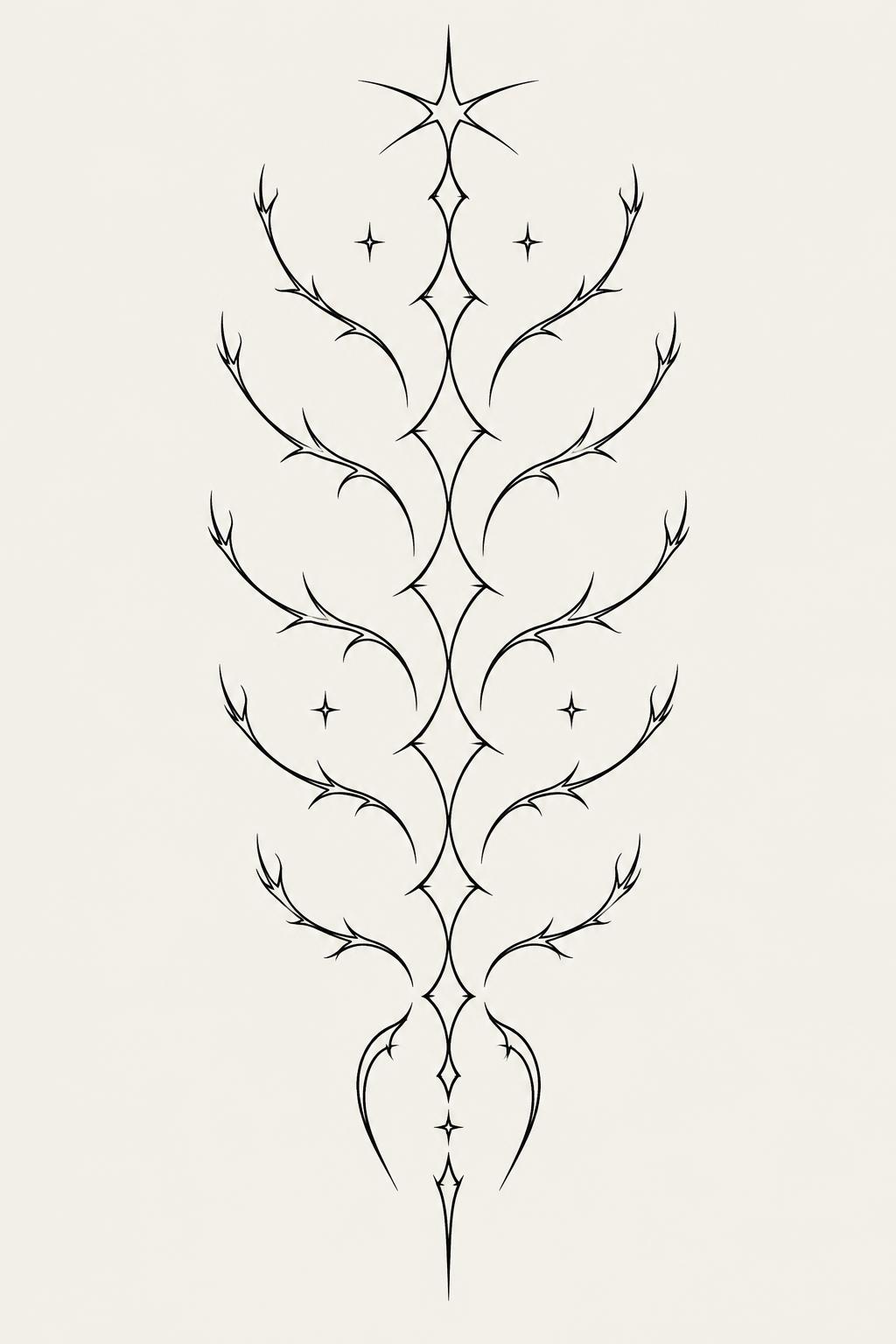
Tall phone lock screens and wide desktop wallpapers with a thorn-and-vein emblem down the centre and room for the clock.
AI fonts that fit Cybersigilism
Every AI font here fits the Cybersigilism frame. Pick one, or let the generator choose.


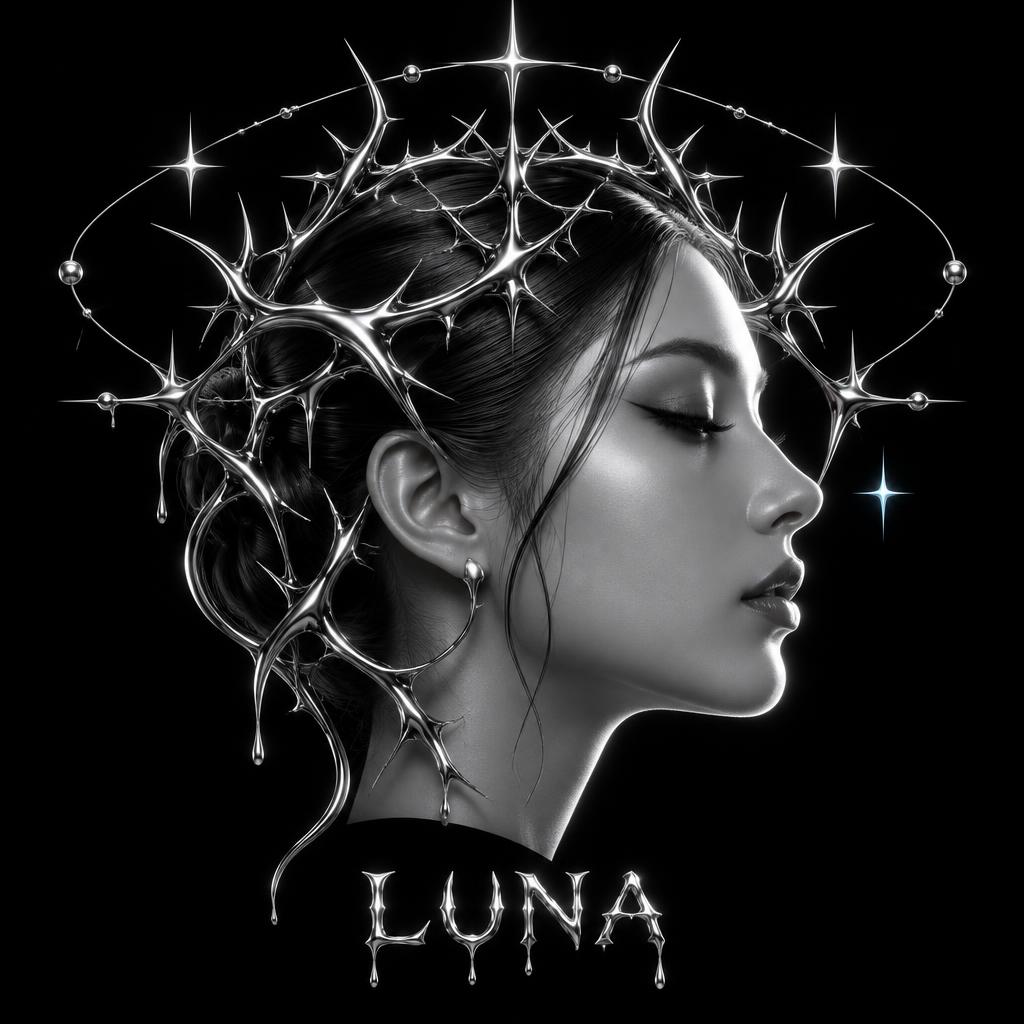
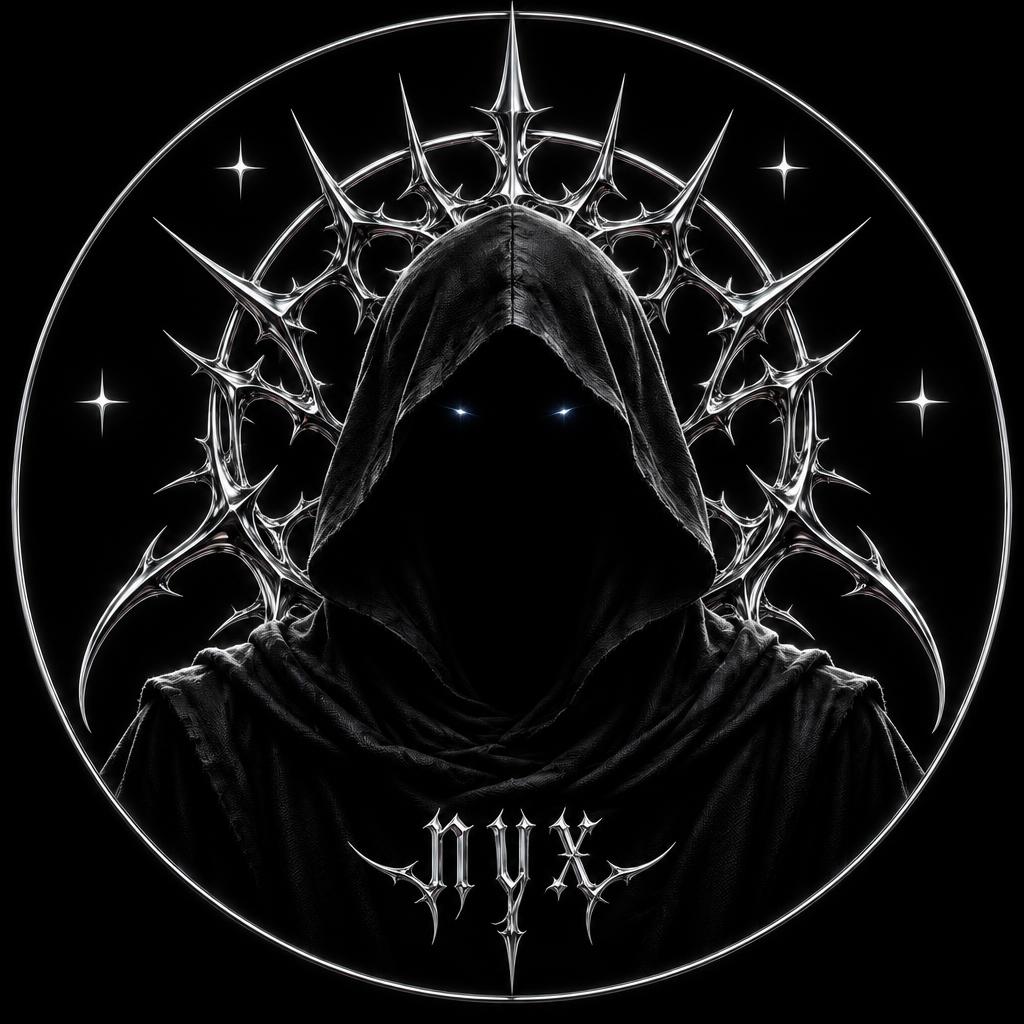
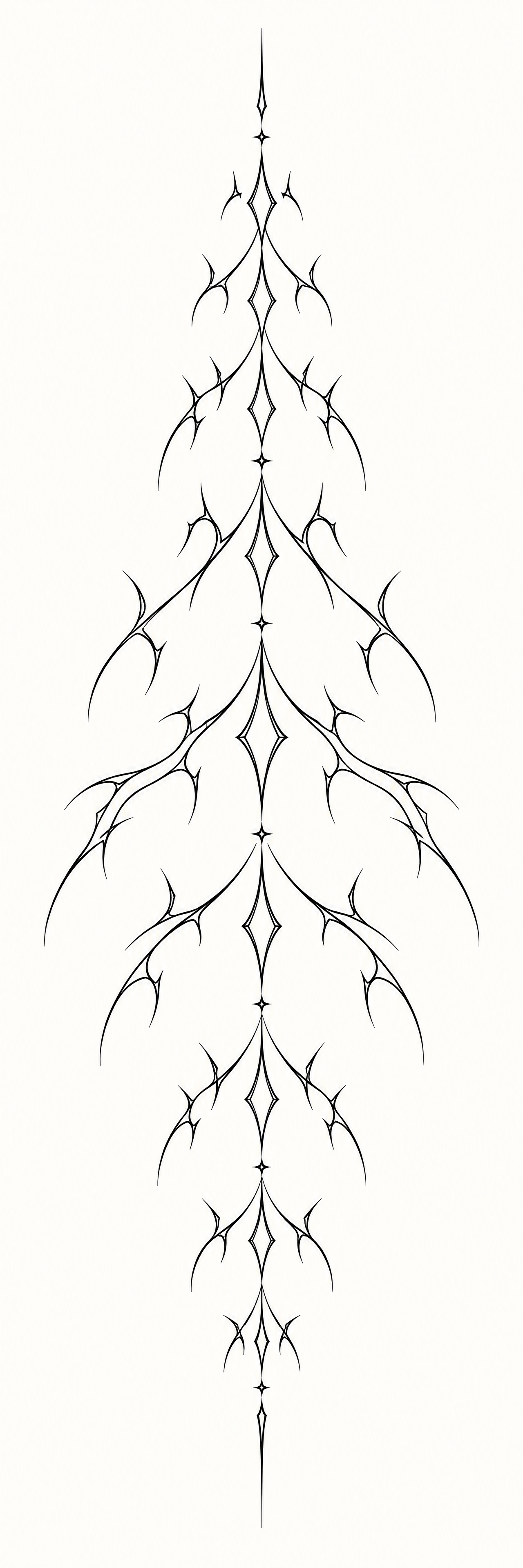
Cybersigilism style designs
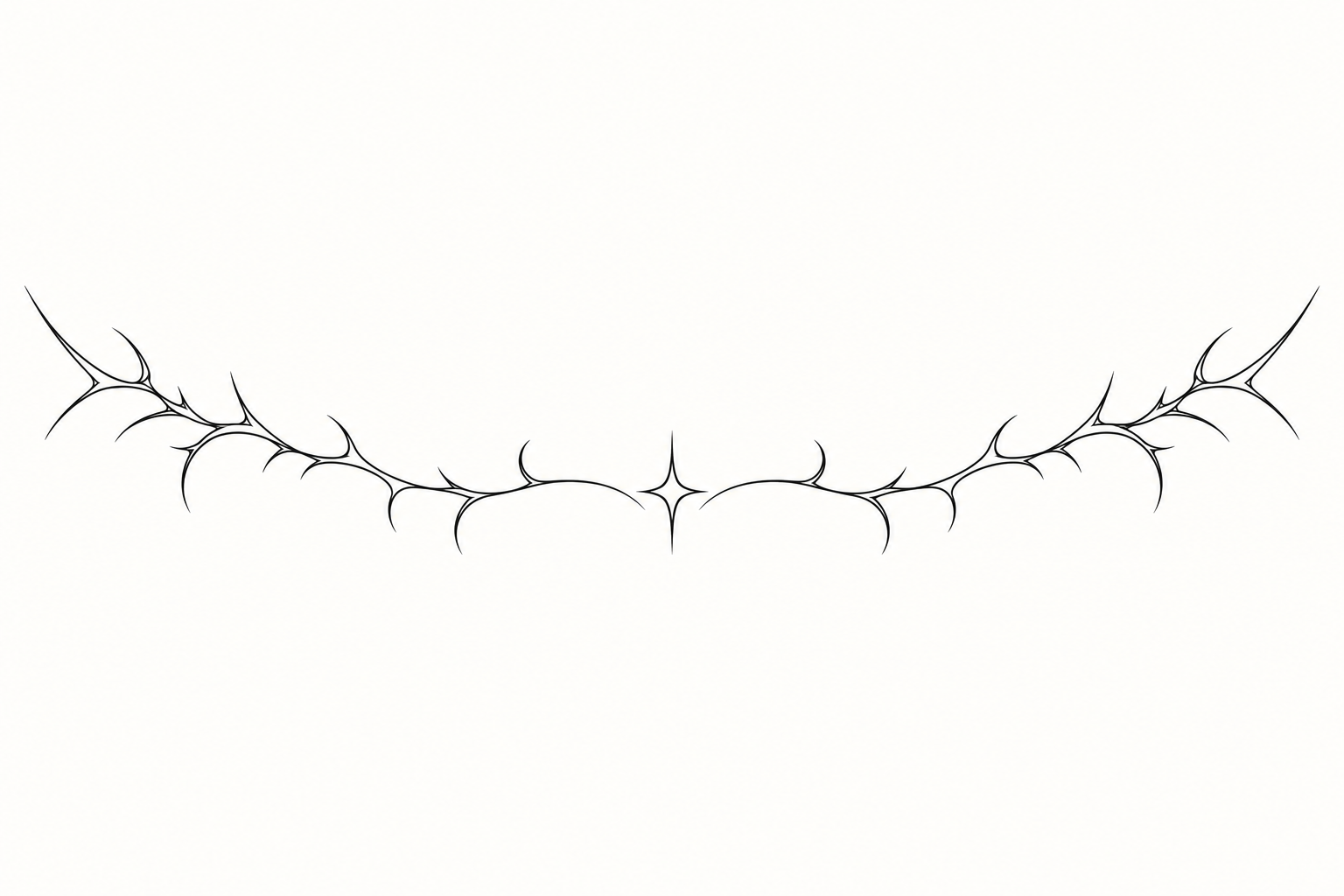
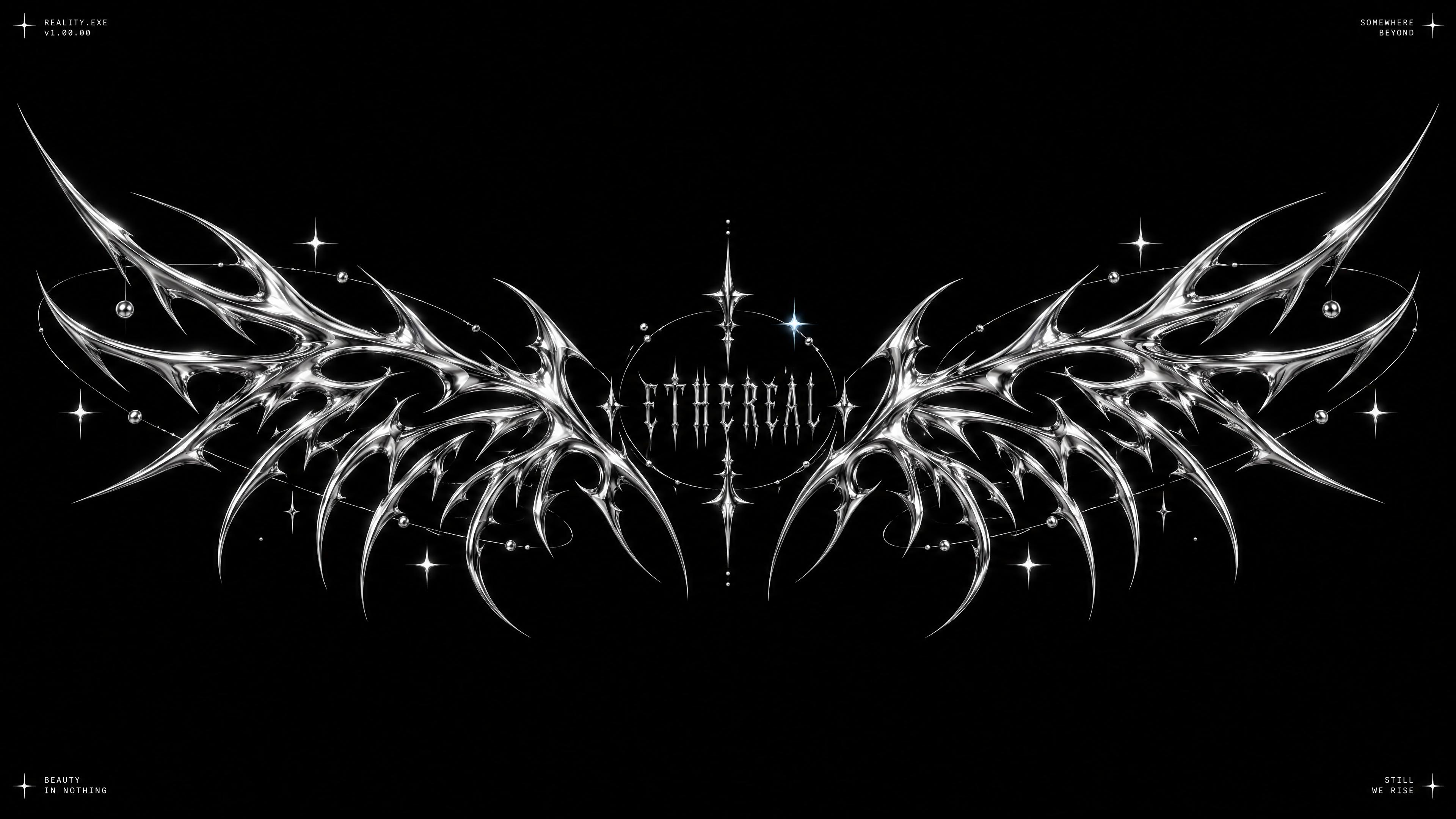
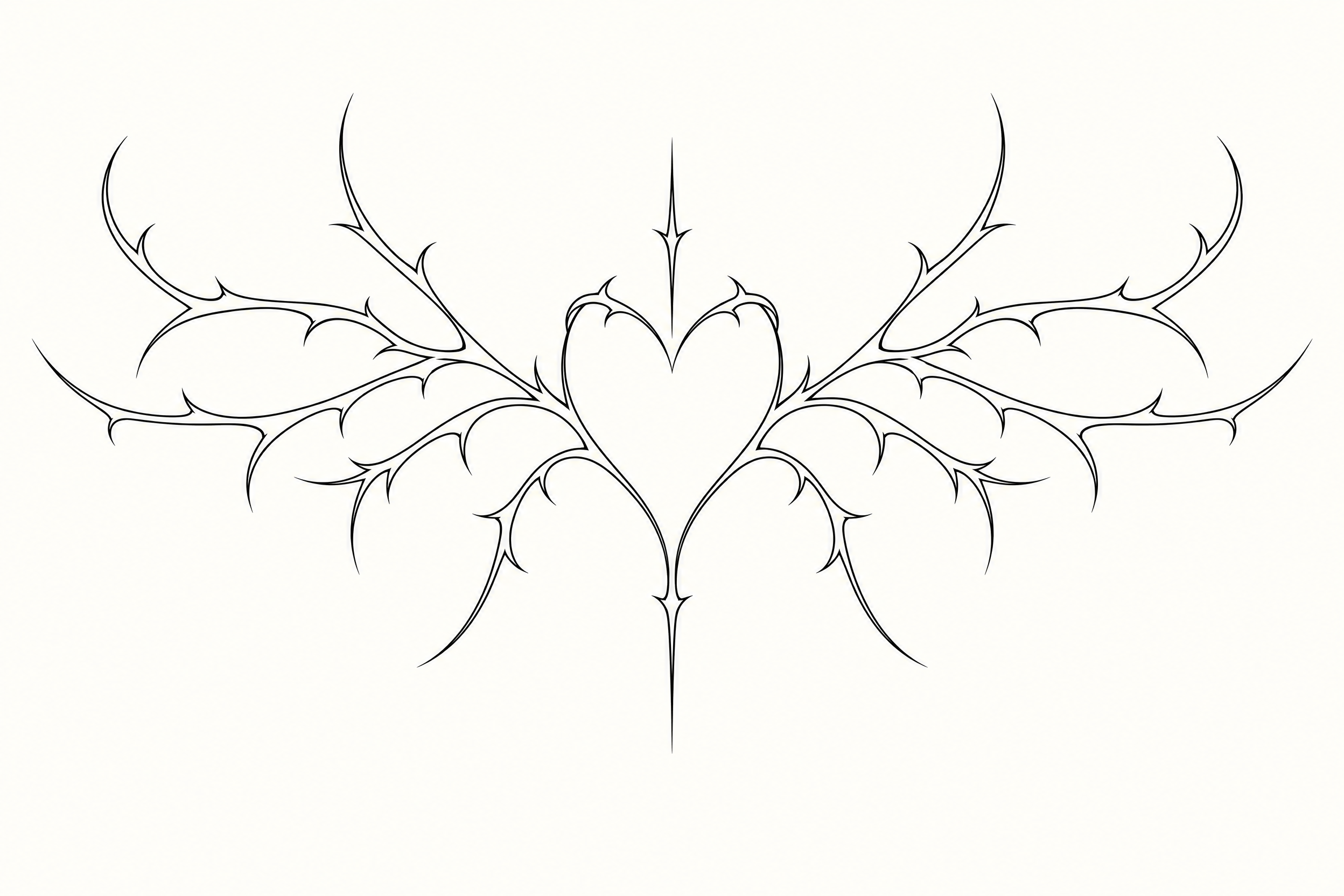
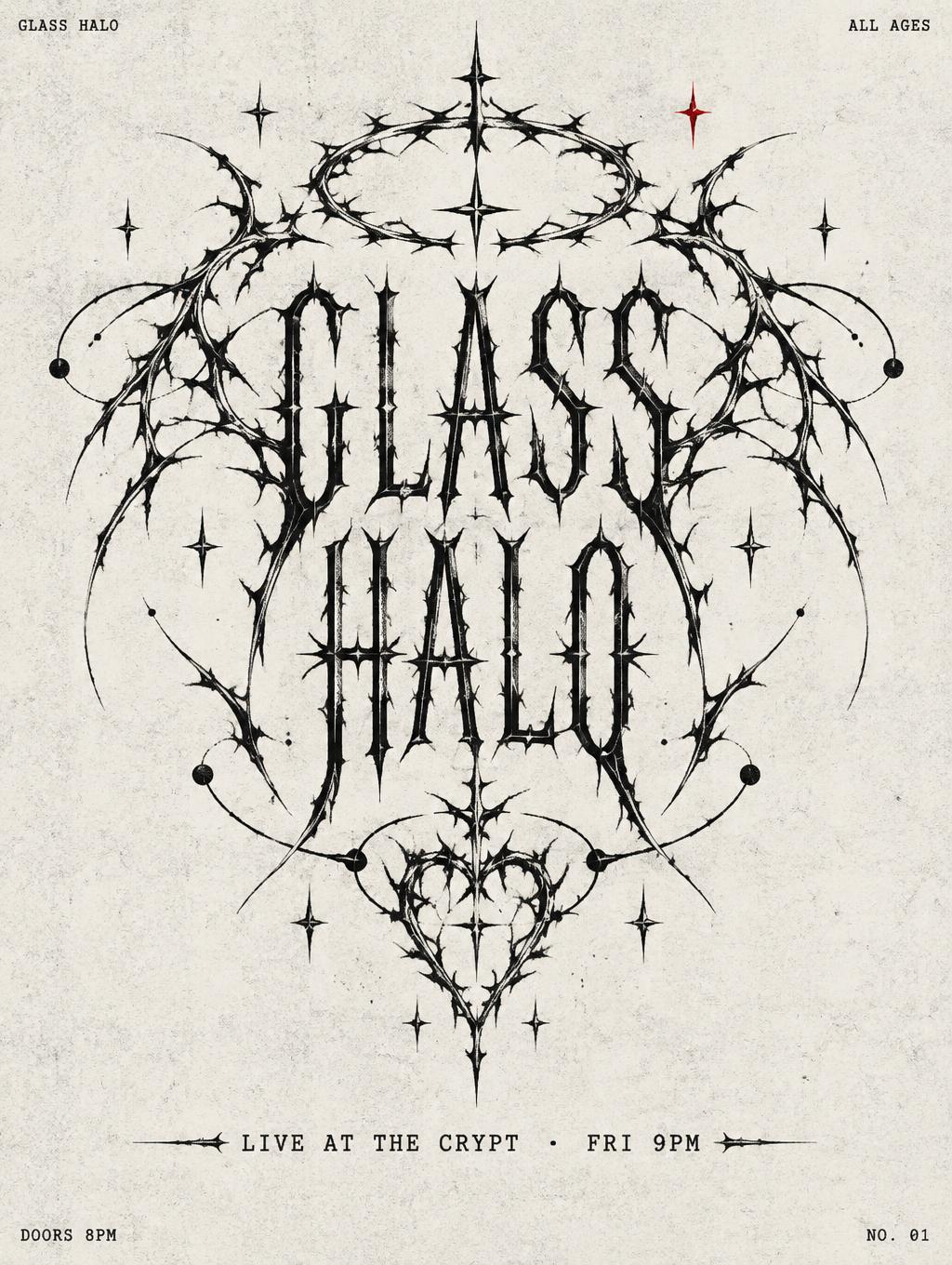
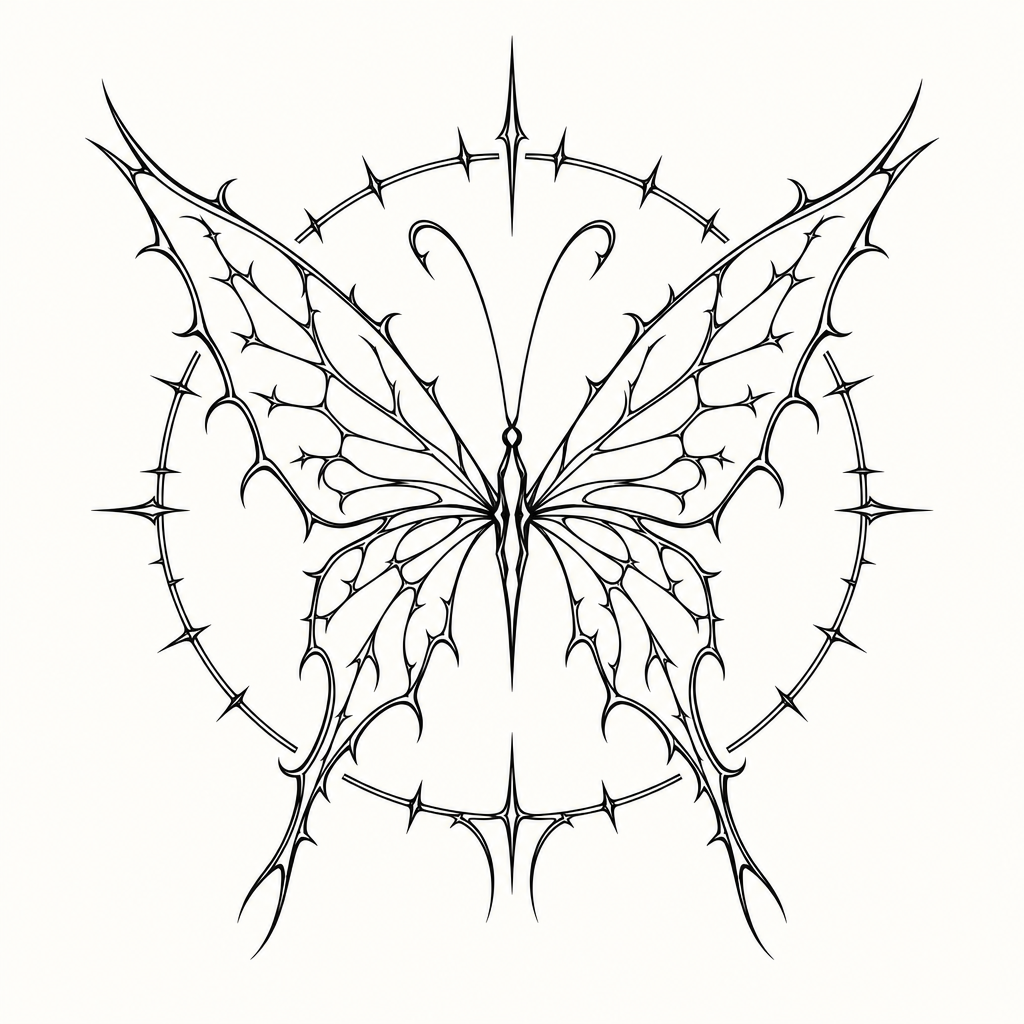
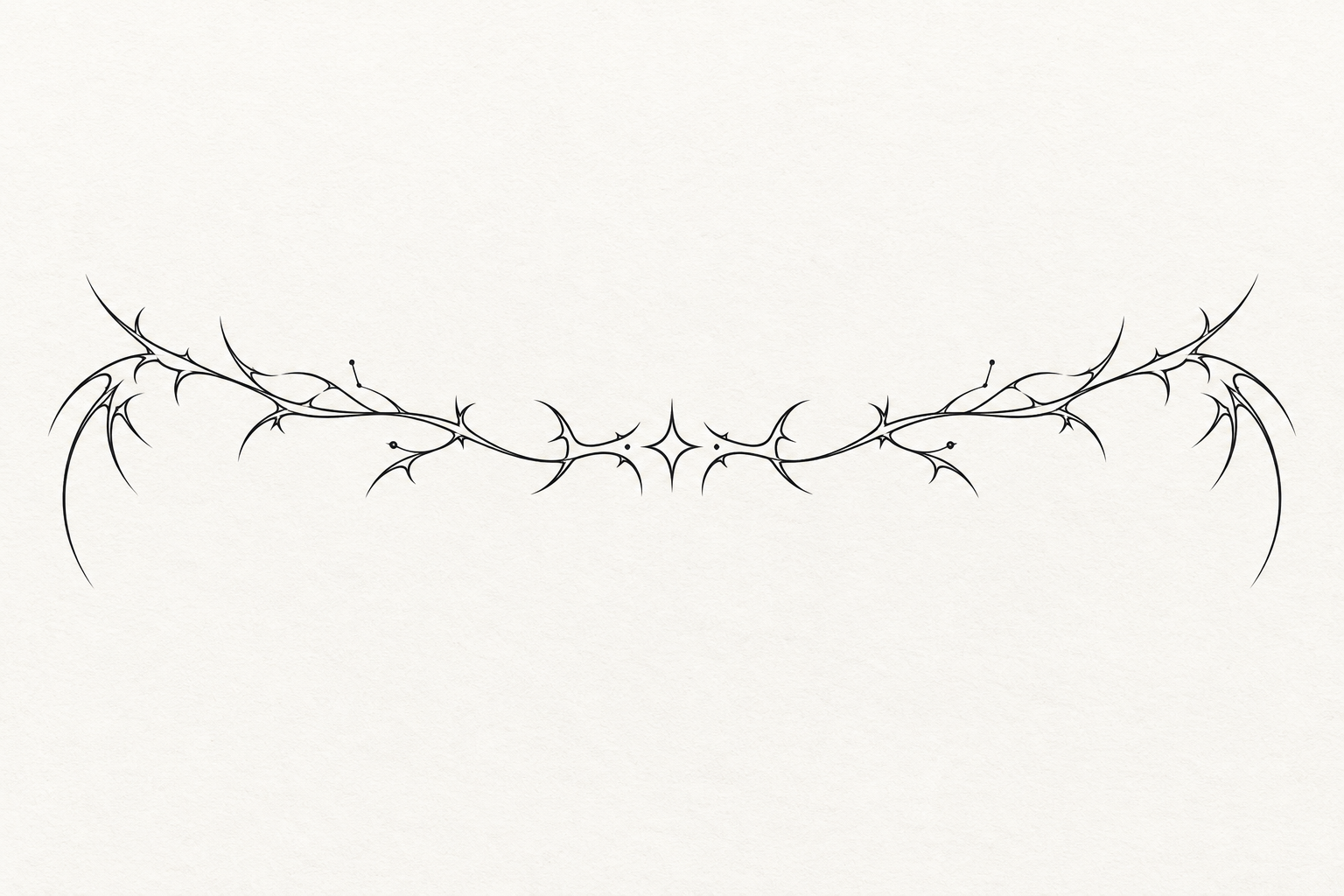
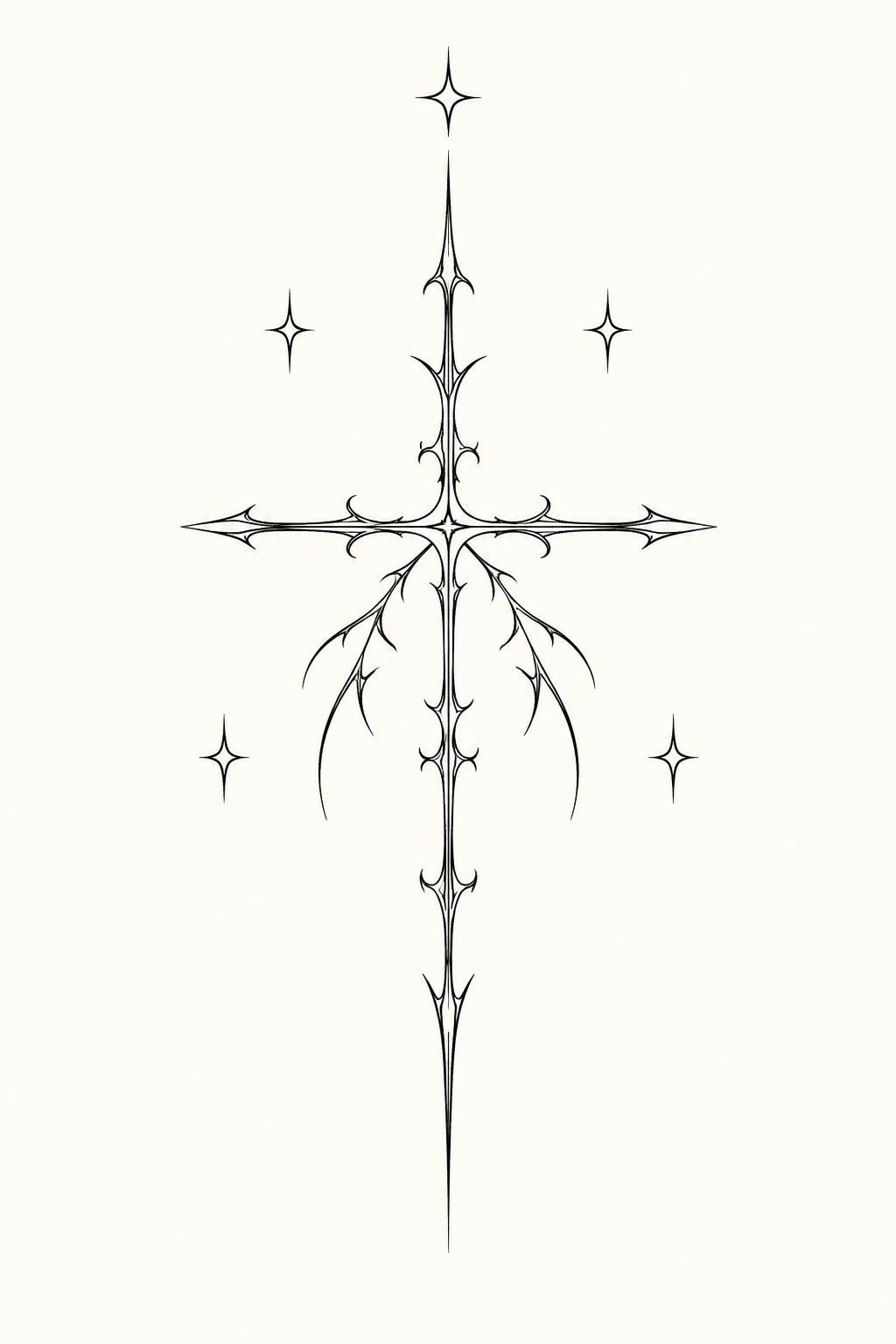
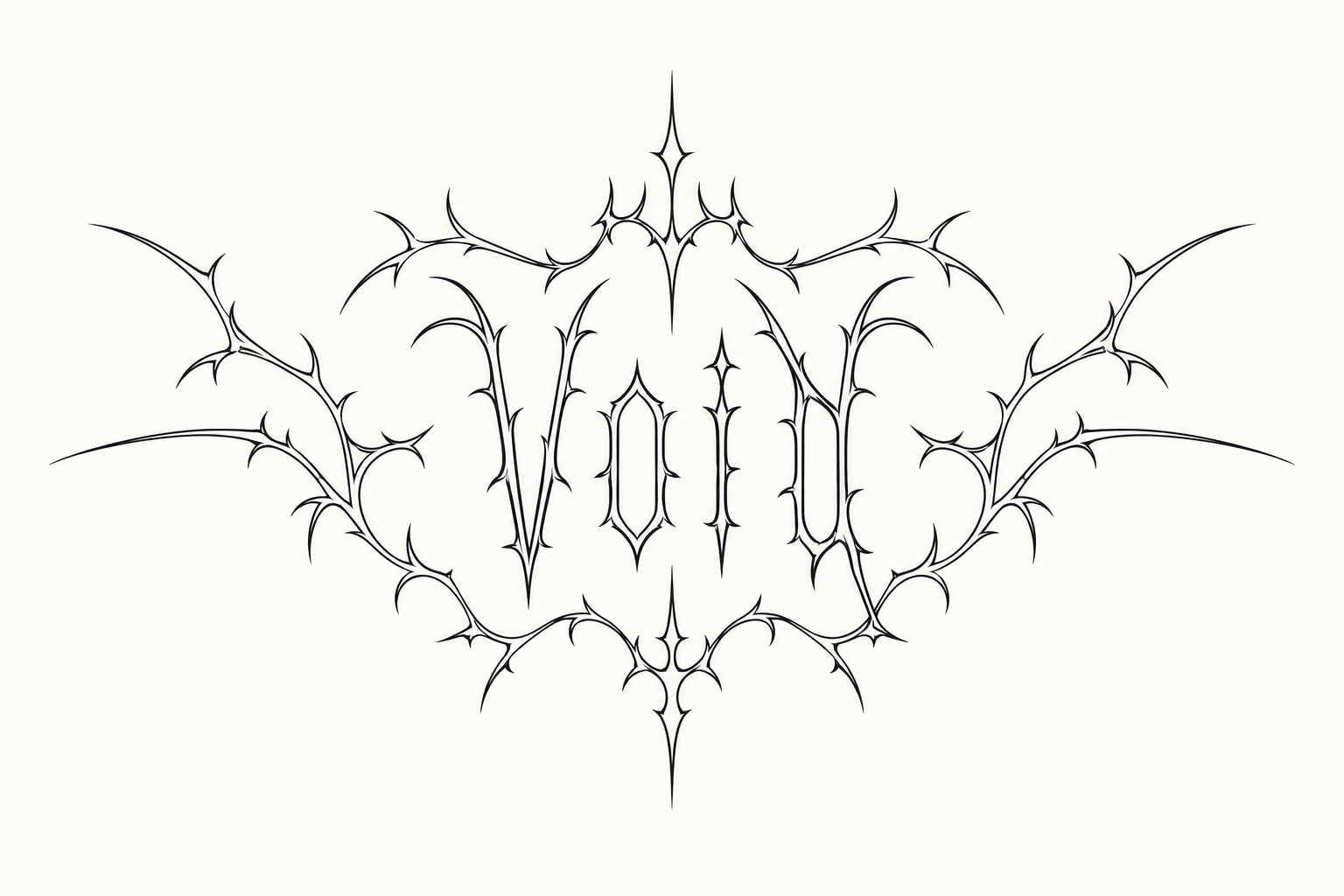
Real designs made on FontVibe. Open any one, or reuse it with your own text.
What you can make with Cybersigilism
Pages for the things people make in the Cybersigilism style. Each one has ready-made ideas and the right size.
Similar styles
Other looks that work for the same kinds of designs.








Tags in Cybersigilism
Every tag used on this page — each opens the designs, fonts and styles that share it.
Questions
The story behind Cybersigilism
Where the look comes from, the moments that shaped it and the facts behind it, with sources.
Where cybersigilism comes from
Cybersigilism grew up in tattoo studios and clubs. The magazine 032c traces it to the Berlin club scene of the late 2010s: a blackwork tattoo style of needle-fine, thorn-like lines that fuses ancient-looking symbols with digital aesthetics, which some people simply call Gen Z tribal.
Its parts are older. A sigil, from the Latin sigillum, meaning seal, is a symbol used in magic; the occultist Austin Osman Spare (1886–1956) built his sigils by condensing the letters of a wish into one glyph. The spiky, mirror-symmetrical silhouettes echo extreme-metal band logos, especially those drawn by Christophe Szpajdel, and the half-organic, half-mechanical line echoes H. R. Giger’s biomechanical art.
The chrome comes from Y2K design of the late 1990s and early 2000s, with its metallic materials and glossy effects. By the early 2020s, 032c reports, the look had spread from club queues to fashion runways, high-street shops and rap merch, so cybersigilism graphics now appear on posters, album covers and hoodies as often as on skin.
Sources: 032c — Cybersigilism: the Forever Trend (2025) · Wikipedia — Sigil · Wikipedia — Austin Osman Spare · Wikipedia — Christophe Szpajdel · Wikipedia — H. R. Giger · Wikipedia — Y2K aesthetic
Moments that shaped cybersigilism
Did you know?
The word sigil comes from the Latin sigillum, meaning seal. Source ↗
Austin Osman Spare (1886–1956) made sigils by condensing the letters of a written wish into a single glyph. Source ↗
Christophe Szpajdel, nicknamed the Lord of the Logos, estimates he has drawn over 10,000 logos, mostly for black metal, death metal and dark ambient bands. Source ↗
H. R. Giger (1940–2014) called his style biomechanical; his work on Alien (1979) won the Academy Award for Best Visual Effects in 1980. Source ↗
The Y2K aesthetic covers design of the late 1990s and early 2000s, known for metallic chromecore materials and glossy effects. Source ↗
Cybersigilism in typography
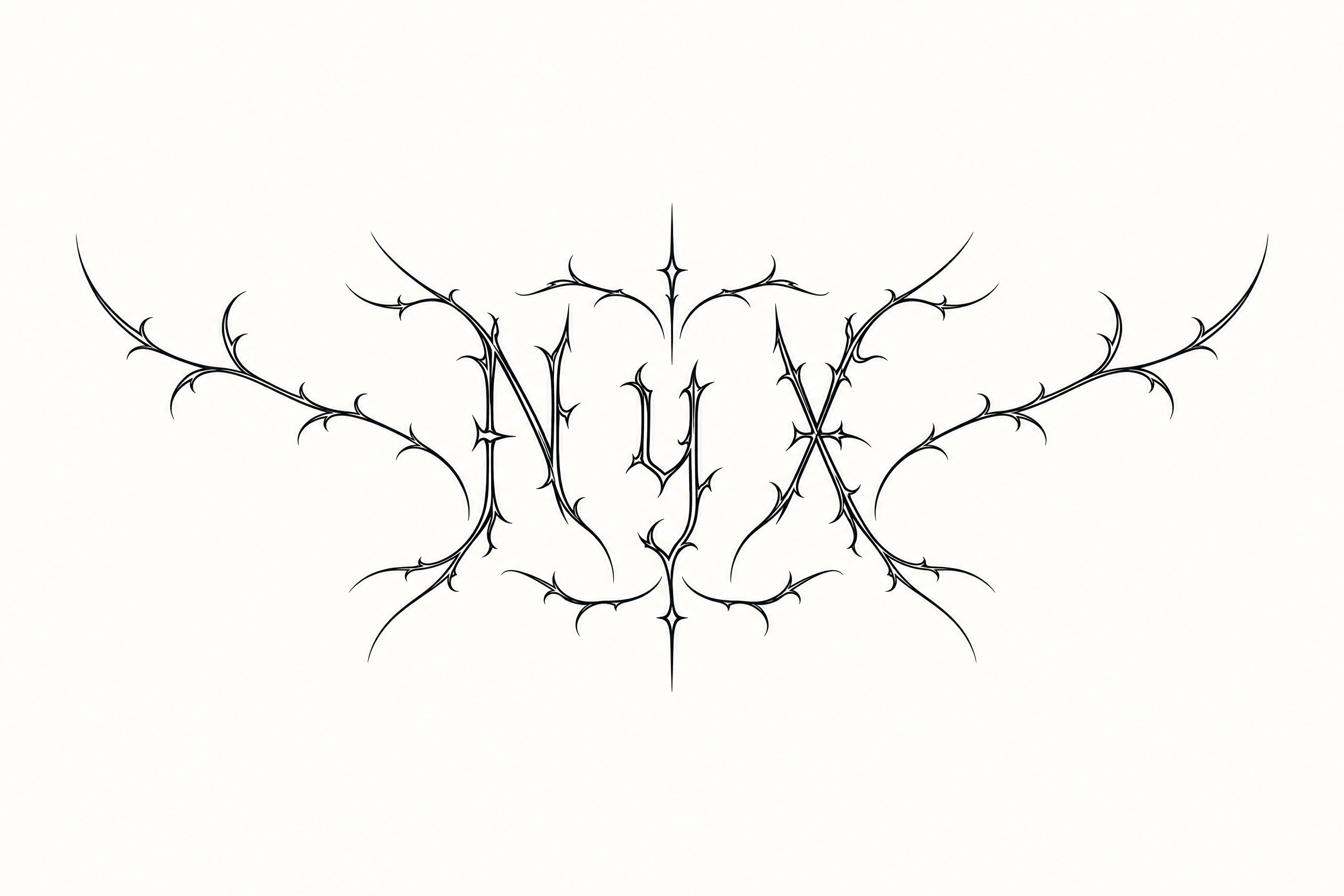
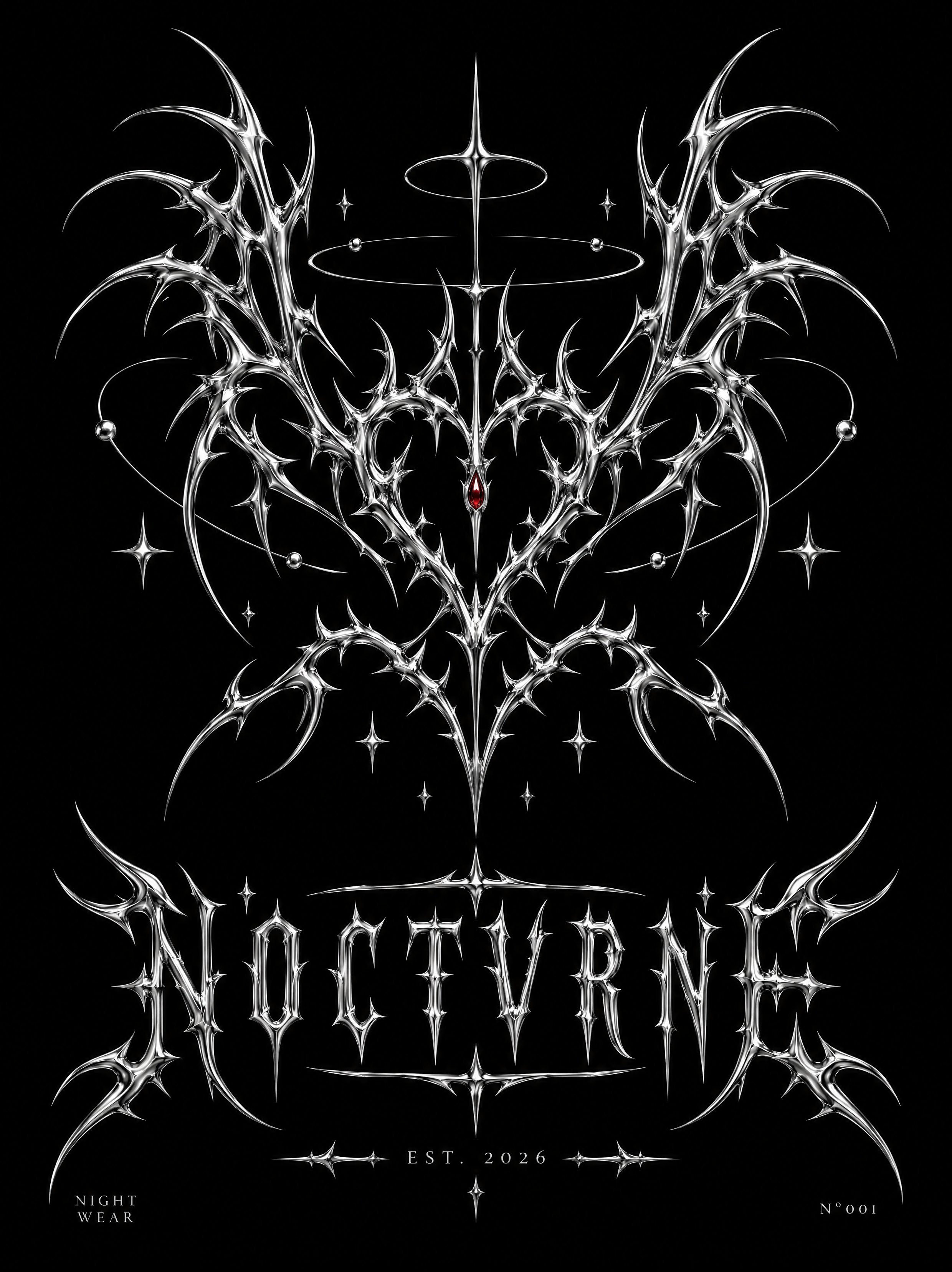
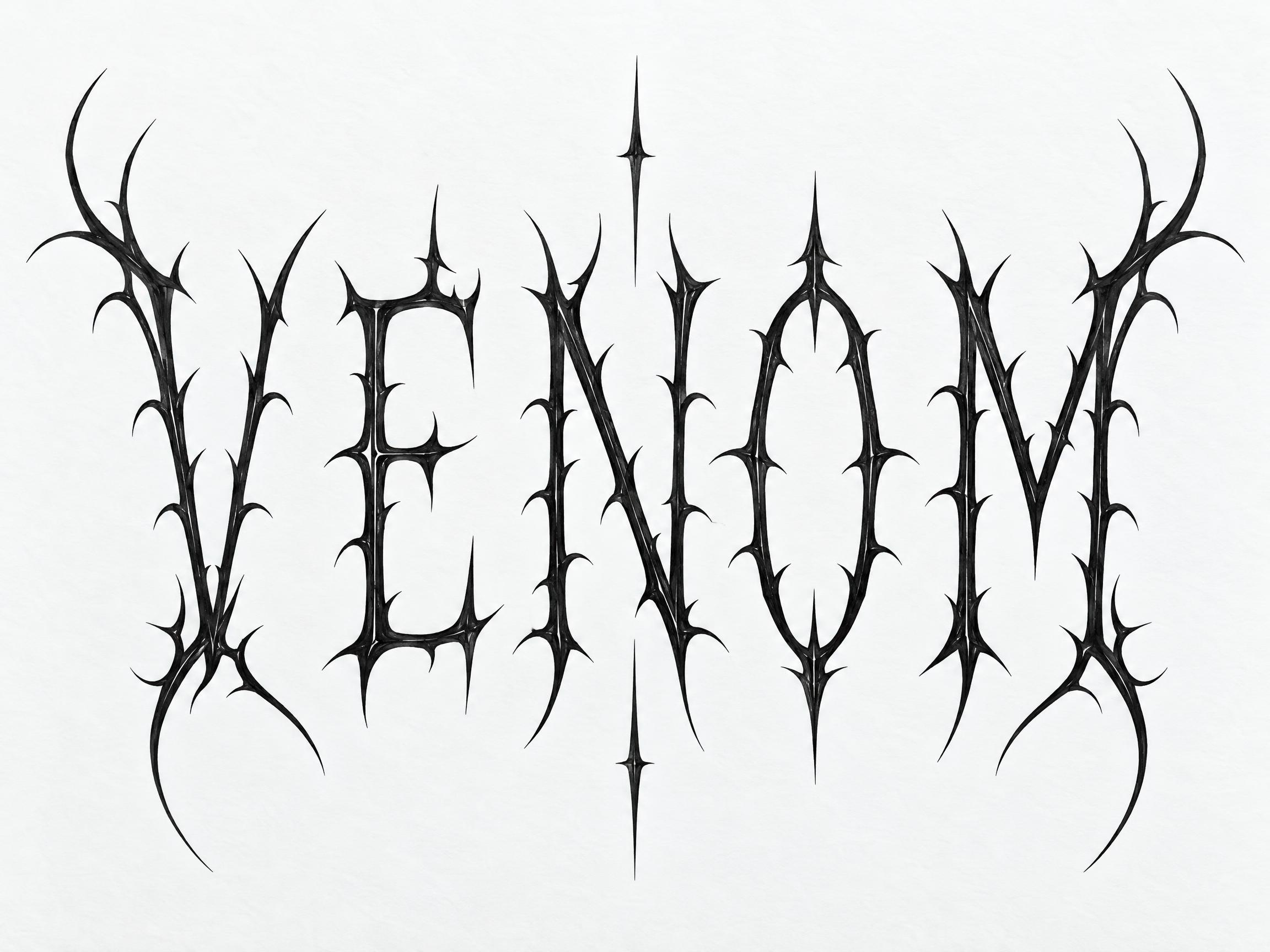
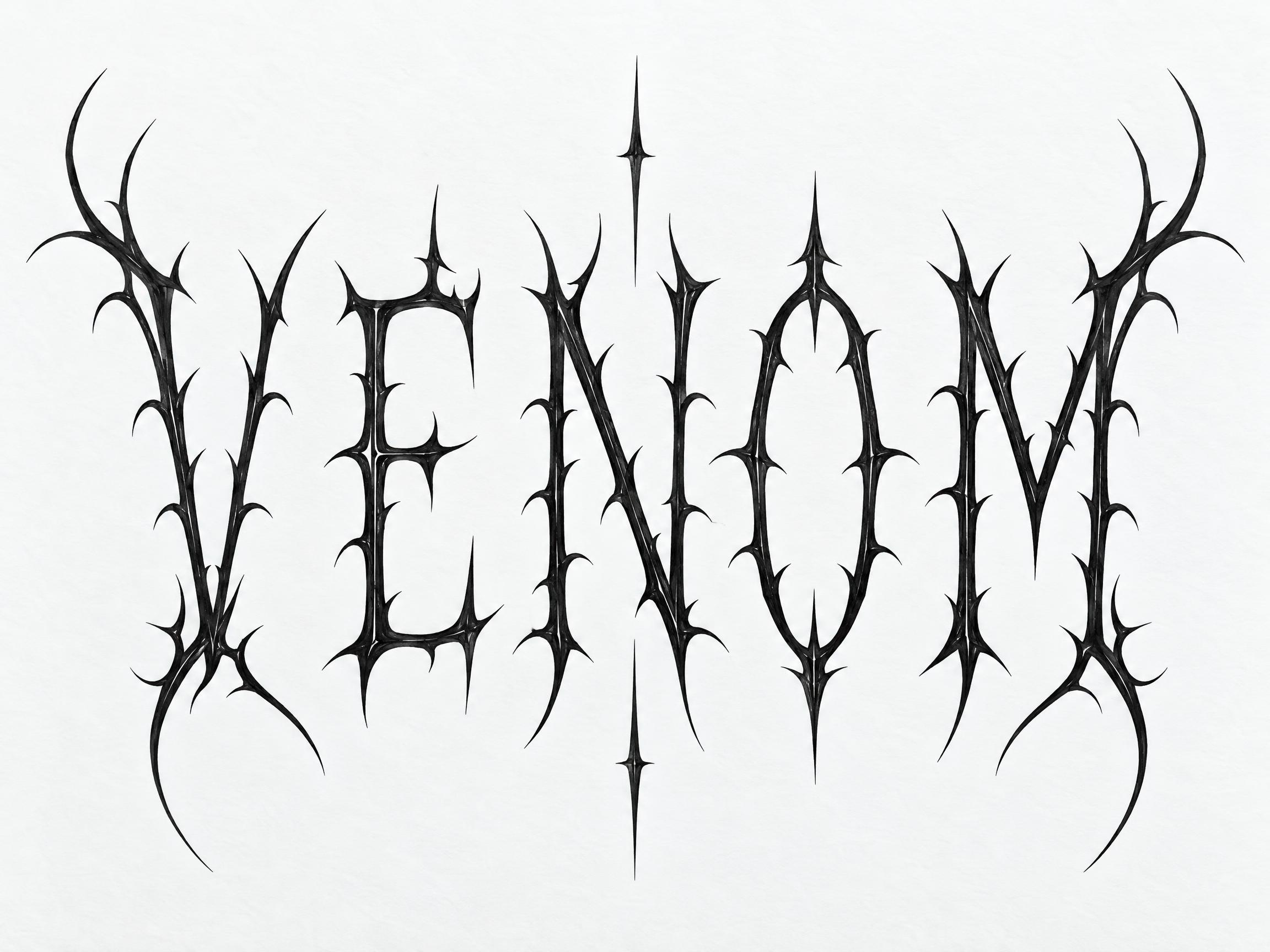
In a cybersigilism design the words sit on the same vertical axis as the thorn emblem: usually one name or title set large in the middle, with the emblem’s wings and spikes spreading out from it. Thin letters that grow their own thorns, heavy spiked metal-logo lettering and liquid chrome letters all fit; a clean condensed sans is often used for small dates and captions so the details stay readable.
On posters, tiny caption blocks in the corners and a thin rule along one edge balance the big emblem. On prints the whole design is black line on a light ground or white line on black, so it works as a one-colour screen print.
Where you’ll see it
- ✦Club night and rave posters
- ✦Album, single and mixtape covers
- ✦Hoodie and T-shirt prints for streetwear brands
- ✦Phone and desktop wallpapers
- ✦Profile pictures and channel icons
- ✦Tattoo designs to take to a tattoo artist
The cybersigilism aesthetic: thorns, symmetry, monochrome and chrome
Every cybersigilism piece here is built from the same four parts. The style draws the thorns, the symmetry, the tones and the finish of the whole picture; the letters come from the AI font you pick.
Cybersigilism posters, album covers, merch prints, wallpapers and PFPs
Every format here puts your name or title on the centre line of a mirrored thorn emblem, in black ink or liquid chrome. Pick a format to see designs made in it, or describe your own.
Cybersigilism Album Covers
Square album, single and mixtape covers with a symmetrical thorn sigil behind the artist name, in black ink or liquid chrome.
Cybersigilism Shirt & Hoodie Prints
Flat print artwork for hoodie backs and T-shirt fronts: your brand name across a thorn emblem, black on light or white on black.
Cybersigilism Posters
Club night and gig posters with a mirrored thorn emblem around the title, sparkle stars and tiny caption blocks in the corners.
Cybersigilism PFPs
Square profile pictures with your name or handle inside a chrome thorn heart, halo or pair of wings.
Cybersigilism Wallpapers
Tall phone lock screens and wide desktop wallpapers with a thorn-and-vein emblem down the centre and room for the clock.
AI fonts that fit Cybersigilism
Every AI font here fits the Cybersigilism frame. Pick one, or let the generator choose.


Cybersigilism style designs
Real designs made on FontVibe. Open any one, or reuse it with your own text.
What you can make with Cybersigilism
Pages for the things people make in the Cybersigilism style. Each one has ready-made ideas and the right size.
Similar styles
Other looks that work for the same kinds of designs.
Tags in Cybersigilism
Every tag used on this page — each opens the designs, fonts and styles that share it.
Questions
The story behind Cybersigilism
Where the look comes from, the moments that shaped it and the facts behind it, with sources.
Where cybersigilism comes from
Cybersigilism grew up in tattoo studios and clubs. The magazine 032c traces it to the Berlin club scene of the late 2010s: a blackwork tattoo style of needle-fine, thorn-like lines that fuses ancient-looking symbols with digital aesthetics, which some people simply call Gen Z tribal.
Its parts are older. A sigil, from the Latin sigillum, meaning seal, is a symbol used in magic; the occultist Austin Osman Spare (1886–1956) built his sigils by condensing the letters of a wish into one glyph. The spiky, mirror-symmetrical silhouettes echo extreme-metal band logos, especially those drawn by Christophe Szpajdel, and the half-organic, half-mechanical line echoes H. R. Giger’s biomechanical art.
The chrome comes from Y2K design of the late 1990s and early 2000s, with its metallic materials and glossy effects. By the early 2020s, 032c reports, the look had spread from club queues to fashion runways, high-street shops and rap merch, so cybersigilism graphics now appear on posters, album covers and hoodies as often as on skin.
Sources: 032c — Cybersigilism: the Forever Trend (2025) · Wikipedia — Sigil · Wikipedia — Austin Osman Spare · Wikipedia — Christophe Szpajdel · Wikipedia — H. R. Giger · Wikipedia — Y2K aesthetic
Moments that shaped cybersigilism
Did you know?
The word sigil comes from the Latin sigillum, meaning seal. Source ↗
Austin Osman Spare (1886–1956) made sigils by condensing the letters of a written wish into a single glyph. Source ↗
Christophe Szpajdel, nicknamed the Lord of the Logos, estimates he has drawn over 10,000 logos, mostly for black metal, death metal and dark ambient bands. Source ↗
H. R. Giger (1940–2014) called his style biomechanical; his work on Alien (1979) won the Academy Award for Best Visual Effects in 1980. Source ↗
The Y2K aesthetic covers design of the late 1990s and early 2000s, known for metallic chromecore materials and glossy effects. Source ↗
Cybersigilism in typography
In a cybersigilism design the words sit on the same vertical axis as the thorn emblem: usually one name or title set large in the middle, with the emblem’s wings and spikes spreading out from it. Thin letters that grow their own thorns, heavy spiked metal-logo lettering and liquid chrome letters all fit; a clean condensed sans is often used for small dates and captions so the details stay readable.
On posters, tiny caption blocks in the corners and a thin rule along one edge balance the big emblem. On prints the whole design is black line on a light ground or white line on black, so it works as a one-colour screen print.
Where you’ll see it
- ✦Club night and rave posters
- ✦Album, single and mixtape covers
- ✦Hoodie and T-shirt prints for streetwear brands
- ✦Phone and desktop wallpapers
- ✦Profile pictures and channel icons
- ✦Tattoo designs to take to a tattoo artist