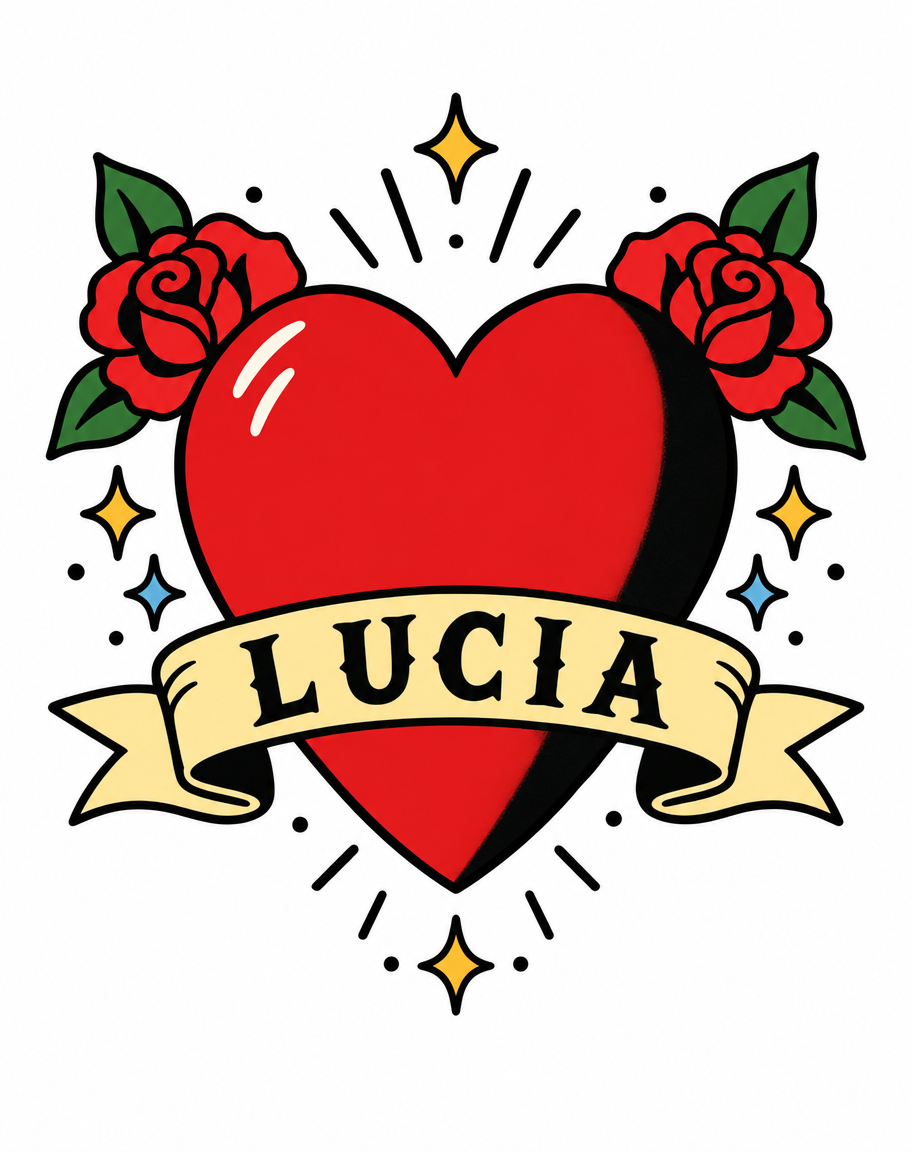
The American traditional style: bold lines, flash motifs, a short palette and aged paper
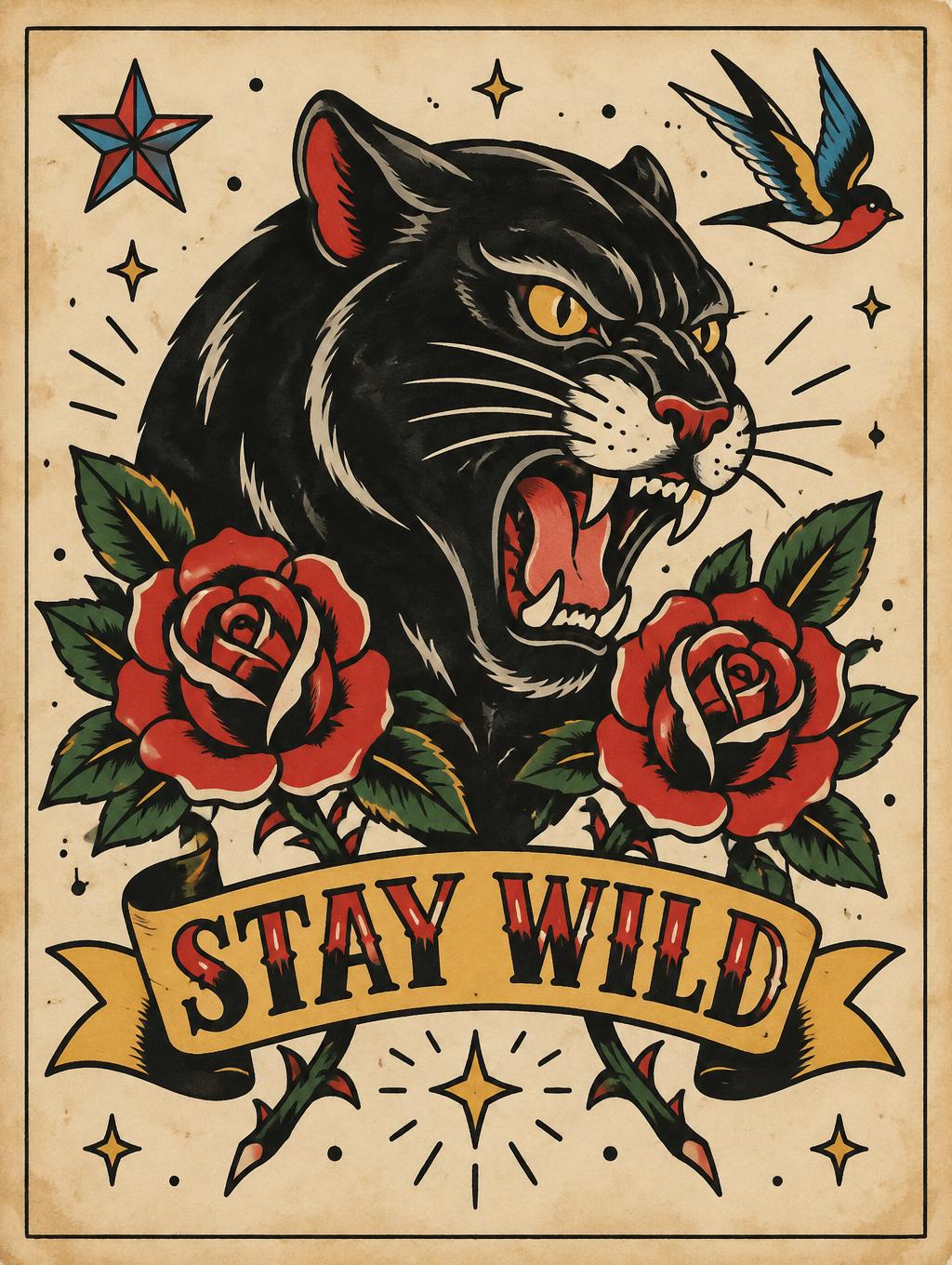
Every American traditional piece here is built from the same four parts. The style draws the outlines, motifs, colour and paper around your words; the letters come from the AI font you pick.
American traditional tattoo designs, flash prints, posters, stickers and tees
Every format here puts your words into classic American traditional flash. Pick a format to see designs made in it, or describe your own.
American Traditional Flash Prints
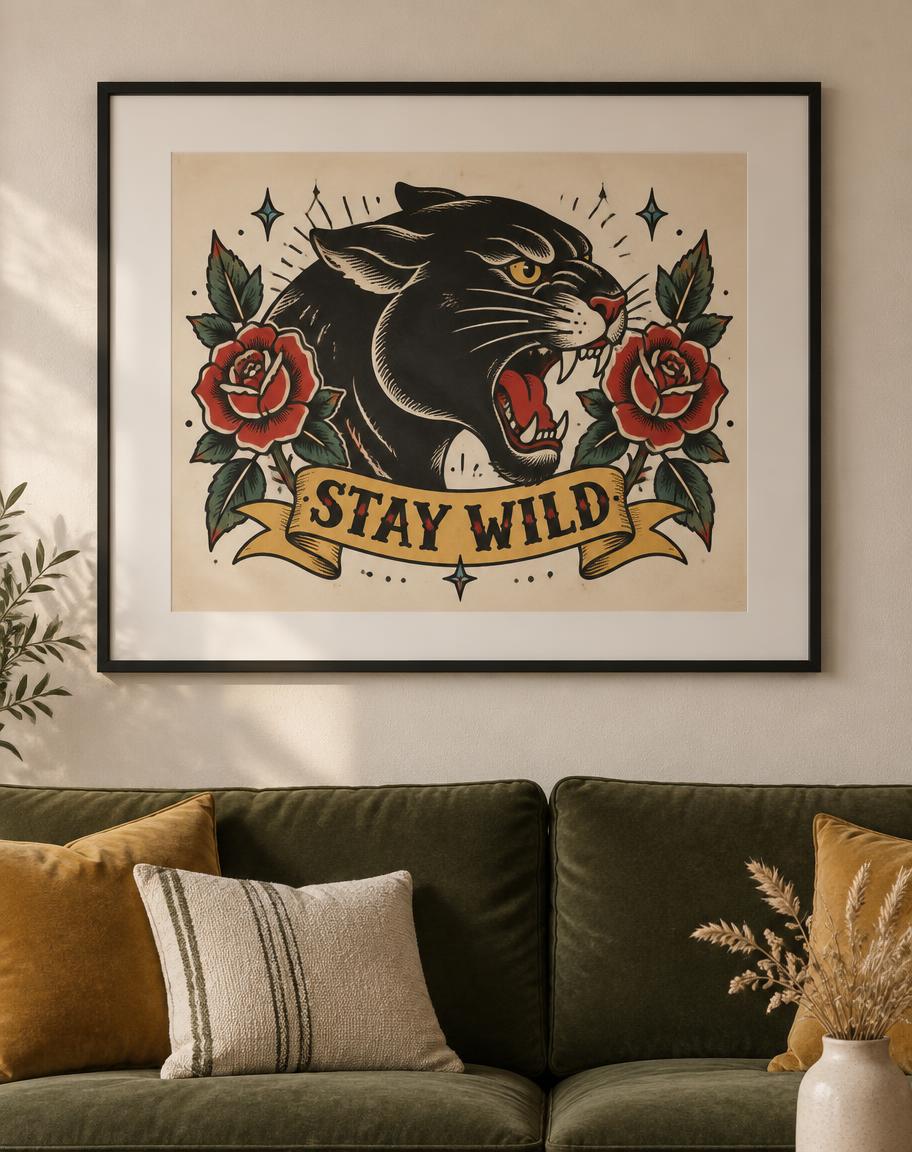
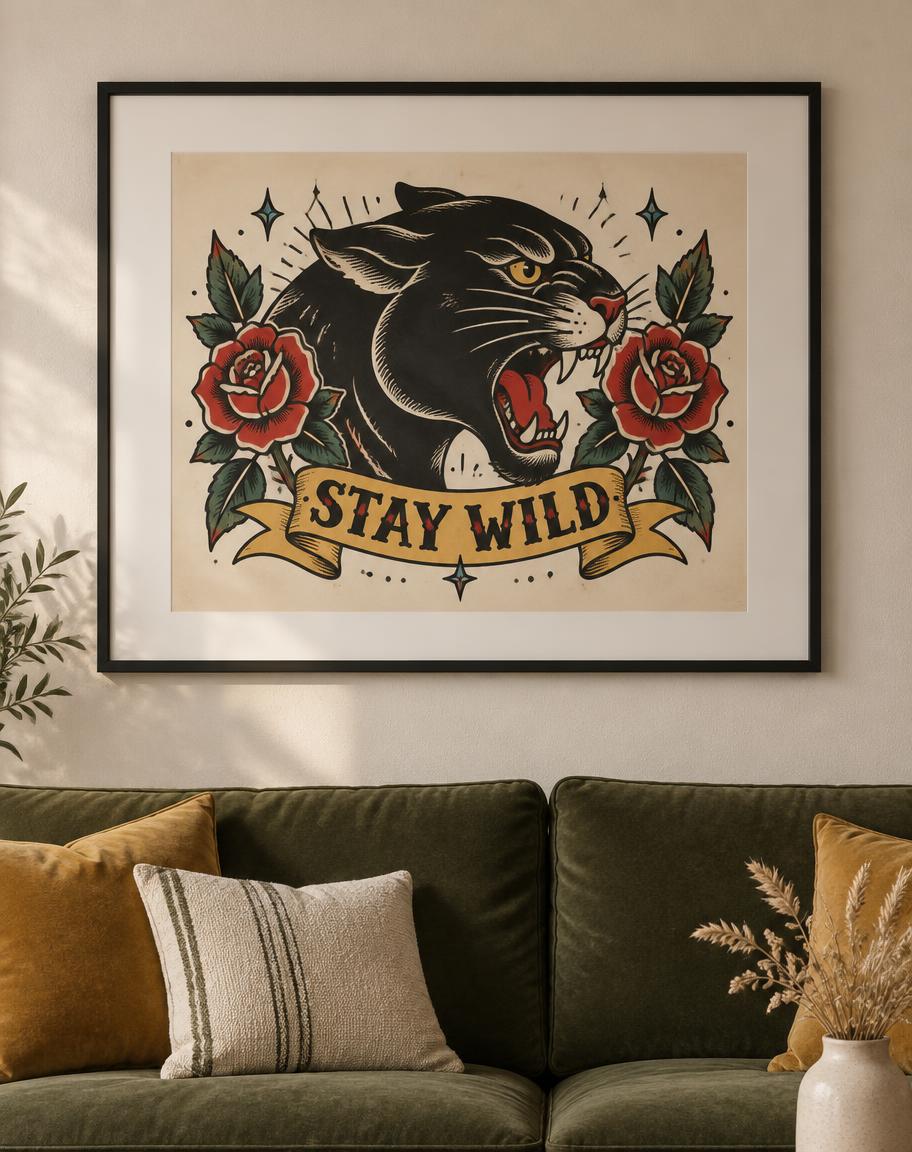
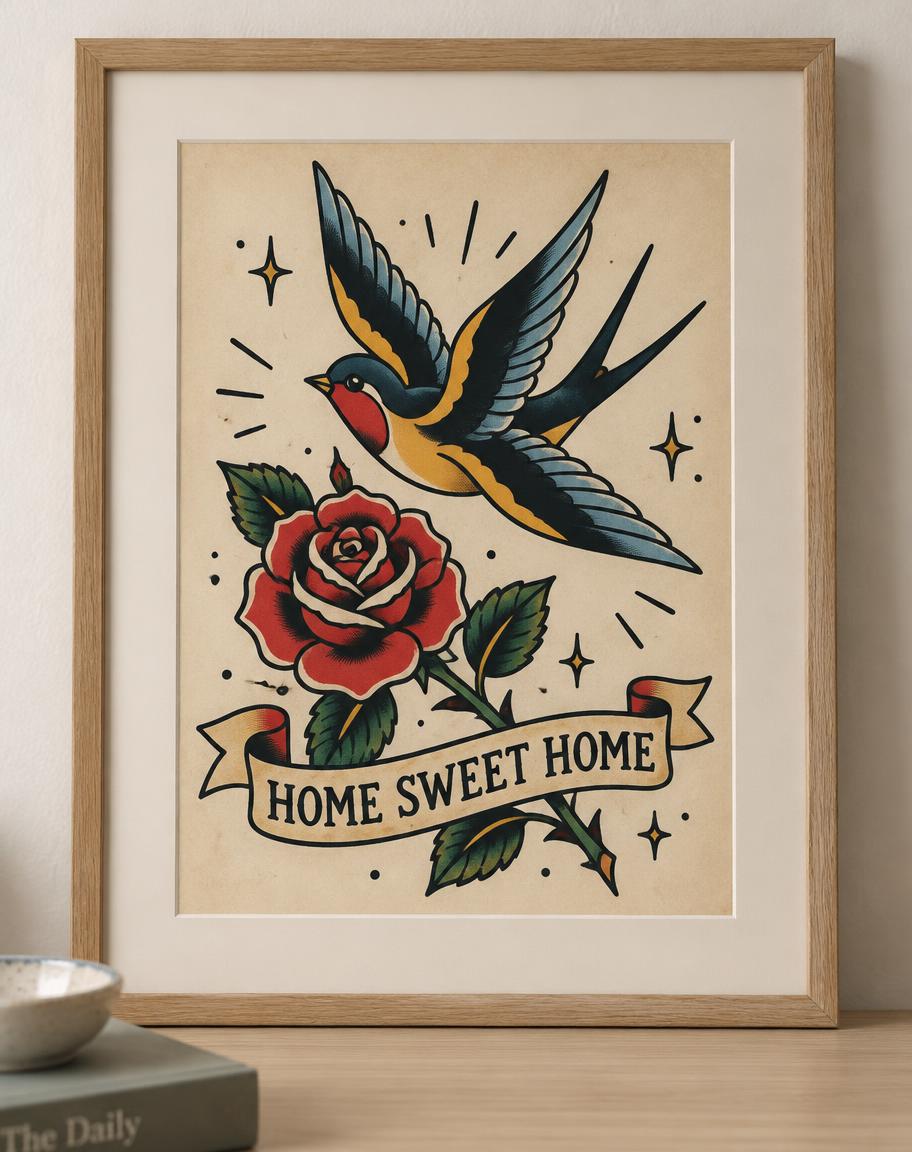
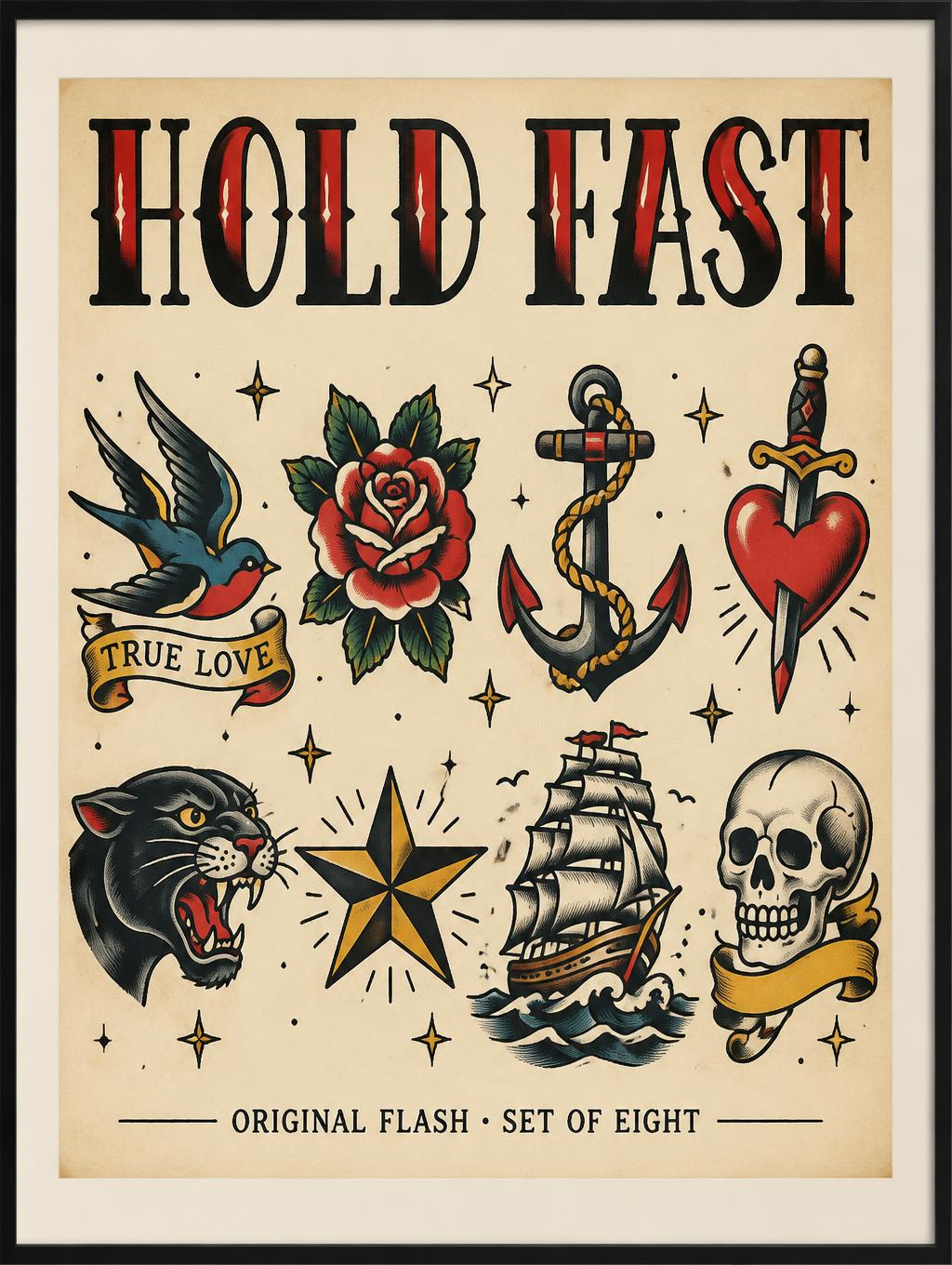
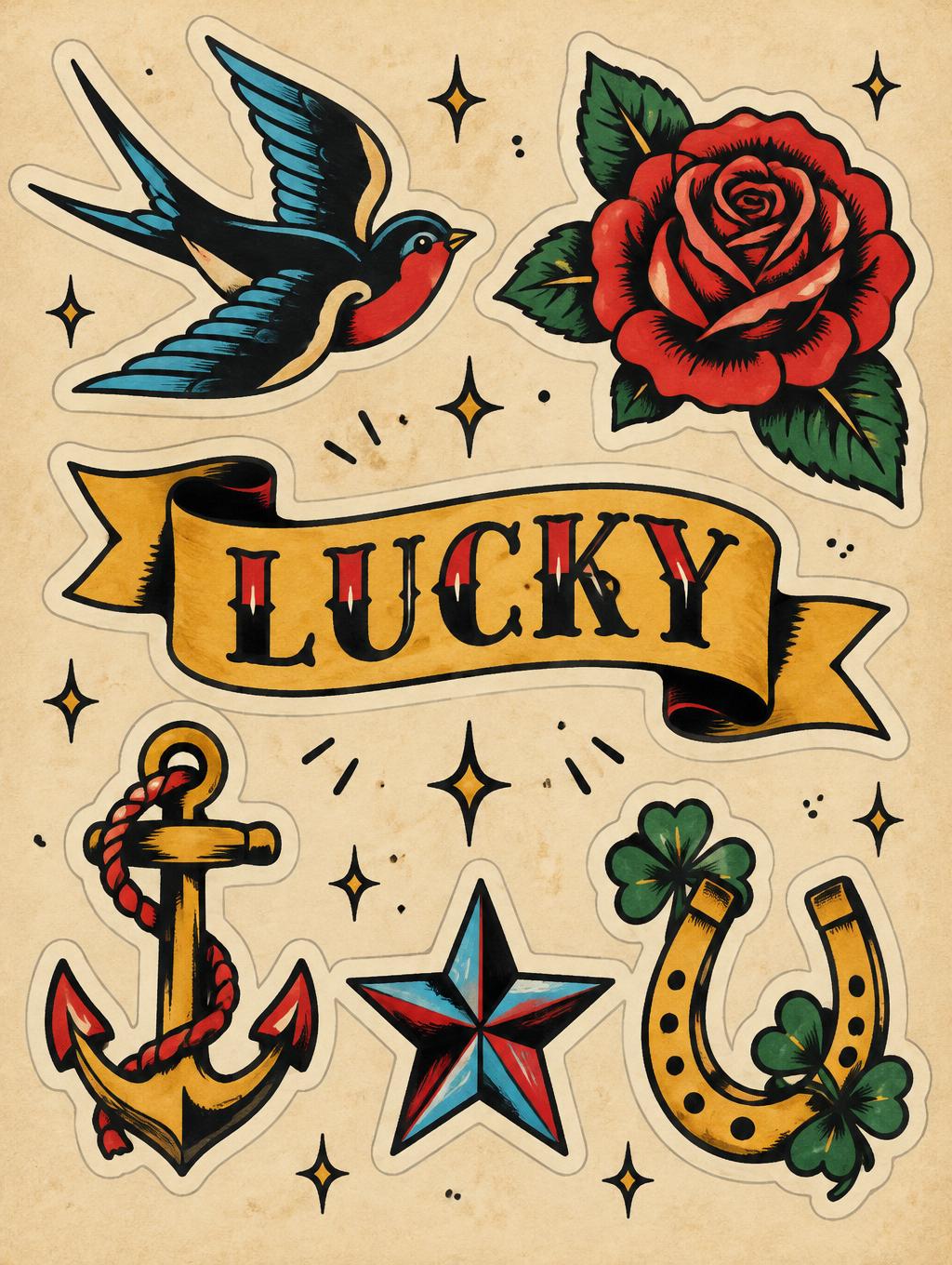
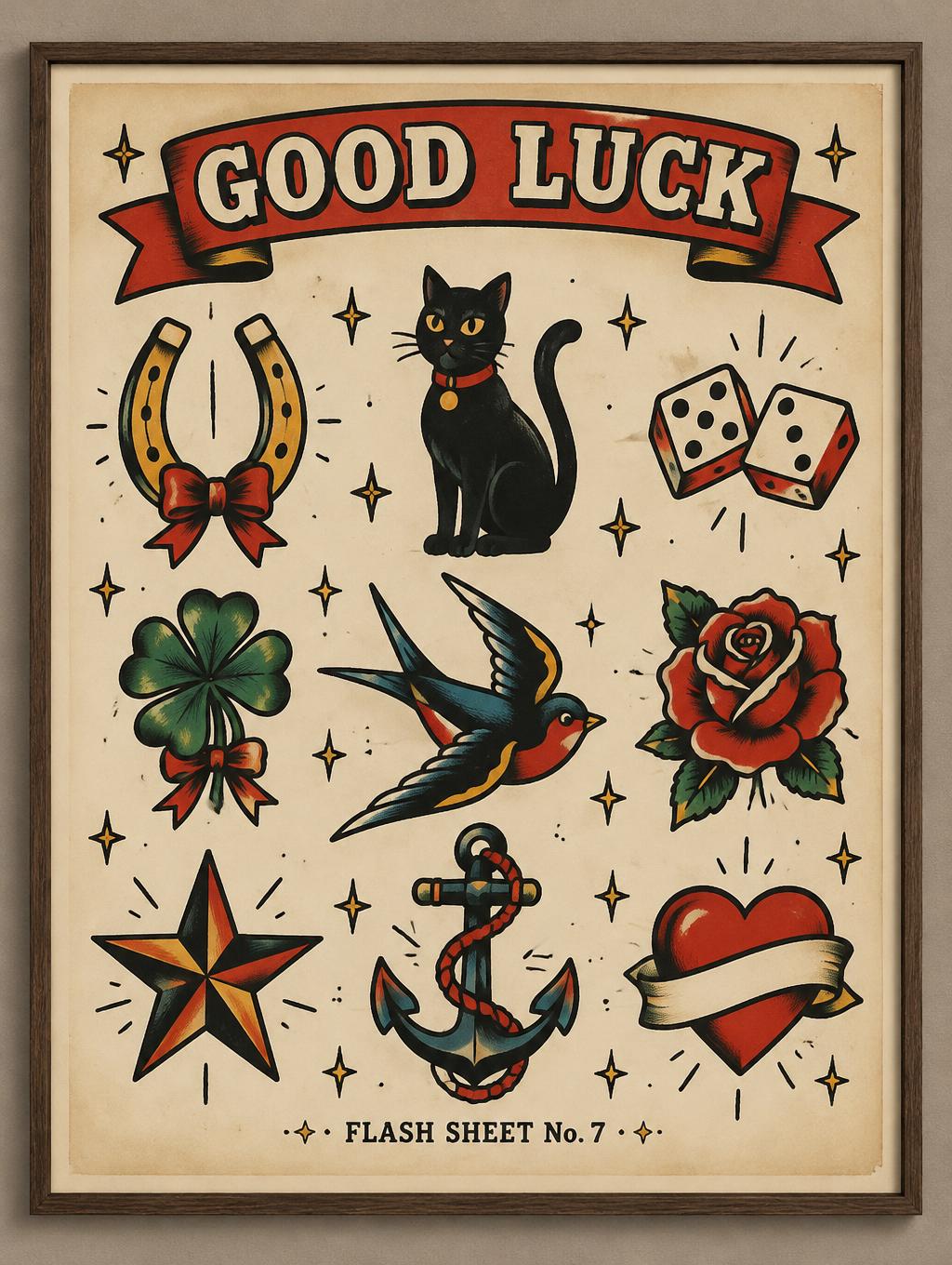
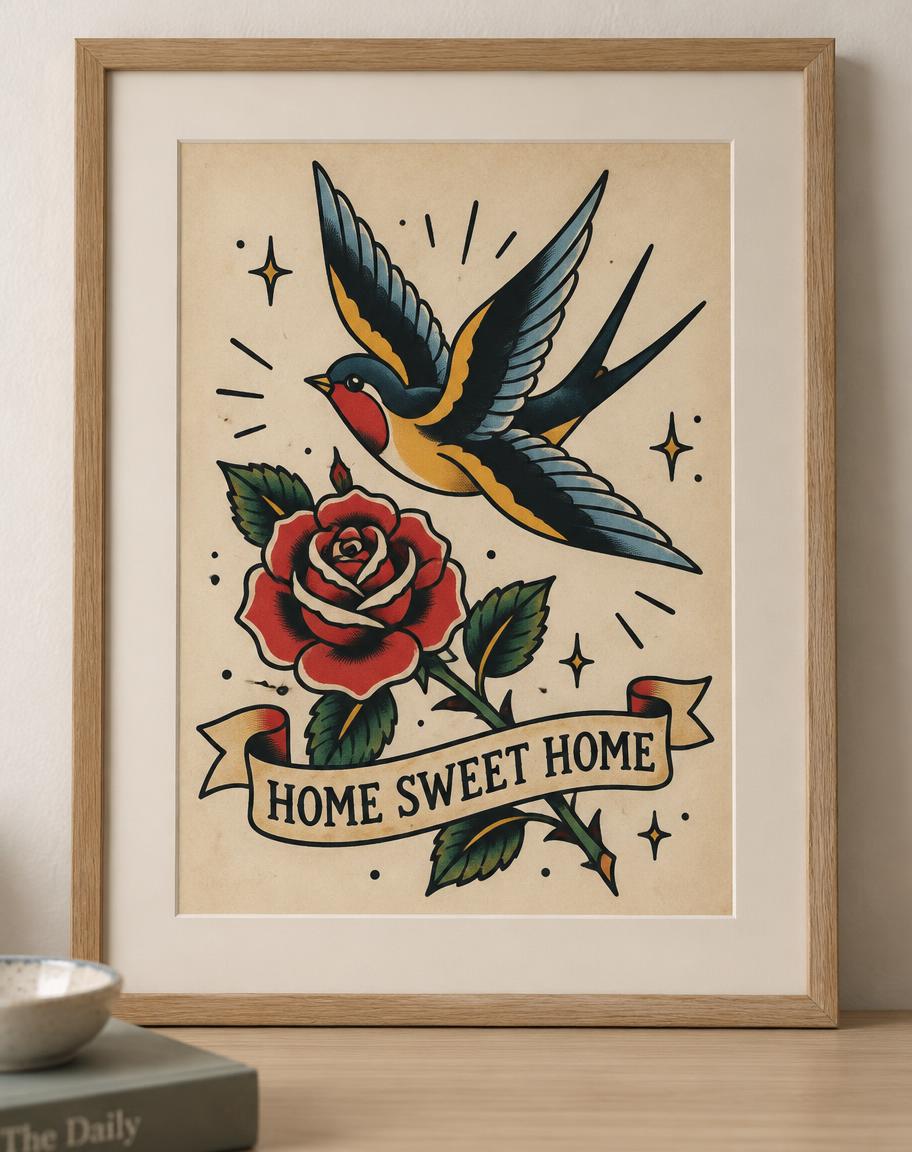
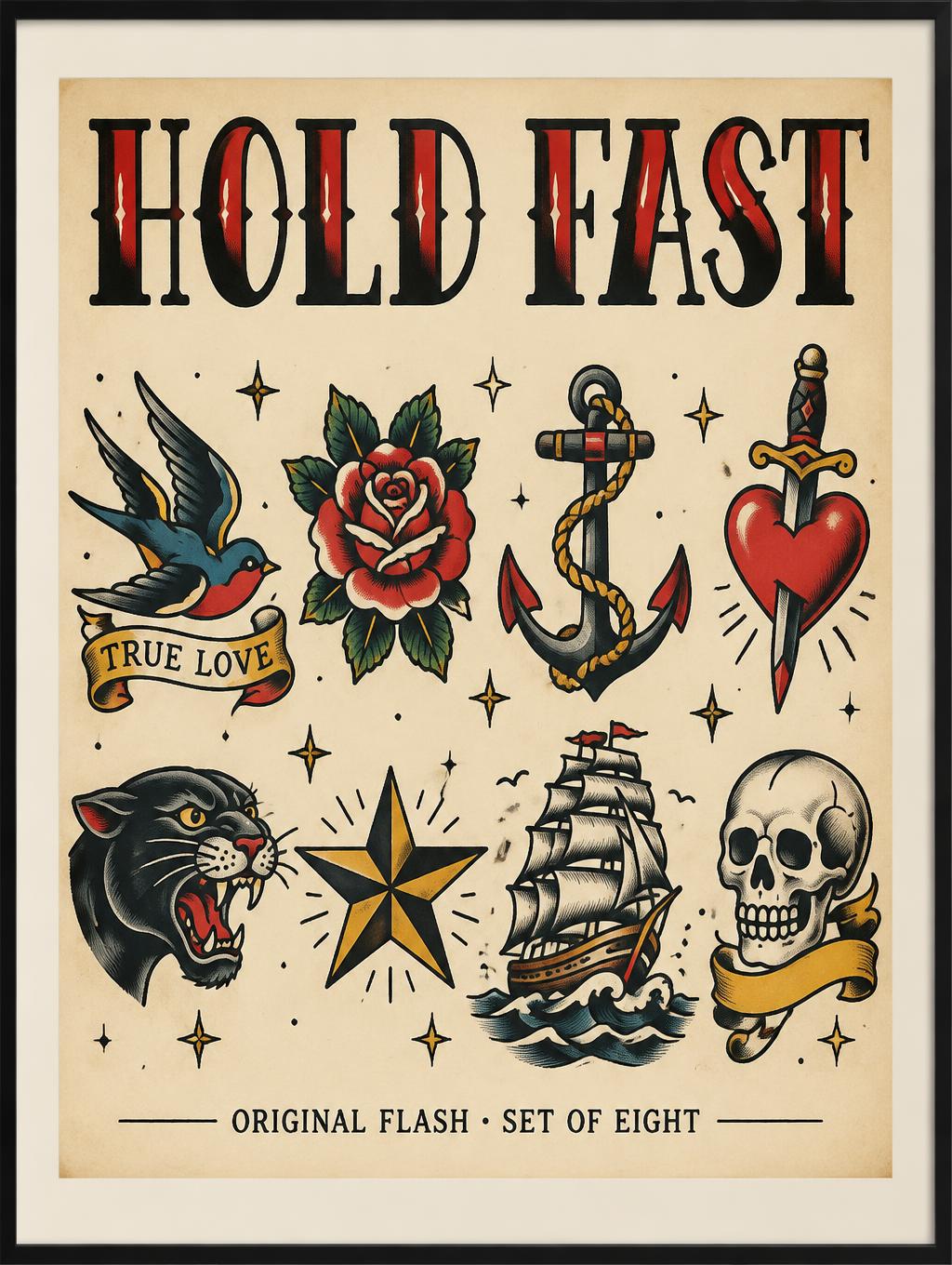
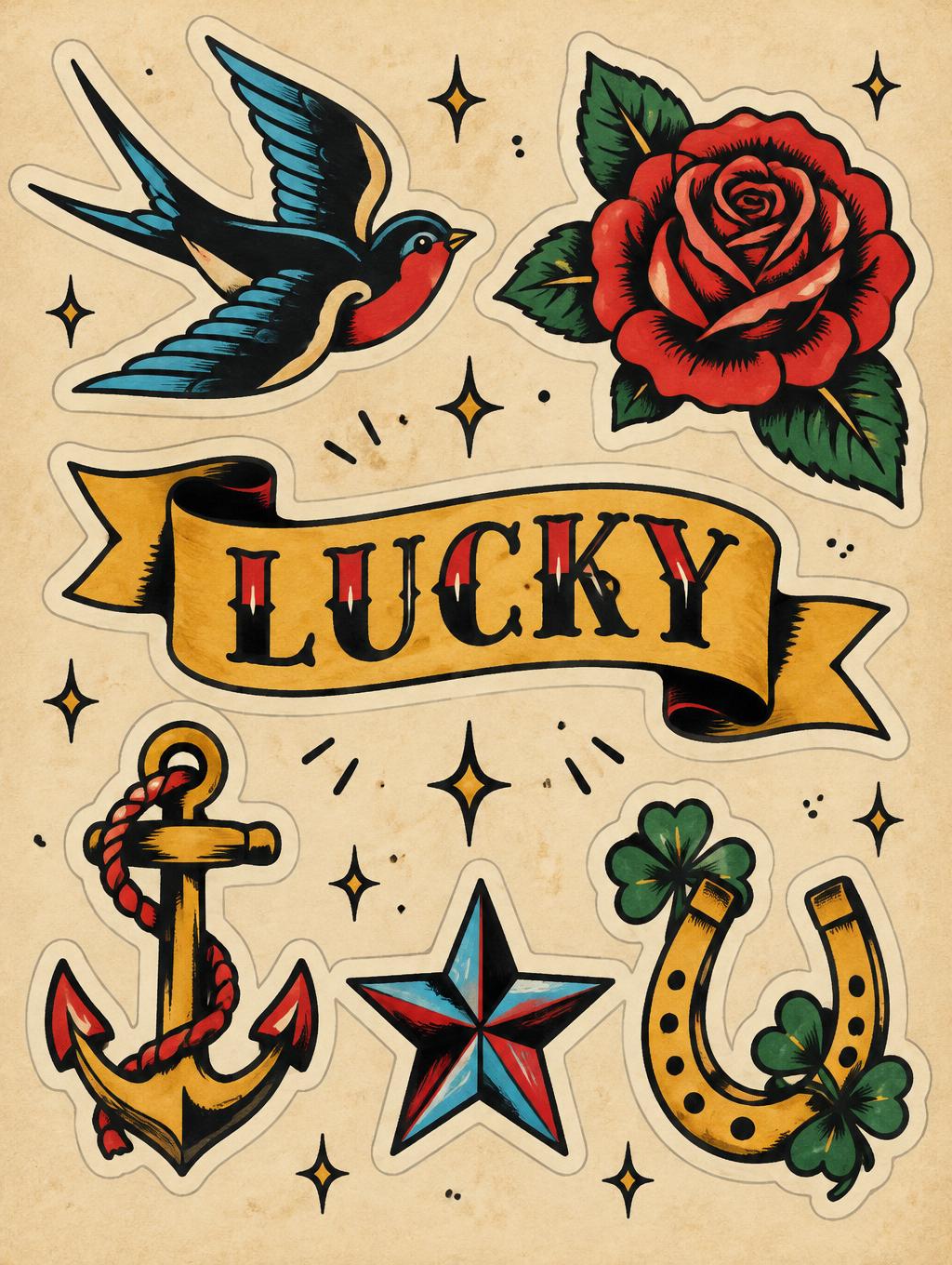
Flash sheet wall prints on aged cream paper, with your title over a set of small classic designs, ready to frame.
American Traditional Posters
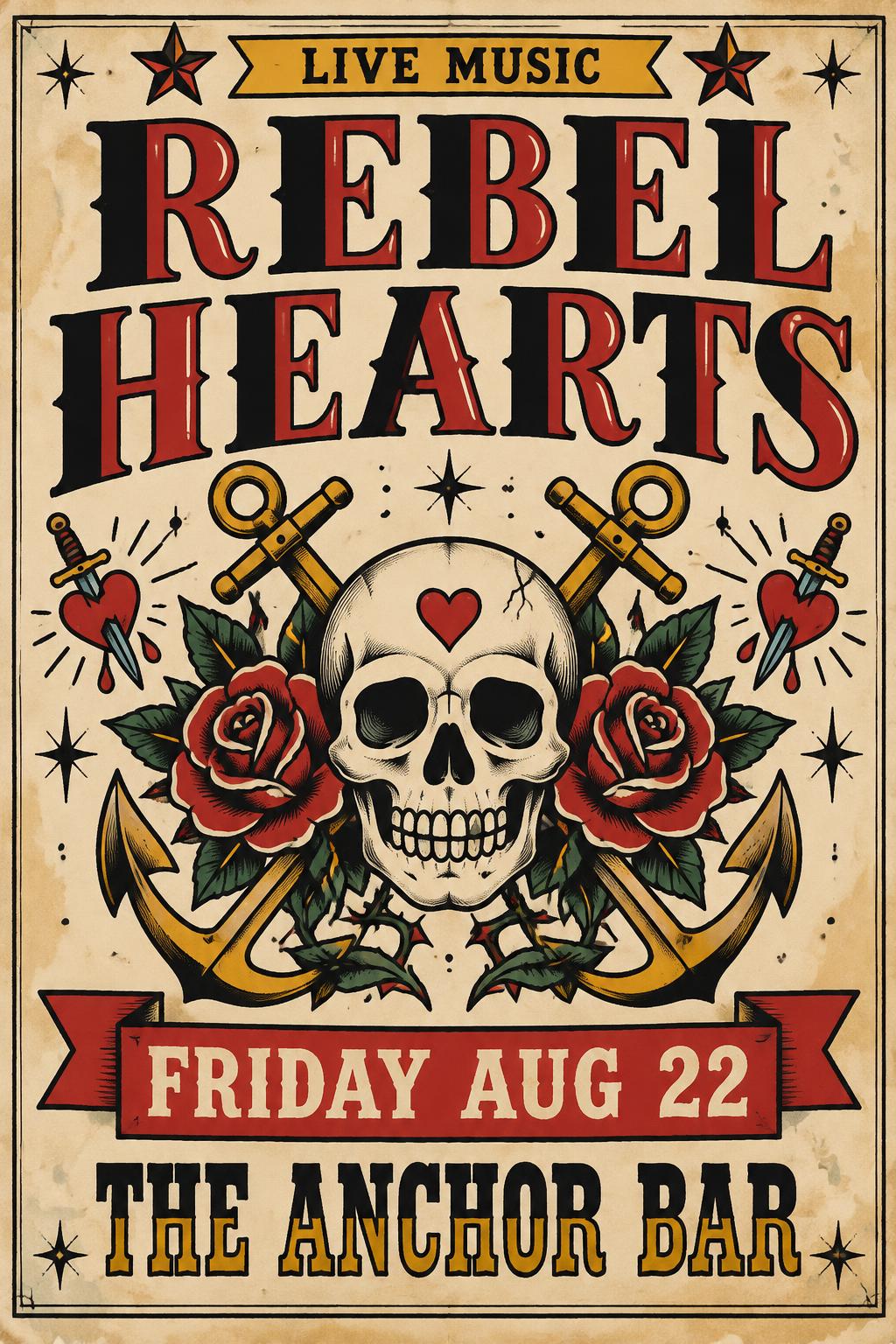
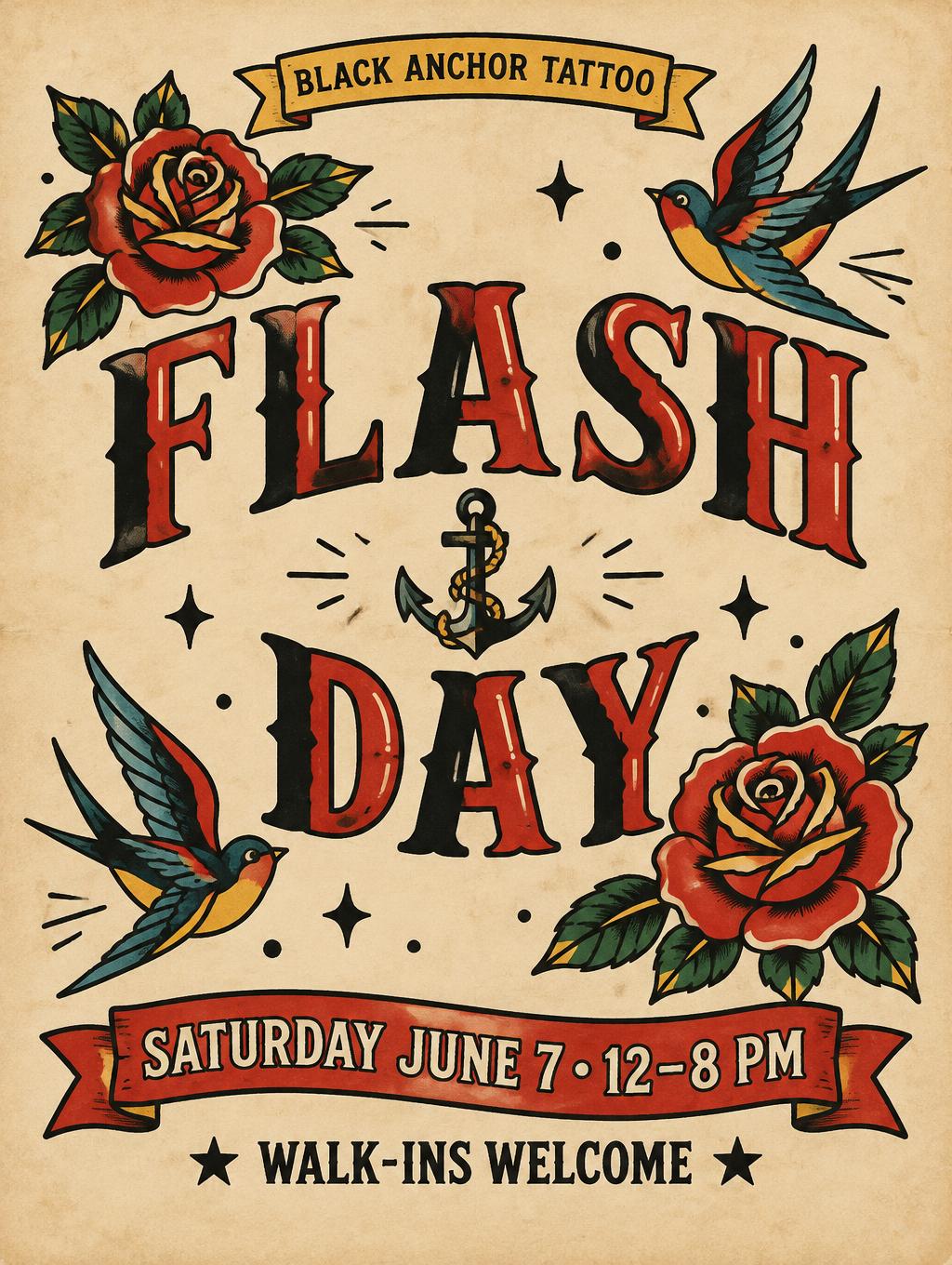
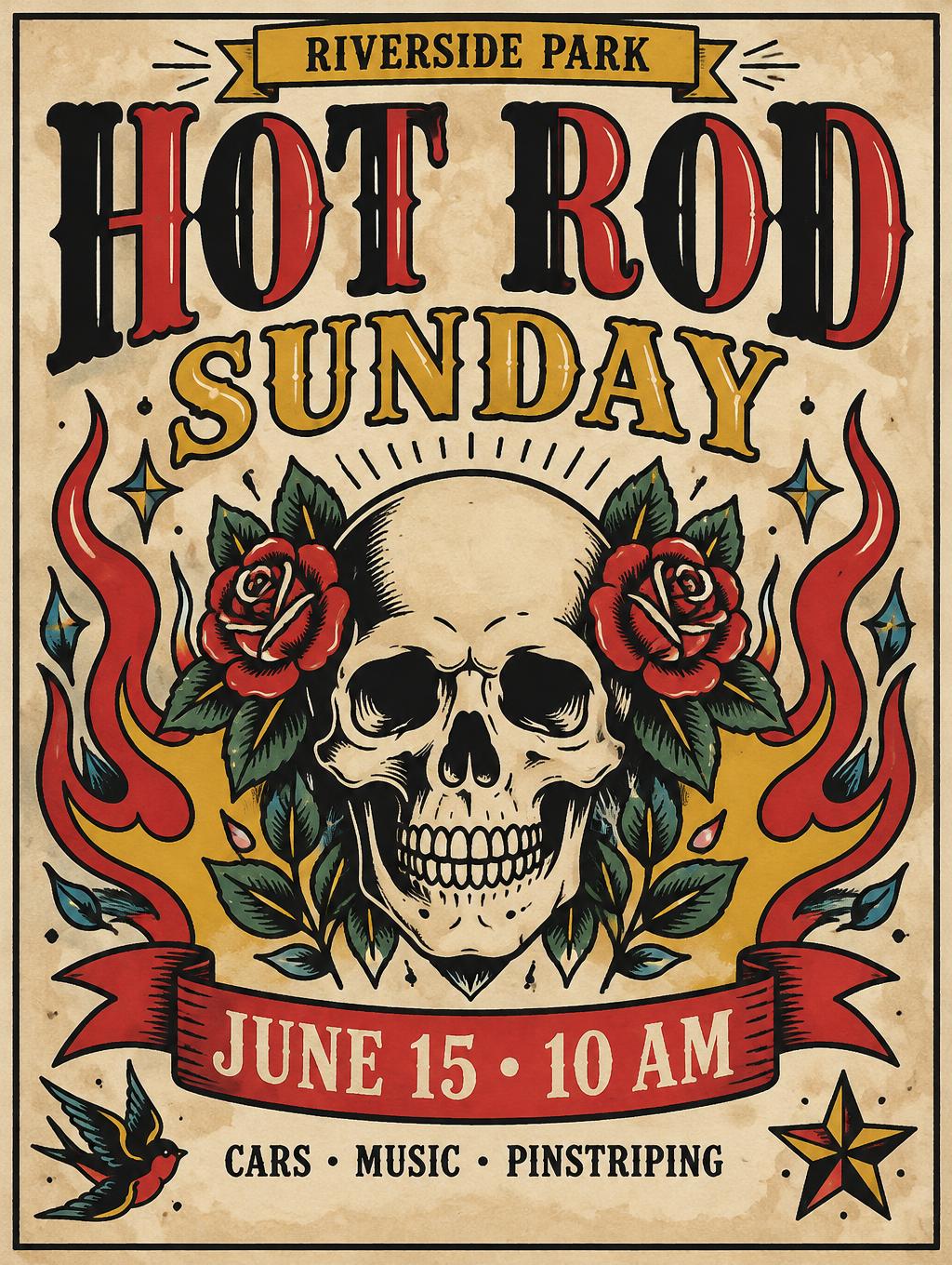
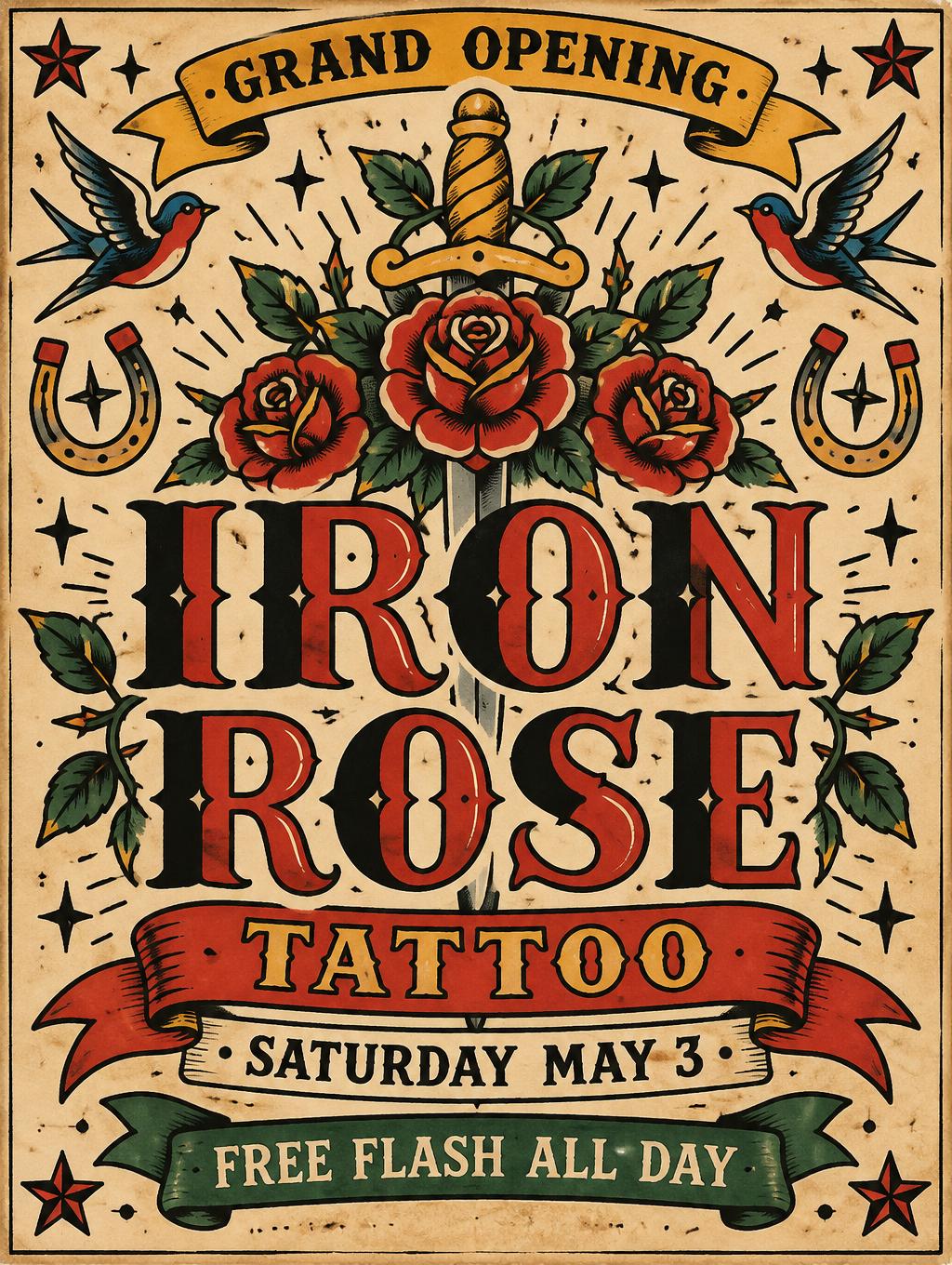
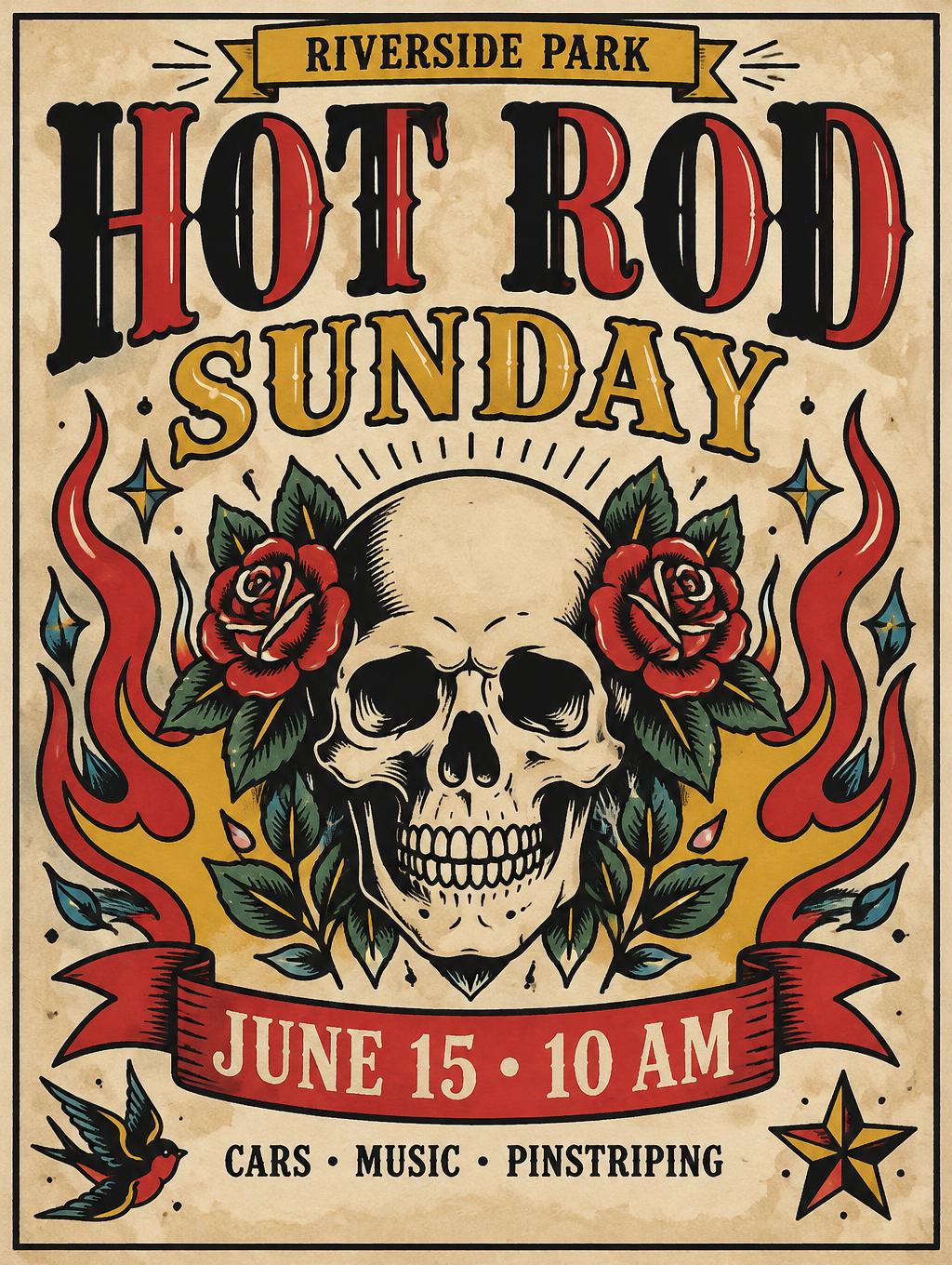
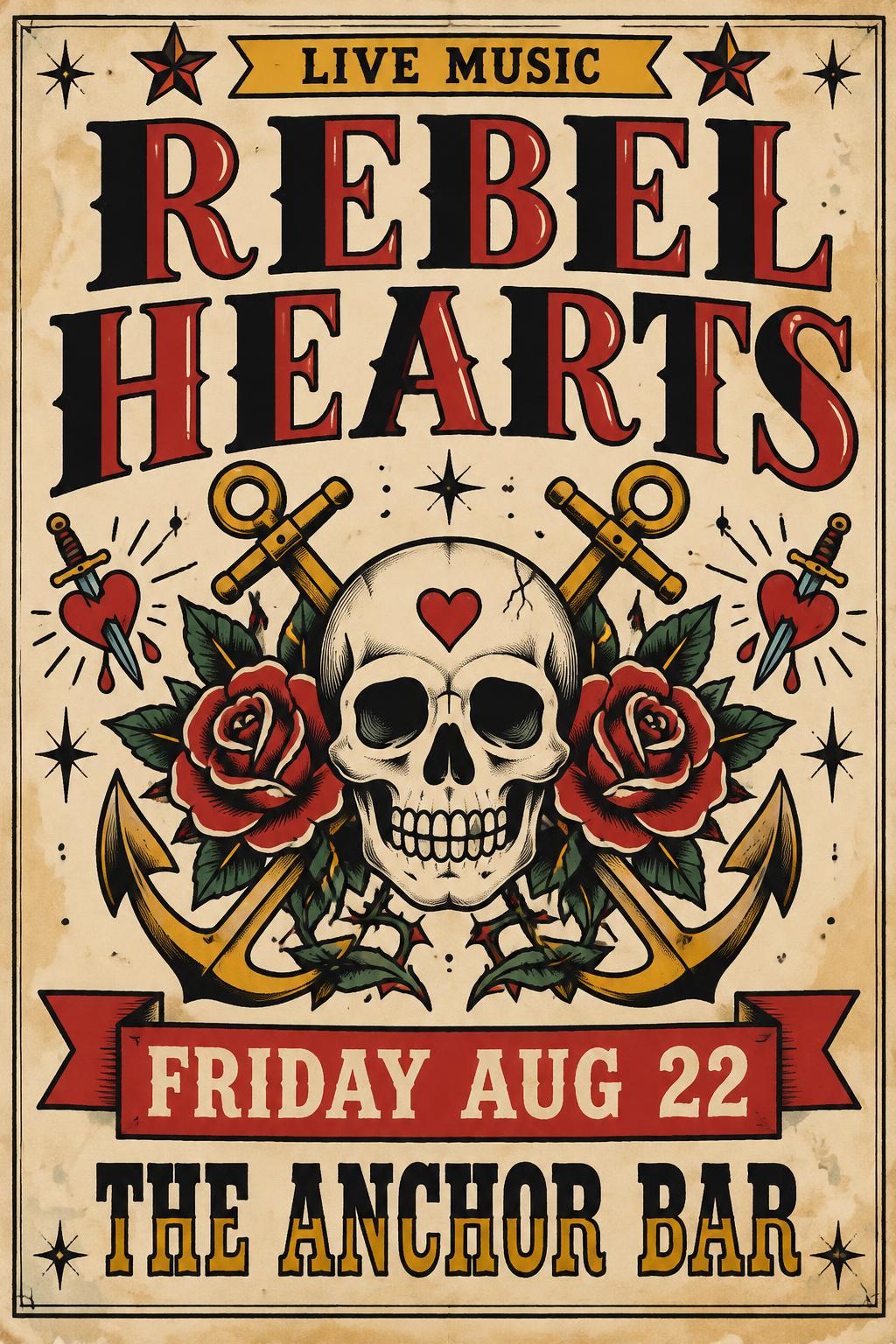
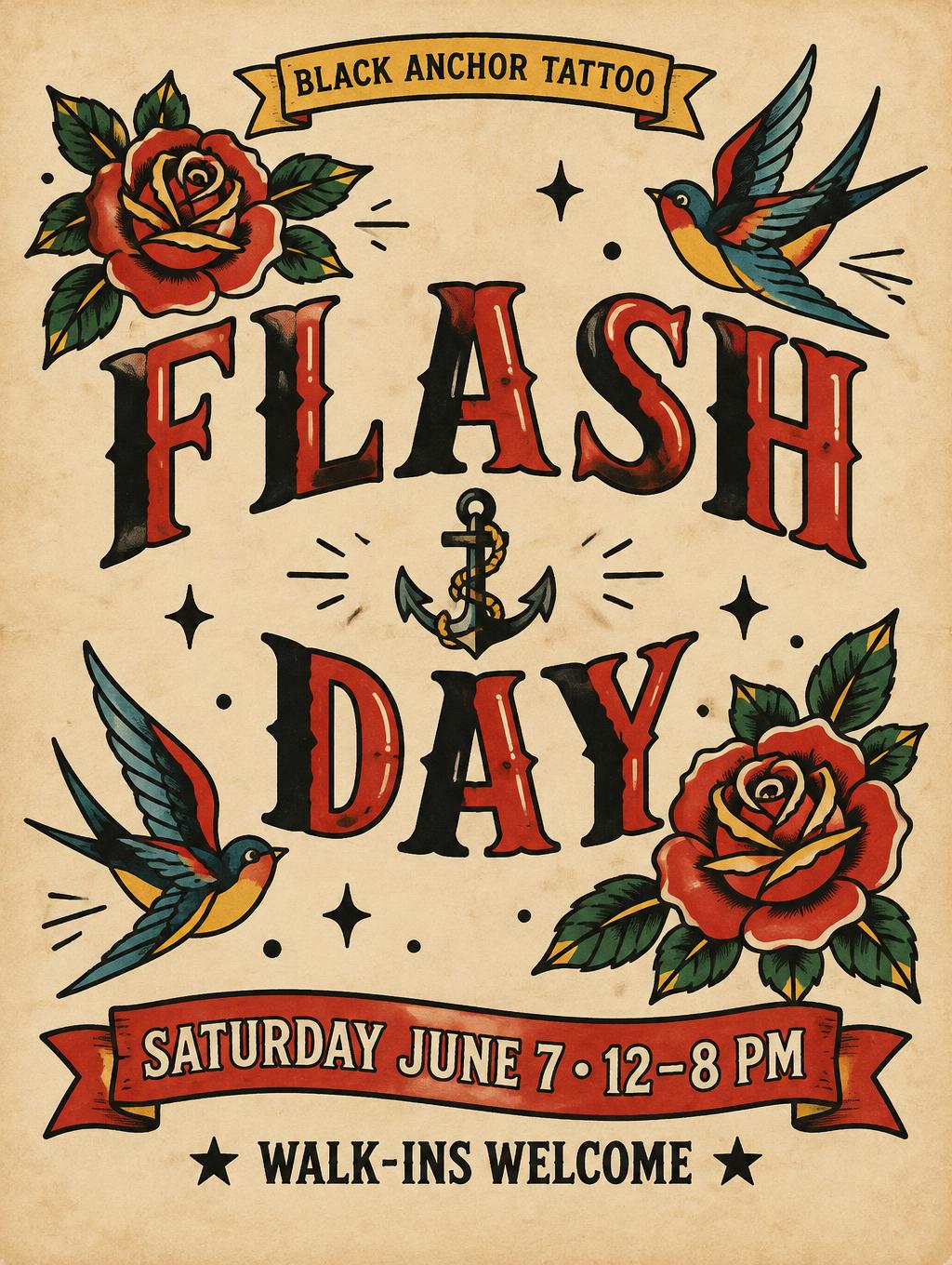
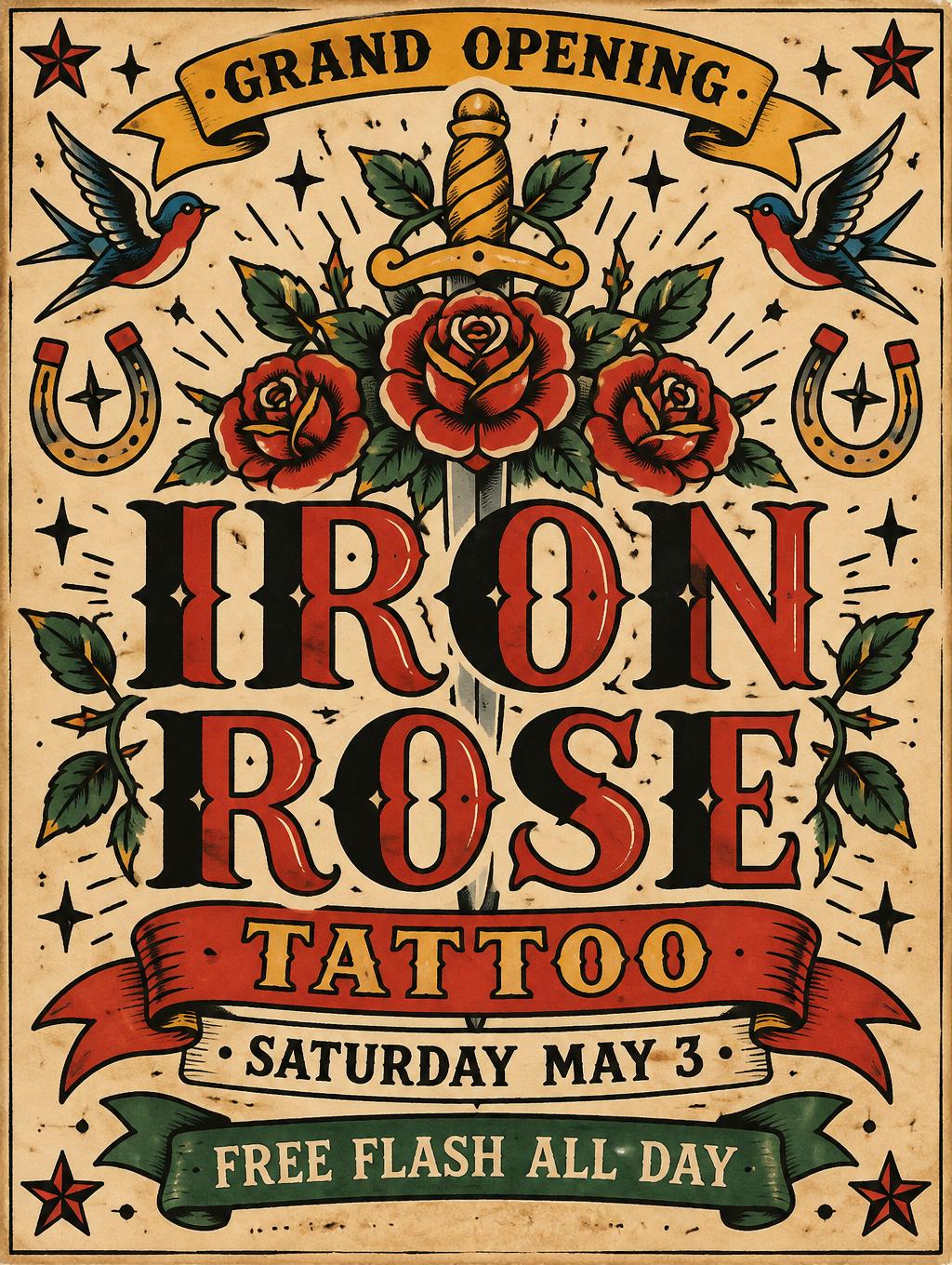
Flash day, shop opening and gig posters with the event details set among roses, swallows and sparkles.
American Traditional Stickers
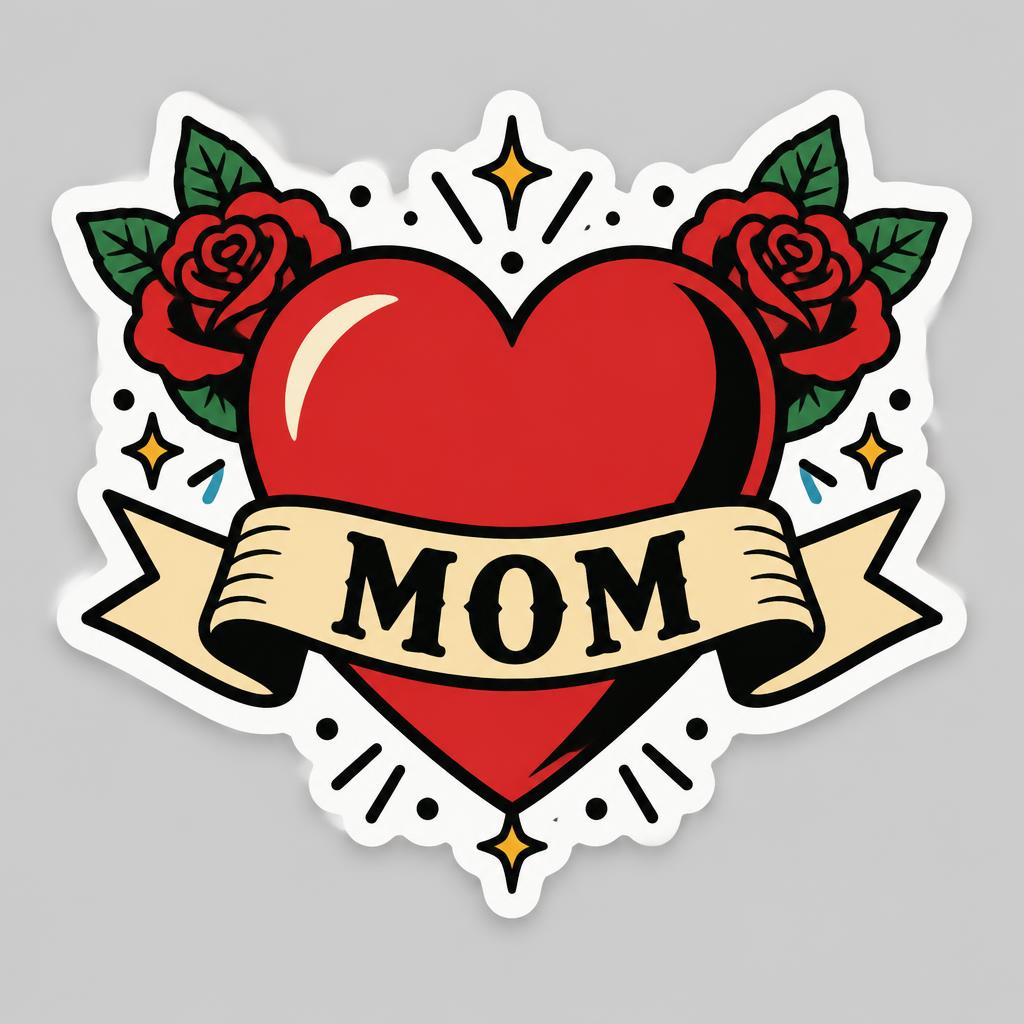
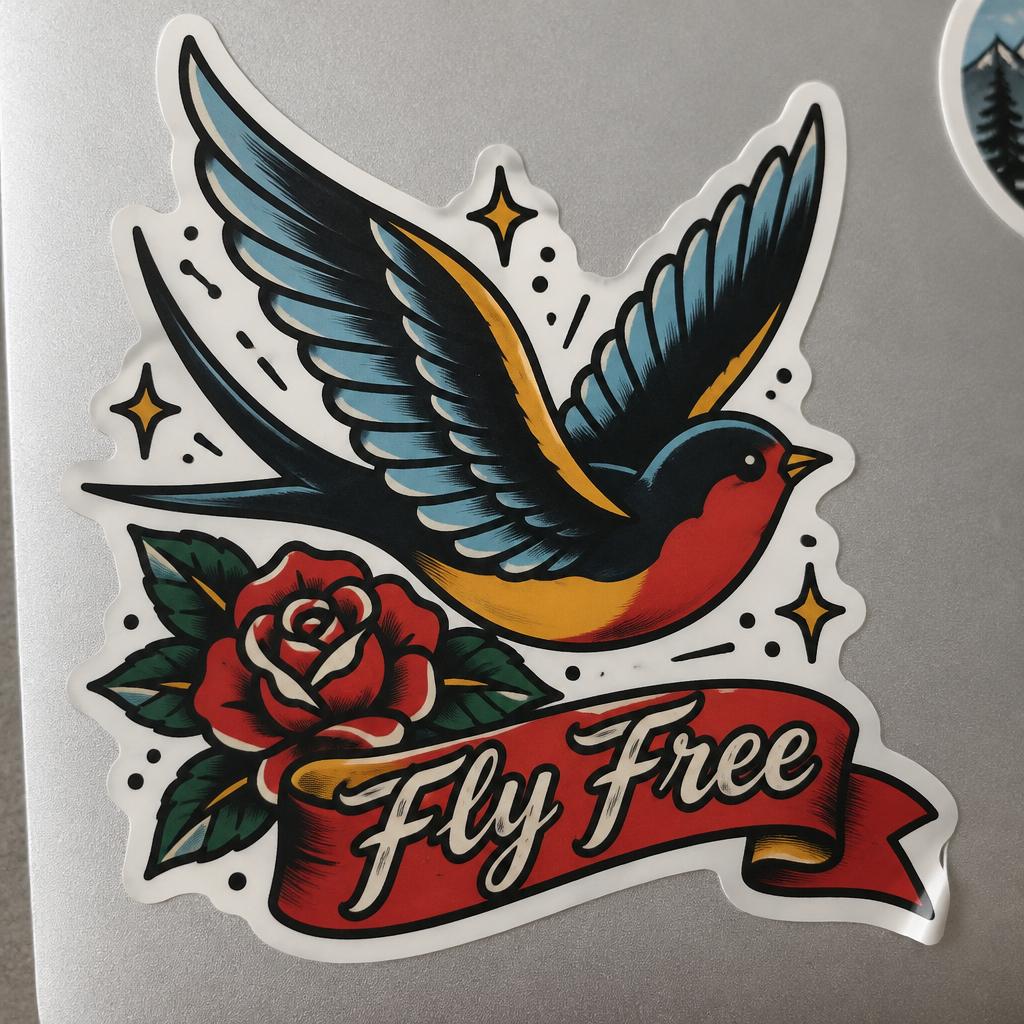
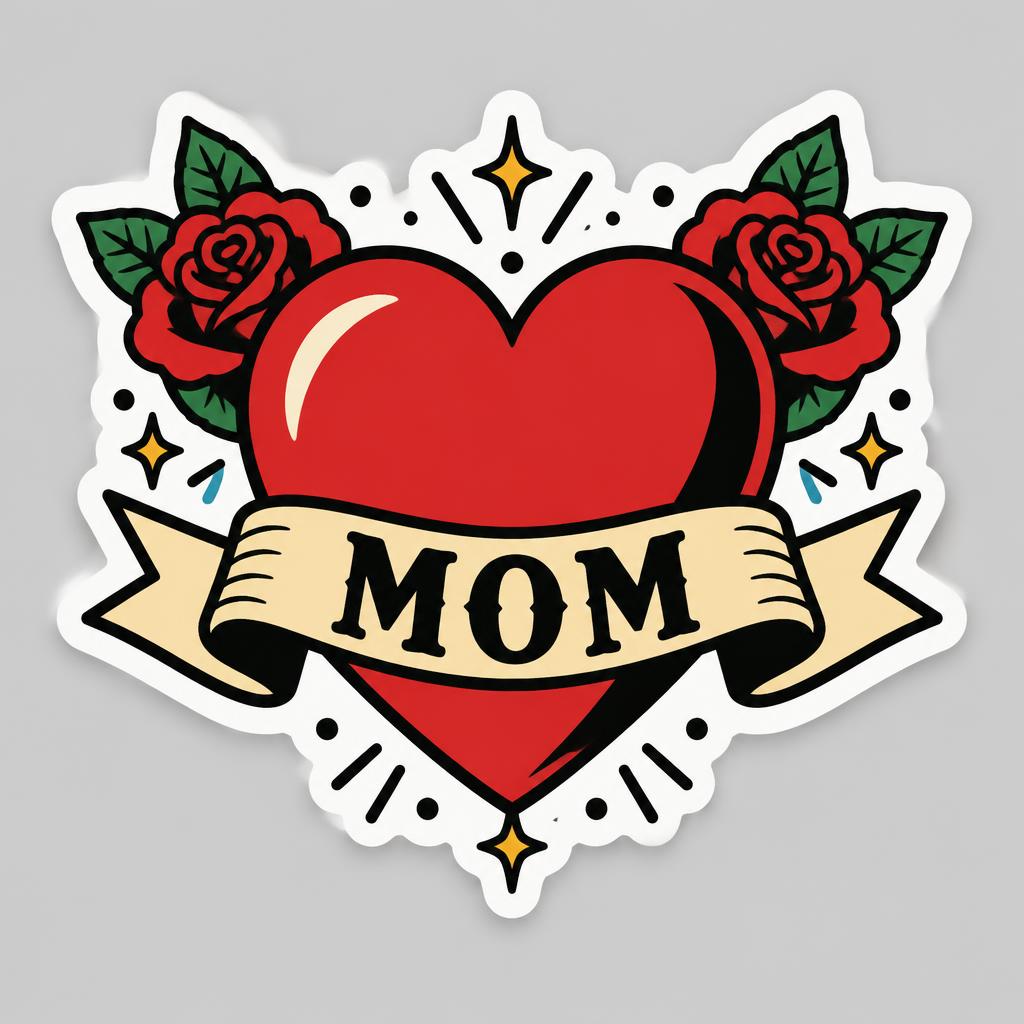
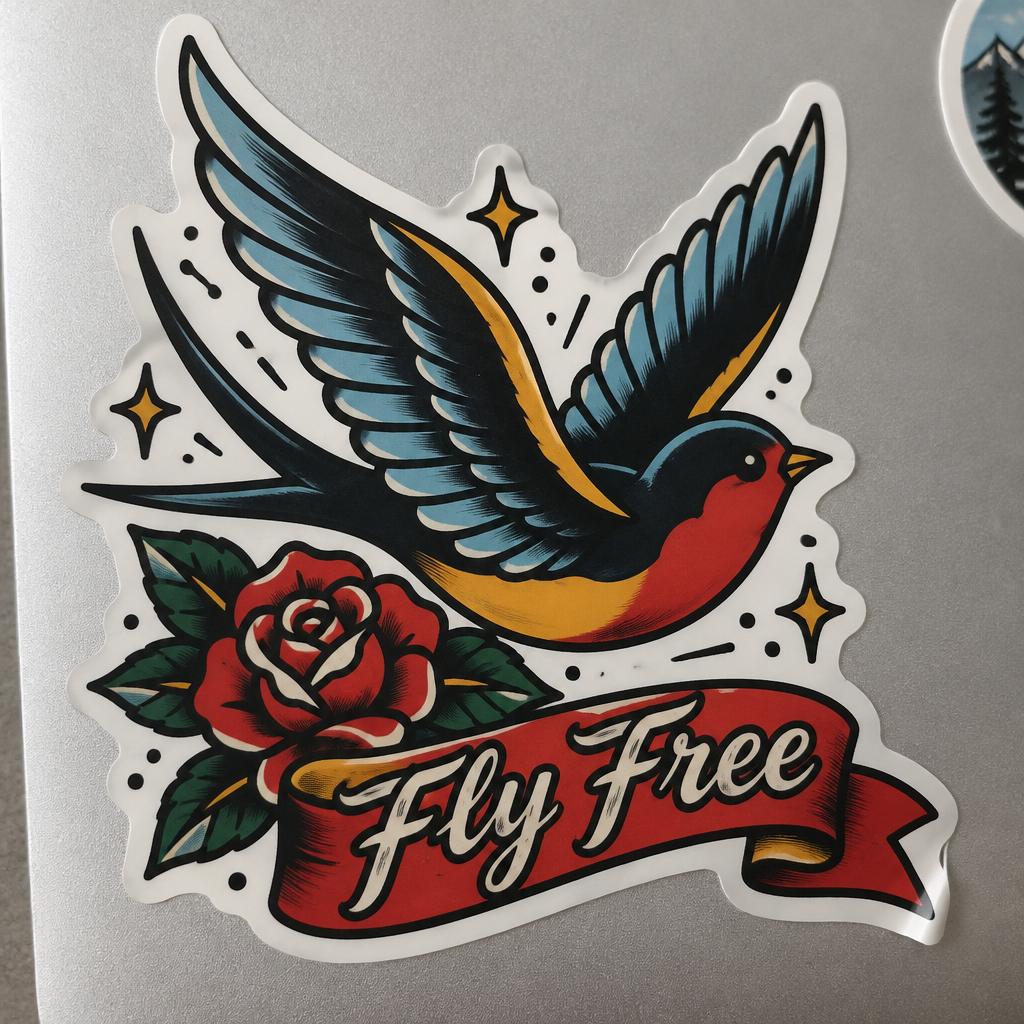
Die-cut stickers and sticker sheets of classic flash icons with a short word in each design.
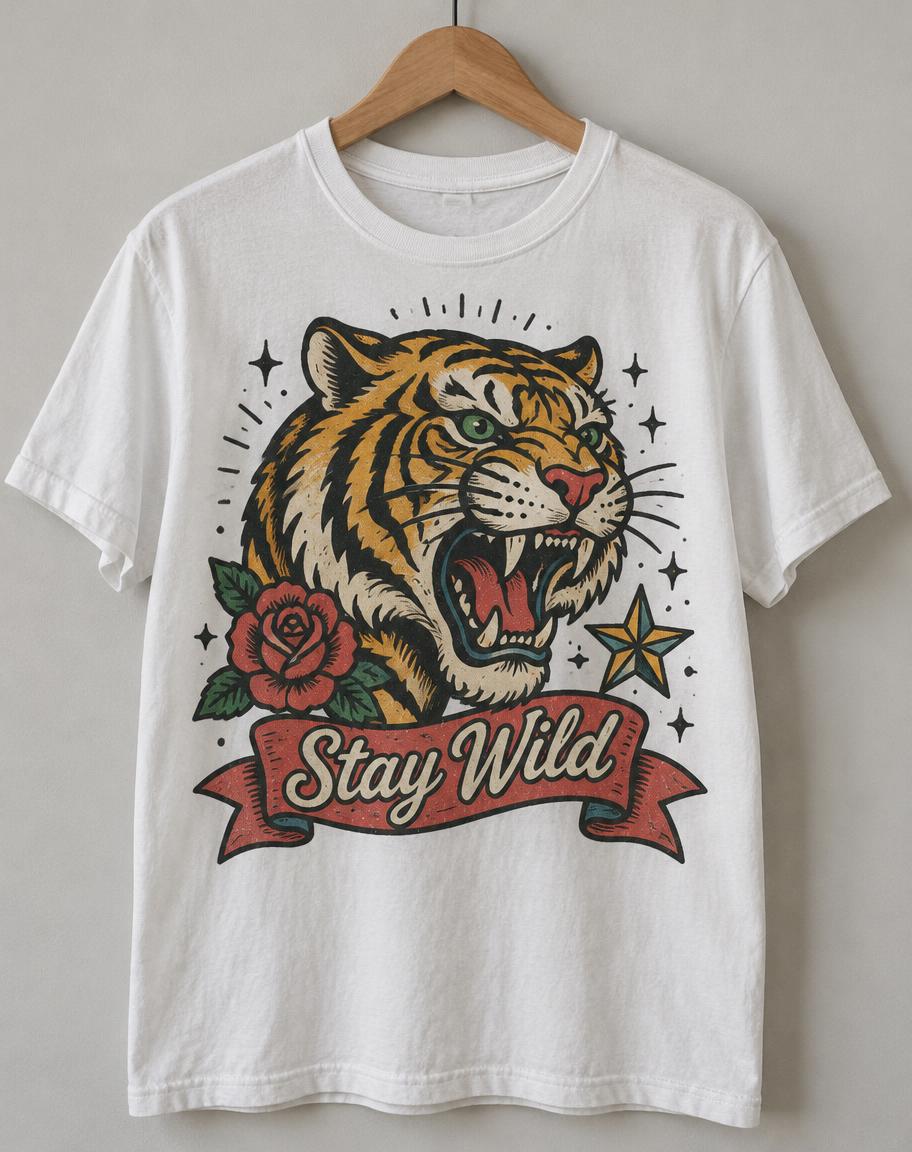
American Traditional T-Shirts
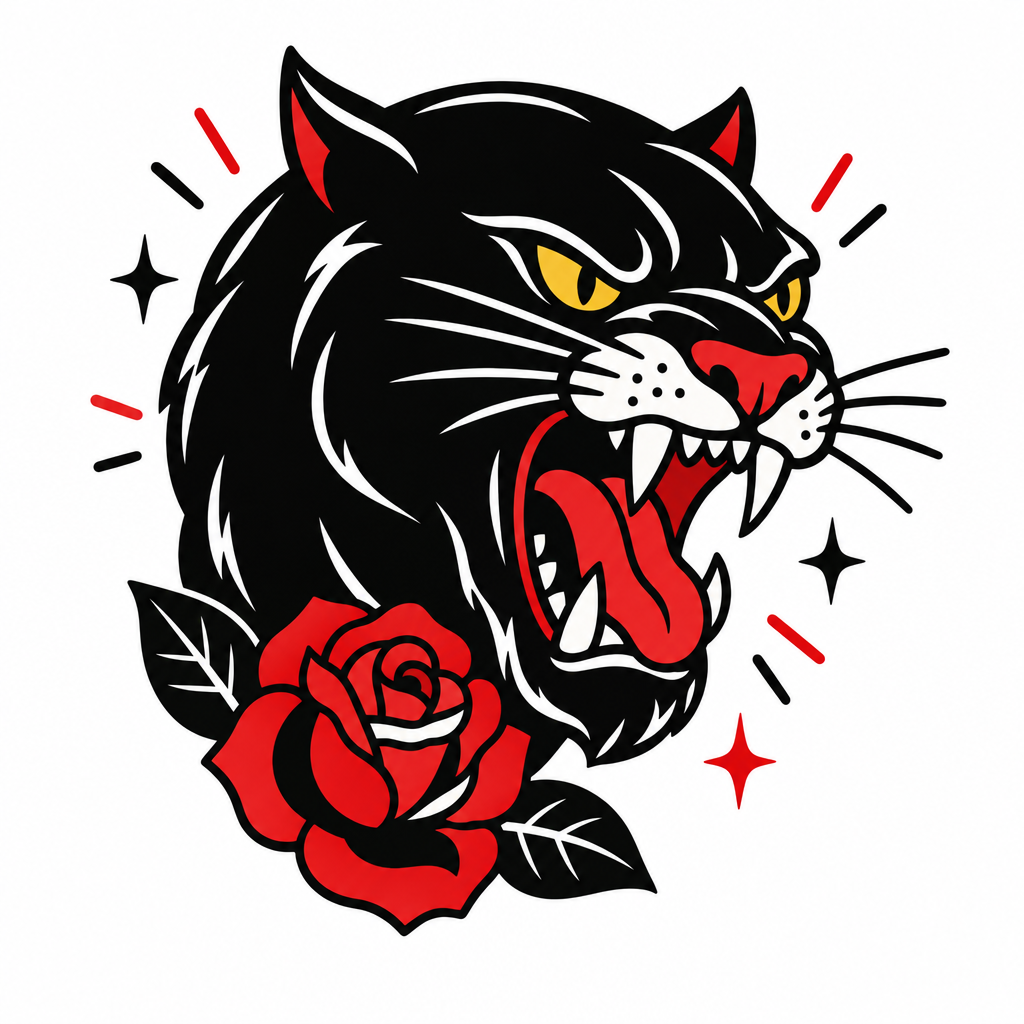
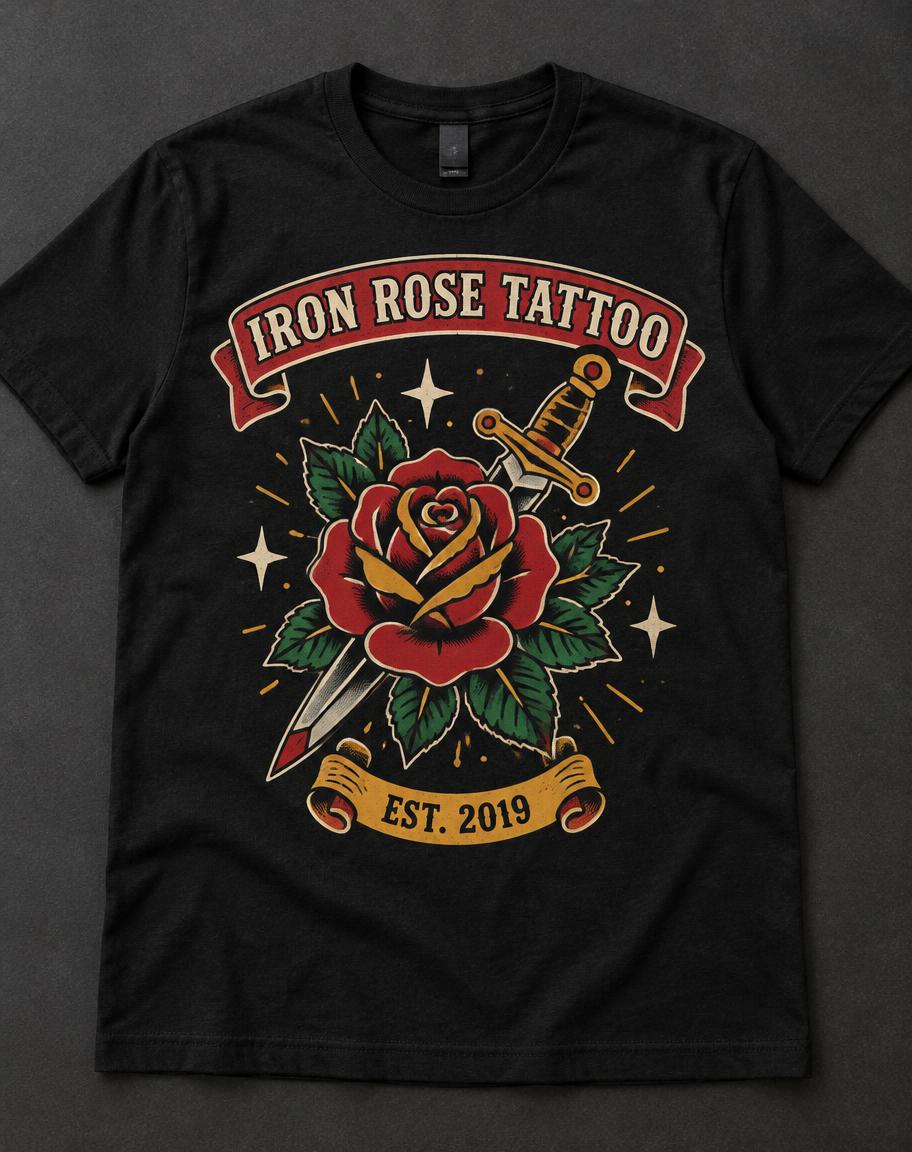
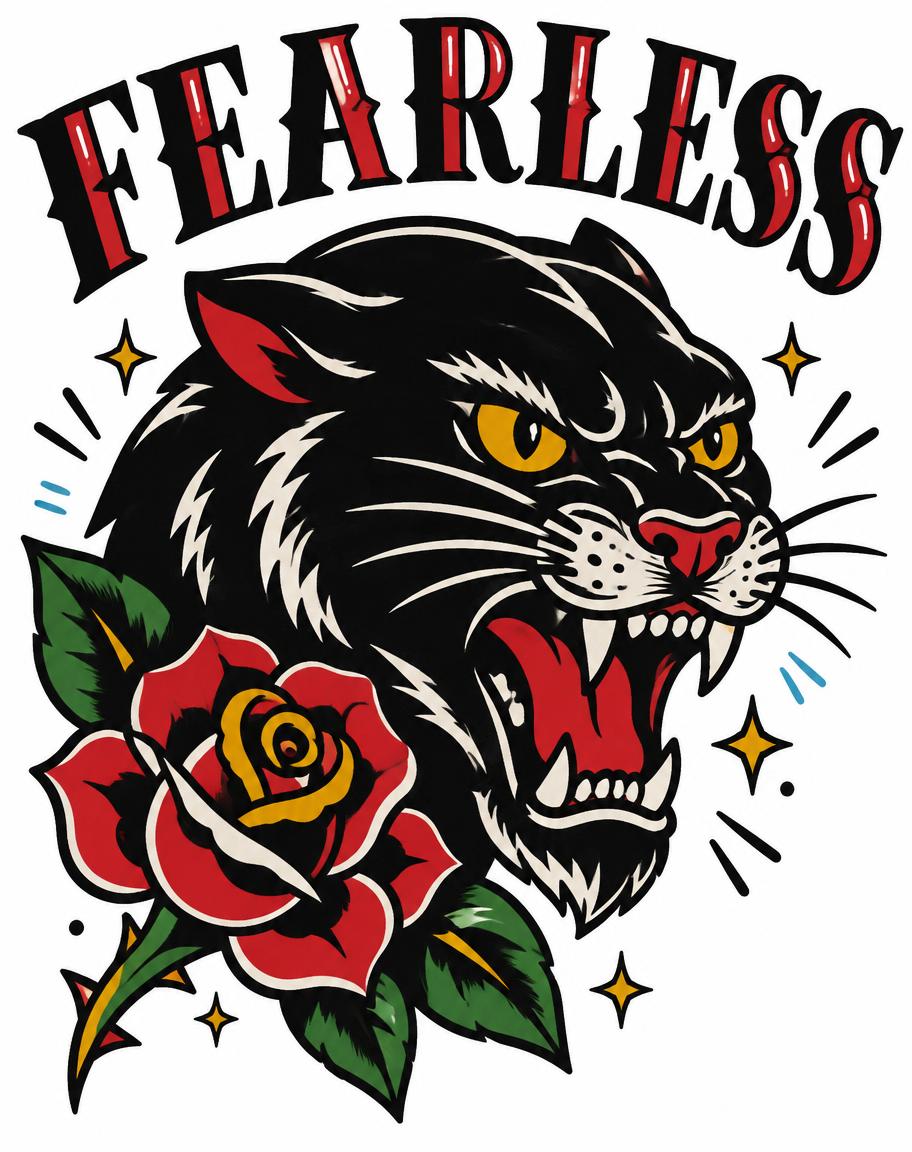
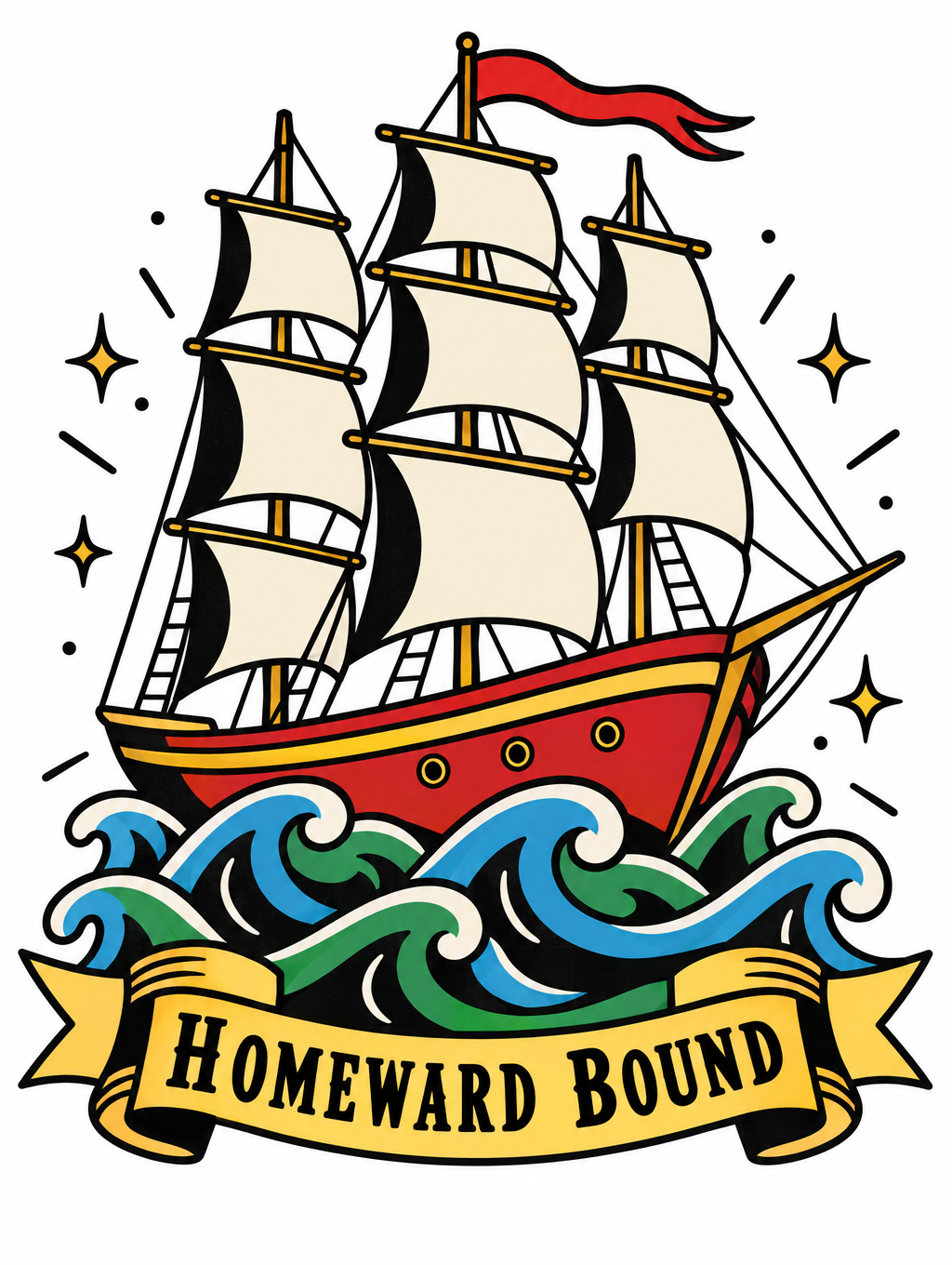
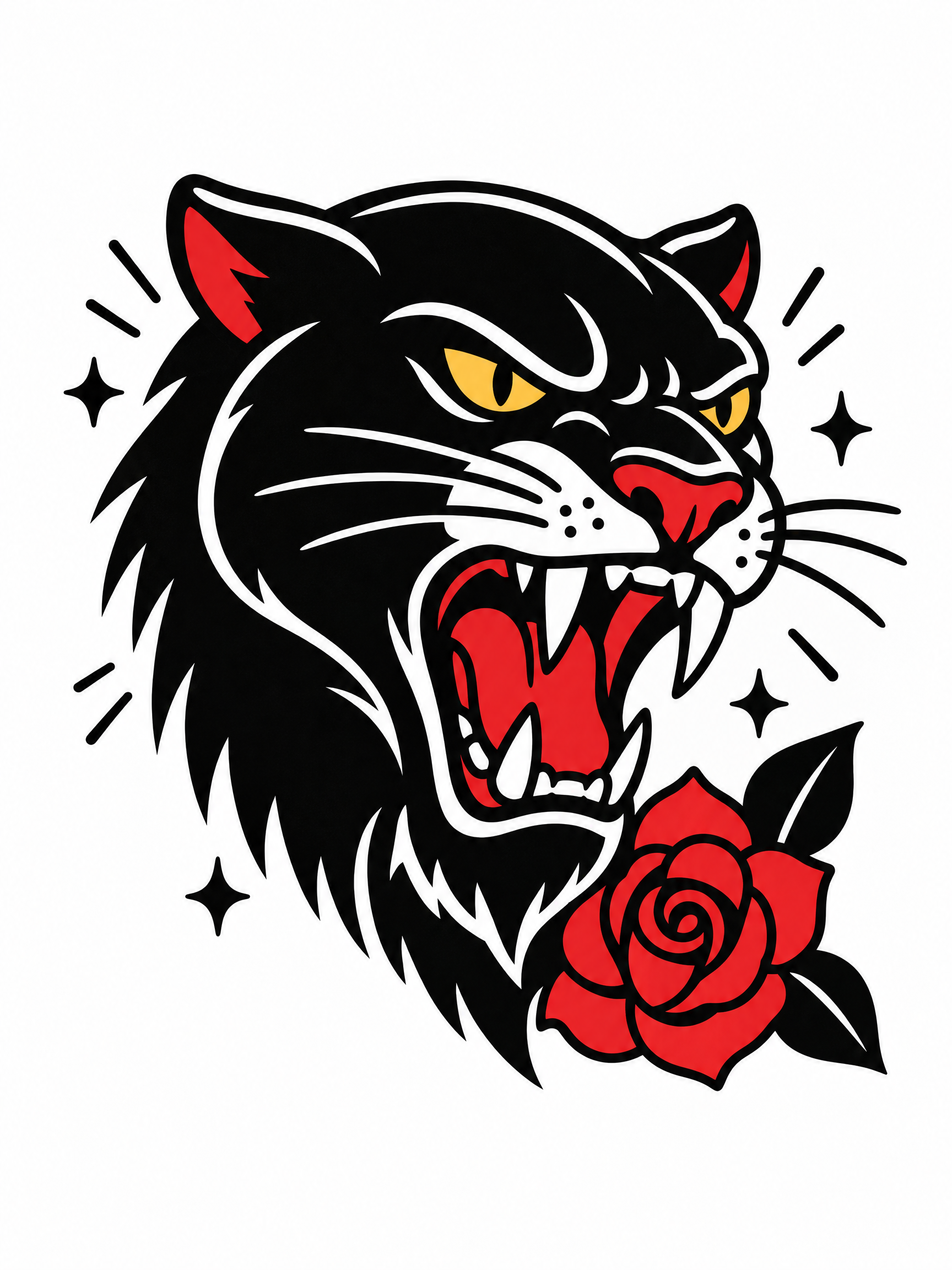
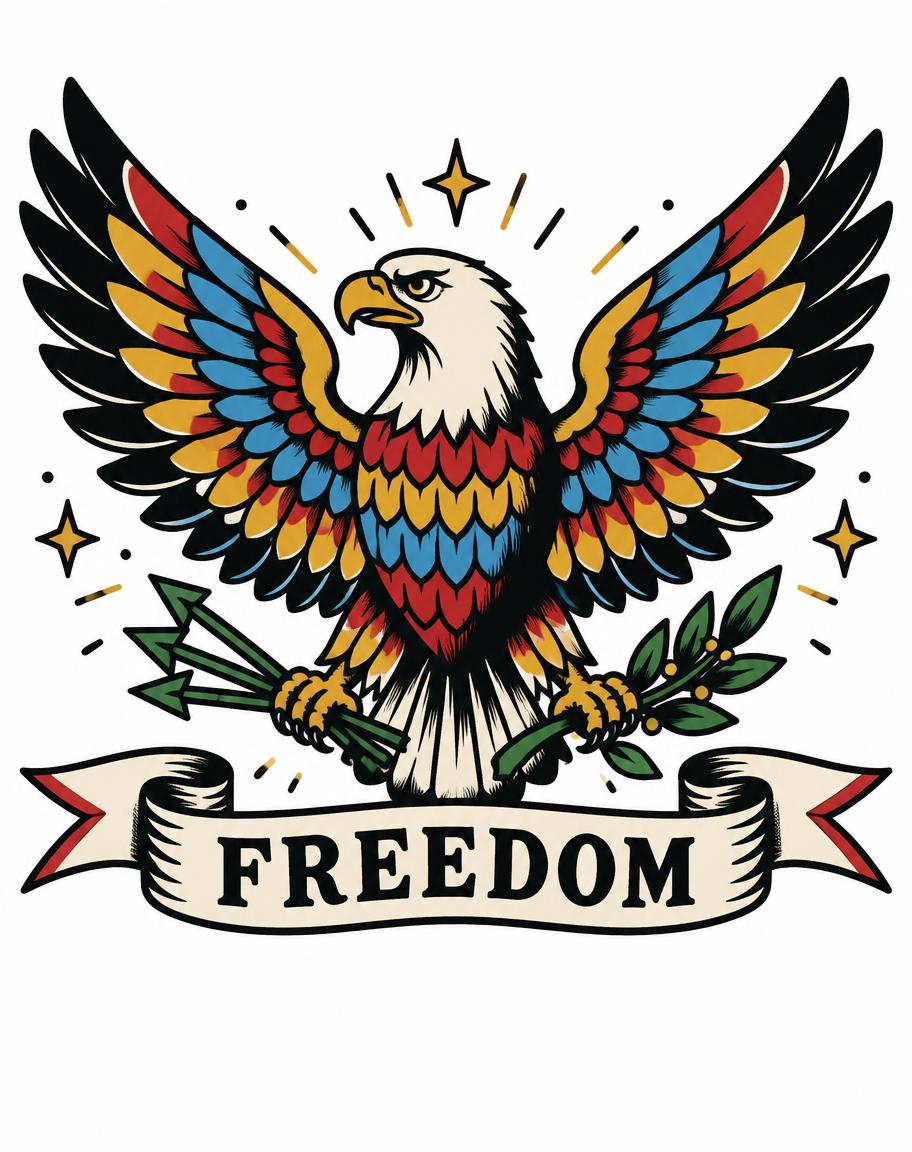
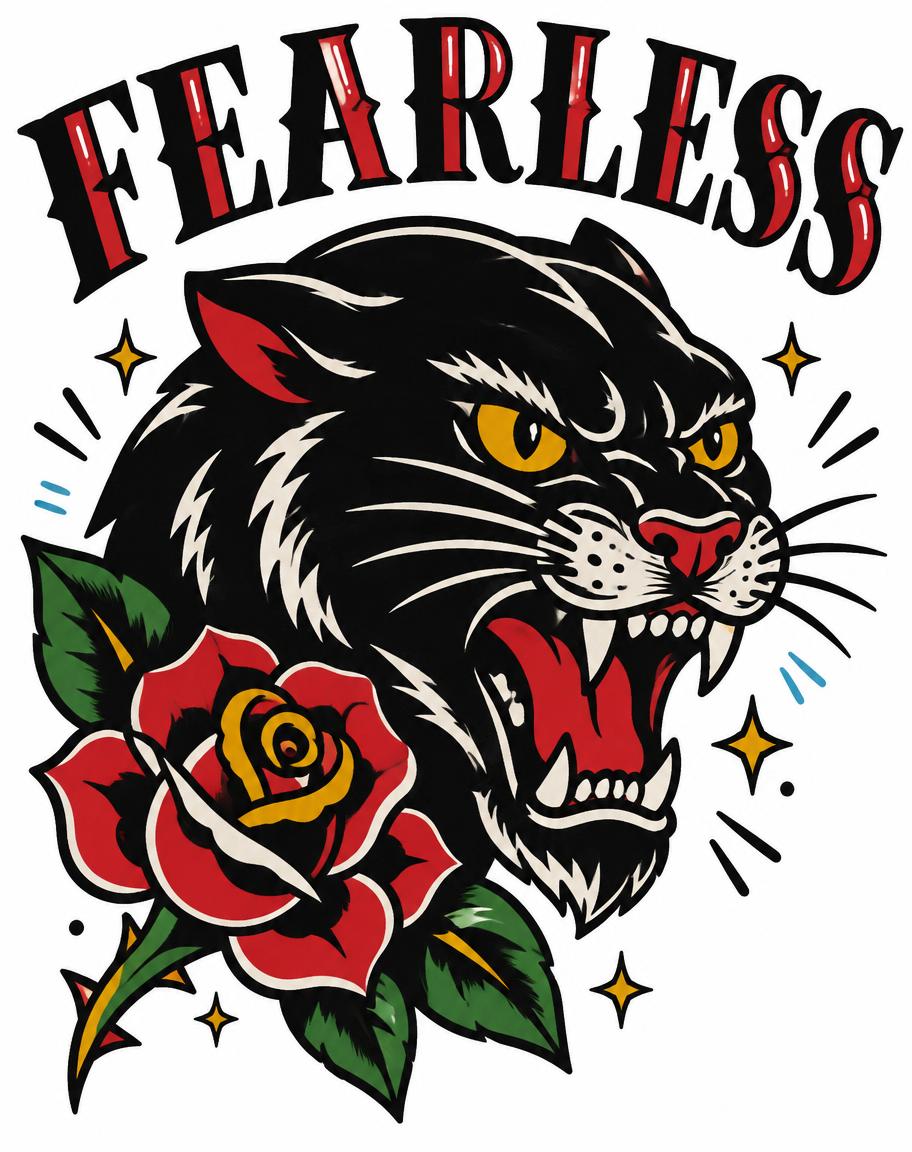
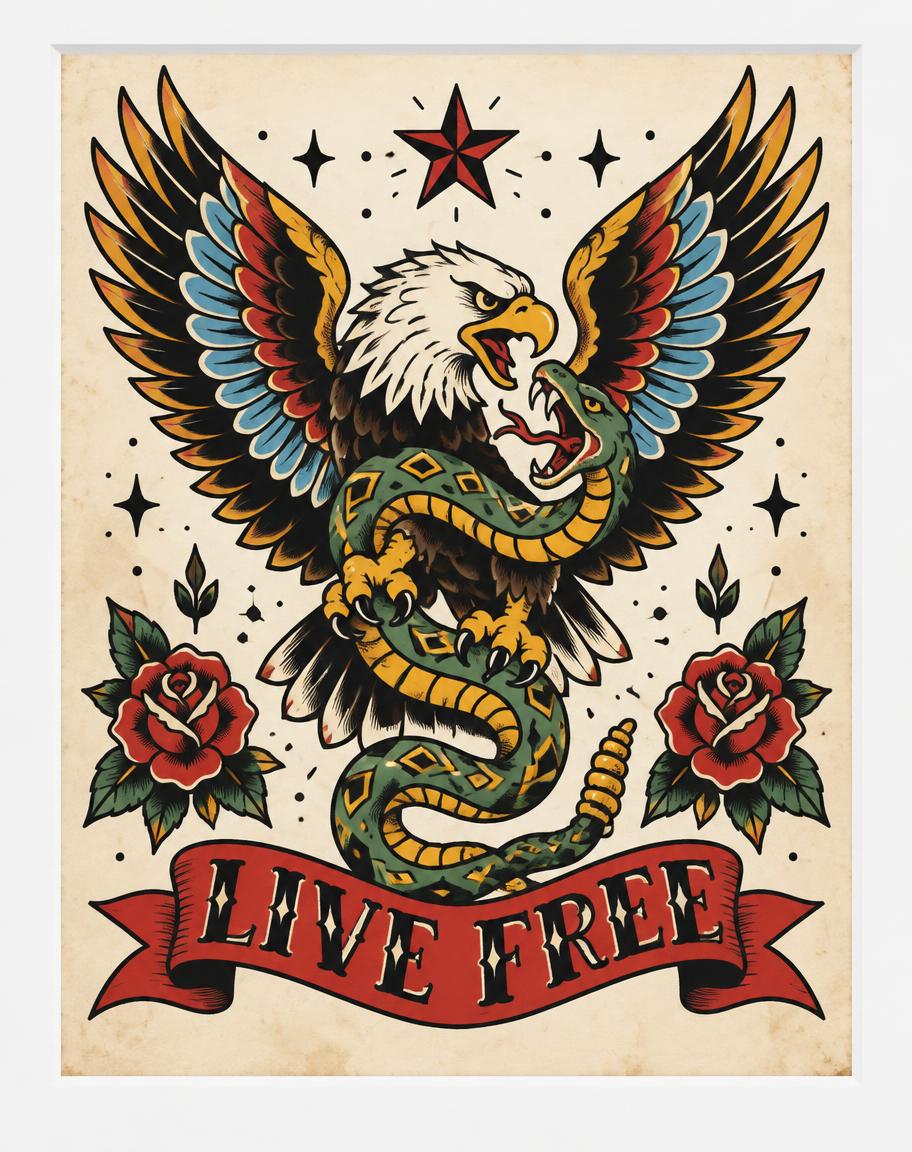
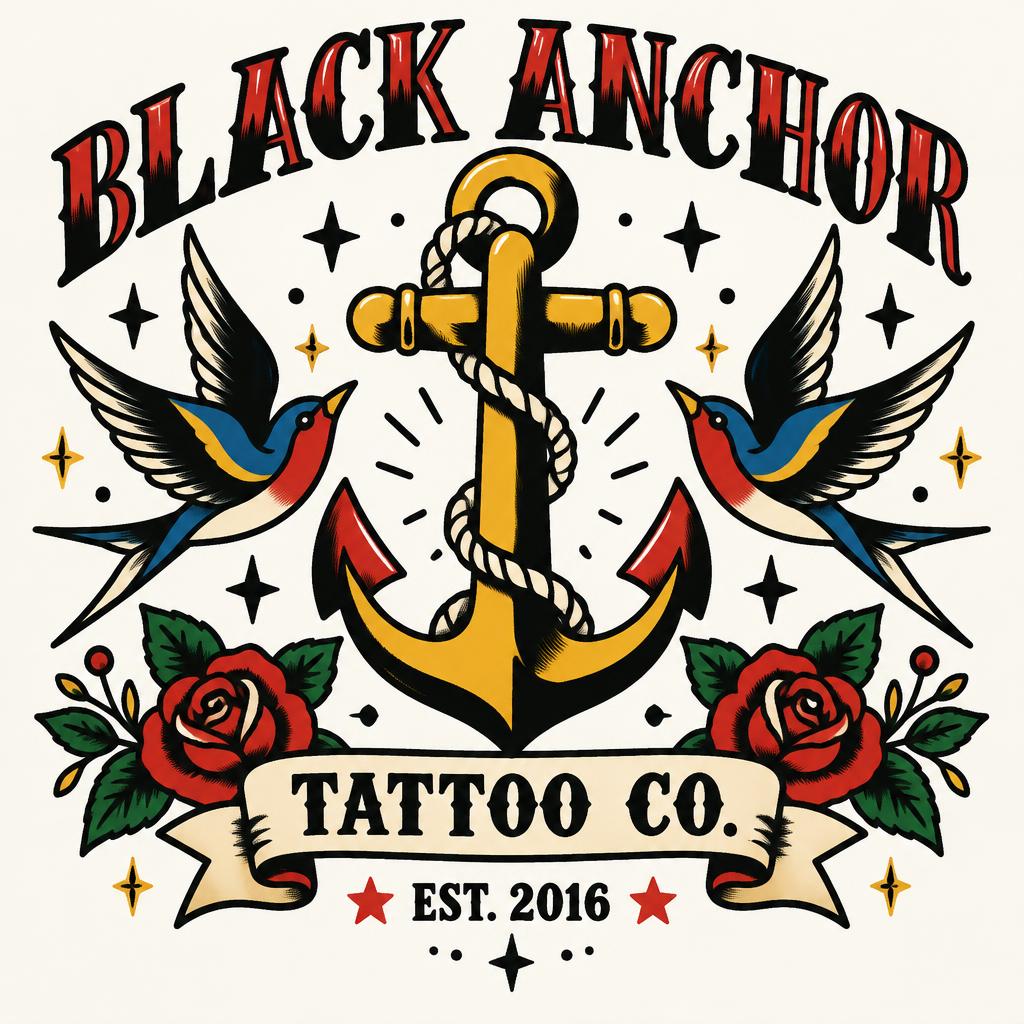
Tee graphics of eagles, panthers and anchors with a banner or shop name, in black, red, yellow and green.
American Traditional Flash Designs
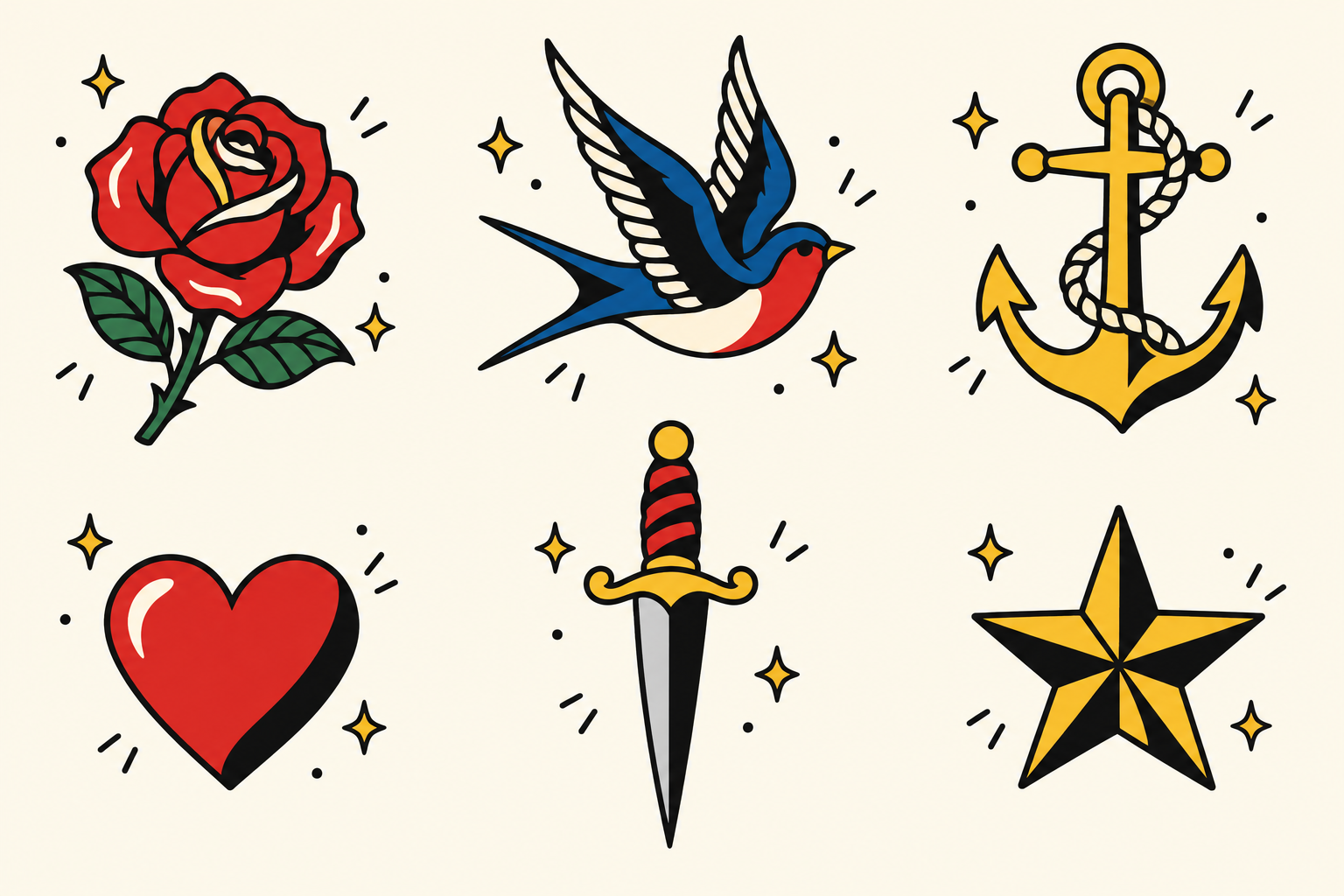
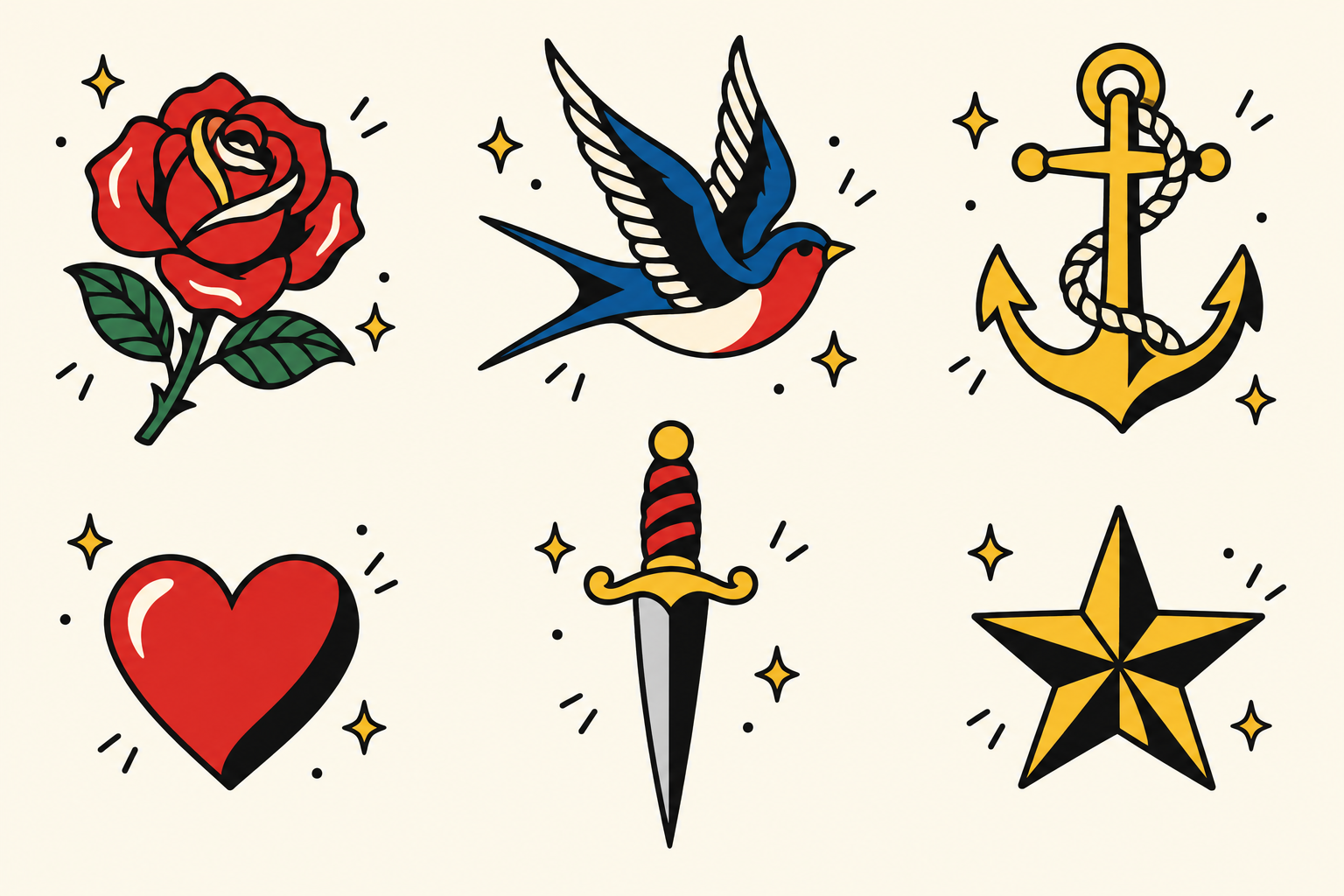
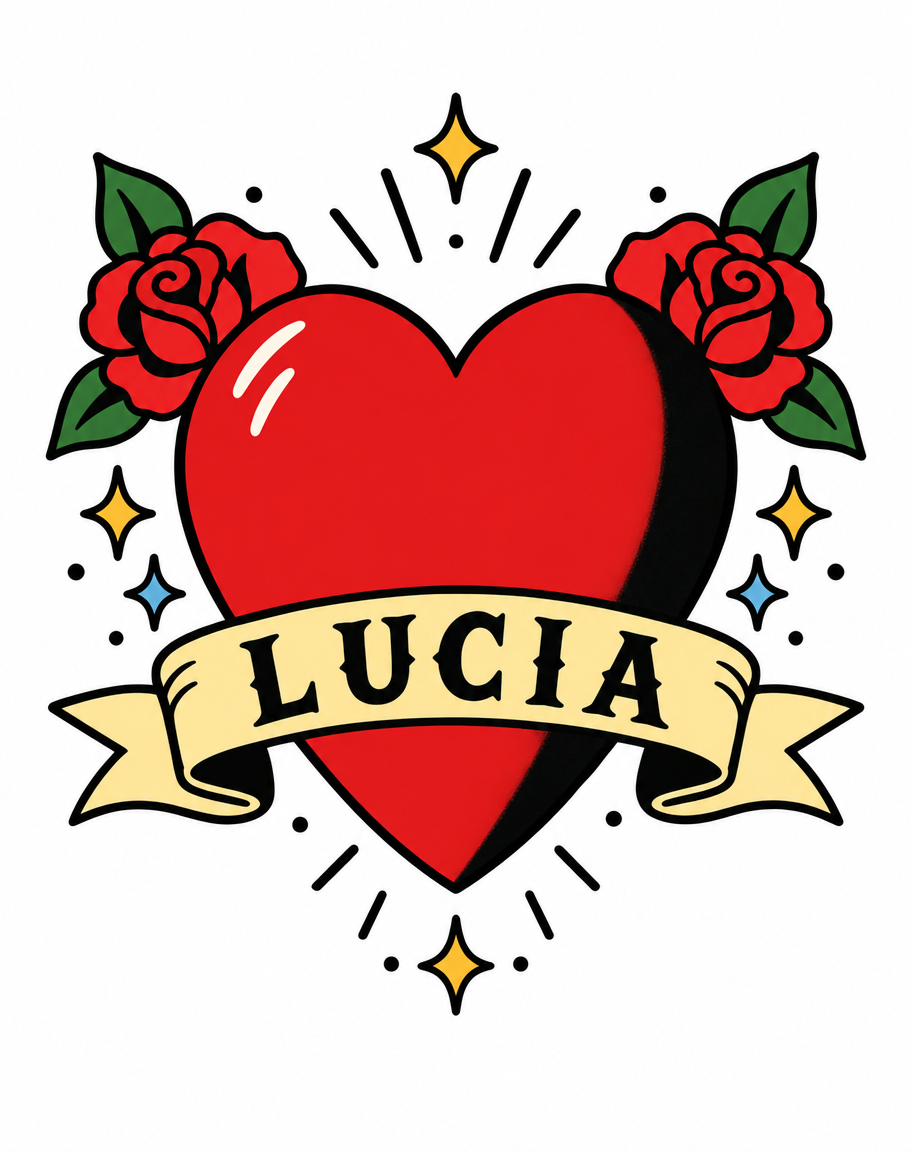
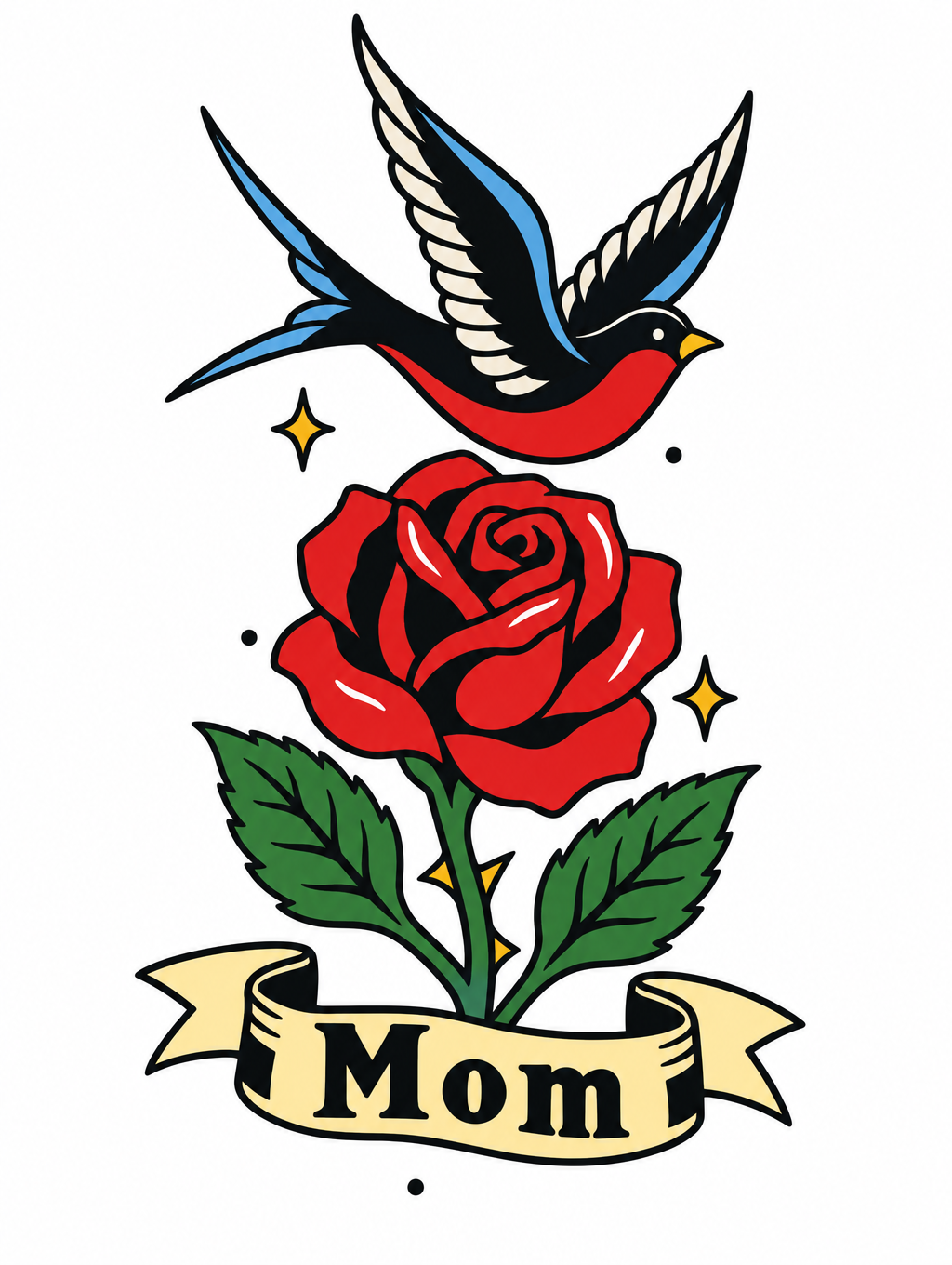
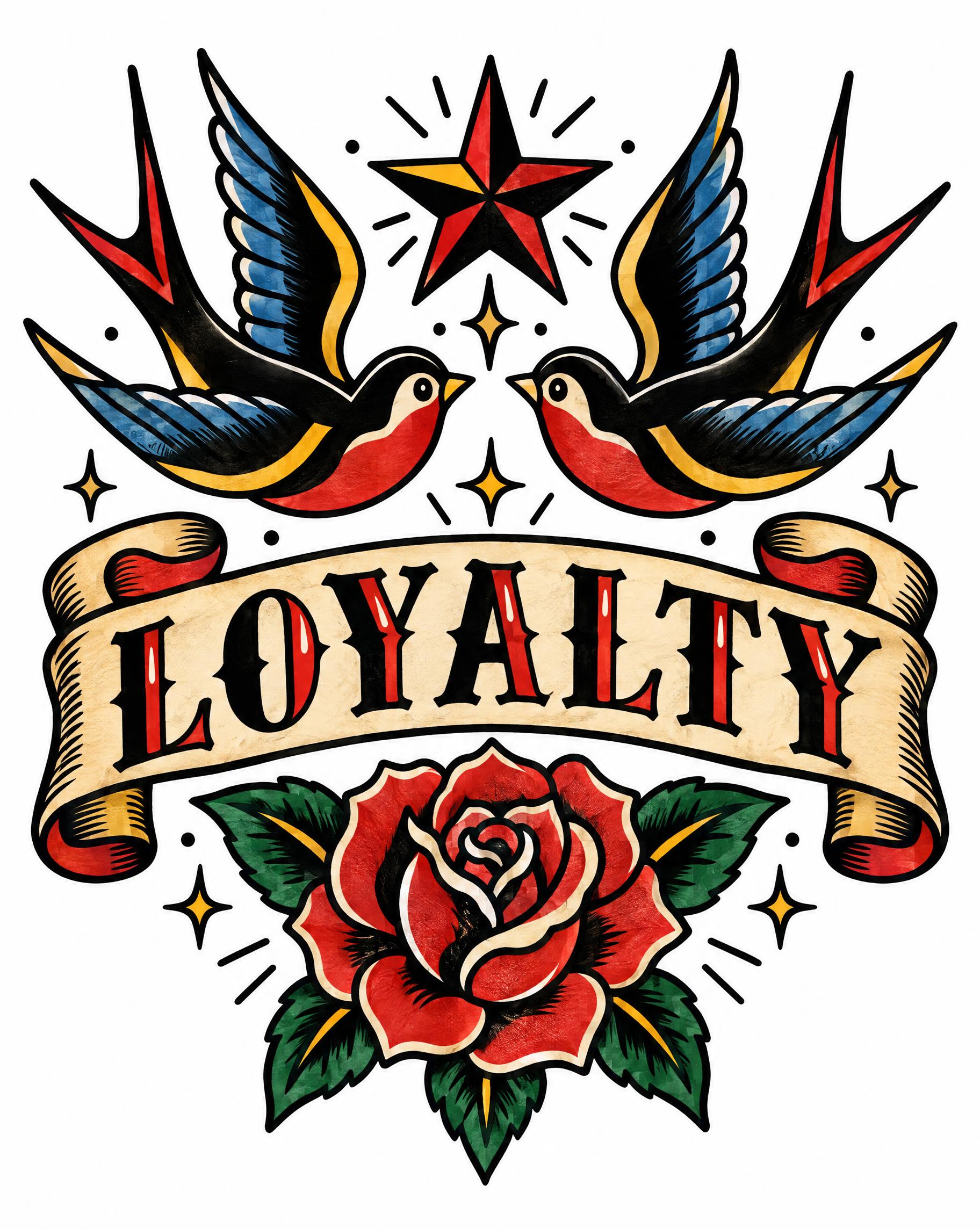
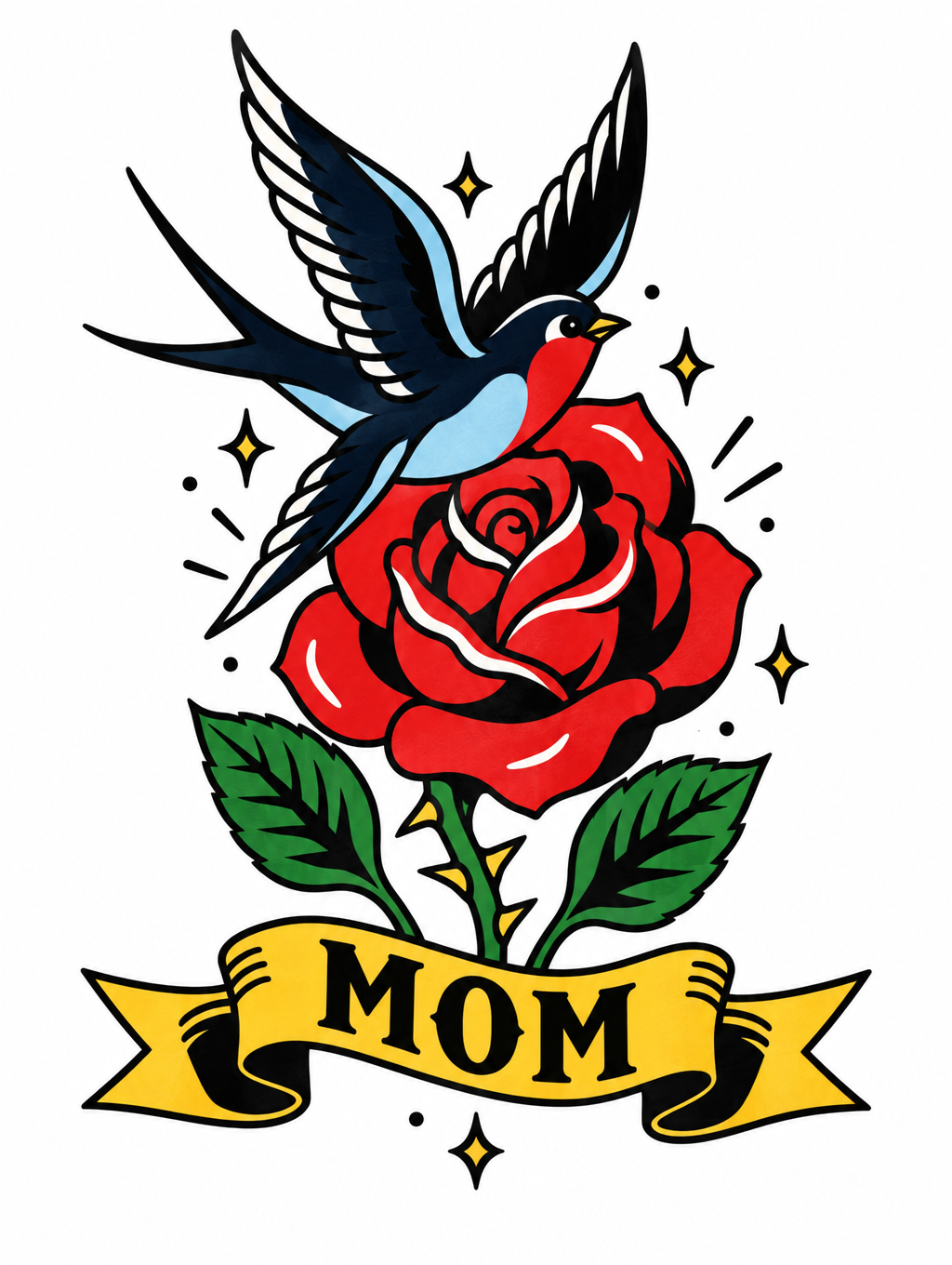
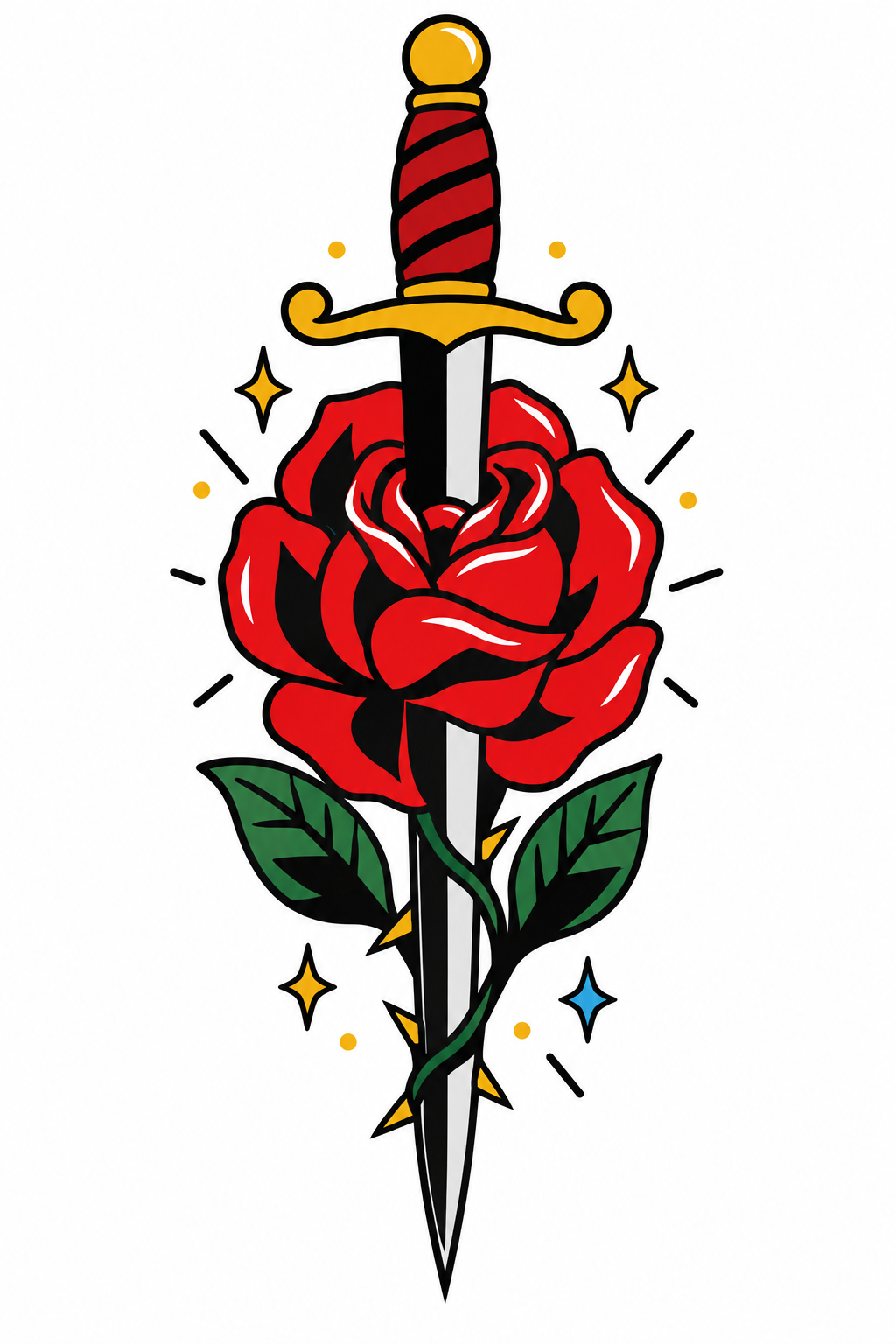
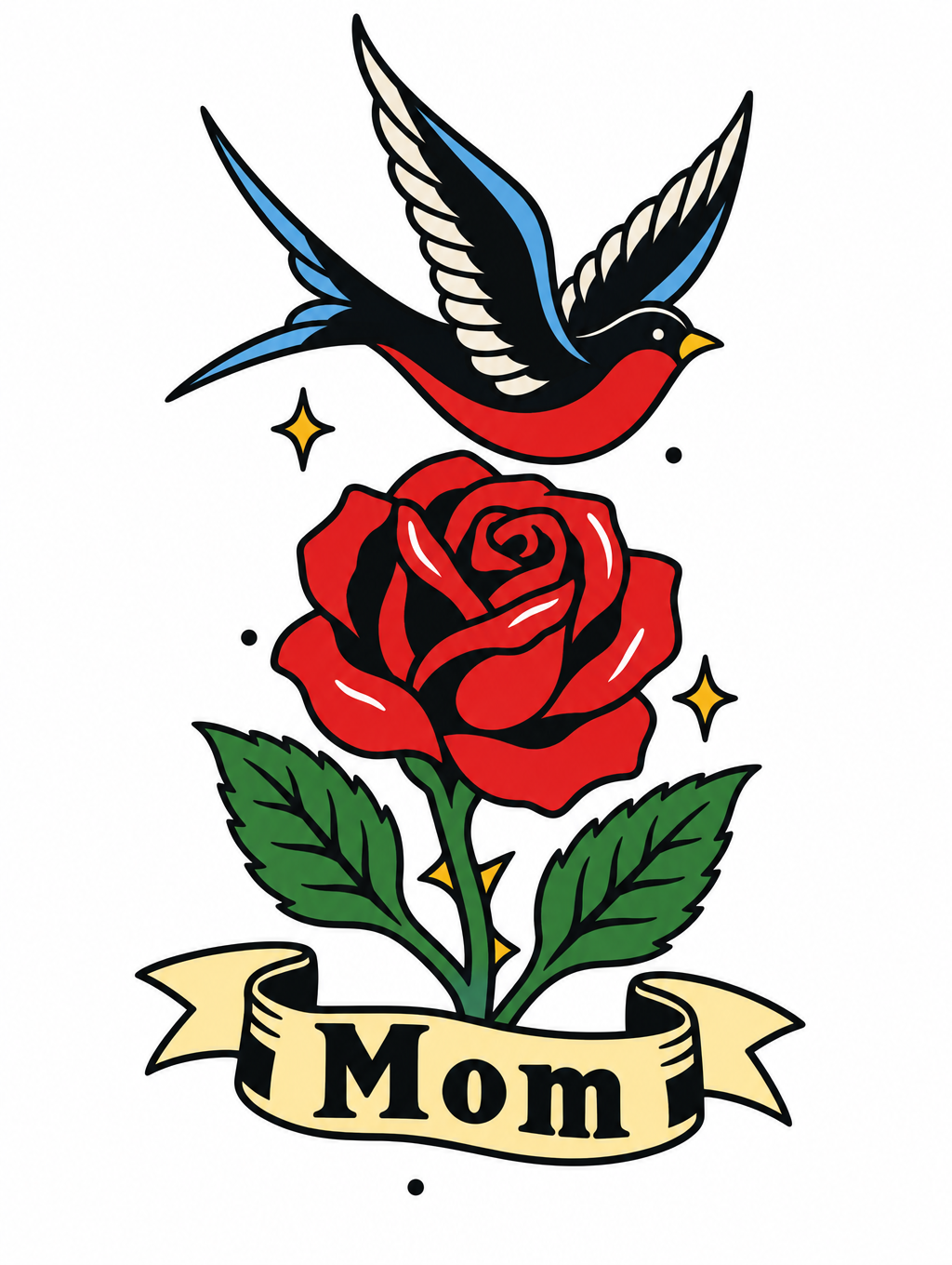
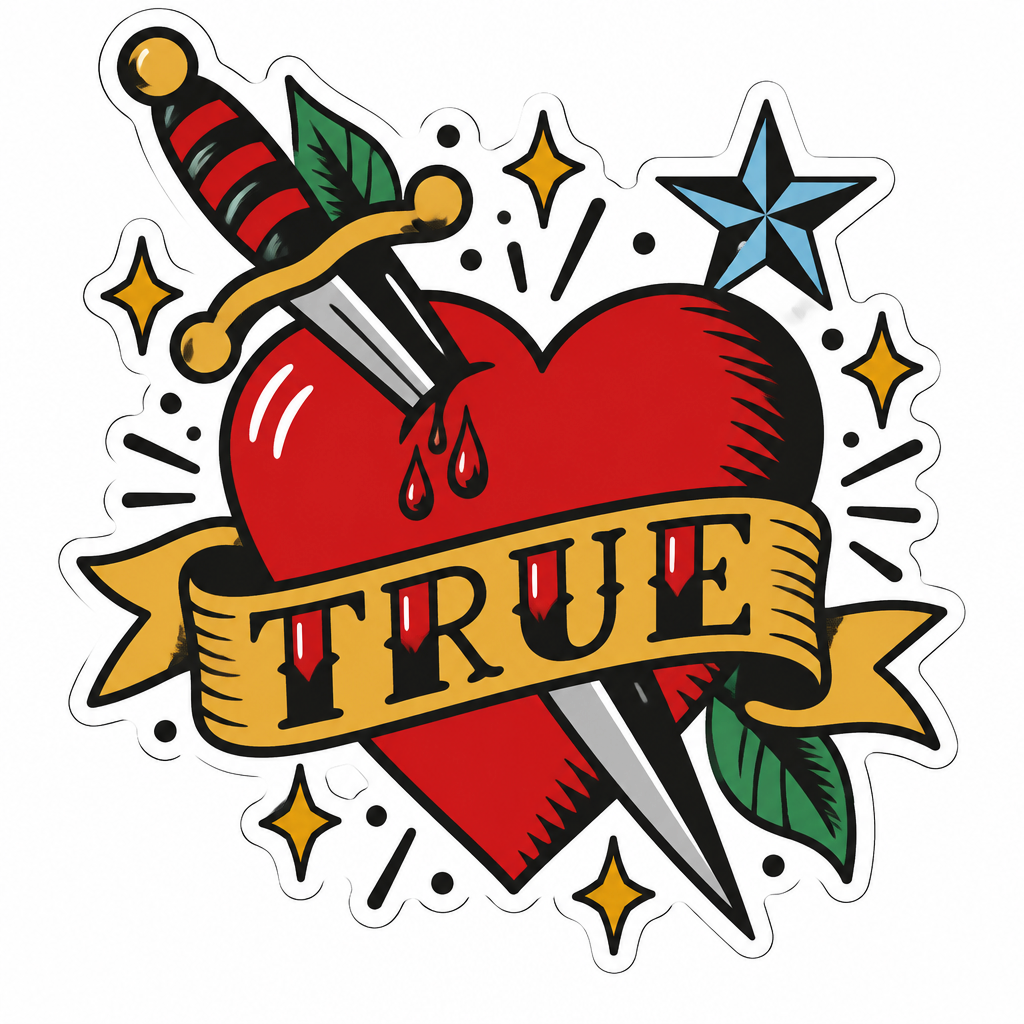
Single tattoo designs on white: swallows, hearts, roses or daggers with your word or name on a ribbon banner.
AI fonts that fit American Traditional
Every AI font here fits the American Traditional frame. Pick one, or let the generator choose.
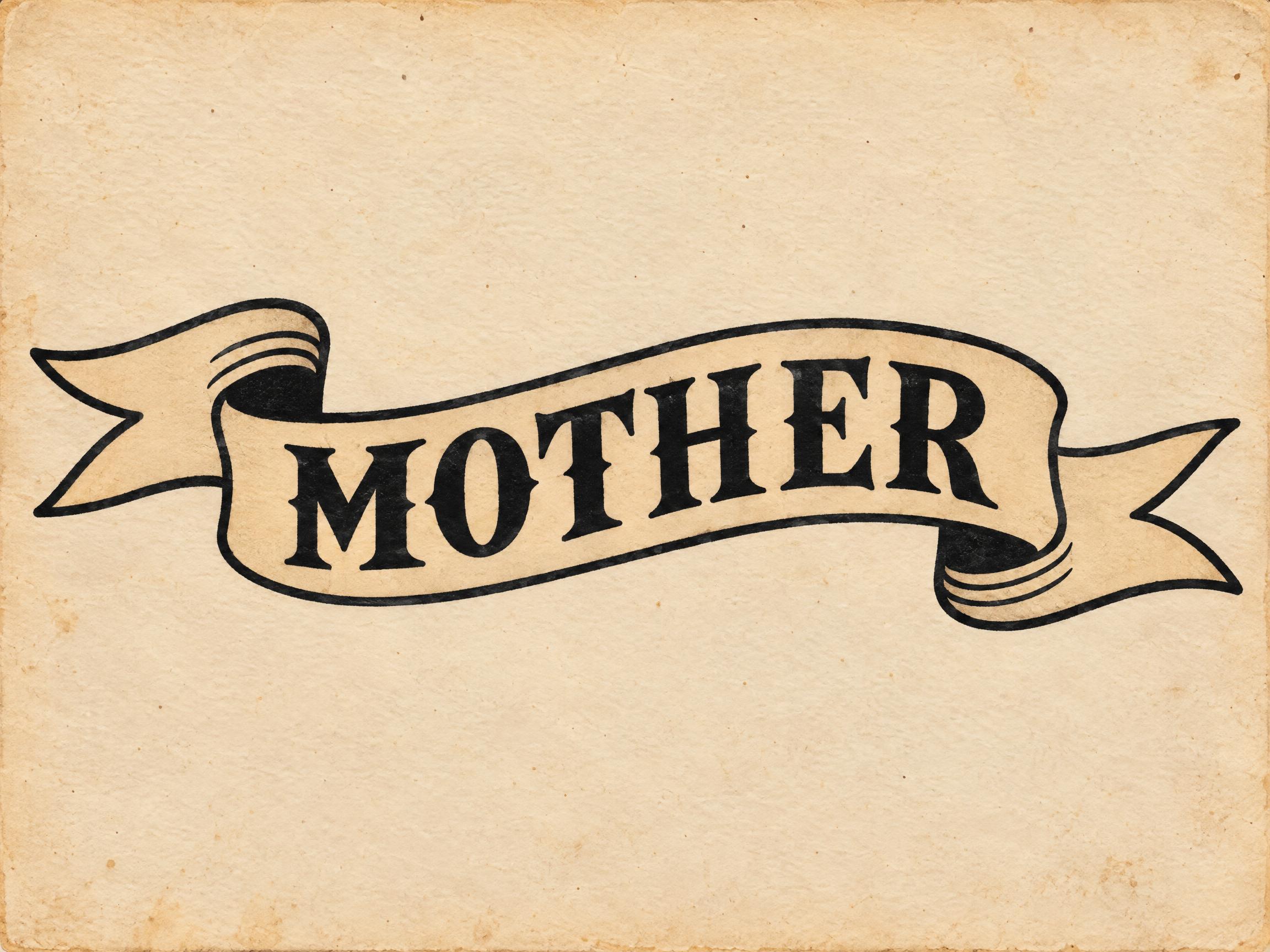


American Traditional style designs
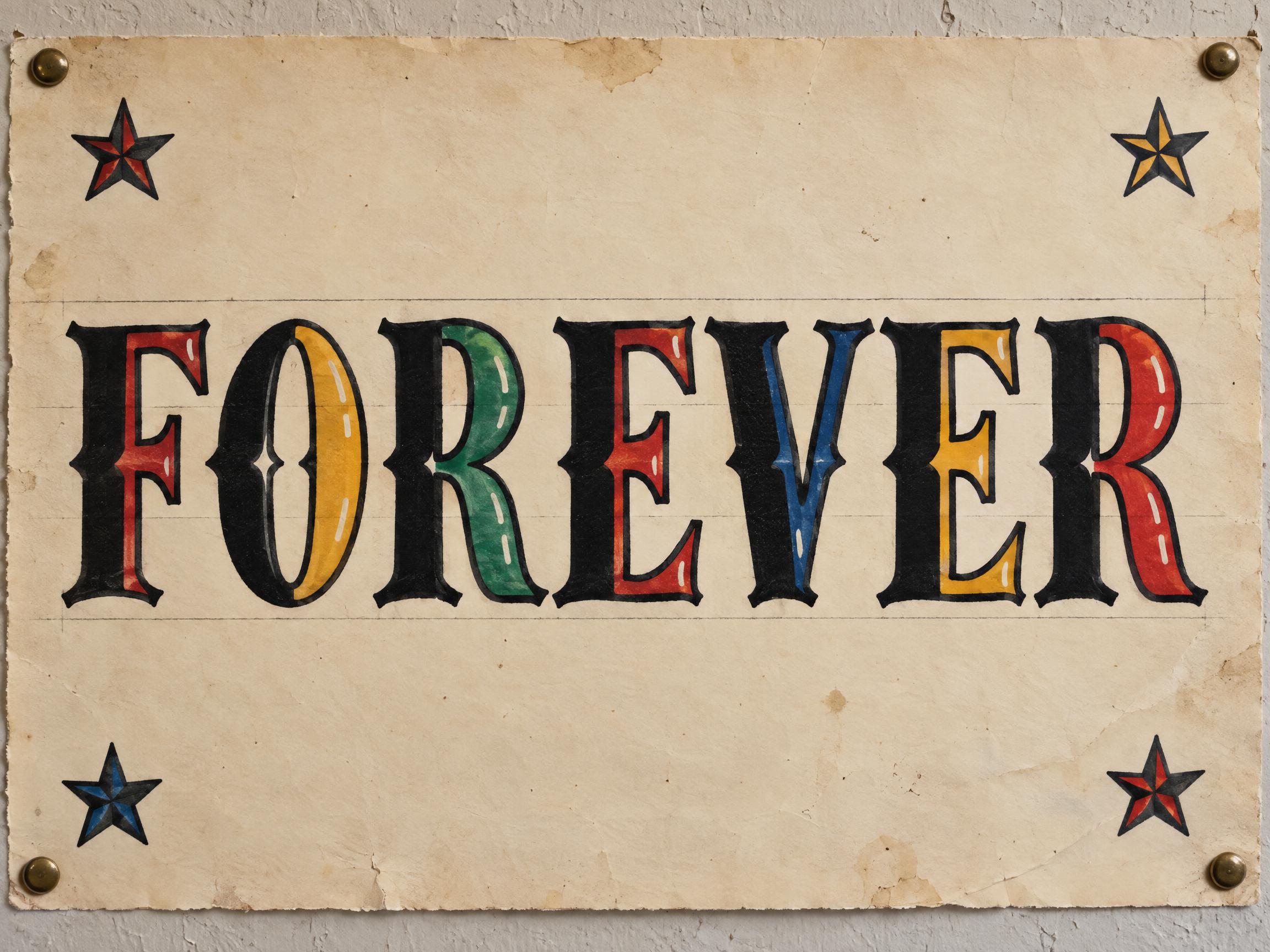
Real designs made on FontVibe. Open any one, or reuse it with your own text.
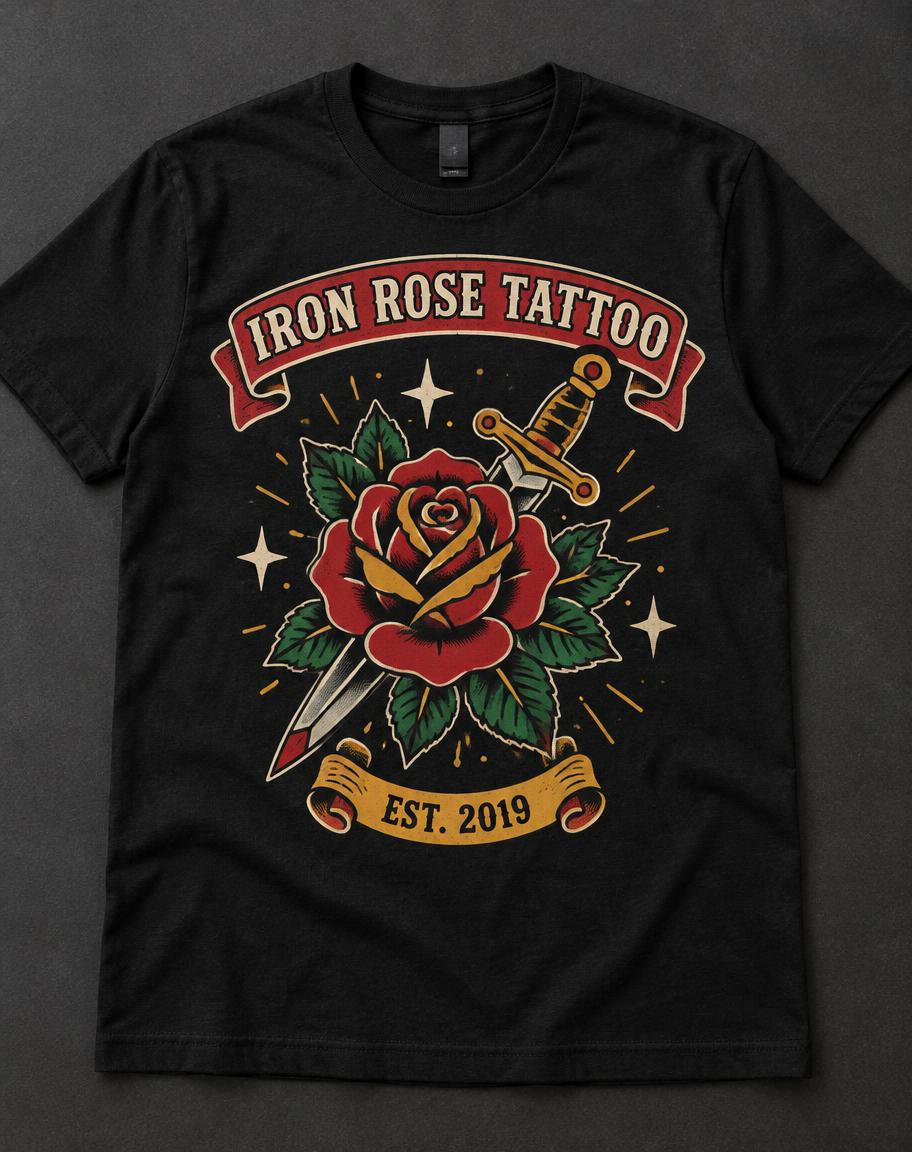
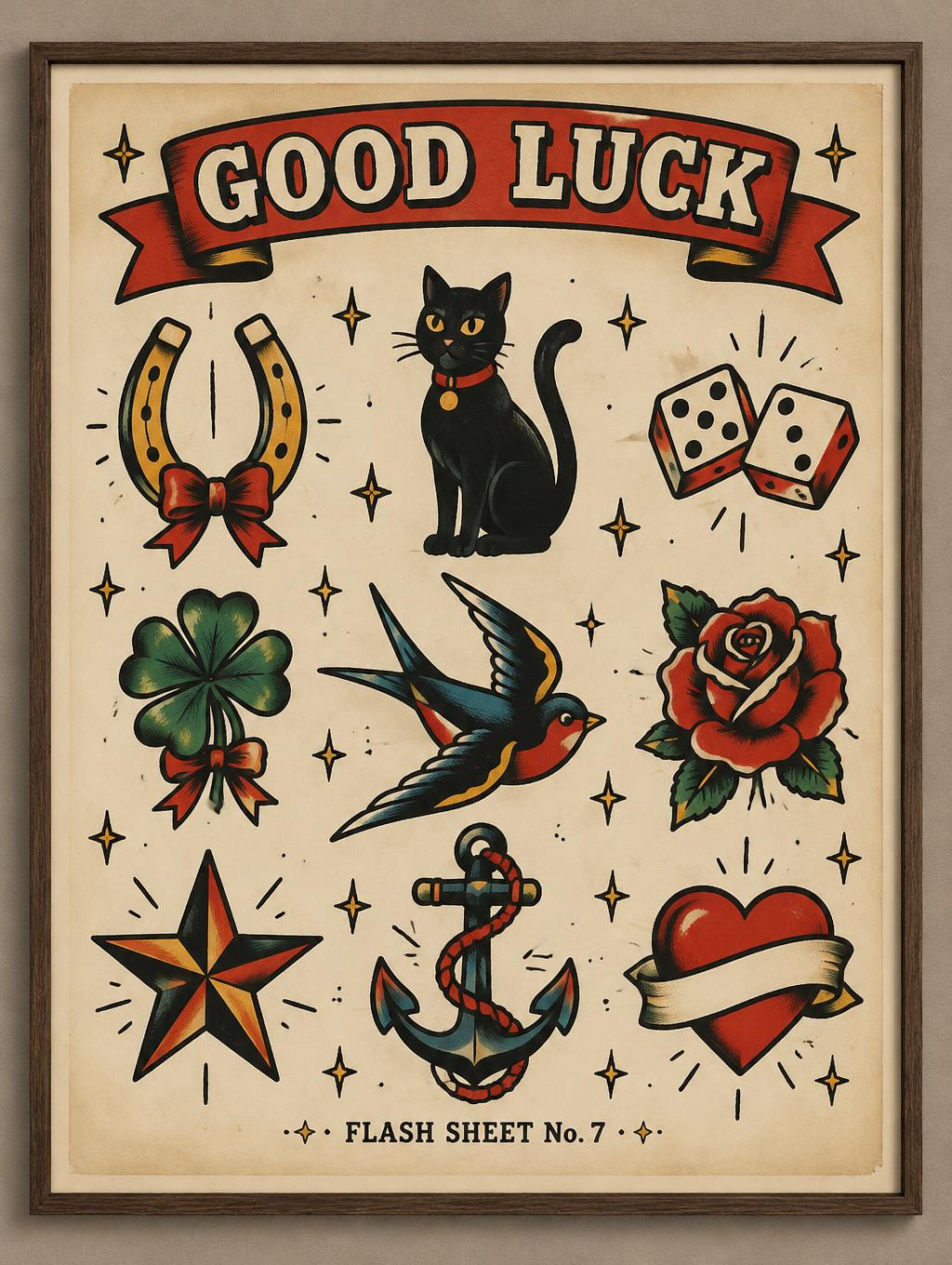
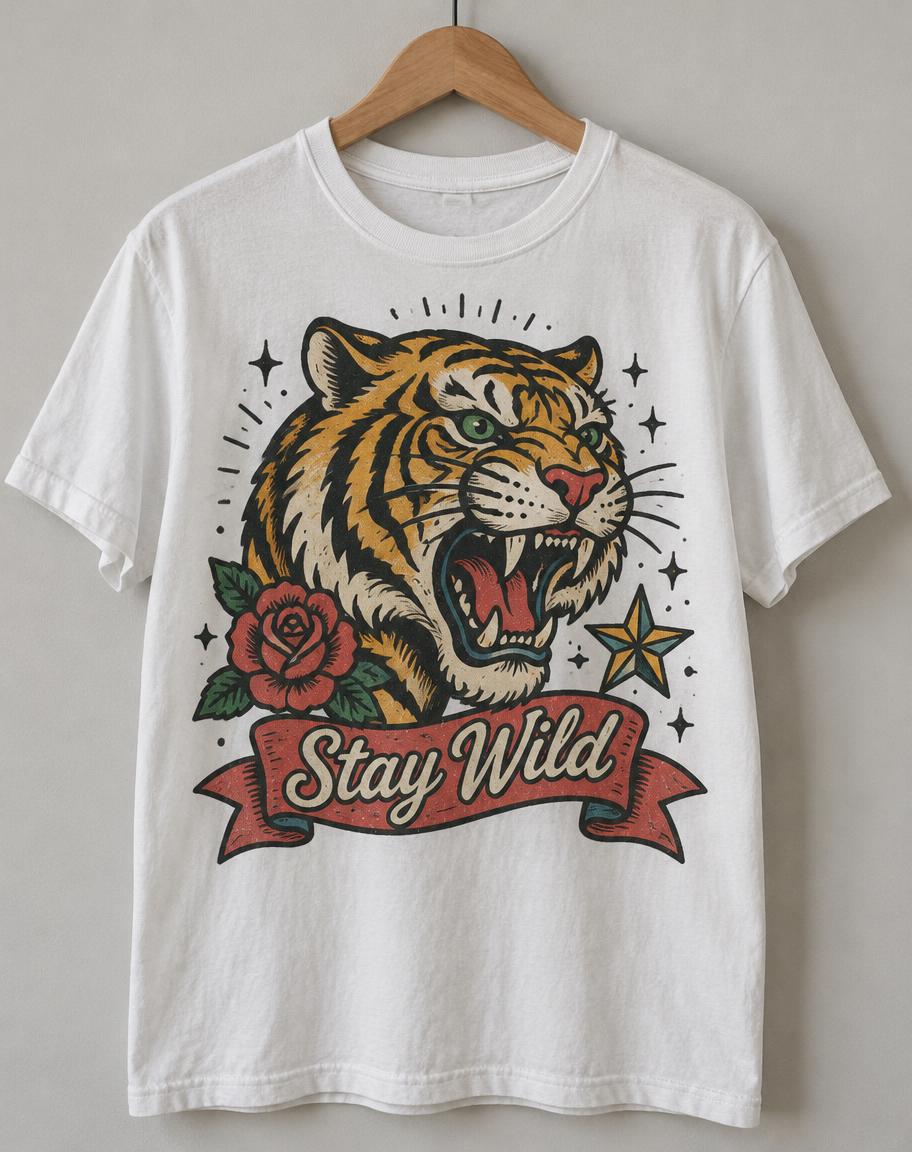
What you can make with American Traditional
Pages for the things people make in the American Traditional style. Each one has ready-made ideas and the right size.
Similar styles
Other looks that work for the same kinds of designs.





Tags in American Traditional
Every tag used on this page — each opens the designs, fonts and styles that share it.
Questions
The story behind American Traditional
Where the look comes from, the moments that shaped it and the facts behind it, with sources.
Where the American traditional look comes from
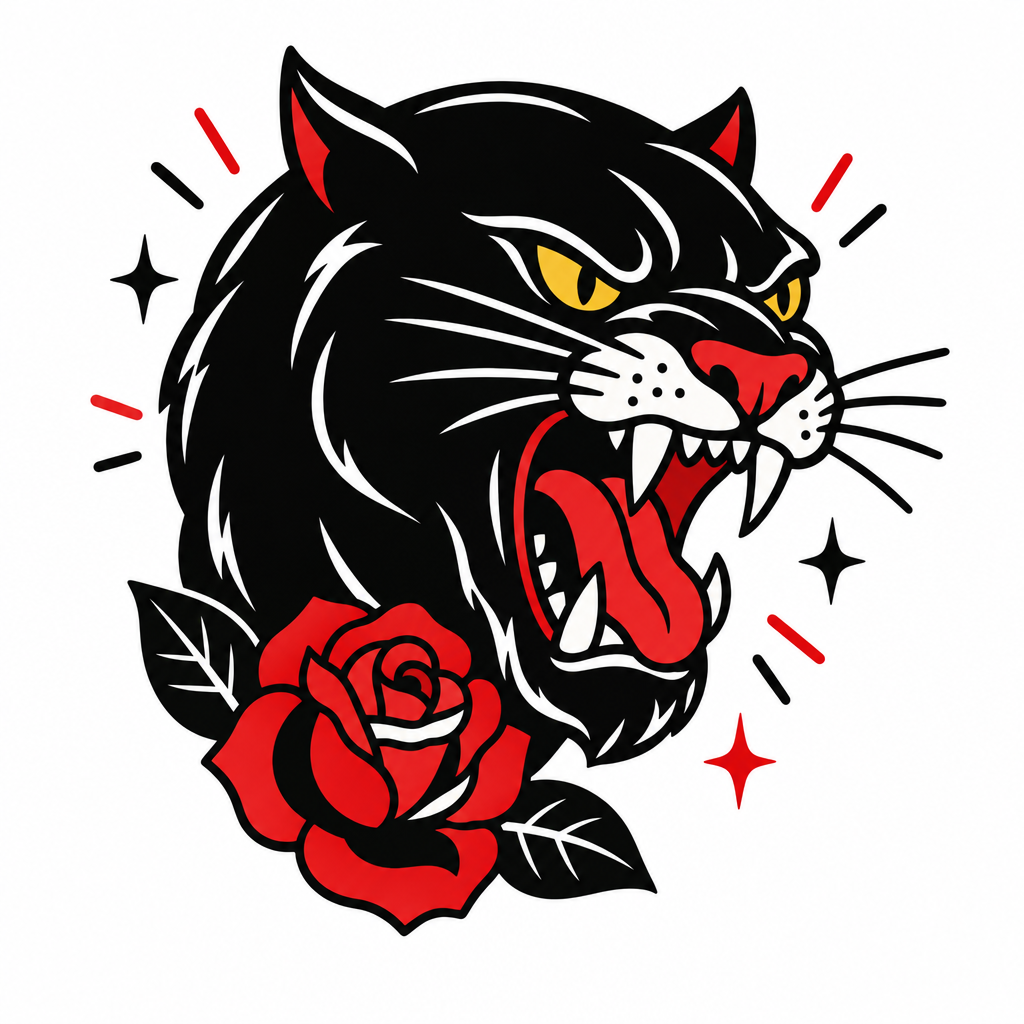
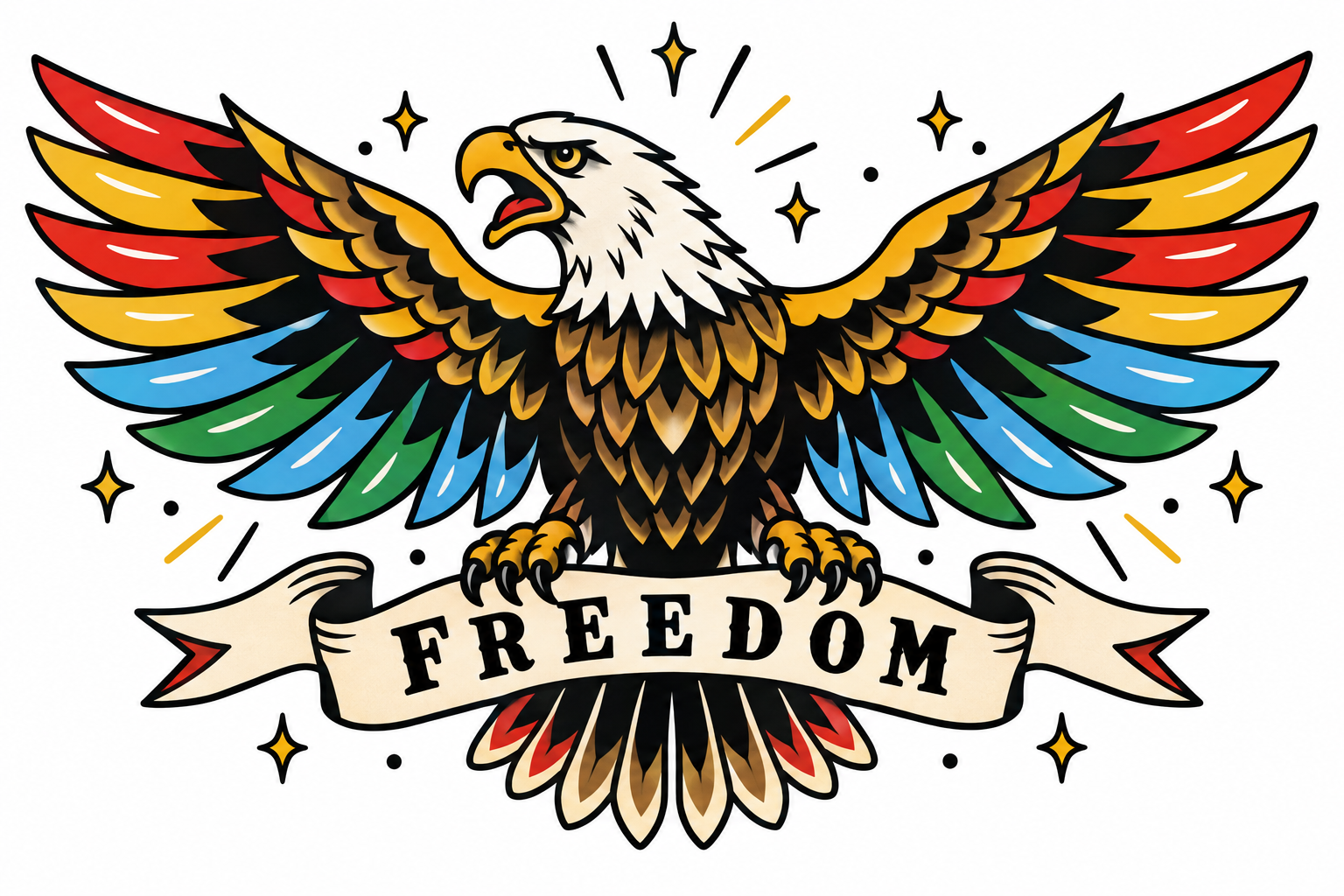
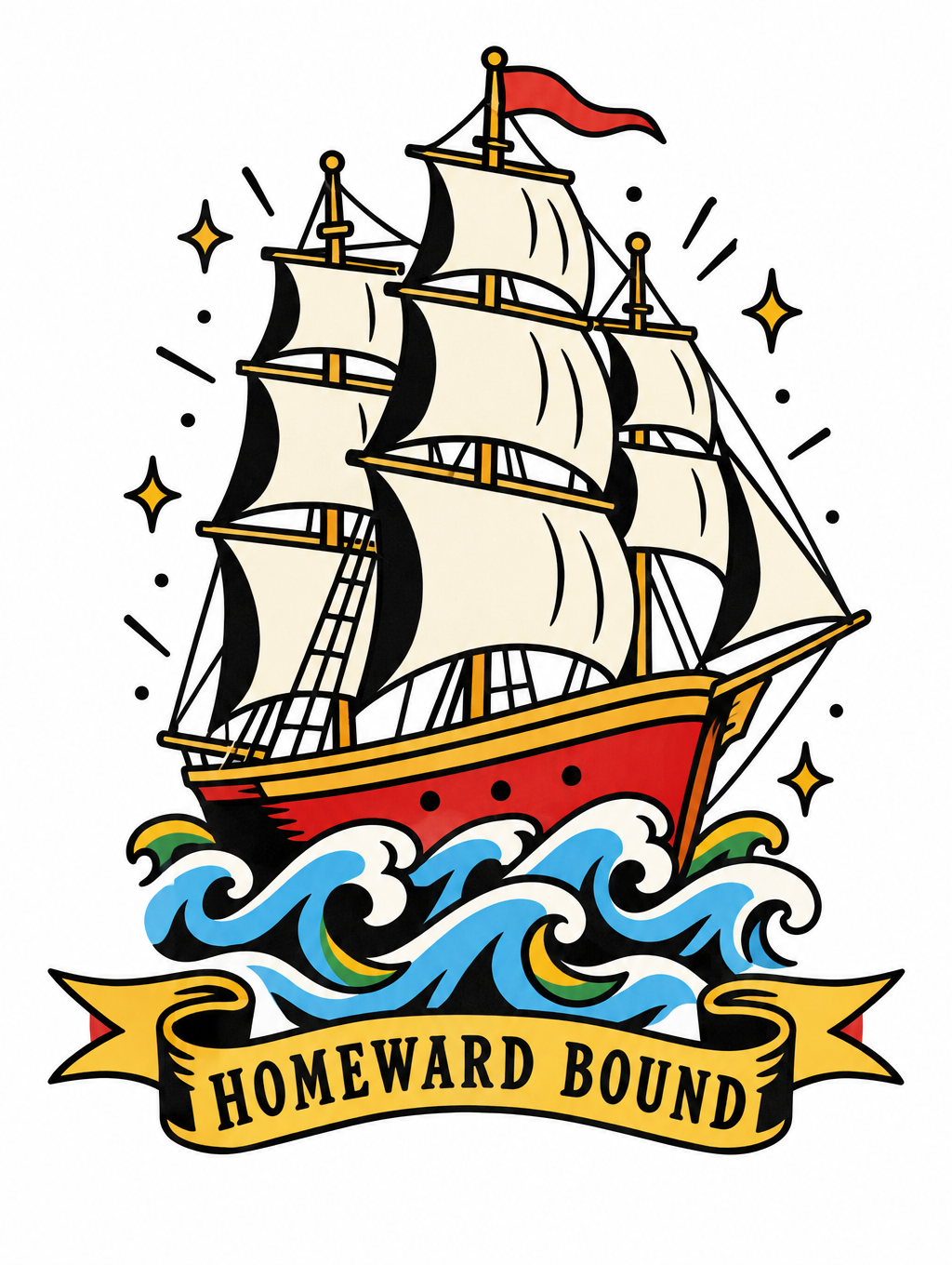
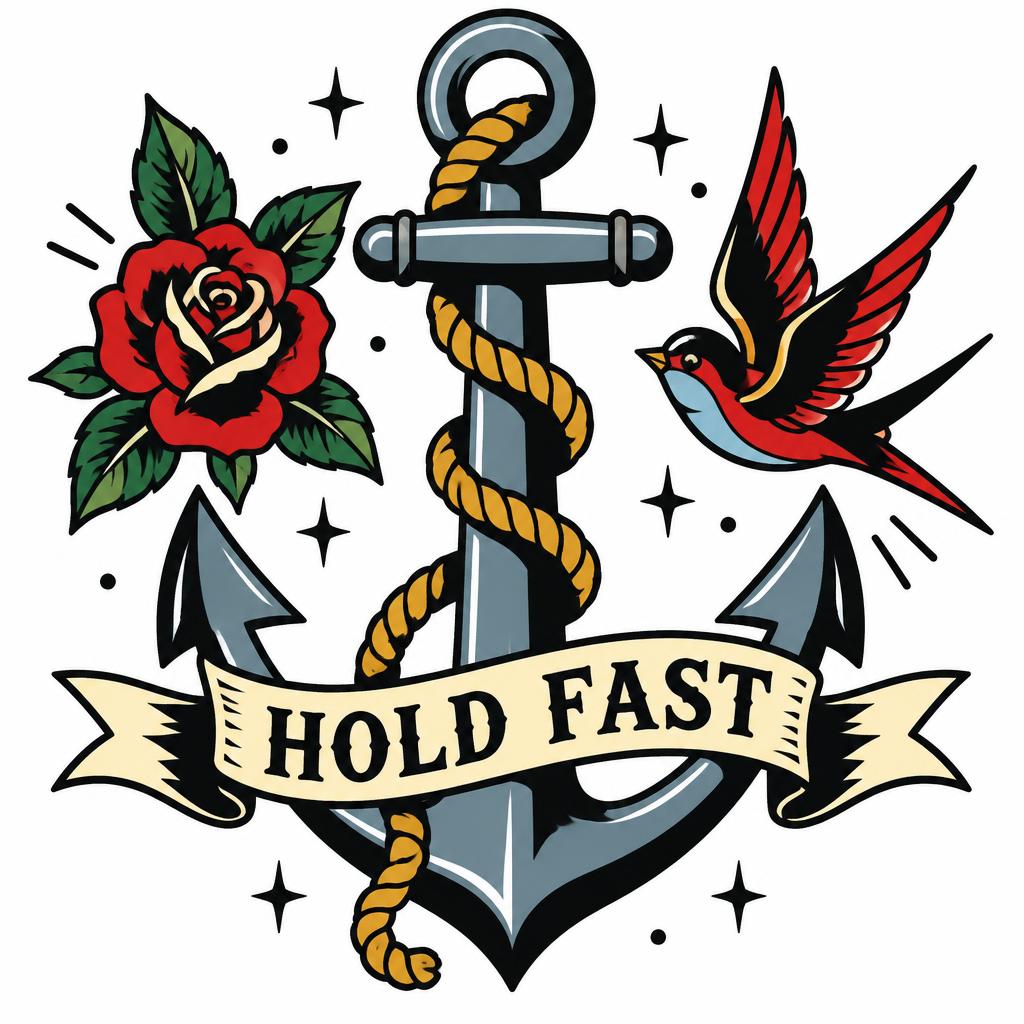
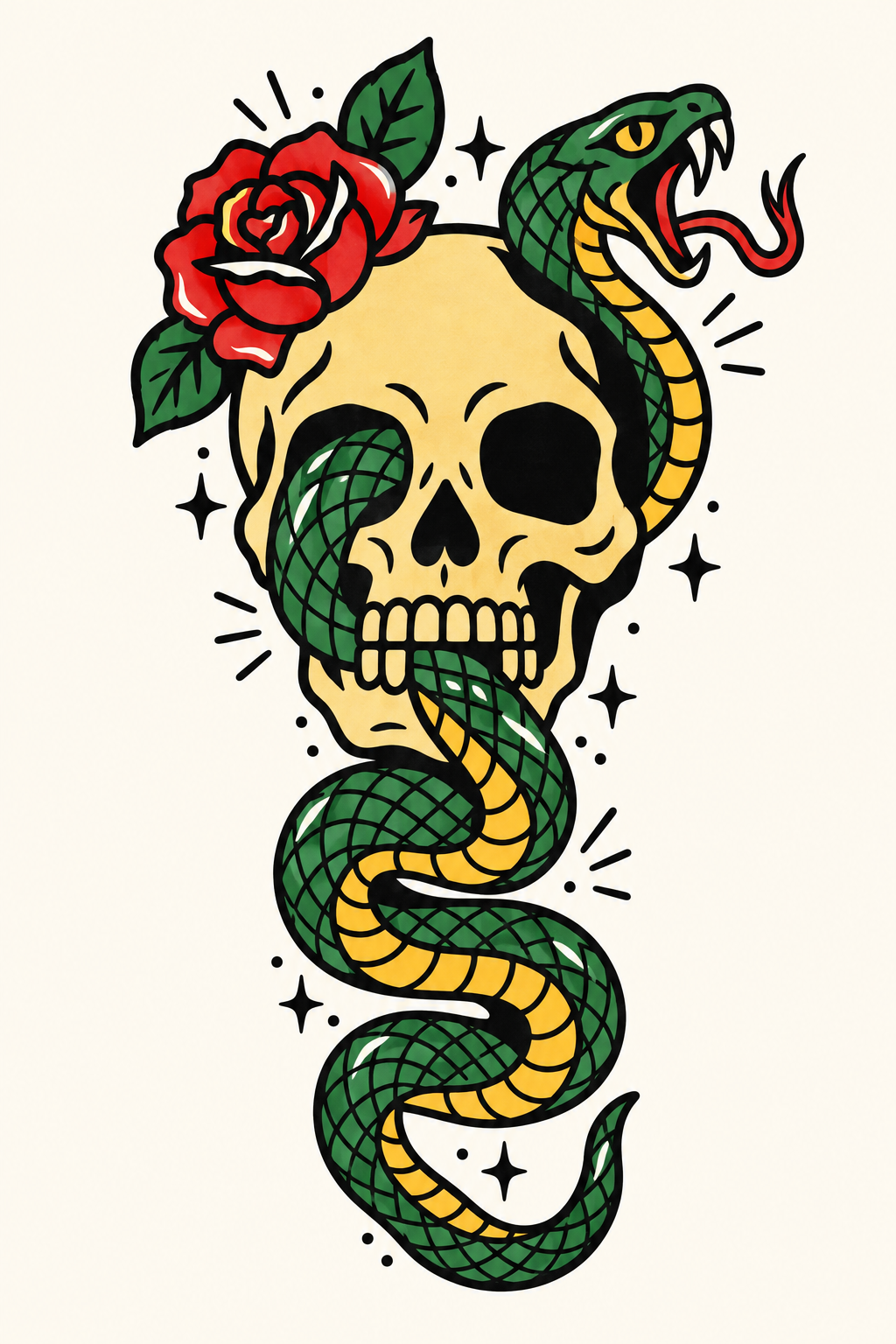
American traditional, also called Western traditional, old school or simply traditional, is a tattoo style with bold black outlines and a limited colour palette, with common motifs influenced by sailor tattoos. Many of its motifs come from tattoos popular among military service members during World War II, including eagles, American flags and pin-up girls.
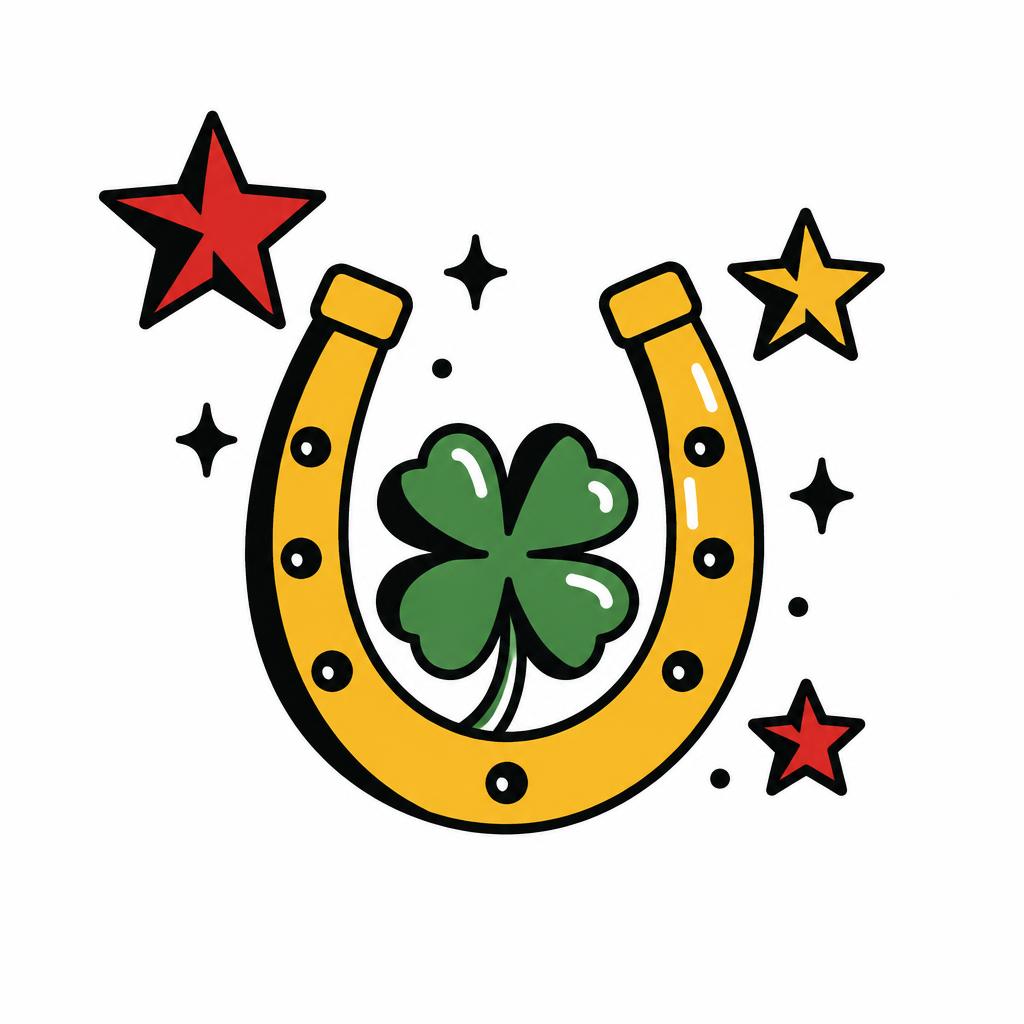
The colours are bright, saturated yellow, red and green with black shading, applied so they stay clear on the skin over a lifetime. The designs were sold as flash: ready-made designs that customers pick from the wall instead of ordering a custom piece.
Norman Keith Collins (1911–1973), better known as Sailor Jerry, reworked 1920s–1930s designs with influences from Japanese artists and is known as one of the people who started the style. This page draws the general look, black lines, flat flash colours, swallows, roses and banners, around your words.
Sources: Wikipedia — American traditional · Wikipedia — Flash (tattoo) · Wikipedia — Sailor Jerry
Moments that shaped American traditional
Did you know?
Tattoo flash is commonly printed on 11x14 inch sheets in North America. Source ↗
The name flash is said to come from the traveling carnival and circus trade of the late 1800s. Source ↗
Milton Zeis (1901–1972) sold thousands of flash designs to tattoo artists through his mail-order supply business. Source ↗
Sailor Jerry's last studio was at 1033 Smith Street in Honolulu's Chinatown. Source ↗
American traditional in typography
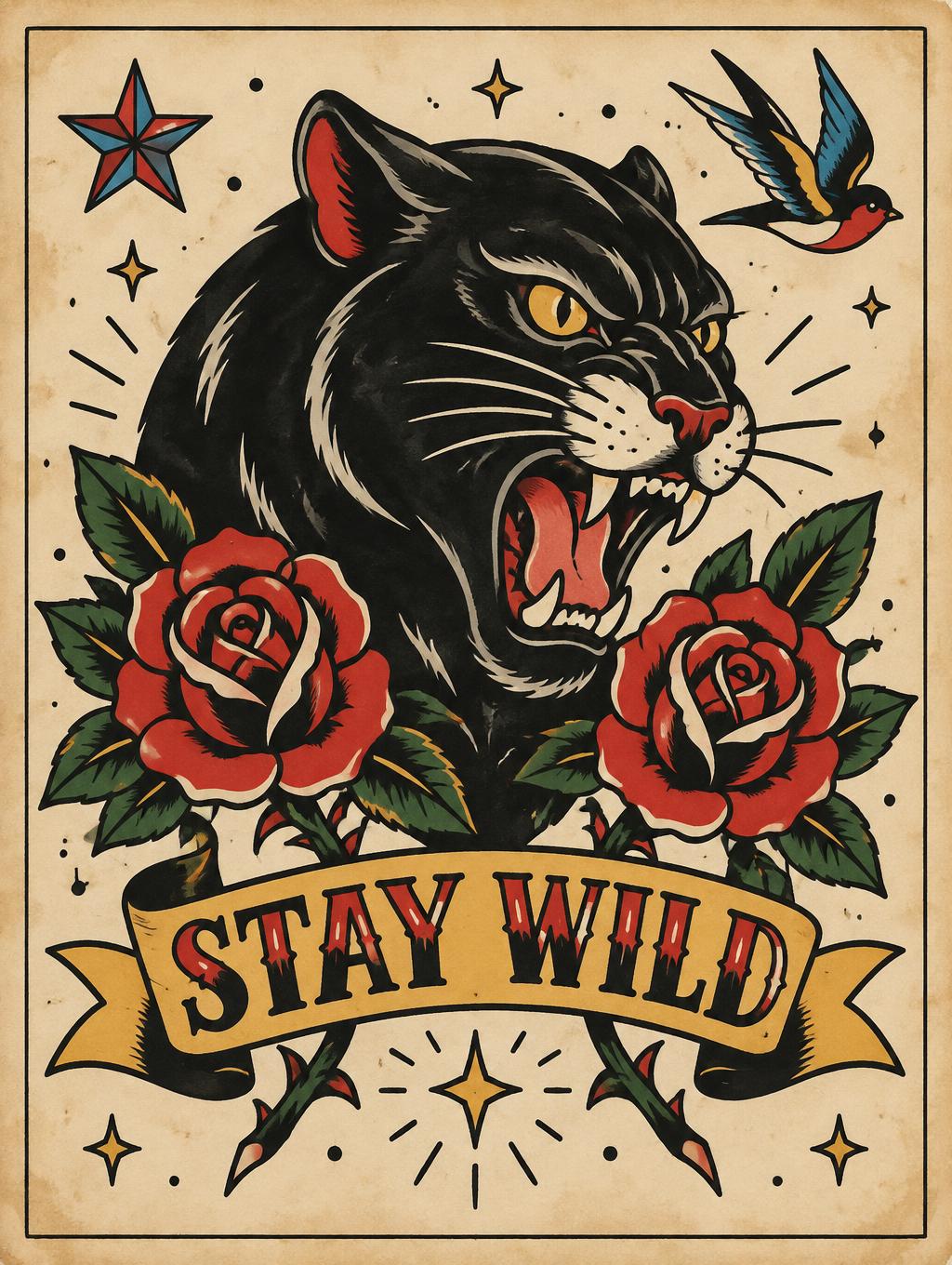
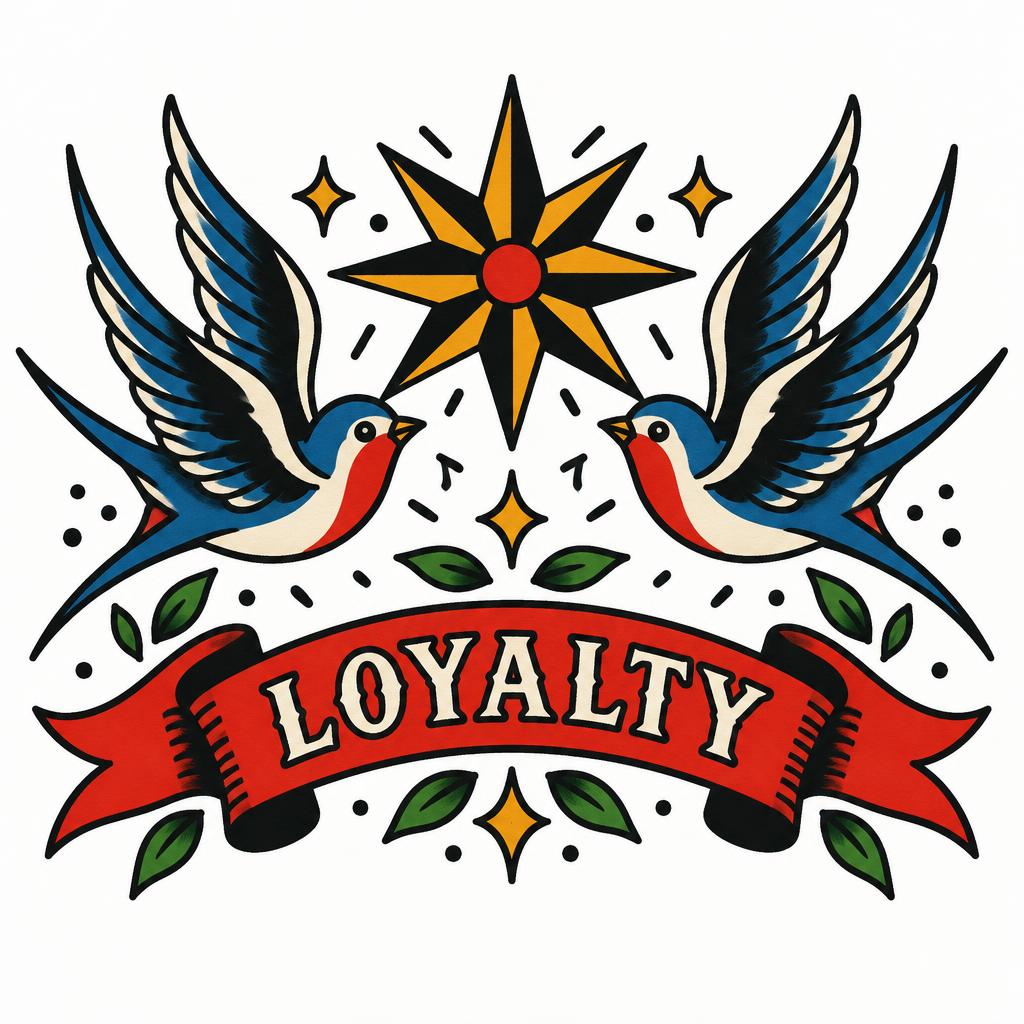
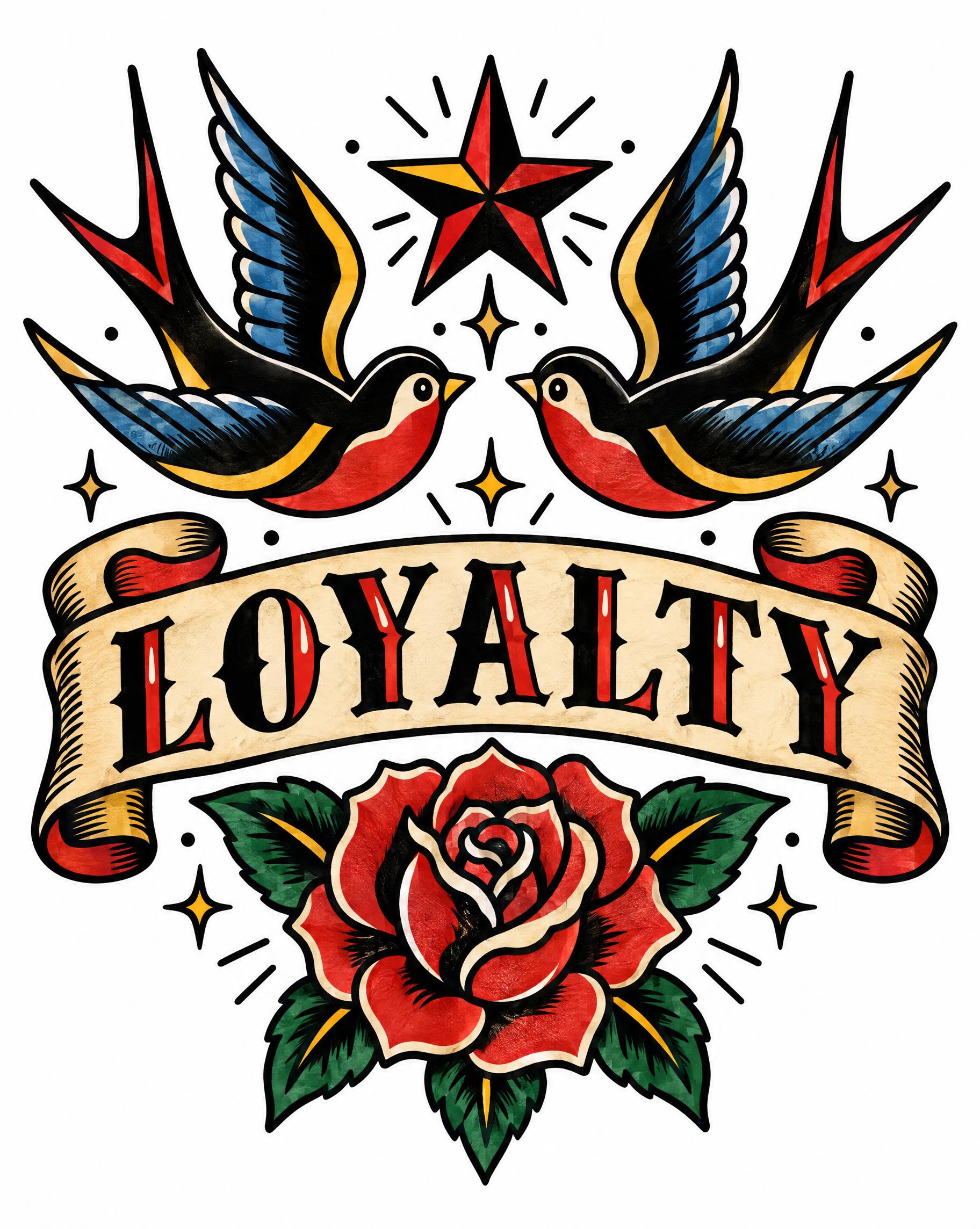
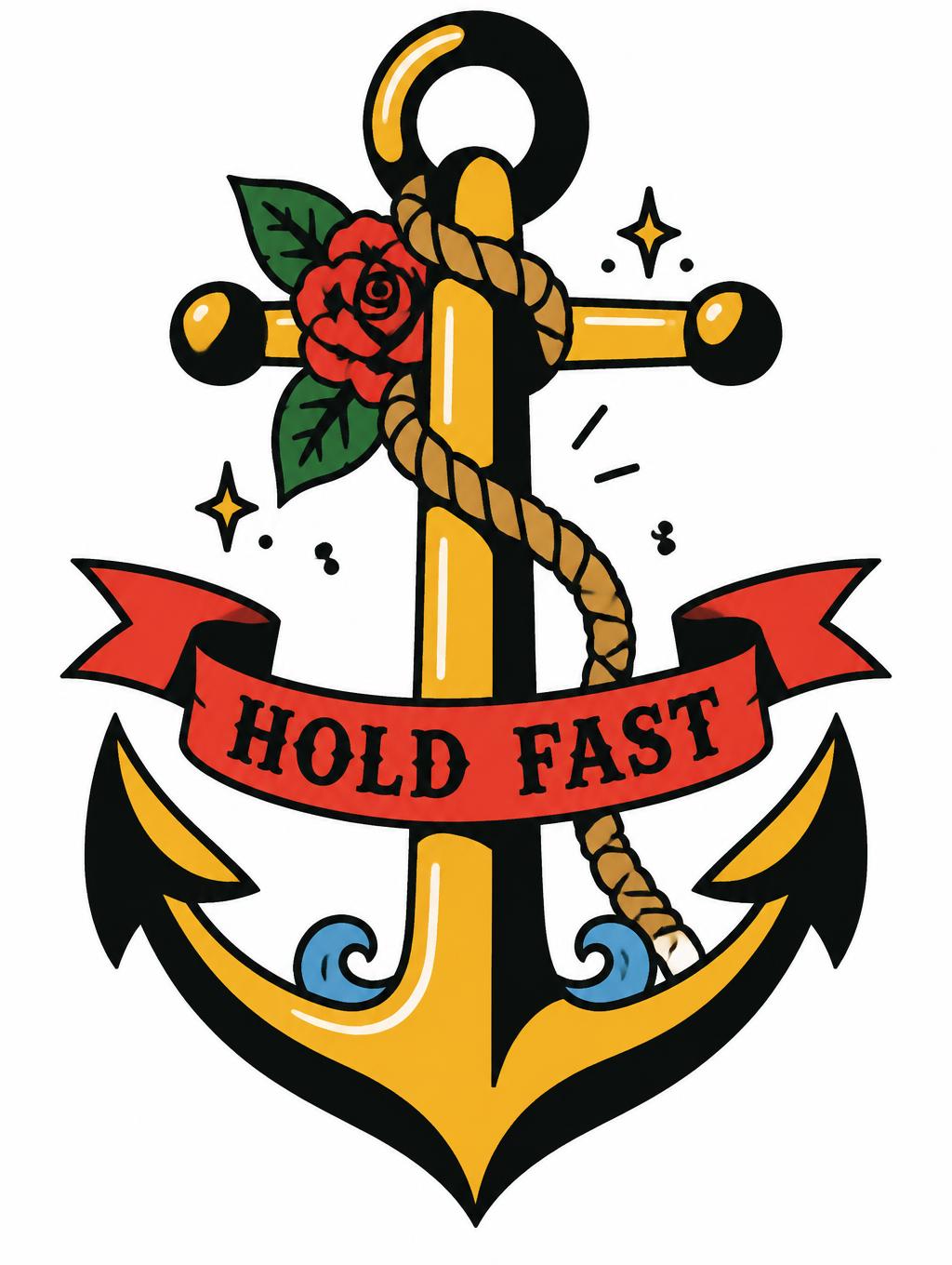
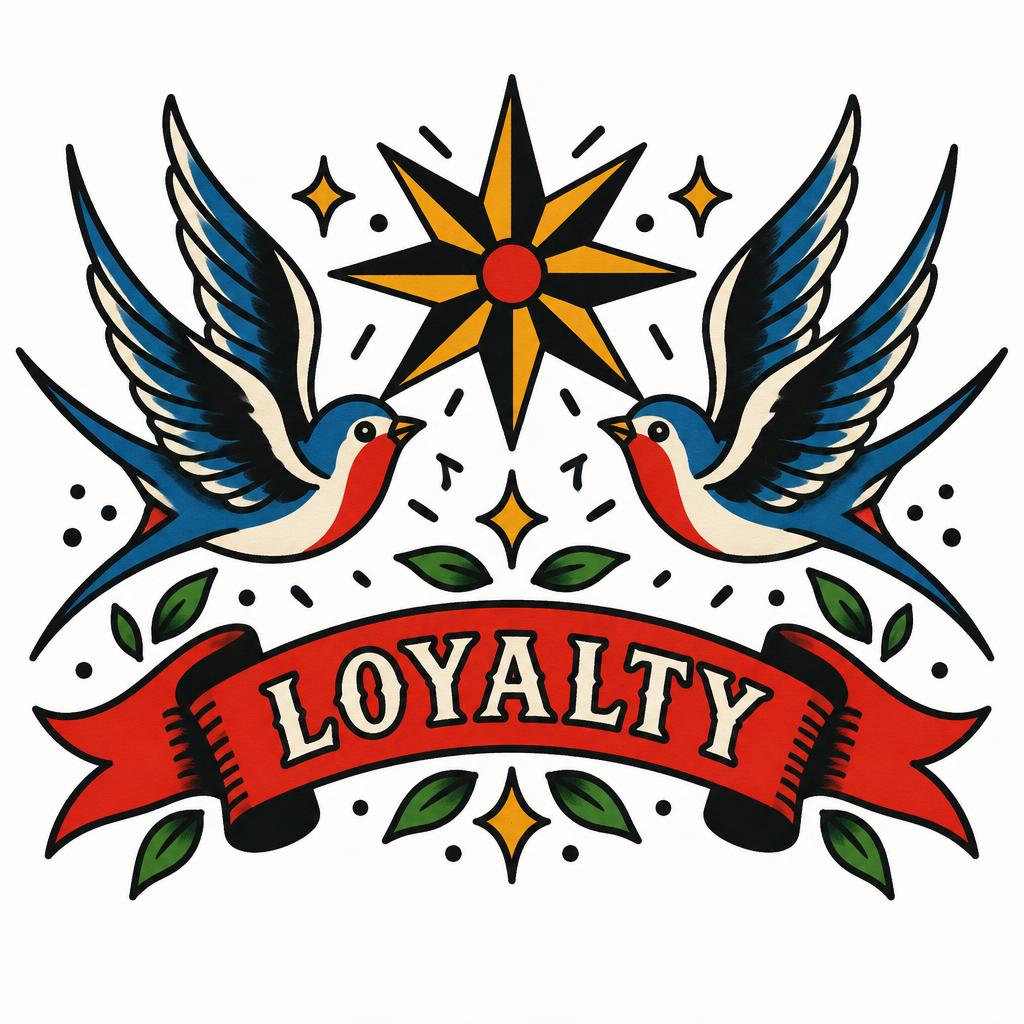
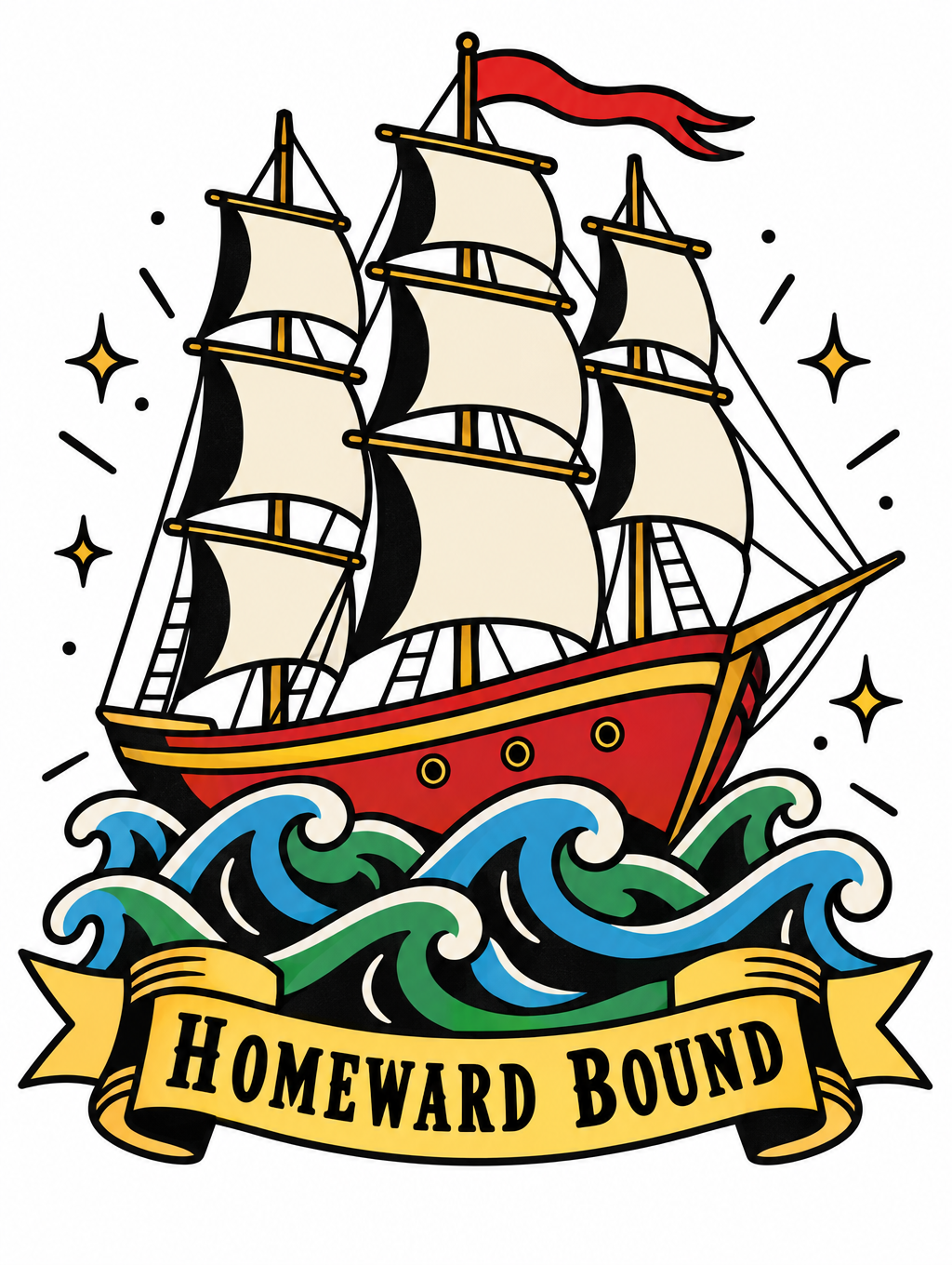
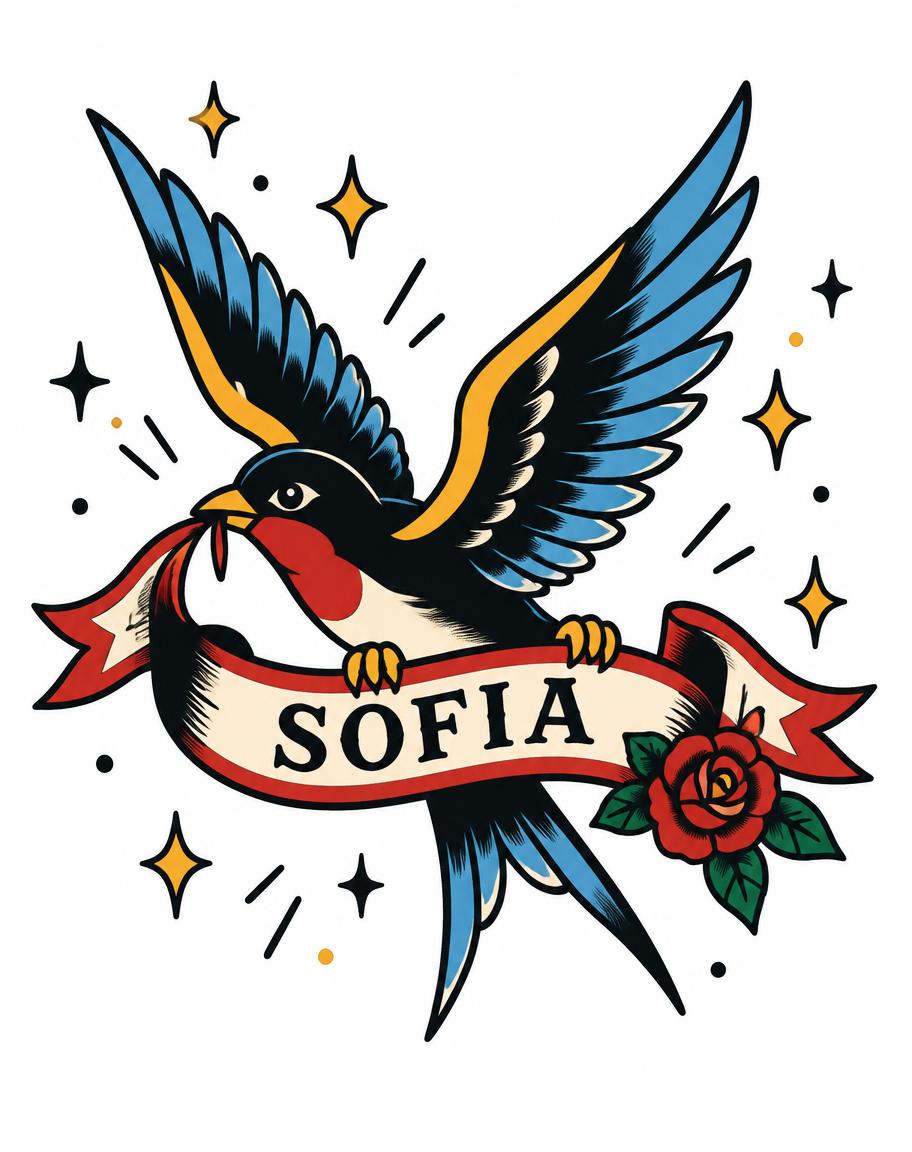
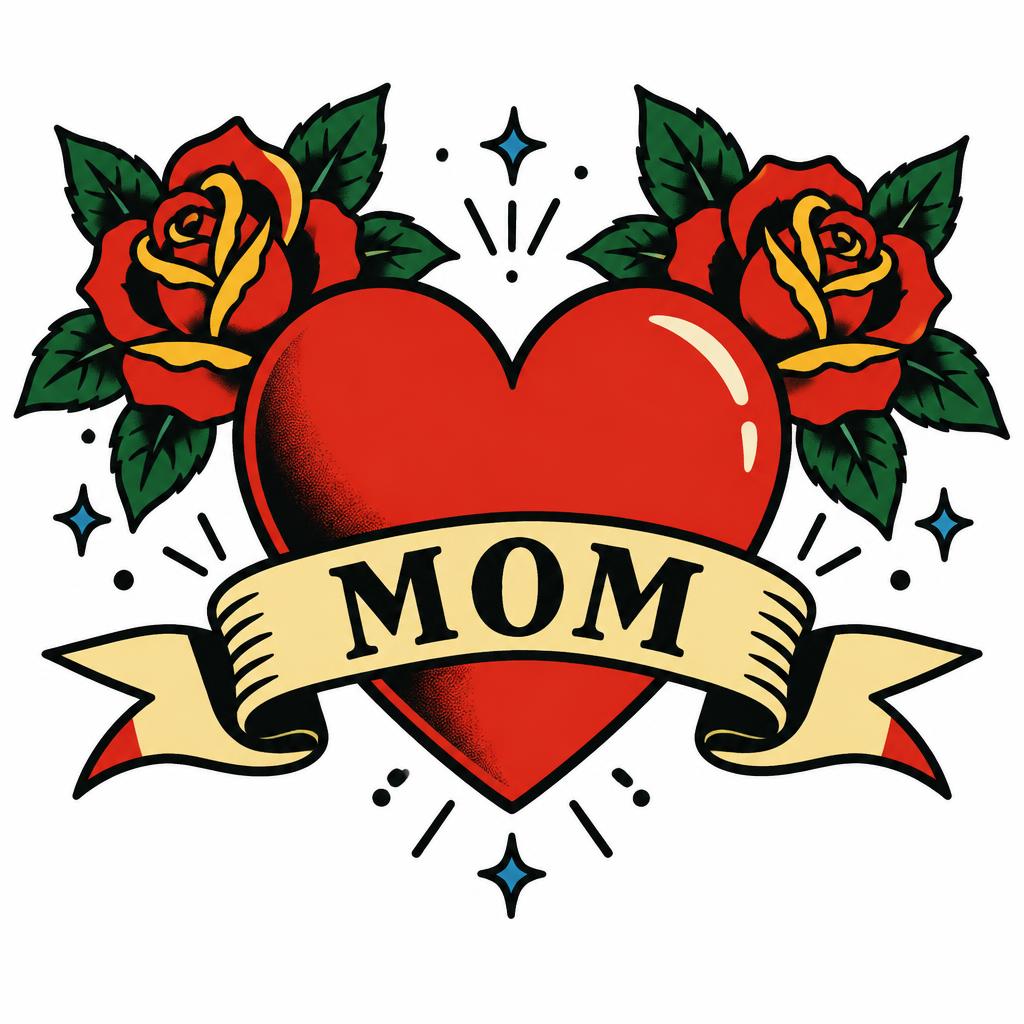
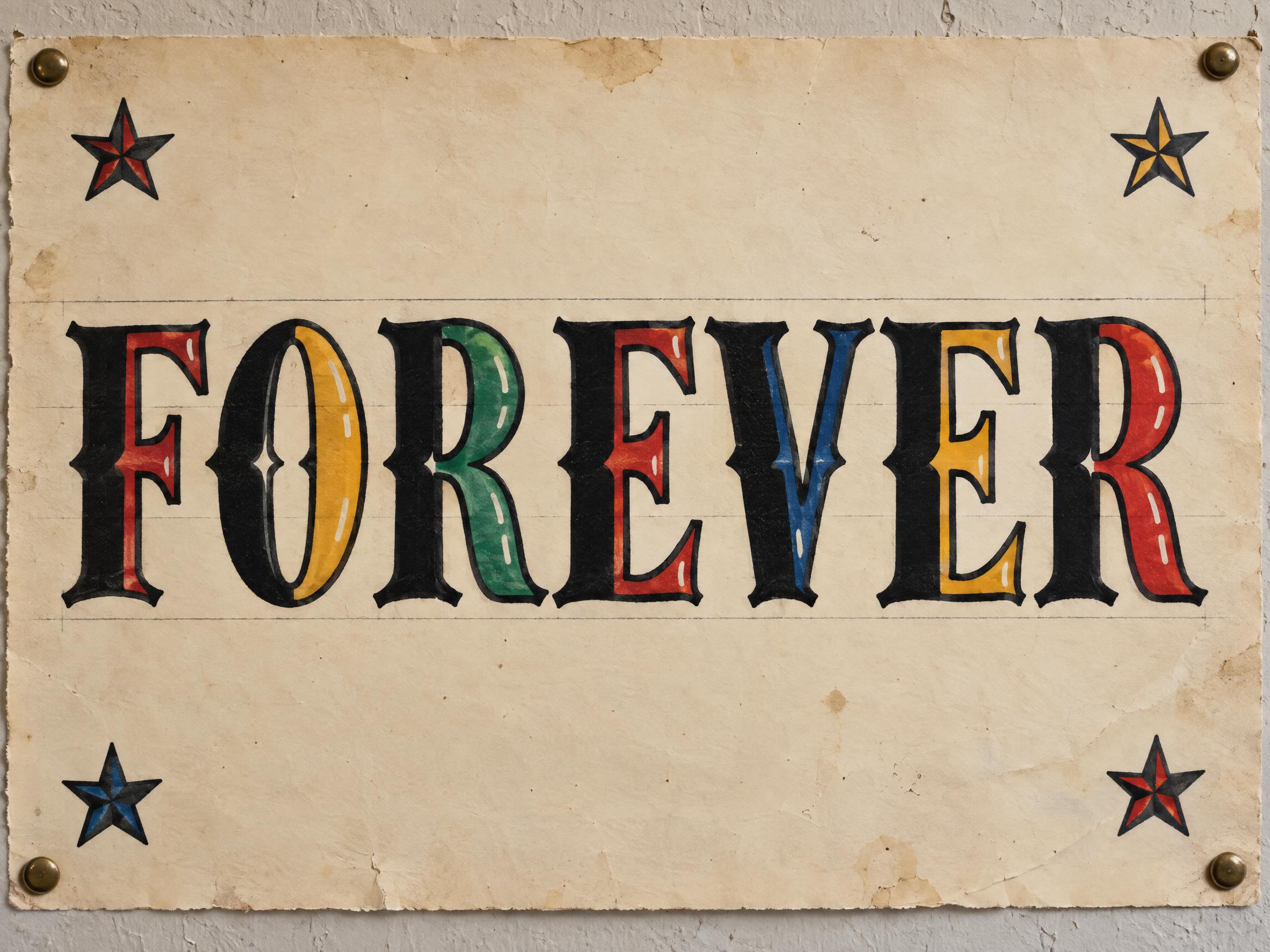
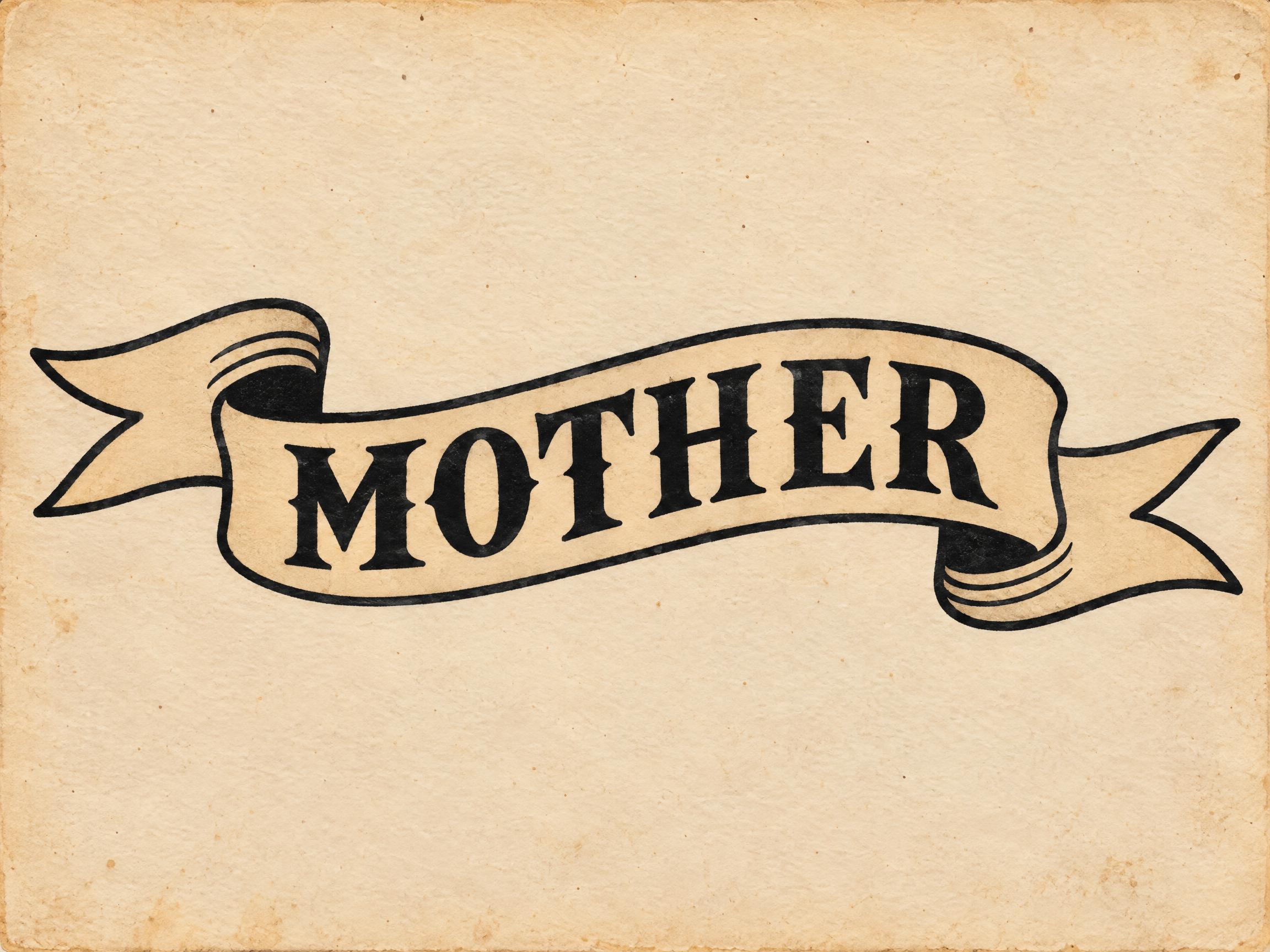
Lettering on traditional flash is short and bold: a single word such as LOYALTY or HOLD FAST, a name, or MOM on a ribbon banner. Capitals dominate, often with each thick stroke half black and half red, outlined in heavy black like the rest of the design.
Banners curl across a heart, a dagger or under a pair of swallows, and the words follow the curve. Flash sheet titles sit at the top of the page above the rows of designs.
Where you’ll see it
- ✦Tattoo flash on a studio wall
- ✦Framed flash sheet art prints
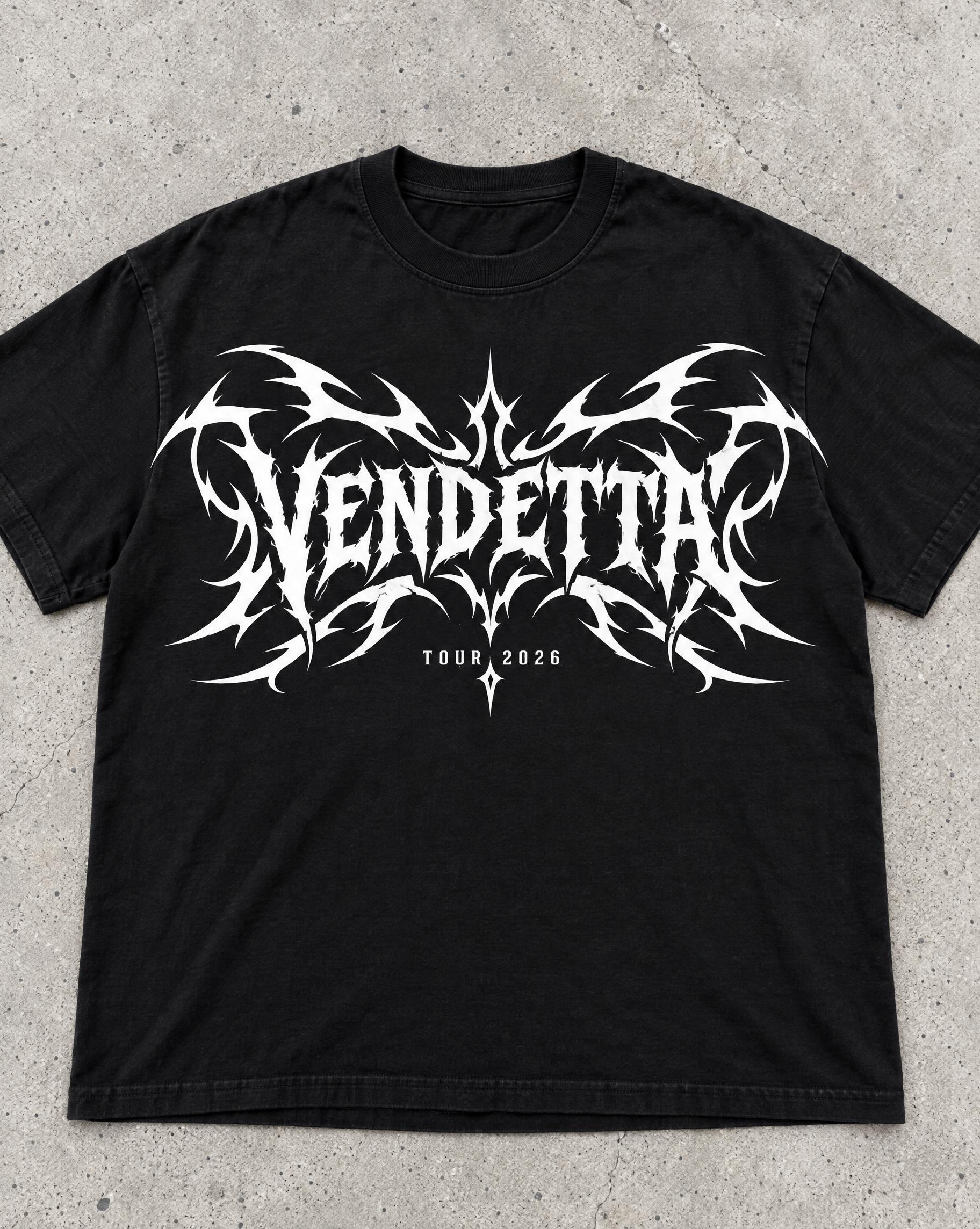
- ✦Tattoo shop and barbershop T-shirts
- ✦Laptop and water bottle stickers
- ✦Flash day and gig posters
- ✦Shop signs and business cards
The American traditional style: bold lines, flash motifs, a short palette and aged paper
Every American traditional piece here is built from the same four parts. The style draws the outlines, motifs, colour and paper around your words; the letters come from the AI font you pick.
American traditional tattoo designs, flash prints, posters, stickers and tees
Every format here puts your words into classic American traditional flash. Pick a format to see designs made in it, or describe your own.
American Traditional Flash Prints
Flash sheet wall prints on aged cream paper, with your title over a set of small classic designs, ready to frame.
American Traditional Posters
Flash day, shop opening and gig posters with the event details set among roses, swallows and sparkles.
American Traditional Stickers
Die-cut stickers and sticker sheets of classic flash icons with a short word in each design.
American Traditional T-Shirts
Tee graphics of eagles, panthers and anchors with a banner or shop name, in black, red, yellow and green.
American Traditional Flash Designs
Single tattoo designs on white: swallows, hearts, roses or daggers with your word or name on a ribbon banner.
AI fonts that fit American Traditional
Every AI font here fits the American Traditional frame. Pick one, or let the generator choose.


American Traditional style designs
Real designs made on FontVibe. Open any one, or reuse it with your own text.
What you can make with American Traditional
Pages for the things people make in the American Traditional style. Each one has ready-made ideas and the right size.
Similar styles
Other looks that work for the same kinds of designs.
Tags in American Traditional
Every tag used on this page — each opens the designs, fonts and styles that share it.
Questions
The story behind American Traditional
Where the look comes from, the moments that shaped it and the facts behind it, with sources.
Where the American traditional look comes from
American traditional, also called Western traditional, old school or simply traditional, is a tattoo style with bold black outlines and a limited colour palette, with common motifs influenced by sailor tattoos. Many of its motifs come from tattoos popular among military service members during World War II, including eagles, American flags and pin-up girls.
The colours are bright, saturated yellow, red and green with black shading, applied so they stay clear on the skin over a lifetime. The designs were sold as flash: ready-made designs that customers pick from the wall instead of ordering a custom piece.
Norman Keith Collins (1911–1973), better known as Sailor Jerry, reworked 1920s–1930s designs with influences from Japanese artists and is known as one of the people who started the style. This page draws the general look, black lines, flat flash colours, swallows, roses and banners, around your words.
Sources: Wikipedia — American traditional · Wikipedia — Flash (tattoo) · Wikipedia — Sailor Jerry
Moments that shaped American traditional
Did you know?
Tattoo flash is commonly printed on 11x14 inch sheets in North America. Source ↗
The name flash is said to come from the traveling carnival and circus trade of the late 1800s. Source ↗
Milton Zeis (1901–1972) sold thousands of flash designs to tattoo artists through his mail-order supply business. Source ↗
Sailor Jerry's last studio was at 1033 Smith Street in Honolulu's Chinatown. Source ↗
American traditional in typography
Lettering on traditional flash is short and bold: a single word such as LOYALTY or HOLD FAST, a name, or MOM on a ribbon banner. Capitals dominate, often with each thick stroke half black and half red, outlined in heavy black like the rest of the design.
Banners curl across a heart, a dagger or under a pair of swallows, and the words follow the curve. Flash sheet titles sit at the top of the page above the rows of designs.
Where you’ll see it
- ✦Tattoo flash on a studio wall
- ✦Framed flash sheet art prints
- ✦Tattoo shop and barbershop T-shirts
- ✦Laptop and water bottle stickers
- ✦Flash day and gig posters
- ✦Shop signs and business cards